
 |
| A Fragment of The Dead Sea Scrolls |
If...
1. There is no such thing as Sacred Tradition -- the Bible is the sole rule of faith
AND
2. The Jews had the right to canonize the Old Testament -- and they did
3. Therefore (from #1), the canon of the New Testament (not a particular book) is a tradition of men
4. If it is a tradition of men, it makes the word of God of no effect (bearing in mind a first century Jew hearing and believing the words of Christ about tradition could come to this conclusion later)
5. If #'s 2-4, then the first century Jew would be right to reject the New Testament canon
6. Therefore, there is no New Testament canon
Now, thinking like a first century Jew and a Protestant Christian, a Protestant must admit #1, #3, #4. A Protestant may not admit #2, but then would have to admit to a Catholic canon -- which they do not. Since they do not admit to either a Catholic canon or #2, they would have to vest the Reformers with the authority to close the Old Testament canon.
If they admit to #2, then they admit that there is no New Testament canon.
Option 1: No New Testament canon
Option 2: The Reformers were graced to close the Old Testament canon
Note: This is a thought experiment. Any objections, rebuttals, etc. are appreciated and should be noted in the spirit of dialog not in a condescendingly pedagogical tone that assumes this was not a thought experiment.
Thank you. - Staff
____________________________________
Theological Aside
I argue that Christian Scriptures are equally predicated on God's action and the author's action. In other words, Scripture is an expression of both God's logos and the author's unique logos. Through the diversity of authors, God communicates His will and plan and in so doing demonstrates His incredible power to use fragile creatures like you or I to relay the very words of God. Far from equivocal, each writer uses his unique style, experiences, and vantage to tell God's story. Through the inspiration of the Holy Spirit, earthen vessels pour out heavenly wealth.
Did you know that Muslims reject Christian Scriptures for just this reason, and that they also reject Christ as God for the same reason? They see humanity and divinity as being incompatible. The Incarnation is scandalous. But we know that is not the Christian story...
 |
| The Participants |
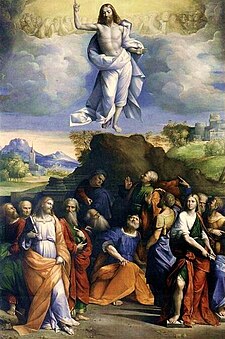
Instead, He invites the the Church He founded to participate with the Holy Spirit in leading the Church into all truth. Unlike the Old Testament, the spirit is in the Church not just with Her.
What is the canon, you ask?
Ask, the Church.
When you ask the Church, through her divine participation in the work of the Holy Spirit, you receive the mind of Christ who is the head of the Church.
Glory be to God!

