April 30, 2011

Individuals, Persons and Blessed Pope JPII

My Friend David
Meet my friend David. Isn't he a great chap. He likes to masticate various organic compounds, occasionally enjoys longer than average energy output periods, and most of all enjoys the random dormant phase whereby his Krebs cycles are able to more efficiently produce expendable energy. We both enjoy intermittent use of the electronic relay of sound waves through the small medium between our ear and the output coil. I also recently found out that we both have exercised our genetic tendency for DNA preservation a whopping four times each. Sadly, one of his friends recently had an electrical shut-down and is decomposing at an alarming rate--likely due to the increased humidity in the air. I nearly experienced an infection in my tear ducts from this incident so I have decided to refrain from accepting any input data to this affect again.

We are all robots or machines. We control our lives. We are a sum total of our electro-chemical impulses. We are animals of instinct. We must dominate and control. There is not another meaning in life but the biological-material.

Enters Pope John Paul II. On this eve of his beatification, let us call to mind his words:

"While it is true that the taking of life not yet born or in it’s final stages is sometimes marked by a mistaken sense of altruism and human compassion it cannot be denied that such a culture of death, taken as a whole, betrays a completely individualistic concept of freedom, which ends up by becoming "the freedom of " the strong" against the weak who have no choice but to submit"

"Man’s life comes from God: it is his image and imprint, as sharing in his breath of life. God therefore is the sole Lord of this life: Man cannot do with it as he wills"
Evangelium Vitae, Pope John Paul II- 1995
May these words give us solace and courage as we enter upon a time unprecedented in human history. Never have we witnessed the radical rule of the individual march forward so unchecked while the personhood of the individual quietly obsolesce as a concept. It is, in fact, our personhood which makes us stand in communion with God giving us a radical place in the cosmic order; while our individuality is a concept we share with a #2 pencil. (that's why we personify inanimate objects not individuate them) Saying "I'm an individual" makes you about as unique as a speck of dust, but as a "person" even the angels are perplexed by the inestimable worth God has given you (Psalms 8:5).

As President Obama last month overturned restrictions on little living baby stem cell research (embryonic), may we resist this societal movement towards the radical individualizing of economics, ethics, religion, etc. May we remind ourselves all that is entailed by our unique relationship with God and each other. May we push forward an agenda of hope, peace, and the respect and dignity of the human person against the radical agenda of secular culture which seeks to glorify our individual freedom obfuscating our personal responsibility to God and each other.

And, may all this be done through the prayers of Blessed Pope John Paul II.

Pray for us!

Book Review: God & Man at Yale by William F. Buckley, Jr.

click to go to Amazon to buy
Williams F. Buckley, Jr. (1925-2008), God rest his soul. Not many in the twentieth century could match his combination of wit, charm, eloquence and sagacity. I loved to hear him speak. I happen to learn auditorily, so for me Buckley was like a rare vocal pool of Bethesda. I would have asked to learn to ride a bicycle over had he offered to teach me.

If you get to read him, I encourage you to listen to him first. Then, when you read this book or any other, you will hear Buckley in all his judicious decrescendo splendor. God and Man at Yale was the first book in his illustrious and prolific career. Here's my review:

"All the force of Firing Line is present in God & Man at Yale, Buckley's first volley across the line of the liberal academic hegemony. An eager young student at Yale, Buckley finds that the elite of his university treated intellectual dissent, particularly of the conservative or classical kind, like a descent into mimetic, clamorous barbarism. Buckley reminds us that truth doesn't always win, it must be defended, and rather the history of humanity is marked by the concomitant path of novelty and demise. Buckley prophetically looks into the future of society by looking at the present state of his university. A worthy read for any Buckley 'fan' or interested historian in the history of education and how the 60's was no revolution but rather the fruit of an intentional pedagogical programme."

April 29, 2011

Reason #2173-Why I'm Catholic

The Celibate Religious Life


When I was a Protestant I always ran into these people who were just a little different. They were typically in their late 30's, 40's, maybe even 50's, not married, but generally had an inordinate love for God and others. They didn't know why they hadn't gotten married, but typically it was obvious to everyone around: they were detached from this world and too committed to their work which generally consisted in helping others. Many times these friends of mine would be great men or women of prayer and Bible study. These were normal people, but just didn't seem to fit into the normal Protestant model of grow up, get married, have some kids, retire, etc.

Luther, writing to a group of nuns so as to dissuade them of their obligation to keep their vow, wrote:
"Though womenfolk are ashamed to admit to this, nevertheless Scripture and experience show that among many thousands there is not a one to whom God has given to remain in pure chastity. A woman has no control over herself. God has made her body to be with man, to bear children and to raise them as the words of Genesis 1:1..." 1525 from Wittenberg
Luther would leave the priesthood and marry a nun. I'm not here to run Luther's personal life through the ringer, but what ensues is the end of the celibate religious life in Protestantism. When was the last Presbyterian convent you've stumbled across? Methodist friary? Puritan Priory? Baptist Brothers of the Immaculate? Okay, okay, that last one was pushing it a little. Sorry.

The point of this post isn't to go into Scripture and the Tradition to defend this ancient calling. That can be done, but I'm not doing that here. However, it is to point out that the religious life seems to be a calling that God has for so many and it is apparently embedded into our DNA. I'm so happy to be able to offer this option to my children because I do truly believe it is a calling for many (despite Luther's pontifications). This isn't something I realized since becoming Catholic but rather something I noticed as a Protestant--or rather noticed the striking absence of the availability of this option in that world. To all my Protestant brothers and sisters out there who aren't married, who feel a little out of place, who spend much of their life in prayer and service, please pray about the religious life. Don't let a defecto priest steal this sacred gift from you if that is what God is calling you to be.

I'm Catholic because in the Church, God still has place for everyone. Even someone like you or her...

April 26, 2011

Is the Catholic Church a Christian denomination?


I've heard this said a few times, and I wanted to go ahead and lay this to rest. The Catholic Church is not a Christian denomination. Rather, She is the Church that Jesus Christ established. AGAIN: She is the Church that Jesus Christ established.

MAJOR DIFFERENCE

I teach fractions to people who need to learn fractions. Math review--two parts to a fraction: numerator and denominator. I call the numerator the "how many" and the denominator the "of what". If you are crying right now because fractions make you need a bottle of Dramamine, that's okay. I'll be done with the example soon.

The "of what" is essential to understand especially when you are trying to add or subtract fractions. Let's try one:

1/4  + 1/7 = 2/11 (FAIL)

This epic fail of a math solution was brought to you by denominations: you gotta be talking about the same thing.

Let's move this back over to Christianity real fast before Sir Isaac Newton makes his cameo to introduce us to alchemy. First, denomination implies plurality. Since we are bringing the Catholic Church into the conversation, let's be clear that no other church (a) makes the claim She makes while also (b) having Apostolic succession, (c) visible unity, (d) the successor of St. Peter 'feeding the sheep', or (e) built all of Western civilization, developed the scientific method....

Second, since (a), (b), (c), (d), (e)...there is no other competing 'type'.

Well, aren't there denominations? Yes, there are.

There are Protestant denominations. Our Holy Father calls them 'ecclesial communities'. They just aren't Churches proper. The good thing is (well, not really good thing), there is A LOT of them! So many, that there is even a denomination called 'non-denomination'. Boo-yah! So, when someone asks, what denomination are you, you can say, "I'm non- denomination". Then everyone will immediately know that you are nothing like the 38,000 other denominations with varying church structure, view of the sacraments, marketing budget, salvation, miracles, etc. You might even go to a building that looks like this which is so non-denominational, if you know what I mean.

A Non-Denominational Church not to be confused with...
A Southern Baptist Church

Or you can say you are Catholic and worship at a place that looks like this...


...and everyone will pretty much know you are not of this world, er, I mean not another Christian denomination.

April 24, 2011

The Church is God's Sacrament to the World


At about the end of the third minute (2:50), the young crowd begins to chant, "We love you! We love you! We love you!..."

A few years ago I would have looked at something like that with a great deal of skepticism if not contempt. Why show so much affection for a man? Look, yet another example of how Catholics don't love Jesus as much as they should. They have to split their attention between The Saints, Mary, the Pope, and the list goes on and on. It must be exhausting.

This judgment is an example of pure ignorance. On the most basic level, Christians of the non-Catholic ilk might be just as likely to get in a crowd chanting "I love you" to a musician or an athlete. I'm thinking Rascal Flats or Tim Tebow. Or, they might just live in Texas. 

Either way, we all understand what it means to get excited about meeting someone important or being a part of an important moment. So, give a Catholic a break will you, we just happen to take our religion as serious as SEC football.

However, that is not what a Catholic is doing. Well, at least if they understand what's going on.

You see, The Church is God's Sacrament to the World.

Sacraments are efficacious signs of God's grace. They relay the supernatural life of God. They are His abiding promise of His work until His return.

When Christ left us, when He ascended and when the Paraclete descended, the story did not end. In fact,  it really just began. Like the first Adam, Christ too was "asleep" and from His side was born His Bride--the Church. However, as the God-Man and giver of all good gifts especially His sacraments, He endowed His church with real features. What I mean is that the Church was endowed with visibility.

In Pope Benedict XVI homily at the Mass of the Last Supper just a few days ago, he reminded us that "Only by the prayer of the Lord and of the Church can the Pope fulfil his task of strengthening his brethren – of feeding the flock of Christ and of becoming the guarantor of that unity which becomes a visible witness to the mission which Jesus received from the Father."

He goes on to plead, "Grant unity to your Church, so that the world may believe."

In a world of a Christianity of "thoughts and ideas" (Jesus of Nazareth, Part 2, p. 226), the Catholic Church's insistence on an en-fleshed faith, one of a Eucharist of His Body and Blood, a headquarters made with ancient stones on an ancient hill that cannot be hidden, and a college of Bishops led in a special way by the successor of St. Peter, is a sign and a wonder in our world that God became Man. As such, she is a Sacrament, a sure promise, of Christ's abiding presence.

When the Vicar of Christ happens to be in my neighborhood, I will not cheer out of some youthful stupidity that someone famous is near me. No. Christ's Church is a sign, a Sacrament of His Bride, a witness to the enduring passionate interest God shows to humanity.

If I ever happen to get an audience with the Pope, and if there is a video camera there, and if it looks a lot like the video in this post, you better believe you can expect you will see one man with tears in his eyes and words of adulation on his lips. The sign in the world that Christ has risen from the dead is in my presence. With every "I love you", may it demonstrate my firm hope that Christ has won, and is winning, and will win when He returns to reclaim His Bride--The Church--who will be without stain or wrinkle.

April 20, 2011

Mass 101: It's Jesus and It's Really that Simple


As we get ready to enter into the Easter Triduum, I want to pause and ask, "How should we act at Mass?" This question is not for priests and I'm not going to discuss how they should say the Holy Mass. That's not my place. I think Pope Benedict XVI has got that covered.

Rather, I'm interested in how we the laity should approach both internally and externally the Sacred liturgy. This question is even more important to me because I have children. Children change everything. Ignorance might be bliss for a solitary life, but when you have souls you have been entrusted to lead to heaven, ignorance might become your judgment. So, right now I am trying to teach them how to act in Mass. That can be a tough thing, especially when they are young, but in the process of trying to teach them it has actually become clear how easy it is.

It's Jesus and it's really that simple.

The Mass 101:
  • We cross ourselves with Holy Water reminding ourselves of our Baptism into Christ
  • We genuflect to Christ reminding ourselves that He's there
  • We pray to Christ to ready ourselves for the sacred mystery
  • We stand as the priest in persona Christi processes into the church
  • We repent and ask Christ for mercy on us for we are sinners
  • We enter into the mystery of salvation history in the Old Testament and the Psalms which point forward to Christ
  • We listen to a New Testament reading that points backward to Christ
  • We stand at the reading of the Gospel: The Words of Christ

And then...

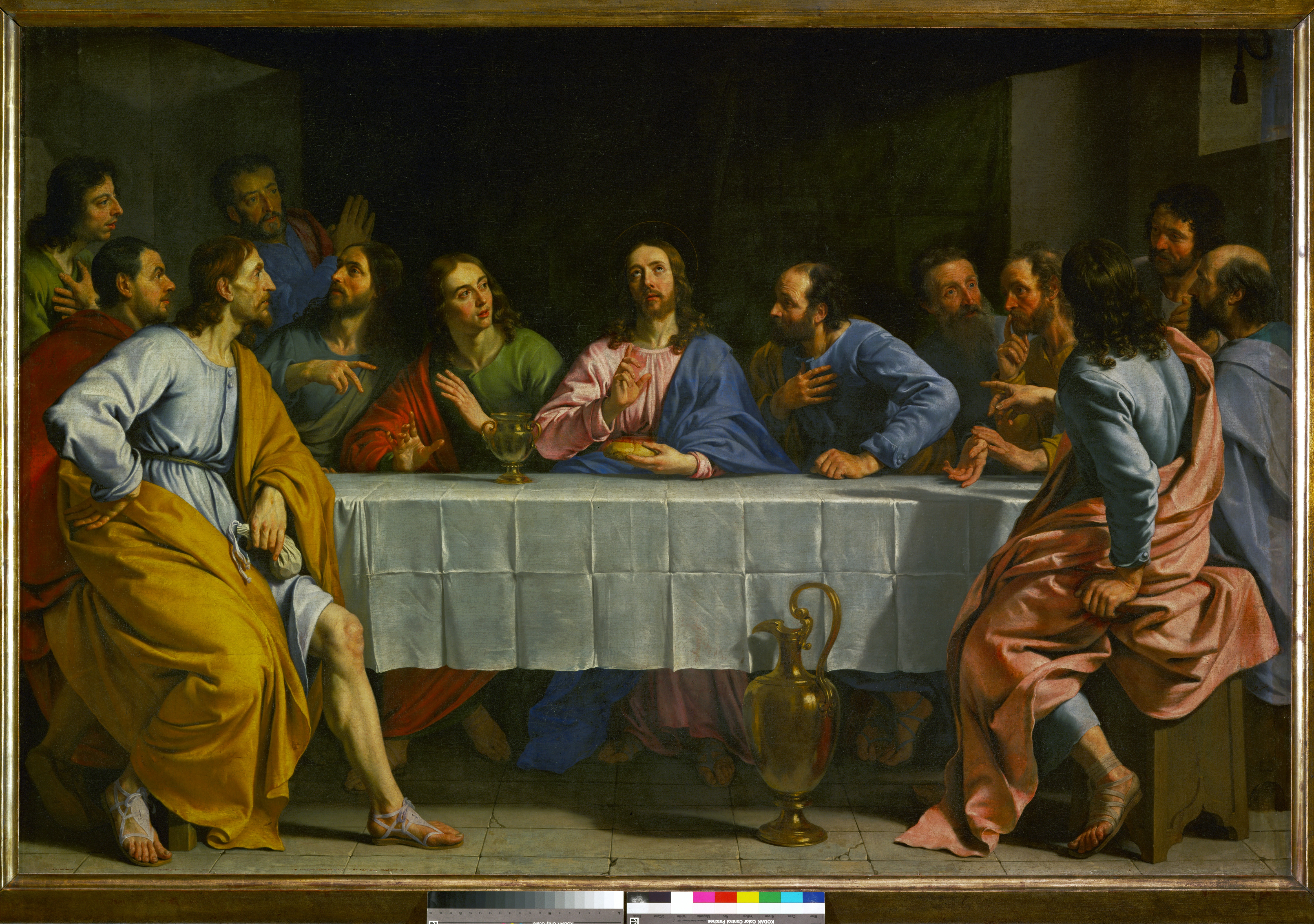
Like at the Last Supper, drawn into the very mystery of the God-Man, we wait to hear what the Holy One will say. We have been at meals before and know what might come next. However, everything is different this time. The God who with His Word created the Universe and set into motion the galaxies, the same God who with His Word entered time and space as a Holy Blastula in the womb of the Virgin, turned water to wine, stopped the raging storm, and walked on water--took bread in His sacred hands.

And then we are left speechless when He says...

"This is My Body"

"This is My Blood"

And it is at this moment that I bend down and whisper into my son's ear, "That's Jesus. The entire universe is focused on this one moment."

How should we act in Mass? I think it's really that simple.

May your Holy Easter Triduum be filled with awe and wonder.

April 19, 2011

Book Review: The Way by St. Josemaria Escriva

click to go to Amazon to buy
I received this book as a gift from my best friend. What a friend! It's hard to give a review for a book like this in very much the same way it would be hard for me to review a surgeon doing a triple by-pass. For starters, I didn't go to medical school and am not qualified to know a good surgeon from a bad one. Here's my best shot:

"Are you mired in sin and making no progress in the Way of Jesus Christ? Do you have spiritual cataracts, unable to even discern whether or not your feet are shod with the gospel or with your own desires? "You will know them by their fruit," our Lord said and so too do we know a great saint. St. Josemaria, with a surgeon like precision, will cut away at your hardened heart for as long as you are willing to read. Like a gardner's pruning sheers, if you will hear his instruction, he will open a path for you that is plain and draw forth the fruit of the Holy Spirit in your life. Written in short yet not so easy to digest 'sayings', this little book is a great post-Lent read to help you capture the spiritual momentum you gained during your 40 days, and that you too, like Christ after his 40 days, may enter into the fullness of the Life, the Truth, and the Way."

April 16, 2011

Catholic Saints and the Bible

The Psalms
Christian prayer. David leads us into the heart of what it means to pray in the Psalms. Christians of every ilk can admit that. In Psalms 103:20 we read, "Bless the LORD, you His angels, Mighty in strength, who perform His word, Obeying the voice of His word!

Is David talking to the angels in this prayer?

In Psalms 148, David continues in his heavenly salutation, "Praise him all his angels, praise him all his hosts."

There are the angels again. Who are the hosts? In the Hebrew language, the word is masculine and denotes a mass of people gathered for a strategic purpose. What is their purpose?

In Revelation 5:11, we get a glimpse of this company, "I looked again and heard the voices of many angels who surrounded the throne and the living creatures and the elders. They were countless in number". In this passage there are three categories of beings: (1) angels, (2) living creatures, and (3) elders.

We already know that David speaks directly to the angels in prayer. However, if he invokes the "host" in prayer, he is also invoking the living creatures and the elders.

Just a few versus before (Rev 5:8) and in Revelation 8, we are informed that the angels and elders in heaven bring before God the prayers of the "holy ones" (Saints). In a recent post, I talked about the nature of how the early Church viewed their departed brethren. In the light of Christ's victory over death, the Church, guided by the Holy Spirit to understand the Sacred Tradition and Scripture it had received, taught that the Saints were in heaven and that we needed their prayers. Further, it was not until the end of the world and the creation of the new heavens and earth that all would be united in heavenly bliss. Until that time, those in heaven would play a strategic intercessory role in the Church.

St. Paul in 1 Corinthians 12:21 says that the "eye cannot say to the hand, 'I do not need you'". Just because our brothers and sisters are in heaven--out of site and out of mind, maybe--we still need them. Even more, because they are perfectly united to Christ in heaven, their prayers are most effectual (James 5:16, "the fervent prayer of a righteous person is very powerful").

"But, they are dead, they cannot do anything," one might argue. Besides the evidence above that they are doing something, Jesus said that "God is not the God of the dead but the living" (Mark 12:27). Remember, "we walk by faith not by sight (2 Cor 5:7). Death is not the end of anything eternal, but only the end of what is temporal. In Christ, death has been disarmed from delivering its fatal blow. So, should we cry when someone dies? Of course. We cry on this side of glory, but it is on that side of glory that they deliver the tears to the throne of God.

If you don't believe that we can ask the Saints for prayers, that they aren't in heaven praying for us, or that as Christians we cannot know either way, I hope you are willing to at the least admit that (1) it isn't against Christian sensibilities, (2) that there is evidence in the early Church for it, and (3) that Sacred Scripture isn't void of any direct or indirect references to it.

Though in the face of such evidence, I hope you would prayerfully ask your departed brother and sisters in Christ for their prayers and that you would ask Christ to forgive you for ignoring them. And, that you would consider coming home (or back home) to the Catholic Church.

April 15, 2011

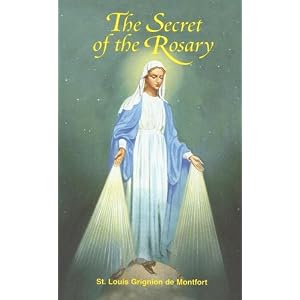
Book Review: The Secret of the Rosary

Click to go to Amazon to buy
I'll admit that the Rosary has been my most difficult prayer to understand since becoming Catholic. I think it is likely due to the fact that it is such an ancient prayer and its devotion has grown up inside the Church for nearly two millennia. As a foreigner to that tradition for most of my growing up life, I just didn't get it.

This Lent I picked up this small book in our parish book store with the hopes of learning more about the Rosary. All I can say is that I've learned so much about Christ since praying it with regular devotion. Here's my pre-Holy Week review:

"St. Louis de Montfort reminds us all that the Angelic Salutation is the chant of our victory over the devil. Combine it with the prayer our Lord taught us, all while meditating on the life, passion, and victory of Jesus, and you get our sure instrument of sanctification. The 'sure sign of orthodoxy', The Secret of the Rosary exposed my biblical and spiritual blindness to this incredible prayer. Make sure your Rosary is close because if you pick this book up Our Lady will have you walking the beads all the way to Her Son."

Challenge: Pick up the Rosary next week (Holy Week) and be drawn more intimately into the mystery of Jesus Christ, Son of God and Son of Mary.

April 14, 2011

To Hell in a Heaven Basket


Over at Time magazine online, there is a story rolling off the insta-press titled "Is Hell Dead?". It is a thoughtful article, well written, and I appreciate all of the sentiments. Hell is a scary place and fundamentalists make it the inevitable place for everyone who didn't grown up in a western semi-industrial world where a gospel message via TV is readily accesible and conscious assent to "I love Jesus" is possible.

When I was in college, there was a Kentucky Bible-thumpin mountain preacher who would say "You are all going to hell in a hand-basket." It was a cute country way of saying, 'stop that sinful foolishness'. I think we were making fun of a preacher or something at the time. Though what my blue grass friend was getting at was the simple ways in which the devil wants to lure us away from God's grace in something as ordinary and simple as a hand-basket (or in my case gossip bordering on detraction).

In my last post about Bell, I tried to show that his thoughts just aren't consonant with the first Christians who had the apostolic preaching still ringing in their ears. It is also not consonant with the dogmatic canon of the Second Council of Constantinople against universalism. Either way, Bell is radically effective.

On the one hand, Bell notices something glaringly off in his theology. In his Evangelical, non-denom emo-emergent Christian brand there is no baptism by fire, desire, sacramental grace, or Magisterium to confirm that the Church has a list of Saints but not Damned. However, the Church does teach that some will be damned because that's what Jesus said. Word. While in the article Bell doesn't want to speculate and feels that those who talk about the afterlife are just doing that because we "don't have video footage", his entire exercise is speculation. Maybe he's close to the conclusion that without an authoritative Church all you get is mere speculation, coffee shop chatter, or at best good opinion.

On the other hand, Bell seems to be laying a trap. "Going to hell in a heaven basket" is an awful thought, but it seems like the right phrase. Bell opens up heaven to not only who St. Paul describes in the Romans 1 that act according to God's law written in their hearts (which the Church affirms) but also to those who St. Paul later describes as "such...will not inherit the Kingdom of God" (Gal 5:21) by their wicked works (which the Church can never affirm).

Bell concludes his interview for the piece by saying, "My generation wanted truth — these are folks who want authenticity. The whole judgmentalism and harshness is something they want to avoid." I guess instead of truth, Bell is going for the most authentic hand-basket. I'm not saying he's in it himself, but just that it looks like he's peddling hand baskets.

April 12, 2011

The Saints and Church History

The Council of Constantinople

"May God by the prayers of the Saints, show favour to the world, that you may be strong and eminent in all good things as an Emperor most truly pious and beloved of God." Letter of the Second Ecumenical Council of Constantinople, A.D. 381

Such is the sentiment of those ancient Christians as they emerged from the waters of persecution for over three centuries. Having spent those years meditating on the mysteries, protecting them through codified language, symbolic gestures, and hidden meeting places, the Church could now shine forth like the sun to a world that had given up its pagan dark day.

One can argue that there is not explicit teaching in scripture admonishing one to ask the Saints for their prayers. We will examine this Biblical claim in my next post. However, I think it is foolhardy to put forward a view of a stale Christianity, shackled by a primitive intuition, unable to learn anew what exactly this new Kingdom means particularly as it unfolds.

That is why there is evidence from the very beginning, even when writing was suppressed for lack of time and resources that Christians knew that those who passed through the veil from life to death were not separated from us; that Christ's victory meant a communion whereby "death has lost its sting." Here are just a few examples of this primitive Christian belief:

"[The Shepherd said:] ‘But those who are weak and slothful in prayer, hesitate to ask anything from the Lord; but the Lord is full of compassion, and gives without fail to all who ask him. But you, [Hermas,] having been strengthened by the holy angel [you saw], and having obtained from him such intercession, and not being slothful, why do not you ask of the Lord understanding, and receive it from him?’" -The Shepherd, A.D. 80

"In this way is he [the true Christian] always pure for prayer. He also prays in the society of angels, as being already of angelic rank, and he is never out of their holy keeping; and though he pray alone, he has the choir of the saints standing with him [in prayer]" Clement of Alexandria, Miscellanies, A.D. 208


"Beneath thy tenderness of heart
we take refuge, O Theotokos,
disdain not our supplications in our necessity,
but deliver us from perils,
O only pure and blessed one."
Egyptian Liturgy for the Nativity of Christ, 3rd Century A.D.

"Then [during the Eucharistic prayer] we make mention also of those who have already fallen asleep: first, the patriarchs, prophets, apostles, and martyrs, that through their prayers and supplications God would receive our petition . . . " St. Cyril of Jerusalem, Catechetical Lectures, A.D. 350

As the Holy bishops made their way to Constantinople, emerging from the ruins of a crumbling empire, we know with certainty that they were not estranged from their departed brothers and sisters. No, let us not imagine for even a moment that for one second the early Christians imagined that those who had been beheaded, crucified, lit on fire, tortured, driven to the edges of society unto death for the sake of Christ were now ambivalent to His bride's struggle. Nor did death steal from them the glory of their prayers. As wheat falls to the ground, so too did these great martyrs and teachers fall to the ground, only to fool death and destroy the works of Satan even more.

Their prayers as the "righteous" were most "effectual" for them and are most effectual for us. May we not be ignorant that they see face-to-face the One our hearts long for (Benedictus Deus) and whose prayers, as we rely on them, glorify God who comes to make all things new. May all Christians, whether militant, purging or glorified be One, even as the Holy Trinity is one. And that all God's people would say, "Amen" in the company of so great a cloud of witnesses. But let us remember that it should not be that they gaze at us as if we were their terrestrial witnesses, but that they are, rather, our heavenly witnesses, and that we must turn to them as such guides who have gone before us to enter into their rest in the Holy City.

Amen.

Book Review: Christianity, Democracy, and the American Ideal by Jacques Maritain

click to go to Amazon to buy
I love me some Jacques Maritain. When I found this fiery Frenchman, I couldn't put him down. At the time, I was near a college library due to my enrollment in a graduate philosophy program. Naturally, I decided to set out to read all his books. I've read half. Things will slow down now since my life is a lot different than it was then. When I read this book it was a first or second edition hard back. Here's the review:

"Like Paul Revere's midnight ride, Maritain runs to rescue Americans from self-loathing in this hopeful tour de force. In an era where français et l'américain sentiments often conflict, the book reads as a literary Battle of the Chesapeake where again we are locked arm-in-arm fighting imperialism. No more nasty caricatures, Maritain shows that what is best about America is our romantic optimism which speaks volumes for a man who loathed idealism. How can we explain this change of heart? He admits that his respite during World War II in America and the resulting academic tour in Chicago, South Bend, and Princeton charmed him, and much in the same way this book may help you to rise above the contemporary anti-American rhetoric and again see the great gift of the sweet land of liberty."

April 11, 2011

Lenten Hiatus: The Feast of St. Gemma Galgani

St. Gemma Galgani
Today is April 11, the fifth week of Lent. In our family it means taking a one day hiatus from our fasting commitments to celebrate the Feast of St. Gemma Galgani. Our youngest daughter, Gemma Grace was named after her and is under her care.

Gemma Grace Stubbs

St. Gemma was on fire for Jesus.

St. Gemma received the stigmata.

St. Gemma pleaded to God for souls.

St. Gemma lived a life completely set a part for Christ.

Regarding Christ, she said:

On loving God: "Oh love, oh infinite love! .....Oh love of my Jesus! ....Let Your love penetrate my all; from You I want nothing else. My God, my God, I love You. But, per­haps I love You too little, oh Jesus?....Oh, if all were to know how beautiful Jesus is, how loving He is! They would all die of love. And yet, how is it that He is so little loved?"

It is recounted that one day she was found in state of ecstatic prayer pleading with God for a soul. Finally, she shouted out in relief, "He's saved! He's saved!" It is attested that around that time a local renowned sinner came into the local church for Confession.

St. Gemma, pray for us!

April 9, 2011

First Reactions: The Pope's Book

click to go to Amazon to buy
Thirty six hours ago, I received this book from my best friend David Williams as an Easter gift. I'm half way through, and no I'm not writing a review but just some of the startling observations of our Holy Father's momentous work so far:

He wants to move beyond the historical critical method which he claims has given us all it can offer. He hopes to fulfill what hasn't been truly attempted which is theological exegesis in the spirit of Vatican II.

The Pope as the Universal head of humanity, affirms pagan, protestant, and jewish notions showing how they all have their fulfillment in the unique person of Christ. Each group has an "Amen" moment, yet each is challenged to confront Jesus in a way relevant to their historical situation.

He compares his work to St. Thomas's Summa and then proceeds in a new type of scholasticism to lay out various exegetical possibilities and show their definitive theological reality in and through The Word made flesh.

The Eucharist is not a meal but rather "a memorial of his sacrifice". Pope Benedict XVI and other scholars notice the historical passing away of the Eucharist being connected with meal (Last Supper) but rather to a new Passover.

The "poured out for many" is the most accurate translation of the words during the Consecration, not to limit the universality of Christ's sacrifice but rather to point to the particular sacramental reality of those words (in the chalice): both in completion in the people of Israel and in each subsequent 'Sunday Morning' Eucharist liturgy.

April 8, 2011

The Catholic View of the Saints: Is it against Christian Sensibilities?


The eye cannot say to the hand, "I do not need you"- 1 Corinthians 12:21

The Saints. When you didn't grow up Catholic (like me) that means a football team. A not very good football team at that (sans all this new success). It might also conjure up a tune ("Oh when the saints, go marching in...). I digress, but, hey, my kids are dancing now.

In evaluating the Catholic understanding of the Saints a number of issues arise: prayers to them, their role in our lives, who they are, and a few other issues that fall under the sub-domain of one of those. Before I look at the historical and biblical understanding of the Saints, I first want to address what I call "Christian sensibilities".

What I am aiming at is the "gut reaction". To use examples from other orders of experience, when someone of a foreign origin walks into your office what do you think? When someone hands you a strange food, what do you feel? When you walk into a Church and notice paintings and statues of Biblical and Church heroes what is your reaction? I like to think of this as a kind of Christian litmus test in very much the same way it is a litmus test for things like our respect for human life or our true racial sentiments.

Not a Catholic teaching
On my journey to the Catholic Church, I always tried to pause a moment and step back from the rhetoric and debate and ask myself, "Is this a Christian thing to think?" I mean, if the Catholic Church taught that Obi-Wan Kenobi is real and must be obeyed, then we had...well...problems. 

In 1 Corinthians, Paul warns us that we are not at liberty to reject another part of the body. Even more, from our experience and a second grade education we understand that most of what is really happening with our body we cannot see. Some of this is geographical (the back of your head, where you sit, etc.) However, most of what we cannot see happening is because it is meant to be out of our view. In fact, the health of the body is predicated on you not seeing your heart beating, your spleen working, or your bones stressing under the pressure of Thanksgiving seconds.

At this point, I'll suspend my momentum and not delve into Holy Scripture. That is for another day. What I will ask is a few questions. Questions not so unlike the kind of questions one might ask a friend who is a semi-bibliophobe standing outside of Barnes and Nobles. That's the way I felt. Not about books, of course, but about the Saints (and not the football team this time). It's like I was standing out in a storm and I could smell the fresh coffee, see the smiling faces, almost hear the pages turning but I wouldn't go in. I was frozen. Why was I so afraid of my celestial family?

With all the suffering Christians face on earth, are our brothers and sisters in heaven really doing this?


If we asked them for some help, will they do this?

Is heaven a big happy hugfest?


Or, is it more like this?

A heaven full of scholars, noblemen, peasants, husbands, wives, nuns, monks, athletes, soldiers, martyrs and minstrels, all before the face of God in perfect union with Christ filled to the full with the Holy Spirit. And as the Spirit looks upon the earth and groans at our sin and suffering, it is with and through the Saints that we hear the noise.

Yes, the Saints are the pharmacists and Jesus is the doctor. He writes the prescription and the Saints fill it. St. Rose of Lima, patroness of my family and the Americas, pray for us! (and you)

(hat tip to Taylor Marshall for the pharmacist analogy)

Book Review: The Present Age

click to go to Amazon to buy
Kierkegaard is the kind of friend that makes you a better person. I finished this book on a two-day retreat to the beach with my wife. Ah...the love of your life, the sun, the waves, and an existentialist rant on the state of media. In a word: perfect.

"The Present Age by Kierkegaard can read one part luddite two parts revivalist. Kierkegaard wants his reader to have passion informed by reason and not give in to the cult of the mass--passions without reasons. Don't tweet away your existence or think that by liking "save the rain forests" you are making a difference. Instead, Kierkegaard demands that we snap out of our Freudian daze, and pick up the cross of life and allow every splinter to awaken us to a greater state of responsibility to reality."

Hallelujah!

April 7, 2011

The Saints and the Second Pill

In my last post I talked about the "second pill" in the movie The Matrix. The second pill is the pill of truth. Here's a short list of some individuals who chose to swallow the pill of Truth. Let's see where it got them:


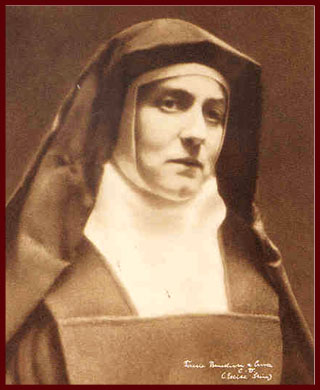
Edith Stein- Jew turned atheist


St. Teresa Benedicta of the Cross (Edith Stein)- turned Carmelite nun who wrote Finite and Eternal Being


Sitting Bull- I just think this is beyond cool
(After his conversion should we call him "Kneeling Bull"? Thanks Taylor for the pic)


Augustine- curious intellectual and common fornicator

St. Augustine of Hippo- Doctor of the Universal Church


John Newman- Anglican clergy


Blessed John Henry Newman- Saint, Cardinal, and perennial defender of the Catholic Church


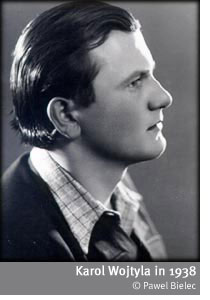
Karol Wojtyla- actor and motherless son

Blessed Pope John Paull II- son of Mary, Saint, and Papa of the Universal Church


What will you do with the Truth?


Book Review: Introduction to Christianity

click to go to Amazon to buy
In my journey into the Church, I picked up this book in the very beginning. I was thoroughly blown away by how then Cardinal Ratzinger moved concomitantly inside Catholic tradition and the canon of Scripture effortlessly. After I finished the book, I thought, "I could call this guy Papa". The Spirit works in mysterious ways. Here's my review:

"Cardinal Ratzinger shows us why he's the Pope-Bible scholar par excellence. Even before the weight of the Universal Church was on his vicarious shoulders, then Ratzinger leads his reader on a journey into the most pressing issue of our time: faith in God. This return to a faith in the public square has been a theme of his pontificate and we can see that it was something he was convinced of well before Bavaria cried for joy. Follow our now Holy Father as he penetrates the meaning and relevance of the ancient creed and why its proclamation is the medicine to heal the modern soul."

April 6, 2011

The Matrix and the Catholic Church


What do I do when faced with Truth?

One of the best movies written (the script) in the last 20 years was the first movie in The Matrix trilogy. It's great because of all the important philosophical questions it asks. What is truth? What is the nature of reality? What does it mean to be sentient? What is real?

One of the very best scenes in the movie is when Morpheus, after showing Neo the truth about reality, presents him with two pills. One pill, if swallowed, will allow Neo to forget everything he has seen and go back to living as he did (in a vat somewhere hooked up to sensors). The other pill, if swallowed means he proceeds; he accepts truth; he becomes a part of the plan.

When I was on my journey to the Catholic Church, I wanted to swallow the first pill. Becoming Catholic meant giving up too much: my personal history, my ministry, my theology, and my pride. If I swallowed the first pill I could go back to my life as I knew it; maybe even return on a path toward Christian ministry. If I became Catholic it meant kneeling in a wooden pew, in an old Church, as an ordinary member of an extraordinary Church full of saints and scholars. The second pill meant becoming a part, while the first pill offered a chance at my part. Not just my part, but my faith and my Christianity.  

Yet, somewhere deep inside me, like Neo, I knew that reality wasn't mine. Even if I went back to the vat, I would still know that's where I was and so I could take the first pill all the while knowing it meant gaining nothing and losing everything. If the Catholic Church was who she said she was, then I was taking the second pill and swallowing my pride. 

What I've gained...is more than I can put in words.

(Next: A look at a few who took the second pill for all its worth)

Book Review: Love is Stronger than Death

Since this blog is really only 3 weeks old, but began in haste almost 3 years ago, I realized that I intended to do some "sleeve cover style" book reviews. What I mean, of course, are those nice little blurbs on the back of books that give you a kind of micro-synopsis and that work exceptionally well for marketing purposes. My new friend and fellow convert Brandon Vogt over at his blog is actually giving away Peter Kreeft's book, "Love is Stronger than Death" which is the topic of my review today. 
click to go to Amazon to buy
"Kreeft's book is somber, bleak, yet prophetically hopeful. Any book with a chapter entitled 'Death as Mother' is bound to intrigue. Though, be prepared. It will plunge you into the depths of despair like a Salinger tail, but unlike Catcher will raise you from the dead in all the glory of Christ's victory. I suggest reading this book during the day, because ultimately Kreeft is asking us to think about death in bright terms. Death is our friend, but it is only our friend when we look at it in plain view, turning to Christ in His empty tomb, and introspectively returning to ruminate about our own destiny. We are not meant for decay but eternal life and as thus we understand Kreeft's point that Love is Stronger than Death."

April 5, 2011

Purgatory in the Bible


In the last post, I ended with a reference to Christ's words in Mathew 12:32 where Christ makes reference to a repayment for sin "either in this life or the next." Of course, this cannot be referring to hell because hell is not a repayment for anything but rather a punishment. Repayment implies reconciliation and restitution; punishment does not.

When God reveals himself to Moses, Moses hears God's voice from a burning bush (Exodus 3). Later this fire will lead the children of Israel in the desert (Ex 14). In Hebrews, the author (likely Paul) encourages us with the lives of the "cloud of witnesses" and concludes this discourse about the kingdom of God we receive that is "unshakable" (12:28) describing God as a "consuming fire". Just a few verses beforehand, he warns us that God "scourges every son he acknowledges" (12:6). What is this scourging? How is God a "consuming fire"?

Let's look at a few scripture passages that allude to an interpretation terminating in the idea of a postmortem purgation :

  • Matt 5:26, 18:34; Luke 12:58-59- Come to terms with your opponent or you will be handed over to the judge (God) and thrown into prison and will not get out until ou have paid the last penny
  • Matt 5:48- "Must be perfect"; Jesus makes it clear that perfection is an ontological requirement
  • Luke 12:47-48- "some will receive heavy beatings but live"; for those who know the Master's will but don't act accordingly
  • Luke 16:19:31- the dead rich man is suffering but has compassion (which means he cannot be in hell because compassion is a virtue of the Spirit)
  • Phil 2:10- "every knee shall bow in heaven earth and "under the earth"
  • Heb 12:14- "without holiness no one will see the Lord"; We must possess holiness. Do you possess it perfectly now? 
  • 2 Tim 1:16-18- Paul asks for mercy "on that day" for Onesiphorus who is dead 
  • 1 Peter 3:19; 4:6- Jesus preached to the spirits in "prison"
  • Baruch 3:4- prayers for the dead
  • 2 Macc 12:43-45- prayers are offered for the dead to help free them from sin (Luther removed Maccabees because of this)
  • 1 Cor 3:10-15- works are judged after death and tested by fire
  • Jude 1:23- people are being saved "out of the fire"; but hell is eternal separation from God (CCC 1035) therefore the fire cannot be hell
  • Also see Matthew 12:32
(there were numerous other passages I could have included but did not so you could still read this comfortably on your iphone)

Where do we go from here? Where could I go? The Catholic Church claimed that purgatory existed. The early Church proclaimed that a place of purgation for the elect was impending if the temporal penalty of their sin wasn't paid. The Bible hardly makes a case against it. It wasn't against my Christian sensibilities nor did it diminish the work of Christ. No, purgatory affirmed Christ's commitment to me, the perfection of God, and my responsibility for my actions. Christ is the sacrifice that atones for my sins appeasing the justice of God. However, my actions still have temporal consequences and God requires justice. Did I reject Purgatory because of a man-made tradition that renders the word of God of no effect?

When one is faced with the reality that they may be so wrong, when their faith as they know it as containing certain propositional values has been unearthed with a flower spade revealing its shallow roots; one has two options. I'll explain them in my next post. Until thin, thank God for purgatory or pray to God to help you understand this beautiful but oft misunderstood dogma.

April 4, 2011

Purgatory in Church History


When I was studying the doctrine of purgatory, one of the most interesting facts that astounded me was just how explicit this notion was in the early Church Fathers. More than infant baptism or original sin, the notion of a coming purgation for the elect was eminent in their writings both East and West. 

In my previous post I explored whether or not this doctrine made sense generally as a Christian. Despite what I will convey here and my growing conviction of the apostolicity and orthodoxy of the doctrine during my studies, I still couldn't make the heart movement which I explained in my previous post. Before that movement, I had given assent to the doctrine per my understanding of (a) the authority of the Catholic Church to teach it and (b) the witness I noticed in Church history and Scripture that attested to it. 

In the The Passion of Perpetua and Felicity we are introduced to a "place of punishment". St. Clement of Alexandria in the dawning of the third century describes this place saying:
"Accordingly the believer, through great discipline, divesting himself of the passions, passes to the mansion which is better than the former one, viz., to the greatest torment, taking with him the characteristic of repentance from the sins he has committed after baptism. He is tortured then still more--not yet or not quite attaining what he sees others to have acquired. Besides, he is also ashamed of his transgressions. The greatest torments, indeed, are assigned to the believer. For God's righteousness is good, and His goodness is righteous. And though the punishments cease in the course of the completion of the expiation and purification of each one, yet those have very great and permanent grief who are found worthy of the other fold, on account of not being along with those that have been glorified through righteousness."-Stromata
St. Cyril of Jerusalem in the fourth century about five hundred miles away from Alexandria writes:
"For I know that many say, what is a soul profited, which departs from this world either with sins, or without sins, if it be commemorated in the prayer? For if a king were to banish certain who had given him offense, and then those who belong to them should weave a crown and offer it to him on behalf of those under punishment, would he not grant a remission of their penalties? In the same way we, when we offer to Him our supplications for those who have fallen asleep, though they be sinners, weave no crown, but offer up Christ sacrificed for our sins, propitiating our merciful God for them as well as for ourselves.”-Catechetical Lectures 23:9,10
St. Augustine of Hippo a few decades after St. Cyril writes:
"For our part, we recognize that even in this life some punishments are purgatorial,--not, indeed, to those whose life is none the better, but rather the worse for them, but to those who are constrained by them to amend their life. All other punishments, whether temporal or eternal, inflicted as they are on every one by divine providence, are sent either on account of past sins, or of sins presently allowed in the life, or to exercise and reveal a man's graces. They may be inflicted by the instrumentality of bad men and angels as well as of the good. For even if any one suffers some hurt through another's wickedness or mistake, the man indeed sins whose ignorance or injustice does the harm; but God, who by His just though hidden judgment permits it to be done, sins not. But temporary punishments are suffered by some in this life only, by others after death, by others both now and then"-City of God 21:13
 At the Twenty Fifth Session of the Council of Trent, the Church affirmed:
"The Catholic Church, instructed by the Holy Ghost, has, from the sacred writings and the ancient tradition of the Fathers, taught, in sacred councils, and very recently in this oecumenical Synod, that there is a Purgatory, and that the souls there detained are helped by the suffrages of the faithful, but principally by the acceptable sacrifice of the altar; the holy Synod enjoins on bishops that they diligently endeavour that the sound doctrine concerning Purgatory, transmitted by the holy Fathers and sacred councils, be believed, maintained, taught, and every where proclaimed by the faithful of Christ. But let the more difficult and subtle questions, and which tend not to edification, and from which for the most part there is no increase of piety, be excluded from popular discourses..."
The Catholic Church continues to proclaim this doctrine of purgation that affirms the dignity of the individuality of the human person and that is copiously present in the writings of the Church Fathers. What I found is that a lot of the historical and theological objections to purgatory had to do with the "difficult and subtle questions, which tend not to edification (or)...increase of piety." The Church certainly had in mind some of the late medieval nominalism that was marked by the most peculiar and subtle questions regarding theology. For example, "If the Eucharist falls on the ground and a mouse picks it up, does the mouse consume the Sacramental species of Christ?" The answers did little more than satiate the inordinate obsession of nominalists with the unending possibility of making language a game. Nevertheless, when the doctrine is understood in its Biblical, historical, and sensible context, it is quite manageable to understand.

Moreover, as the Council of Trent illumines, the doctrine of Purgatory compels us to a life of holiness and penance here on earth. When we sin we not only injure our relationship with God but also our relationship with ourselves and others. Purgation is the process whereby we make right the later two and will make it right either in this world or the next (Matt 12:32).

(Next: Purgatory in Scripture)

April 3, 2011

March Madness and Lenten Penance

I am going to take a sidetrack from talking about Purgatory to talk about March Madness. Not basketball but the Lenten kind.

Lent generally occurs during the month of March. During Lent, Catholics from everywhere are "called" back to the Church in anticipation of Easter. Easter is the great feast of the Church because it is when our King rose again and from which the Church draws her power to rise again from the ashes of schism, tragedy, and sin. It is also a time that a lot of Catholics go to the Sacrament of Confession for the only time. It's better than not going at all. I was recently speaking with a priest who said that the real miracles happen in the Confessional.


I guess it is like the basketball kind of March Madness. Let me explain. We go to Confession to receive absolution and the forgiveness of God for sins (especially mortal sins) and to be restored to right relationship with God and the Church. This is important during Easter so one can take Holy Communion. Both sacraments provide us grace that can keep us from mortal sins and in friendship with God. Going to confession once a year is a huge risk, though. It's the bear minimum. Who doesn't sin year round? It's kind of like getting a #16 Seed in the NCAA tournament. You are in the dance, but its a big up hill battle. Getting seeded gets you one game, but you are probably not going to win the game.

It's going to be an awesome game (like Easter Mass). But, the rest of the year might not look so hot. Further, if one partakes of the Eucharist in a state of mortal sin, they eat and drink "judgment to themselves" (1 Cor 11:29).

I didn't grow up with the Sacrament of Confession. However, it has been a huge surprise since coming into the Church how awesome this Sacrament is. I don't think continued progress in the life of holiness is possible without it. In our tournament to heaven, or as we in the words of St. Paul play "to win" (1 Cor 9:24), let's improve our seeding. It isn't up to a selection committee, isn't determined by whether or not we play in a power conference, nor is it determined by how skilled we are. Rather, our progress in the life of holiness is determined by our willingness to humble ourselves. In the Sacrament of Confession we can improve our seeding. It can be a continual opportunity to "humble yourselves under the mighty hand of God, that he may exalt you in due time." (I Peter 5:6). It's March Madness. Are you playing?