July 31, 2012

July 27, 2012

St. Peter on the Perspicuity of Scripture

"As also in all his epistles [Paul's], speaking in them of these things; wherein are some things hard to be understood, which the ignorant and un-steadfast wrest, as they do also the other scriptures, unto their own destruction.." -2 Peter 3:16

Notice:
  • The ignorant twist Scripture
  • The un-steadfast twist Scripture
  • They do so to their own destruction
Would being learned and stable guarantee that one would understand Scripture?

According to the learned Apostle St. Peter, no. Apparently, some of the things that St. Paul wrote about were "hard to be understood". Earlier in the chapter, St. Peter says that he is writing this letter and the previous letter to remind them of what he preached, lest they deny the second coming of Christ (v.4).

What is St. Peter's proof for steadfast belief in this essential doctrine? Look at 2 Peter 3:5-10. 
"For when they maintain this, it escapes their notice that by the word of God the heavens existed long ago and the earth was formed out of water and by water, through which the world at that time was destroyed, being flooded with water. But by His word the present heavens and earth are being reserved for fire, kept for the day of judgment and destruction of ungodly men. But do not let this one fact escape your notice, beloved, that with the Lord one day is like a thousand years, and a thousand years like one day. The Lord is not slow about His promise, as some count slowness, but is patient toward you, not wishing for any to perish but for all to come to repentance. But the day of the Lord will come like a thief, in which the heavens will pass away with a roar and the elements will be destroyed with intense heat, and the earth and its works will be burned up."
He uses a number of obscure concepts and images to prove his point. He almost seems to assume that his reader knew more than what he was writing. Of course he is! That is what he said he was doing:
"This is now, beloved, the second letter I am writing to you in which I am stirring up your sincere mind by way of reminder, that you should remember the words spoken beforehand by the holy prophets and the commandment of the Lord and Savior spoken by your apostles." (vv.1-2)
Scripture. Tradition. The Teaching Office of the Church. 

You get all three of these in this passage:
  • A reference to oral teaching
  • A reference to Scripture
  • A magisterial interpretation of Scripture
This is the Biblical model.

So, why would the Christian Church stop this after the death of the last Apostle? They would if cessationism is true. That is why I think the doctrine of cessationism is essentially linked to the existence of Protestantism. Luther doesn't go all the way with it, but Calvin does. As he states in his Institutes:
"The gift of healing, like the rest of the miracles, which the Lord willed to be brought forth for a time, has vanished away in order to make the new preaching of the Gospel marvelous forever." (Battle translation, 1960, p.1467).
For Christ, miracles were a marvelous part of the Gospel (Luke 4:18). So, the gift of the infallible teaching office of the church either died with the Apostles or it did not. Either way, the Apostle Peter has weighed in on the subject of the Protestant doctrine of perspicuity, and even cessationism won't change that.

July 20, 2012

Myth Busters: Primitivism

Setting aside your preference for baby chub, do you prefer this...

Me at 2
...to this?

Or this...

to this?
"So He was saying, “What is the kingdom of God like, and to what shall I compare it? “It is like a mustard seed, which a man took and threw into his own garden; and it grew and became a tree, and the birds of the air nested in its branches.” Luke 13:18-19
Before I begin, let's think about the pictures above. Should I prefer the child or the small sapling simply because they come first? Obviously not. It would be foolish to desire the former over the later, because it was precisely for the later that the former came into existence.

Yet many object to the Catholic faith because of its maturity. They don't exactly say it that way, but generally the objection comes in the form of some type of claim that the first Christians were "Messianic", Jewish, blew shofars, ate matzo balls (exaggeration), met in homes and certainly didn't have all the pageantry, form and "pomp" of Catholicism. They think that this is a sound and solid argument against the Catholic Church. Of course, these same folks cannot deny that in the first century, Christians began to call themselves "Catholic" so as to distinguish the apostolic Church from the sects. However, even that act, of calling themselves Catholic -- on their view, is an example of a departure from the primitive and what is oft implied "pure" nascent church.

To unpack the error of this view, one must first discern whether or not (a) their view of the primitive Church is accurate, (b) whether or not their can be authentic development (i.e., organic growth) in the Church and lastly (c) if their view can be substantiated as a preference either by reason and/or revelation. For pedagogical purposes, I will deal with these points in reverse order.

1. It is against reason to prefer that which is prior correlative to that which caused it.


The myth of "primitivism" is an irrational proclivity toward an awkward synthesis of the ornate and the immature. The primitivist wants what is old -- that's why he asks for the "old time religion", but he also wants what is young. He wants a very small old man, or he wants a six-foot tall infant. However, what makes an old man so valuable is that he is not young, and it is the youthfulness of the infant that makes it so vulnerable. We prefer an infant to nothing, but when making a decision we prefer the counsel of the old man. Nonetheless, some still object that the wise young man can become the stupid old codger.

True.

However, when we consider any object, it is obvious to all that whatever it is we are talking about tends toward some end (teleo). The end is namely that for which it was purposed. In the picture above, we see a certain end, or namely that for which the architect(s) intended. However, as you know, this castle will not remain like this. External causes will act on it, even internal causes intrinsic to the material itself will cause it to decompose and eventually cease to exist.

There are two possible ends: life or death. If the Church is merely a natural object, then we should expect it to decay. If the Church is a supernatural object, founded by Christ, we should expect the reverse. Anything less is what Bryan Cross aptly calls "ecclesial deism".

2. All living things grow. So, too, the Church grows and by the power of the Holy Spirit is maturing into the full stature of Christ (Eph 4:13).

In Luke 13:18-19, Christ gives us a glimpse into the life of the Church. In Blessed Newman's famous Essay on the Development of Christian Doctrine, he examines whether it possible for authentic development to take place. He discusses a number of criteria, and instead of going into all of them (you can read the book for yourself), I will summarize what I believe to be the most germane.

First, before I look at Newman's criteria, one should be aware of the numerous developments in the doctrine of the Catholic Church in the first four centuries:
  • Trinity
  • Hypostatic Union
  • Two natures in one person (Homoousian)
  • The canon of Scripture
  • Mary as Theotokos
A few criteria:
  • What comes after does not destroy what comes before
  • What comes after finds its raison d'ĂȘtre in what comes before
  • What comes after has a kind of DNA relationship to what comes before
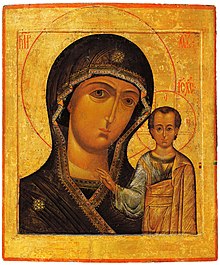
Theotokos
I have yet, to this day, to find one Catholic dogma to be in violation of any of these principles of doctrinal development. Further, it is only the Christian who rejects all creeds and councils in favor of the creed of creed-less Christianity, who rejects all doctrinal development prima facie on a fundamentalist rendering of sola scriptura. Sadly, as my article on doctrinal development demonstrates, fundamentalism does the same thing to truth that liberalism does. In fact, the fundamentalist rejects doctrinal development because it appears to be liberalism. However, doctrinal development does just the opposite: it conserves.

The plant, when it grows, conserves its uniqueness. It persists in existence through its growth. The non-growing thing decays, and fails to persist in existence precisely because it does not grow.

What about God? Are you advocating for a type of open theism?

No way.

God is completely different than (other) creation, and, the Church is His New Creation.

What about Scripture? It doesn't grow.

In one sense it doesn't, but in another sense it does. Obviously, the Church has closed the canon and there will be no more passages of Scripture added to it. However, in her doctrinal development, the Church recognizes the expansive, potent, and inestimable riches of the deposit of faith found in Sacred Scripture. In fact, a view that closes one off from development of doctrine makes the Sacred Text reductive, less potent, and expendable.

3. The primitive Church (1st century) was already Catholic, and any claim otherwise is the error of the Judaizers. 

The error of the Judaizers was to hold to the belief that the Mosaic ceremonial law and customs were to be strictly enforced in the Christian community. It is true that for the first 40-50 years of Christianity, it is was viewed primarily as a sect of Judaism. This fact, however, should not be confused with the idea that Christianity is in fact a sect of Judaism. That view is grossly incomplete and fails to grasp the universal goal of Christ's salvific work (John 1:29). Further, many of the early theological issues dealt with the gradual development of Christianity's clean break with Judaism as a religion. This is evidenced in both Galatians and Acts and portended in Christ's prophecy about the destruction of the temple (Matt 24:2). We might say it wasn't until 70 AD and the destruction of the temple that the Church could truly established her identity separate from the cult of the temple; not because she was always separate from that cult but that culturally, the temple dominated the mind share of the people.

When we examine Matthew's account more closely, it is not just a coincidence that Christ says, "not one stone here will be left upon another, which will not be torn down" and that earlier in his ministry, St. Matthew recounts that Christ called St. Peter "the rock" (Matt 16:18), that the Church is built upon stones, the cornerstone of which is Christ (Eph 2:20). In a sense, we should expect that the "old stones" of the temple were still being cast down between our Lord's ascension and the destruction of the temple.

At this point, I could really just rehash another one of my posts. Instead, I will turn your attention to my post:

Myth Buster: Constantine Founded the Catholic Church

Considering the first two paragraphs (above) and the post about Constantine, it should be clear to see how, what, and why the Church emerges as she does in the late first century. The Old Temple, and its cult, has been destroyed. The New Temple has been built, whose cornerstone is Christ, and whose steward is a rock for whom the Church will lean upon for unity until His return. Of course, we know that the great scandal of unity and the Petrine See is that it has caused many times just the opposite. But, we should not be surprised. Our Lord told us it would be so.

In conclusion, primitivism is only preferable for natural objects. However, even for natural objects that are animate, many times we prefer what is after to what is before because it is precisely in the process of the passing of time that the value of the thing comes to the fore. However, for supernatural objects, we should never prefer what is before simply because it is before. 

That is irrational, unbiblical and a-historical.

Protestantism: The Musical

This post was originally conceived as "Will the Real Protestant Please Stand Up". It is in response to the ever-changing goal-post of what stands for "Protestant orthodoxy". It was also inspired by this.


___________________________________________________

[The scene opens with an empty stage. A lone voice, not on stage, breaks the silence.]

Voice 1: Moving targets. The big tent. You aren't welcome.

Voice 2: Who?

Voice 1: You Catholics.

Voice 2: Okay, I get it.

Voice 3: Smaller tent.

Voice 1: You aren't welcome.

Voice 2: Who?

Voice 1: The JW folks.

Voice 3: Why?

Voice 1: Because they don't believe.

Voice 2: I...see?

Voice 3: Smaller tent.

[A young guy who appears to be in his early twenties, skinny jeans, a mint green Express For Men shirt, dark-fauxish hawk hair-do, runs on stage. He is singing everything he says.]

young guy: I am going to start a church tomorrow. It's going to be called "Clean". I'm converting an old waste management facility. It's going to be mean.

Voice 3: Are you guys Catholic?

(His voice rises in a defiant yet exultant tone, almost like Tevye's "Tradition" but in a more metro-sexual kind of way.)

young guy: No!

[Reformed dude with a british accent runs on stage. He is wearing flat-front dress pants, penny loafers and a blue-stripped dress shirt with a pull-over sweater vest. He also has a dark-fauxish hawk hair-do and is singing.]

Reformed dude: You are most certainly not Protest-ant! You don't hold to the Reformed doctrines of worship and govern-ment. Moreover...moreover...moreover...you do not administer the sacra-ments.

young guy: Dude, I totally feel you. But, we are totally Protestant. We believe in sola scriptura, fide and gratia.

"sola scriptura, fide and gratia" 


(he repeats this 3 times in a swaying tone)

I went to seminary. I just didn't lose my passion for Katy Perry [he jumps up and points to the sky]. At Clean, we call them Straight up Word, Straight up Trust, Straight up Freedom.

"Straight up Word, Straight up Trust, Straight up Freedom"  (he repeats this 3 times in a swaying tone)

 We are Protestant. Whether you believe it or not, we will not relent.

[His voice fades off, repeating the last phrase. He moves to the back of the stage, and spins and points to the opposite corner of the stage.  There, enters three women: long skirts, buns, but kicking their legs and dancing across the stage like the rockettes. At this point, the audience realizes that a Pink Floyd song was playing in the background]

three ladies: "We don't need no pope [instead of education]. We don't need no pope. We don't need no pope. We don't need no pope. We don't need no pope. We don't need no pope. We don't need no pope. We don't need no pope."


Replace "Teacher" with "Magisterium" and this becomes
a kind of Protestant theme song

[At this very moment, two women "bishops" come on stage, fully "vested", doing some kind of sacred procession to Mother Earth. At the same time, 3 young, male, southern baptist seminarians enter the stage. Each of them has blond hair, cleanly parted to the right side.]

Baptist seminarian #1: Have you ever heard of Tim Tebow?

[Right as he asks that question, an enormous American flag is hoisted down creating the scrim for the scene. A young man, dressed up as Tebow but clearly much more diminutive than the real Tebow, runs on stage (they couldn't find anyone as jacked up as Tebow.]

Baptist seminarian #2: Did you know that Pentecostals are going to hell because they believe in a doctrine of the devil? (he repeats this over and over again)

Voice 3: Would the real Protestant stand up?

[Silence settles on the stage. By now, at least fifty other Christian denominations have entered. One is carrying a large peace sign. The other a sign saying that God hates everyone. A minister is sprinkling a baby in a corner, while what appears to be a lay-person is forcefully trying to restrain the minster while simultaneously attempting to full-emersion baptize him...]

Voice 2: Would the real Protestant stand up?

Baptist Seminarian #3: Yes!

Reformed dude: Yes!

Pentecostal rockettes: Yes!

young guy: Yes!

Random guy with a snake: Yes!

woman bishop 1: Yes!


July 18, 2012

The Future of this Blog

Dear Blog Readers,

I am considering making a very big change to my "online presence." Over a year ago, I started this blog. I started this blog to share with my family and friends the reasons I converted to Catholic Christianity. You know what? I got a lot of people talking. A lot more people than my family and friends, but that certainly did happen too.

For all of it, I'm thankful.

Over the last almost four years, I have grown in my Catholic faith. And, being a part of the "Catholic blogosphere" has been interesting. Sometimes I feel as though there are 1,500 Catholics online and I've seen all of them. I know this is not the case, but it is just how it feels. But more than the Catholic part, the anti-Catholic part has been interesting...to say the least.

So, here is where I am. I'm considering putting this blog in "almost-a-blog" mode. I won't write here anymore...well, I might write a couple posts a year. Instead, I will write occasional guest posts at other sites and link to those as well as link to good things I'm reading (apologetic). In fact, I'm right now working on two book reviews. But, instead of primarily doing Catholic apologetics...

...I will focus my online presence on the work I do professionally. That work involves serving a marginalized population in our society. I don't mix religion and my professional life, but this blog has made me realize that you can do a lot of good online. It has made me want to do that kind of good online for those I serve during the day. So, why not? Isn't that what my Catholic faith tells me to do?

Go into all the world. 
Be a light. 
Be salt. 

And as a Catholic, that doesn't mean I have to be an annoying fundamentalist, bringing 2,500 year old dinosaurs with me everywhere I go to to ruin almost anything. It doesn't mean I have to act like a condescending member of the elect who might not be elect if he finds out later that he wasn't elect, but as of right now he is elect so therefore you and everyone else are nothings (= not elect). Instead, motivated by my commitment to the dignity of the human person and the principle of solidarity, I can do good. I can bring Christ to the world.

Because as a lay, that is where I live: in the world.

So, what do you think?

July 11, 2012

Combox Rules Revisited

NOTE: This post is a republish from almost a year ago. If you ever wonder why I delete a comment, see below.

I recently had a comment made on my blog (it has been deleted) that has provoked me to iterate some rules for comment publishing. Some bloggers man their combox like a gulag, refusing the manifestation of dissenting opinions. Some don't allow any comments, thereby making their blog a static web-page, meant only to disseminate information.

I enjoy comments, but I want to lay some ground rules. This post will be added to the side bar and entitled: "Comment Publishing Guidelines".

#1- The Combox is meant to engage the article to which it is connected. It is not your personal opportunity to "sound off". You are welcome to create your own blog for that, but my blog is not that forum for you.
Find Old Posts

#2- If it is clear to me that you have not taken the time to read any of my posts and are making arguments I've refuted, I will likely delete your comment. (The visuals illustrate ways to find my posts on a topic)

#3- Any comments that are ad hominems will be deleted (if yours slipped through, lucky you).

#3-1- If you talk about my family or friends in any way that is not positive (like calling someone a "coward"), your comment will be deleted and you will be blocked from my combox FOREVER

#4- You can always contact me at the "About Brent" tab. You can then send me a message in the "Contact me" form. If it is something that merits a reply by email, I will email you. If not, peace to you on your journey...

#5- Comments that are good include those that ask questions or provide evidence against a claim I make. Bad comments ignore what I wrote, provide no evidence, or ground their claim on how much they "feel" a particular belief is true.


Search by any keyword like "Mary worship"

You can always start here

July 8, 2012

A New Papist Is Born

Luke Parker Stubbs - 8lb, 5oz - 22 in - Papist
This is what I call "putting my baby where my mouth is."

Mom is gorgeous.

Baby is healthy and beautiful.

Family is joyful.

Life is grand.

Blogging is non-existent.

"See you" when I "see you."

July 5, 2012

Impossible, Awkward, Protestant Moments

Sorry, man. You ain't Prot
enough. Nice beard, though.
I'm a former Protestant. I'm not some cradle Catholic imaging what it is like to be a Protestant. I was one. I know to some, I was not Protestant enough. I was, in their view, born into a community at maybe (to borrow a Catholic phrase) no fault of my own, that wasn't Protestant enough. Oh foolish man that I was, born into a tradition that wasn't Protestant enough!

Luther, Calvin, where art thou???? Save me from this wretched sect that is not Protestant enough!

I was Pentecostal. Not like this, but kind of sort of. Then again, I did really like Reformed theology, especially the doctrines of sola gratia, fide and scriptura. Does that make me Protestant enough? That has to count for something, even if I didn't worship in a place like this. It is all so confusing.

I don't know.

"Go collect all the symbols of fish you can find"
Anyways, I want to now consider some passages of Scripture and some scenarios that are what I call "Catholic ghosts in the Protestant machine." Or, as my title states: impossible, awkward Protestant moments. In other words, a Protestant rendering of Scripture makes these passages awkward if not impossible. Let's first consider John 6 (the way it should read on a Protestant view of the passage):
So Jesus said to them, “Truly, truly, I say to you, unless you eat the metaphorical flesh of the Son of Man and drink His metaphorical blood, you have no life in yourselves. He who eats My metaphorical flesh and drinks My metaphorical blood has eternal life, and I will raise him up on the last day. For My flesh is true metaphorical food, and My blood is true metaphorical drink. He who eats My metaphorical flesh and drinks My metaphorical blood abides in Me, and I in him. As the living Father sent Me, and I live because of the Father, so he who eats Me metaphorically, he also will live because of Me. This is the metaphorical bread which came down out of heaven; not as the fathers ate and died real bread; he who eats this metaphorical bread will live forever.”

These things He said in the synagogue as He taught in Capernaum.

Therefore many of His disciples, when they heard this said, “This is a difficult metaphorical statement; who can listen to it? I mean, we can barely understand the metaphor.” But Jesus, conscious that His disciples grumbled at this difficult metaphorical teaching, said to them, “Does this cause you to stumble? It shouldn't. Remember, it's only a metaphor! It is the Spirit who gives life; my real flesh profits nothing; the words that I have spoken to you are metaphorical! 
As a result of this incredibly obtuse metaphor, many of His disciples withdrew and were not walking with Him anymore. So Jesus said to the twelve, “You do not want to go away also, do you?” Simon Peter answered Him, “Lord, to whom shall we go? You have metaphorical words of eternal life.
And at the Last Supper:
"While they were eating, Jesus took some bread, and after a blessing, He broke it and gave it to the disciples, and said, “Even though I spoke the entire world into existence, don't be confused. Take, eat; this is merely the great symbol My body.” And when He had taken a cup and given thanks, He gave it to them, saying, “Again, do not be confused that I am changing anything with the power of my words. Drink from it, all of you; for this is merely the great symbol of My blood of the covenant, which is poured out for many for forgiveness of sins."
And Matthew 16:
Now when Jesus came into the district of Caesarea Philippi, He was asking His disciples, “Who do people say that the Son of Man is?” And they said, “Some say John the Baptist; and others, Elijah; but still others, Jeremiah, or one of the prophets.” He said to them, “But who do you say that I am?” Simon Peter answered, “You are the Christ, the Son of the living God.” And Jesus said to him, “Blessed are you, Simon Barjona, because flesh and blood did not reveal this to you, but My Father who is in heaven. I also say to you that you are Peter which means rock, and upon this rock, the rock of your confession not the name I just gave you, sorry if that is confusing, I will build My church; and the gates of Hades will not overpower it. I will give you, as in all believers who have the same faith as you not to be confused with the you you, the keys of the kingdom of heaven; and whatever you bind on earth shall have been bound in heaven, and whatever you loose on earth shall have been loosed in heaven.”
Let's also consider some other awkward aspects of Protestantism in light of history, theology, and Scripture:

3rd Century Bishop making the
sign of the cross
Question: Why did Protestants get rid of the sign of the cross? If sola scriptura includes tradition as many Reformed Protestants claim, why throw out the sign of the cross? This seems to me to be a glaring example of throwing out the baby with the bath water. If, in fact, Protestants threw out the baby with the bath water in this example, what else did they throw out?

Question: Many Protestants like to claim St. Augustine as a kind of Protestant church father. How does a Bishop of Hippo becomes the heir to bishop-less churches?

Question: When Jesus breathed on his Apostles, he said "the sins you retain will be retained." Where does the practice of retaining sins happen in Protestantism?

Question: Why did Protestants take the corpus off of the cross? I get it. Jesus is no longer on the cross. However, that does not mean that we should not reverence Christ on the cross. It is through His sacrifice on the cross that we receive our redemption. So, again, why take the body of Christ off of the cross?

Question: Since Protestants believe that they can be the rightful heirs to Christianity by simply following the Scriptures, that being Apostolic is merely acting a certain way, why couldn't or didn't someone in the Old Testament take the Old Testament Scriptures and claim to be the true Israel?

Just some thoughts. What do you think?

July 4, 2012

Me Too

Life. Liberty. Pursuit of Happiness.
"Me too, please."
Between flag waving, Mass, and something on the grill, say a prayer for freedom. America is a failure as a nation if it cannot secure its most prized commodity for those most weak and vulnerable among us.

Prayer for the Unborn
Composed by Pope Benedict XVI

Lord Jesus,
You who faithfully visit and fulfill with your Presence
the Church and the history of men;
You who in the miraculous Sacrament of your Body and Blood
render us participants in divine Life 
and allow us a foretaste of the joy of eternal Life;
We adore and bless you.

Prostrated before You, source and lover of Life,
truly present and alive among us, we beg you.

Reawaken in us respect for every unborn life,
make us capable of seeing in the fruit of the maternal womb
the miraculous work of the Creator,
open our hearts to generously welcoming every child
that comes into life.

Bless all families,
sanctify the union of spouses,
render fruitful their love.

Accompany the choices of legislative assemblies
with the light of your Spirit,
so that peoples and nations may recognize and respect
the sacred nature of life, of every human life.

Guide the work of scientists and doctors,
so that all progress contributes to the integral well-being of the person,
and no one endures suppression or injustice.

Give creative charity to administrators and economists,
so they may realize and promote sufficient conditions
so that young families can serenely embrace
the birth of new children.

Console the married couples who suffer
because they are unable to have children
and in Your goodness provide for them.

Teach us all to care for orphaned or abandoned children,
so they may experience the warmth of your Charity,
the consolation of your divine Heart.

Together with Mary, Your Mother, the great believer,
in whose womb you took on our human nature,
we wait to receive from You, our Only True Good and Savior,
the strength to love and serve life,
in anticipation of living forever in You,
in communion with the Blessed Trinity.

Amen.


July 3, 2012

Live Blogging From My Couch...

...while watching Dr. Taylor Marshall's The Journey Home episode. Check it out.