Showing posts with label myth busters. Show all posts

July 20, 2012

Myth Busters: Primitivism

Setting aside your preference for baby chub, do you prefer this...

Me at 2
...to this?

Or this...

to this?
"So He was saying, “What is the kingdom of God like, and to what shall I compare it? “It is like a mustard seed, which a man took and threw into his own garden; and it grew and became a tree, and the birds of the air nested in its branches.” Luke 13:18-19
Before I begin, let's think about the pictures above. Should I prefer the child or the small sapling simply because they come first? Obviously not. It would be foolish to desire the former over the later, because it was precisely for the later that the former came into existence.

Yet many object to the Catholic faith because of its maturity. They don't exactly say it that way, but generally the objection comes in the form of some type of claim that the first Christians were "Messianic", Jewish, blew shofars, ate matzo balls (exaggeration), met in homes and certainly didn't have all the pageantry, form and "pomp" of Catholicism. They think that this is a sound and solid argument against the Catholic Church. Of course, these same folks cannot deny that in the first century, Christians began to call themselves "Catholic" so as to distinguish the apostolic Church from the sects. However, even that act, of calling themselves Catholic -- on their view, is an example of a departure from the primitive and what is oft implied "pure" nascent church.

To unpack the error of this view, one must first discern whether or not (a) their view of the primitive Church is accurate, (b) whether or not their can be authentic development (i.e., organic growth) in the Church and lastly (c) if their view can be substantiated as a preference either by reason and/or revelation. For pedagogical purposes, I will deal with these points in reverse order.

1. It is against reason to prefer that which is prior correlative to that which caused it.


The myth of "primitivism" is an irrational proclivity toward an awkward synthesis of the ornate and the immature. The primitivist wants what is old -- that's why he asks for the "old time religion", but he also wants what is young. He wants a very small old man, or he wants a six-foot tall infant. However, what makes an old man so valuable is that he is not young, and it is the youthfulness of the infant that makes it so vulnerable. We prefer an infant to nothing, but when making a decision we prefer the counsel of the old man. Nonetheless, some still object that the wise young man can become the stupid old codger.

True.

However, when we consider any object, it is obvious to all that whatever it is we are talking about tends toward some end (teleo). The end is namely that for which it was purposed. In the picture above, we see a certain end, or namely that for which the architect(s) intended. However, as you know, this castle will not remain like this. External causes will act on it, even internal causes intrinsic to the material itself will cause it to decompose and eventually cease to exist.

There are two possible ends: life or death. If the Church is merely a natural object, then we should expect it to decay. If the Church is a supernatural object, founded by Christ, we should expect the reverse. Anything less is what Bryan Cross aptly calls "ecclesial deism".

2. All living things grow. So, too, the Church grows and by the power of the Holy Spirit is maturing into the full stature of Christ (Eph 4:13).

In Luke 13:18-19, Christ gives us a glimpse into the life of the Church. In Blessed Newman's famous Essay on the Development of Christian Doctrine, he examines whether it possible for authentic development to take place. He discusses a number of criteria, and instead of going into all of them (you can read the book for yourself), I will summarize what I believe to be the most germane.

First, before I look at Newman's criteria, one should be aware of the numerous developments in the doctrine of the Catholic Church in the first four centuries:
  • Trinity
  • Hypostatic Union
  • Two natures in one person (Homoousian)
  • The canon of Scripture
  • Mary as Theotokos
A few criteria:
  • What comes after does not destroy what comes before
  • What comes after finds its raison d'ĂȘtre in what comes before
  • What comes after has a kind of DNA relationship to what comes before
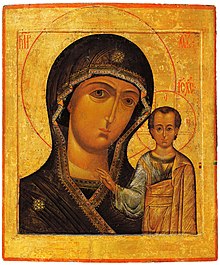
Theotokos
I have yet, to this day, to find one Catholic dogma to be in violation of any of these principles of doctrinal development. Further, it is only the Christian who rejects all creeds and councils in favor of the creed of creed-less Christianity, who rejects all doctrinal development prima facie on a fundamentalist rendering of sola scriptura. Sadly, as my article on doctrinal development demonstrates, fundamentalism does the same thing to truth that liberalism does. In fact, the fundamentalist rejects doctrinal development because it appears to be liberalism. However, doctrinal development does just the opposite: it conserves.

The plant, when it grows, conserves its uniqueness. It persists in existence through its growth. The non-growing thing decays, and fails to persist in existence precisely because it does not grow.

What about God? Are you advocating for a type of open theism?

No way.

God is completely different than (other) creation, and, the Church is His New Creation.

What about Scripture? It doesn't grow.

In one sense it doesn't, but in another sense it does. Obviously, the Church has closed the canon and there will be no more passages of Scripture added to it. However, in her doctrinal development, the Church recognizes the expansive, potent, and inestimable riches of the deposit of faith found in Sacred Scripture. In fact, a view that closes one off from development of doctrine makes the Sacred Text reductive, less potent, and expendable.

3. The primitive Church (1st century) was already Catholic, and any claim otherwise is the error of the Judaizers. 

The error of the Judaizers was to hold to the belief that the Mosaic ceremonial law and customs were to be strictly enforced in the Christian community. It is true that for the first 40-50 years of Christianity, it is was viewed primarily as a sect of Judaism. This fact, however, should not be confused with the idea that Christianity is in fact a sect of Judaism. That view is grossly incomplete and fails to grasp the universal goal of Christ's salvific work (John 1:29). Further, many of the early theological issues dealt with the gradual development of Christianity's clean break with Judaism as a religion. This is evidenced in both Galatians and Acts and portended in Christ's prophecy about the destruction of the temple (Matt 24:2). We might say it wasn't until 70 AD and the destruction of the temple that the Church could truly established her identity separate from the cult of the temple; not because she was always separate from that cult but that culturally, the temple dominated the mind share of the people.

When we examine Matthew's account more closely, it is not just a coincidence that Christ says, "not one stone here will be left upon another, which will not be torn down" and that earlier in his ministry, St. Matthew recounts that Christ called St. Peter "the rock" (Matt 16:18), that the Church is built upon stones, the cornerstone of which is Christ (Eph 2:20). In a sense, we should expect that the "old stones" of the temple were still being cast down between our Lord's ascension and the destruction of the temple.

At this point, I could really just rehash another one of my posts. Instead, I will turn your attention to my post:

Myth Buster: Constantine Founded the Catholic Church

Considering the first two paragraphs (above) and the post about Constantine, it should be clear to see how, what, and why the Church emerges as she does in the late first century. The Old Temple, and its cult, has been destroyed. The New Temple has been built, whose cornerstone is Christ, and whose steward is a rock for whom the Church will lean upon for unity until His return. Of course, we know that the great scandal of unity and the Petrine See is that it has caused many times just the opposite. But, we should not be surprised. Our Lord told us it would be so.

In conclusion, primitivism is only preferable for natural objects. However, even for natural objects that are animate, many times we prefer what is after to what is before because it is precisely in the process of the passing of time that the value of the thing comes to the fore. However, for supernatural objects, we should never prefer what is before simply because it is before. 

That is irrational, unbiblical and a-historical.

April 15, 2012

Myth Busters: Catholics Worship Idols


As I stated in my post about Catholics not worshiping Mary, I believe it is fair to start with the assumption that most people know when they are worshiping something. I get it that we can all fall into false idolatry for things like food, sex and money. However, it seems rather odd that it would be claimed of a religion that they worship something that they do not themselves claim to worship. Moreover, even given that some people worship food, sex and money, I have yet to find the first modern Protestant who desires to do away with any of these three in an effort to avoid even the possibility of idolatry. So, it does not follow from the fact that some people may, in fact, worship Catholic statues that we should do away with statues altogether out of some kind of intrepid self-made-piety.

Yet despite all this reasonableness, the objection that Catholics worship statues remains a part of popular lore.

It's time to bust some myths up in this house.  First, let me present to the jury as evidence three years of experience:

1. I have never worshiped a statue.
2. I have never felt inclined to worship a statue.
3. Catholicism has never nudged me, even in the slightest, in the direction statue worshipping.

Protestants, we found you out!
Yet when you enter into google, "Do Catholics worship ______," the power of auto-complete is quick to spit out "saint", "idol" or "the pope". Blasted google auto complete!!! Oh separated brother where art thou? Why do thou search with unending joy or mysterious fascination for blog posts and articles on Catholics worshiping statues only to confuse google? Do thou in thou own religion find the absence of statues such a farce to your religious sentiment that your only consolation is to think ill of those who have them?

Instead, I think google auto-complete reminds us of an old adage: perception is reality. 

"Look at him!" He's, he's whu, whu....
what is he doing?"
Of course, perception is not reality. Perception informs our response to reality. One can certainly respond inappropriately to reality. I can have a perception that leads me to act irrationally. I can have a perception that makes me hide in my room all day for fear that a clown with an ice-cream gun is on the loose and may find me and bury me in a pool of butter-pecan. (that actually doesn't sound too awful) All that to say, the more my perception corresponds to reality, the more my response will be appropriate to reality.

"Catholics! You worship statues!"

No we don't.

"Catholics! You worship statues!"

No we don't.

In order to write a proper response, I will now turn to Scripture and experience. I think this myth can be dispelled both through a careful study of Scriptural idolatry in relationship to the revelation of God in Christ, and through a phenomenological rumination on the nature of the use of religious images -- statues included -- in Catholic practice.

I. The Bible: Egypt, Idolatry and the Incarnation

In order to put forward their objection, those who claim Catholics worship statues often cite the following verses:
"Thou shalt not make unto thee any graven image, or any likeness of any thing that is in heaven above, or that is in the earth beneath, or that is in the water under the earth. Thou shalt not bow down thyself to them, nor serve them: for I the LORD thy God am a jealous God,visiting the iniquity of the fathers upon the children unto the third and fourth generation of them that hate me." -Exodus 20:4-5

"And ye have seen their abominations, and their idols, wood and stone, silver and gold, which were among them." -Deuteronomy 29:17

"Ye shall make you no idols nor graven image, neither rear you up a standing image, neither shall ye set up any image of stone in your land, to bow down unto it: for I am the LORD your God."-Leviticus 26:1
In turn, they claim that Catholics violate the commandment by both creating and kneeling before statues. At first blush and without any context, this would appear to be a valid objection. However, God clarifies what he means in Exodus 20:23:

"You shall not make gods of silver, nor shall you make to yourselves gods of gold."

I want you to notice how a fundamentalist reading of this passage could ruin it. Does God allow for "gods of butter pecan ice cream" not just gods of silver and gold? No, because as the Scripture declares, "You should have no other gods before me!" But wait, Mr. Fundamentalist is here to eisegete even that one:

"That must mean I can have other gods after him!" .

Thus, it is easy to see how a fundamentalist reading of almost any passage of Scripture is destined for disaster. Getting back to Exodus 20:23, proceeding the passage, God gives the children of Israel explicit instructions on various images and likenesses He wants them to create (part of the context). These were icons and symbols -- some three dimensional -- of heavenly realities; foretastes of the true Temple that was to come (Christ). Thus, God's disapprobation is very specific and has the exile in Egypt as its object. In fact, the prohibitions in the Mosaic law, even the very language of the commandments, find their proper context -- their linguistic referents -- in Egypt. Why? Because the Egyptians were, even according to the Greek historian Herodotus, "religious to a higher degree than any other people".  This is important for our case, because we should understand that Egyptians built statues for one reason:

They worshiped them as gods. 

Some habits are hard to break
Set free from the bondage of Egypt, the children of Israel had picked up a few, we could say euphemistically, "bad habits" in the course of their 430 year captivity. That's right, 430 years! Imagine the bad habits you could pick up living in a pagan society, not free to worship your God as you should, all while witnessing idolatry in every home and street corner. You might do silly things like hang national flags behind your pulpits and celebrate the inauguration of your country more than the Mother of your Savior (I digress). My point is that good ol' fashioned idolatry is really hard for us to wrap our minds around given that we are not inclined in even the least bit to worship idols in our scientifically enlightened society. Nonetheless, for the ancient Israelites, 430 years of being exposed to extreme idol worship had its effects. Think about it. God had just dramatically saved them from Egypt, performed numerous mind-boggling miracles in their midst, and they turn around and melt their gold into a baby cow and worship it.

I repeat. They worshiped a gold baby cow.

Seriously?

Yup. They worshiped a baby cow that they had just made out of their jewelry.  Ergo, it is plain to see that when God tells the children of Israel to not make statues of any kind, He is being specific:

DO NOT WORSHIP false gods. 

Come out of Egypt!

Moreover, we can know His prohibition is not against statues in general because He proscribes them in Exodus 25:17-22. In their proper context -- the worship of God alone -- they are valuable aids that point us to heavenly realities. Notice that God puts statues in a specific context: freedom from Egypt in the tabernacle of His dwelling. Idols represent just the opposite: bondage to the pagan way of living outside of the place of God's dwelling.

Fast forward to the New Testament.

St. Paul describes our salvation as a freedom from the slavery of sin, and the author of the book of Hebrews copiously goes about comparing our salvation to the exile from Egypt. Christ is described as the New Temple (John 2:19) and the Bread from Heaven (John 6:35). His Mother is the Ark of the New Covenant (Revelation 11:19). All of this culminating in St. Paul's description of Christ as the "image of the invisible God" (Colossians 1:15).

So let's connect the dots. Christ becomes for us the true image of God. Through the Incarnation, we are given not just explicit instructions on how to build heavenly images, but rather we are given an explicit encounter with the very Image Himself! Therefore, all Christian religious art is a response to this Divine encounter. Notice that St. John and St. Peter both go un-rebuked in the gospels when they are inclined to build tabernacles at the Transfiguration (Matthew 17, Luke 8, Mark 9). Religious images -- statues included -- reflect a natural response to an encounter with the Revelation of God. The true image of God given to us is no longer found in the shadowiness of type or analogy but rather in the concrete reality of the person of His Son. A Catholic statue, like the one at the top of this post, draws us into a truth that the statue re-presents to us, grounded in the person of Jesus Christ.

But some will still persist, "But where are the explicit instruction to do so?"

I say in response, that the reason for the explicit instructions in the Old Testament was the implicit assumption that the children of Israel had not encountered the true image of God. As Christians, the explicit revelation of the true image of God gives us an implicit freedom to respond to the true image in works of art that glorify God. We need no longer explicit instructions from God -- He has given us an explicit encounter with Himself. Alleluia! What the prophets could not see and the burning bush concealed, we are invited to behold in the person of Christ! Every Christian statue is intended to point us to a reality not that we conjure, but a Reality that we know.


II. A Phenomenology of Worship: God Is The Only Object

At this point, I am comfortable saying that Scripture, when read in its full counsel, does not generally forbid the making of statues -- especially in light of the Incarnation. If so, what then are Catholics doing when they kneel in front of them?

"Worshiping them!"

"No we aren't."

Let me explain. Catholic Churches are full of images and statues of Christ, the saints, and His Mother because we are the people of God who, as I mentioned, received the encounter with His Image -- Christ! We surround ourselves with images of the "great cloud of witnesses", and like a family photo album, relish in our heavenly fraternity.

image h/t: Taylor Marshall
These images and statues, especially of Our Lord and Our Lady, serve to focus our attention "on things that are above," as St. Paul instructs (Colossians 3:2). In other words, they can assist us in obtaining a frame of mind, an attitude, of prayer.

No practicing Catholic is worshiping a statue when they kneel before it. If the statue or image is of a saint, the Catholic might ask the saint to pray for them, but they don't think the saint is in the statue or the statue is the saint. (If you disagree with communicating with saints, I've got other posts for that. See here, here, here and here) When I stare at an image of Christ, like the one above (in fact I just stared at a statue of the image above during prayer time this evening), the image merely serves as a tool to direct my mind to Christ. Through the image, I adore the Sacred Heart of Jesus -- the real one -- and meditate on His inestimable Divine Mercy.

Now, if I were truly going to worship a statue or image, somewhere in my experience the object of my adoration would need to shift -- like the golden baby cow -- from Christ to the thing, but it doesn't. It never has. Even when I kiss the Holy Cross, like we do on Good Friday, I do not imagine for a moment that the cross I'm kissing is the actual Cross of Christ. However, I don't have access to that Cross. So, instead I kiss the cross at my parish in procession with all the faithful to show God -- whom I'm worshiping! -- that I love Him. In fact, even if I were venerating the true Cross, I would only be venerating it in virtue of the fact that God had hung on it!

Did you get that?

I'm worshiping God.

Not. The. Statue.

So, leave it alone. The myth that is. Oh yeah, and while you are at it, lay off google and go get yourself a statue or something and stop acting so irreligious.


October 10, 2011

Fake Fallibility: A Protestant Myth Worth Busting

Last Monday, I considered how everyone has a pope. Today, I want to bust a myth. However, instead of busting a myth about Catholicism, I want to bust a Protestant myth. (I'm so gosh darn warm and fuzzy).

I'm a lot like another ecumenist I know
Of course, no Protestant walks around saying that they have a Pope. Well, almost. My generous interlocutor in the comboxes of my last post was kind enough to bring to my attention that Protestants say that they are fallible. Unlike the papists who believe that their pope or Magisterium under a special grace of the Holy Spirit--at infrequent times and on important matters regarding the eternal destiny of the soul's of men on earth--can teach infallibly, the Protestants believe that on matters where one's soul could be damned to hell for believing something false, they could be all "well-golly-garsh", marbles in their mouth, caught with their theological pants down; in a word: fallible

I have two problems with this thought. (1) A tuquoque (you-too!) argument is hiding right around the corner. This argument says, "Catholics are fallible too! How can they know their pope/Magisterium or more, how can they know what their authorities teach? (at this point, the arguer looks to his crowd with delight, awaiting their applause)

The difference between the Protestant and Catholic methods for obtaining theological truth is that one (the Protestant) method cannot evidence results that warrant trusting it. We all trust our cognitive faculty to know stuff. That is beside the point. Doubting our cognitive faculty's ability to obtain truth is counterintuitive since we would also need to doubt the very premise that leads to our doubt--which would be just as rational as the doubt (in the premise) itself. Thus it is rational to dismiss this kind of doubt. What we can or should doubt is methods for obtaining truth. These methods can be more or less reliable. The results of the Protestant method for obtaining theological truth (sola or solo scriptura) do not warrant trusting that method. See here or here for evidence. (I will dedicate an entire post to this later)

However, the Catholic merely uses his cognitive faculty to identify the "Church" and then relies upon Her to authoritatively and infallibly interpret the deposit of faith. Moreover, no Protestant--I think--would try to say that "There are 7 Sacraments" is as ambiguous or "“exponentially multivocal, polysemic, and multivalent, [and] semantically indeterminate” as the Bible (see last link) under the Protestant paradigm. In other words, every Protestant sect wielding the method of sola scriptura has not arrived at anything remotely approximating the clarity of "There are 7 Sacraments". On the contrary, one group says there are no Sacraments, another 1, while another 3. Sure, each idea is clear to them. But that is not the point. No one is trying to arrive at a "true-for-me" theological truth, but rather a universal theological truth. In other words, I'm worried about a method that has objects both falling if dropped and not falling if dropped.

On a last note, it is interesting as well that many non-Catholic interlocutors will note that this or that parish is unorthodox as an attempt to evidence how poorly the Catholic paradigm works for its adherents. Ironically, it apparently works well enough that a non-Catholic can spot Catholic orthodoxy fairly easily without even personally subscribing to the paradigm.

Kids, its time to go home.

Which leads me to my second contention: (2) no Protestant confession, statement of faith, or major doctrinal position has EVER been significantly or substantively revised. In other words, what bite is there in being theologically fallible if one never comes to that "a-hah" moment where one would concede (not real quotes):
"Well guys, we totally blew it. That whole 'Once-Saved-Always-Saved' bit...yeah...not so much"-Albert Mohler, President of the Southern Baptist Denomination 
"We are here to announce that con-substantiation is kind of silly. We now see that if the God who said, "Let there be light" and it was light said "this is my body", the 'this' is probably his body (we are updating the website)"-Dr. Harrison, President of The Lutheran Church-Missouri Synod 
"Dear members, we will humbly announce this day that speaking in tongues is not a necessary experience for all Christians nor a necessary sign of the baptism of the Holy Spirit. Don't be alarmed. We have been fallible all this time. I know, I know that many of you have based your entire existence on this belief. We will move past this, I promise." George Wood, General Superintendent of the Assemblies of God 
"You may use instruments in the worship service. We know many of you already were, but we just realized that Scripture doesn't teach against it. We're sorry for the confusion and hope to not make any more mistakes like this in the future. Every church will be receiving a drum kit, keyboard, and gibson guitar in the mail (some assembly required)" --Some pastor, trying to speak for the Churches of Christ
"That's taking it too far!", says quasi-pope person
Seriously, chest-bumping about "look how fallible we are" is little more than false pride or a version of the doubt-train heading toward "Mt. Solipsism". Of course, the individual Protestant, I suppose, could say that they ultimately always have the right to change ship. That per denominations, nobody acts as if they are fallible, but the individual Protestant always lives with the tension of fallibility and thus could always make the kind of about-face changes referenced above. However, I would immediately ask, if not what they just described, what in the world is Ephesians 4:14 describing if not them:
"That henceforth we be no more children tossed to and fro, and carried about with every wind of doctrine by the wickedness of men, by cunning craftiness, by which they lie in wait to deceive" 
Moreover, I don't think any Protestant holds to any particular belief with the type of fallible tension we are suppose to believe they do (or I did!). Go to a Sunday school class or talk to a child to find out just how fallible each individual Christian is. I have respect for those who might be reading this, who aren't teaching Sunday school classes or indoctrinating children. They feel the tension of fallibility due to the unreliability of their method for obtaining theological truth. They are in a theological pregnant pause; one that will either birth a move to Rome or a fundamentalist move to one particular denomination (that is my common observation). Of course, the third option is that they live in the pregnant pause all of their lives and become emergent.

The point is that the Protestant claim to "fallibility" is a little more than stating the obvious. The Pope is fallible most of the time. So, were St. Peter and St. Paul. I am. Who cares. The point is that a lot of the time we have methods at our disposal to obtain truth with a degree of certainty correlative to the type of knowledge we are obtaining. In the case of Christian theology, everyone acts like they are infallible--eternity is at stake. There is no evidence other than church shopping to the contrary. Thus, the claim of "fallibility" is a myth or is at least an ad oculos, ad nauseam argument (irrelevant), I will not believe until I see some major denomination make a statement evidencing the contrary.


Wait a minute, I found one here. Maybe they are fallible after all...


Did you like what you read? Add me to your RSS feed or "join the journey" in the sidebar to your right. You can also follow me on Twitter or Facebook.

August 31, 2011

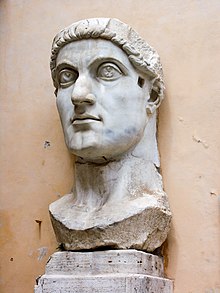
Myth Buster: Constantine Founded the Catholic Church

Is this Constantine admiring the Church he founded?
The Catholic Church claims that she was founded by Christ. Some Evangelicals and fundamentalists claim that she was founded by the emperor Constantine (c.272-337).

The idea for this post came from a friend of mine, and funny as it may be, I first thought that this was a rather lame myth (still do).

"Who thought that?" I asked myself. I mean, come on, really, St. Ignatius of Antioch was calling the Church Christ founded the "Catholic Church" in the first century and there is evidence that this verbiage was a unique identifier of the Church all the way back to the mid first century. (Note: the term Christian was a term given to the followers of Christ by unbelievers--they (unbelievers) also called themselves Nazarenes--Acts 24. In other words, believers of Christ called themselves Catholics and the world called them Christians*)


And then I turned on the TV and heard a preacher talking about how Constantine changed the Sabbath day and founded the Catholic Church. Apparently the myth persists (along with dogs can fly). I don't like myths that keep people from the truth.

This myth assumes three things:

1. Christians did not worship on Sunday before Constantine

2. Constantine had a significant sway in the Christian Church

3. The Roman Catholic Church did not exist before Constantine

#3 runs concomitant with the idea that The Council of Sardica established the primacy of the Roman bishop thereby inaugurating the Roman Catholic Church in some sense.

Reply to #1- Christians worshiped on the Lord's day and not the Sabbath day

St. Ignatius to the Magnesians:
"We have seen how former adherents of the ancient customs have since attained to a new hope; so that they have given up keeping the sabbath, and now order their lives by the Lord's Day instead, the day when life first dawned for us, thanks to Him and His death."
Barnabas, The Epistle of Barnabas, 120A.D.:
"Wherefore, also, we keep the eighth day with joyfulness, the day, also, on which Jesus rose again from the dead"
St. Justin Martyr, The First Apology, 155 A..D.:
"Sunday is the day on which we all hold our common assembly, because it is the first day on which God, having wrought a change in the darkness, made the world; and Jesus Christ our savior , on the same day rose from the dead."
There are two creations. In the first creation, the day of rest was the Sabbath. It was the day God's work was completed. When Christ came, he presented himself as the creator (John 1:3) and the synoptic Gospels unanimously recognize him as the "Lord of the Sabbath" (Matt 12:8, Mark 2:28, Luke 6:5).

Christ came to fulfill not abolish the Old Covenant. Through his entire ministry, he came to fulfill "all righteousness" (Matt 3:15). Thus, in the new creation, Christ established a new Sabbath, the day of his rest, or rather the day that he completed his work. Of course, this is Friday and no one believes that the Christian day of worship is Friday. Yet we know that three days latter he rose again, and so the "Lord's Day" would be that day that Christ rose from the grave.

In the Didache, an early record of apostolic teaching (c.60-100), we find evidence that Christians began to meet on the "Lord's day":
"And on the Lord's own day gather yourselves together and break bread and give thanks, first confessing your transgressions, that your sacrifice may be pure. And let no man, having his dispute with his fellow, join your assembly until they have been reconciled, that your sacrifice may not be defiled; for this sacrifice it is that was spoken of by the Lord; In every place and at every time offer me a pure sacrifice; for I am a great king, saith the Lord, and My name is wonderful among the nations."-14:1-3
The teleological ordering of the temple cult and Judaism at large was the first creation, the genesis of God's relation to mankind. Christianity, however, is ordered to the new creation and as such the new, final and definitive revelation of God in Christ Jesus. Those who demand that Christians worship on the first "day of rest" deny the early Christian practice as it relates to the revelation of Jesus Christ, teach the error of the Judaizers who claimed that one had to follow the Jewish customs to be Christian, and more importantly deny one of the greatest proofs of Christ's resurrection.

Pope Benedict XVI in Jesus of Nazareth, Part 2, points out the fact that the cult of the temple would not come to a complete end until after Christ's ascension. Christ prophesied that the temple would be laid to waist, and it was at the hands of the Romans in 70 AD that this would come to pass. Moreover, the sabbath was so deeply imbedded into the culture, psychology and religious practice of Jews it is hard to imagine what could possibly augment this practice. It is precisely because the early Jews ceased to worship on the Sabbath but instead worshiped on the "Lord's Day"--Sunday--that we have evidence that something monumental happened on Sunday, something so great as to literally re-order their entire psychology. So it is, that in Christ, God re-orders the entire cosmos to the new creation, and the rhythm of worship would forever be ordered to his glorious work in His Son.
 
Reply to #2 Constantine's influence was limited but welcome
What did Constantine do in the Edict of Milan? Did Constantine established a new Sabbath?

First, the Edict of Milan established religious tolerance of all religions. The edict reads:
"And thus by this wholesome counsel and most upright provision we thought to arrange that no one whatsoever should be denied the opportunity to give his heart to the observance of the Christian religion, of that religion which he should think best for himself, so that the Supreme Deity, to whose worship we freely yield our hearts) may show in all things His usual favor and benevolence."
Christianity had severely dis-settled the temple economy of the Roman religions. In turn, the second half of the edict discusses the proper way of restoring property to Christians since it was a common practice to extort Christians since their religion had so significantly diminished the Roman economic system of temple sacrifice and feasts.

Considering #1, we should reject that notion that Constantine established Sunday as the day of worship. Instead, the infamous Edict of Constantine (c.321), should be understood as a way Constantine integrated his new and immature Christian faith into his administrative role as emperor. In no way was Constantine the leader of the Christian Church, nor was his edict directed at Christians only. The fact that the Romans worshiped the sun (whether on Sunday or not) can be understood, instead of some pernicious conspiracy, as a way that God was preparing Gentiles for His Son, who would rise again--like the Phoenix--on Sunday.

Reply #3 The Catholic Church existed before Constantine, and the primacy of the Roman Bishop was affirmed before the Council of Sardica

Evidence A- The First Epistle of St. Clement

Written in the second century, the fourth Pope is writing to the Corinthian church founded by St. Paul. Pope St. Clement opens the letter, "The Church of God which sojourns at Rome, to the Church of God sojourning at Corinth". Clearly, both (1) the Church at Rome existed at this time and (2) churches by this time are being identified by location not congregation. 

The entire tone of the letter is authoritative. Why, we should ask, is the pastor of the church in Rome writing instructively to the church in Corinth? Most striking about the overall language, tone and style of the letter is Pope St. Clement's command that those who were in schism in Corinth submit to the bishop, and "[lay] aside the proud and arrogant self-confidence of your tongue. For it is better for you that ye should occupy a humble but honorable place in the flock of Christ, than that, being highly exalted, ye should be cast out from the hope of His people". Pope St. Clement also makes one of the most obvious and direct references to apostolic succession.

Evidence B- St. Ireneaus, St. Clement of Alexandria, Tertullian, Origen, St. Cyprian and St. John of Chrysostom

All of these early churchmen witness to the Petrine office. Against the claim that the primacy of the bishop of Rome is grounded in the proclamations of Sardica, in each of their writings we find direct evidence that the early church understood the preeminence of St. Peter, the perpetuation of the apostolic offices and the primitive transfer of the locus of that chair to Rome. Here are just a few examples:
"Peter, upon whom is built the Church of Christ, against which the gates of hell shall not prevail, left only one epistle of acknowledged genuinity. Let us concede also a second, which however is doubtful." Origen, Commentaries on John 5,3
"[T]he blessed Peter, the chosen, the preeminent, the first among the disciples, for whom alone with himself the Savior paid the tribute [Matt. 17:27], quickly grasped and understood their meaning. And what does he say? ‘Behold, we have left all and have followed you’ [Matt. 19:27; Mark 10:28]" Clement of Alexandria, Who Is the Rich Man That Is Saved? 21:3–5
"For what purpose did He shed His blood? It was that He might win these sheep which he entrusted to Peter and his successors." (St. John of Chysostom, De Sacerdotio, 53
Evidence C- The Bible Teaches it

For this purpose, I will leave you with a few passages of Scripture. The purpose is to simply evidence the possibility of Scripture establishing the primacy of St. Peter and not to prove the papacy:
"And I also, I say unto thee that thou art Peter, and on this rock I will build my assembly, and hades' gates shall not prevail against it." - Matt 16:18
"But I have prayed for thee [Peter], that thy faith fail not: and thou, being once converted, confirm thy brethren." -Luke 22:32
"And when there had been much disputing, Peter, rising up, said to them: Men, brethren, you know, that in former days God made choice among us, that by my mouth the Gentiles should hear the word of the gospel, and believe." -Acts 15:7
In sum, the Roman Catholic Church was alive and kicking 250 years (since the fall of Jerusalem) before Constantine. The bishop in Rome had authority, and the early Church recognized both apostolic succession and in particular the unique succession of the Petrine office. What Constantine did was provide religious asylum in Rome to Christians who had previously been persecuted. In addition, the early Christians worshiped on Sunday well before Constantine because Christianity is ordered to the new creation not the first creation. Therefore, it is obvious and beyond argument that Constantine did not found the Roman Catholic Church through either the Edict of Milan or in his influence on the Council of Sardica. The claim is a myth and should be rejected as propaganda meant to further schismatic religions.

__________________________________________________________


*Bonus myth busted that the term "Catholic" is less authentically Christian than the general term Christian, when in fact, the term Christian was a general and ambiguous term, albeit one giving one great honor if it was the cause of your personal suffering (1 Pet 4:16), whereas the term Catholic was used to distinguish between those who followed the Apostolic teaching that would spread to the entire world versus those who started sects or lived in schism from Christ's Church.

August 18, 2011

Myth Busters: The Impeccability of the Pope


This just in: The Pope can sin.

Does this disprove the Catholic dogma that the Pope, when teaching ex cathedra, is graced by the Holy Spirit so that he cannot teach error--i.e., he can teach infallibly? 

The typical argument has two parts:

1. If the Pope can sin, he cannot be infallible.

2. There is Scriptural evidence that St. Peter (the alleged first Pope) taught error; therefore, since the first Pope taught error, the Pope is not protected from teaching error.

Infallibility is Incompatible with Sin = Bible Fail #1

You can find this argument in the "chick" tracts that were so prevalent at one time, but thank God you don't see them as much. Nonetheless, the argument still persists (because of the Internet) among the ignorant, hence me typing this.

I would agree with the claim, if infallibility had to be able to comport with man unaided by supernatural grace. However, no one is claiming that. The simple premise that by God's grace the Pope, in special moments is able--not in his own ability but through the power of God--to teach infallibly, defeats the objection sufficiently. In addition--and for the benefit of the ignorant objection, the Scriptures bare witness to a direct account of St. Peter exercising a charism that must be distinguished from inspiration and if so can only be described as infallibility. In Acts 2:16, St. Peter says:
"This is that which was spoken of by the prophet Joel."
(1)  In Luke 4:21, Christ starts his earthly ministry doing the same thing: infallibly interpreting Scripture.

(2) In Acts, Luke is inspired to write the record of what St. Peter says. St. Peter is not inspired. If he is not inspired, then we must ask by what charism he is interpreting the O.T.?

(3) We know he must be infallibly interpreting the O.T. because his claim is not metaphorical--baring possible other interpretations--but is concrete and literal. This (today) = that (O.T. passage).

(4) Therefore, in the Scriptures we have direct evidence of St. Peter, the first Pope, infallibly interpreting Scripture and discerning the times, teaching it to the people and beginning the ministry of the Church very much the same way the ministry of Christ began.

"But Brent," my interlocutor might say, "This passage was so obviously fulfilled in their hearing. Everyone would have interpreted Joel that way."

Not so. A careful consideration of Joel's words do not support this reading. St. Peter quotes Joel and says:
"And it shall come to pass, in the last days, (saith the Lord,) I will pour out of my Spirit upon all flesh: and your sons and your daughters shall prophesy, and your young men shall see visions, and your old men shall dream dreams. And upon my servants indeed, and upon my handmaids will I pour out in those days of my spirit, and they shall prophesy. And I will shew wonders in the heaven above, and signs on the earth beneath: blood and fire, and vapor of smoke..." (Acts 2:17-20)
If one were in the crowd that day, I would imagine they could have easily said, "Where are the dreams? The visions? What about prophecy? This man Peter is no man of God, but an opportunist who misinterprets Scripture! [Let's start our own church!]"

Because St. Peter was speaking under the charism of infallibility and because, by this time, it was clear to everyone who was following the cult of Christ that St. Peter was the mouthpiece for the Lord, no one opposed the teaching of St. Peter.

St. Peter Taught Error = Bible Fail #2

There are two parts to this claim: (1) St. Peter, through his actions, taught error regarding the essence of the Gospel and (2) St. Paul confronted him in Galatians 2:11, therefore "look" St. Peter got "punked" or something like that.

First, (1) fails Biblically. St. Peter, nowhere, teaches what is implied in the argument. What is implied, is that St. Peter taught something contrary to what the Scriptures say regarding what is necessary for salvation, but what we have evidence of is that St. Peter acted in a way worthy of confrontation (see Bible Fail #1). Second, the Bible gives direct evidence that St. Peter actually taught explicitly the exact opposite of what is claimed:
"And the apostles and ancients assembled to consider of this matter. And when there had been much disputing, Peter, rising up [don't miss the imagery of everyone reclined in the typical Jewish way and then one of them standing up--this is not the normal way someone talks in this setting-Matt 9:10], said to them: Men, brethren, you know, that in former days God made choice among us, that by my mouth the Gentiles should hear the word of the gospel, and believe. And God, who knoweth the hearts, gave testimony, giving unto them the Holy Ghost, as well as to us; And put no difference between us and them [Jew/Gentile], purifying their hearts by faith. Now therefore, why tempt you God to put a yoke upon the necks of the disciples, which neither our fathers nor we have been able to bear? But by the grace of the Lord Jesus Christ, we believe to be saved, in like manner as they also."
Regarding (2), we have admitted that St. Peter can sin. St. Peter sinning is not incompatible with him being able to teach infallibly. Further, what St. Paul does in Galatians 2:11 is preceded by his concession in Galatians 1 that even upon receiving a Revelation directly from Christ he only saw St. Peter (save James), and "tarried with him 15 days" (v.18). In Galatians 2:9 (just two versus before), he admits that St. Peter is reputed as a "pillar". Therefore, we should not misinterpret or malign St. Paul's confrontation with St. Peter and imagine it more than it is. Simply put, St. Paul is apposing the hypocrisy of St. Peter's actions not correcting his teaching.

End Note:
I will admit that in this post I have not established that the Pope does, in fact, teach infallibly. That is for a different day. However, what I have demonstrated is that the testimony of Scripture and the admitted fact that Pope's sin does not make the teaching regarding the gift of infallibility per impossible.

Peace to you on your journey.

August 13, 2011

Myth Busters: Catholics Re-Sacrifice Christ

Is this...

...incompatible with this?


First, let me clear the air by saying that the Catholic Church has never, does not, nor will she ever teach that the Mass sacrifices Christ over again. Don't think that the Catholic Church's position has anything to do with Protestants "finding us out". Instead, Catholics claim that they do not re-sacrifice Christ because some Protestants believe that Catholic teaching must of necessity lead to the logical conclusion that we re-sacrifice Christ. As one example, over at the so called "Christian Apologetics Research and Ministry (CARM)" website, they claim:
We certainly do not want to misrepresent Roman Catholic theology (I bet they stay up at night worried about that), but we must ask how it is possible for the Mass to not be a re-sacrifice of Christ when the Mass is called a divine sacrifice (CCC, 1068) that is done over and over again.  We are told that "the sacrifice of Christ and the sacrifice of the Eucharist are one single sacrifice"; (CCC, 1367); that it is an unbloody offering that is propitiatory, (CCC, 1367); that it can make reparation of sins, (CCC, 1414); and is to be considered a true and proper sacrifice (The Catholic Encyclopedia, topic: "Sacrifice of the Mass").  We must conclude that it is a sacrifice that occurs over and over again and since it is said to be a true and proper sacrifice that is propitiatory, then logically it must be a re-sacrifice of Christ.  If it is not, then how can it be called a sacrifice of Christ?  Also, how could it be propitiatory if it is not a sacrifice of Christ since it is Christ's offering on the cross that is itself propitiatory?
The crux of the "logic" of the conclusion is in the question "how is it possible" (and when apparently to CARM it goes unanswered), then logically "it must" follow that Catholics "re-sacrifice Christ". The "logic" goes as follows:

1. Catholics call every Mass a sacrifice
2. There is "one single sacrifice"
3. Since I cannot figure out how #1 and #2 are compatible*
4. Therefore, the Mass because it happens more than once "pretends" (they would have to believe this) to re-sacrifice Christ

Using this same "logic", let's try another Biblical truth:

1. God says that he is not a man (Num 23:19; and it is fairly obvious that since God is outside of creation he is not a man), and Jesus calls himself a man.
2. Christians say that Jesus is God
3. Since I cannot figure out how #1 and #2 are compatible*
4. Therefore, Jesus is not God because God is not a man and Jesus is a man

Notice that the crux of the "logic" in both is #3. It is in our understanding not, per se, in the thing itself. In other words, in both cases, if one could understand how #1 and #2 are compatible, then #4 is not true.

How does any Christian appropriate the body and blood of Christ?

This is an important question because when examined closely, I think I can show that any Christian practice that implies salvation or the remission of sins that is done over and over again (excluding baptism which is done once), using the same "logic" wielded against Catholics, will prove that they either (1) re-sacrifice Christ or (2) do not participate with Christ's sacrifice or (3) are playing pretend. I will then try to show how the logic of the Mass as a sacrifice proves that it (1) does not re-sacrifice Christ, (2) is a real, sacramental and supernatural participation with the one sacrifice of Christ, and (3) is not a pretend show.

"Jesus, forgive me of my sins, come into my heart, be the Lord of my life. Amen"

"What can wash away my sins? Nothing but the blood of Jesus"

"I have faith in Jesus as the only sacrifice for my sins, therefore I am saved"

How, I might ask, does this happen? In the O.T. passover meal, the lamb that was slaughtered, whose blood was put on the lintel, was cooked and the Israelites consumed it. They participated in the sacrifice through partaking of the lamb that was slain. Moreover, the passover was a memorial of the "One Passover", on the night that Israel came out of Egypt. The parallels are obvious, but the analogy is incomplete because the passover only prefigures and foreshadows what Christ truly is: the Lamb of God.

Christian non-Catholics believe that Christ's sacrifice is the only sacrifice that can save them. True. Yet, how do they appropriate this sacrifice, personally?

"By faith, of course," the ready Protestant quickly replies.

Okay, great. So what does your faith appropriate?

"The forgiveness of sins."

How are your sins forgiven?

"By the sacrifice of Christ."

So, let me ask you a question. If your faith appropriates forgiveness, do you receive that forgiveness in the present? In other words, when you ask for forgiveness or appropriate the mercy of God, do you experience today, and then when you appropriate it on another day, do you experience it then?

"Sure"

Here's my problem. To appropriate the sacrifice of Christ daily, necessarily requires that somehow there is a real participation in Christ's sacrifice. However, according to the Protestant "logic", it cannot be known how that is possible. Therefore, every Protestant must be re-sacrificing Christ.

I can literally hear the objections screaming in my ear. So keep reading before you leave a comment. The escape goat for the Protestant is that they do not say that their act of faith is a "sacrifice", therefore and unlike the Catholic, they do not re-sacrifice Christ again. What I say is that if it is a real-participation then it must, in essence, share in nature with what it is participating.

When have you ever participated in something and not been doing what you participated in?

According to the Protestant "logic" they must be re-sacrificing Christ if they are truly participating in His sacrifice. If the "logic" is bad, then they are not truly participating in the sacrifice of Christ. If they are not truly participating in the sacrifice of Christ, then they are just pretending to participate in the sacrifice of Christ.

In order to get this all worked out, we have to demonstrate how these two propositions are compatible (bearing in mind that the Protestant does not believe they are, does not call their participation a sacrifice, and thus the resolution only bears on the necessary conclusion regarding the Mass):
1. Catholics call every Mass a sacrifice
2. There is "one single sacrifice"
Let us return to the Last Supper. I have seen it argued that it is not possible that our Lord was asking them to partake of his body and blood. This, according to the argument, would have been against the "Bible", a pagan practice, and our Lord could have simply cut off a piece of his flesh and given it to them instead. Again, one could make a similar argument against the Incarnation. God becoming man is "against the Bible", more in line with the pagan view of deities, and God could have simply saved us another way. Both arguments fail to understand who Christ is, and instead of submitting to the revelation of God in the person of Christ, both arguments affirm only what makes sense to our natural intuition.

Who is Christ? He is truly God. The God who prefigured His Son's coming through a passover meal that was eaten, over and over again, for 1,300 of years. Yet, the blood of lambs and goats could not bring us salvation. Salvation comes through the Lord. His sacrifice on the cross is the definitive, once and for all sacrifice that brings remission of sins. How do we participate in this? Pope Benedict XVI in God is Near Us, says that the Last Supper and Calvary have an inextricable link to each other. At the Last Supper, the cup is the cup of his blood, the blood of the covenant. The bread is his body, which is broken for us. Without Calvary, the Last Supper was simply a meal. Without the Last Supper, Calvary appears for us only an execution.

What was prefigured in shadows in the Passover, is made real in the Last Supper. Christ institutes the new meal, and in that meal we are again asked to eat. However, unlike the lamb in our first exile whose flesh merely pointed forward to the coming King, the new Lamb is given to us in the Eucharistic feast during our exile from earth to heaven, and unlike the Passover's dramatic effect, the Eucharist is a real, supernatural participation with our crucified and risen Lord with a real effect correlative to its eternal and supernatural cause.

When John is taken up to heaven in the book of Revelation, he sees our Lord "looking as if [he] had been slain" (Rev 5:6). Christ was not "slain again", but rather his once and for all sacrifice perpetually and eternally acts, securing his perpetual and eternal victory over death, hell and the grave (Rev 1:18). 

As a supernatural participation in that sacrifice, the Eucharist must be a sacrifice. Qua supernatural, Christ's sacrifice is not subjected to the limits of time, but transcends time. Yet when we speak of the Eucharist we use language that is natural and supernatural. We act in time and space, but Christ's action transcends time and space. We speak of it as a singular sacrifice, yet we do it again and again, and therefore we can say there are millions of Eucharistic sacrifices offered throughout the world every year, the cause of which is the One Sacrifice.

The Mass is a sacrifice precisely because it shares essentially in the unique, once-and-for-all Sacrifice of calvary. The "how" is supernatural, and the "why" is explained in our Lord's words at the Last Supper. The cup he held was truly "the blood of the new and everlasting covenant", and the words he gave the Apostles--"it is poured out" (present participle-Δ̓ÎșÏ‡Ï…ÎœÎœÎż́ÎŒÎ”ÎœÎżÎœ)--existentially links the Eucharistic miracle with the eternal "present" of the sacrifice of Calvary.

As the Catechism teaches:
The Holy Sacrifice makes present the one sacrifice of Christ the Savior and includes the Church's offering. The terms holy sacrifice of the Mass, "sacrifice of praise," spiritual sacrifice, pure and holy sacrifice are also used, since it completes and surpasses all the sacrifices of the Old Covenant. CCC 1330
And regarding the Catholic priest, acting in the person of Christ (in persona Christi):
"In the sacrifice of the Mass they make present again and apply, until the coming of the Lord, the unique sacrifice of the New Testament, that namely of Christ offering himself once for all a spotless victim to the Father." From this unique sacrifice their whole priestly ministry draws its strength. CCC 1566
Calvary is not a spectator event. We must truly come to the foot of the cross. In the natural, time travel is impossible. Christ, as our lover, is not content with just sending us love notes nor was he interested in instituting another ineffective ritual. He wants to give himself to us, and he does this through his Sacrifice at calvary in the supernatural unbloody sacrament of the Holy Eucharist.  

Mass is not theater. It is reality. We come to calvary to drink from his side, and eat from the Tree of Life. The Mass is a true participation in his sacrifice, and therefore must be described as a true sacrifice. Through the Catholic priesthood, Christ enjoins us to himself, allows us to offer--through his Sacrifice--our bodies as a living sacrifice, which is our acceptable act of worship (Rom 12:1). As Catholics, we do not re-sacrifice Christ. Instead, we truly participate in that sacrifice, and proclaim his death until he comes in glory.
"For from the rising of the sun even to the going down, my name is great among the Gentiles, and in every place there is sacrifice, and there is offered to my name a clean oblation: for my name is great among the Gentiles, saith the Lord of hosts."-Malachi 1:11

good articles on the Mass as a Sacrifice:
NewTheologicalMovement
CalledtoCommunion
Catholic Answers

August 10, 2011

Myth Busters: Catholics Worship Mary

Queen Sheba showing honor to King Solomon--NOT WORSHIPING HIM
Let's start with an assumption: most people know when they are worshiping something. Is that fair? 

I get it that we can all fall into false idolatry for things like food, sex and money. However, it seems rather odd that it would be claimed of a religion that they worship something that they do not themselves claim to worship. Dude says, "Hindu, you worship a cow!" Hindu says, "Yeah, so what." = FAIL

Yet, it is a common Protestant objection to Catholicism that Catholics worship Mary. I've been Catholic for 3 years now and have not once worshiped Mary. In fact, the charge seems prima facie and a posteriori false. Nonetheless, the charge against Catholicism still flies around as popularly as the chant "We will rock you" does at a sporting event.

I've been thinking (proceed with caution). Is the problem that some Protestants are equating "(some) Catholics worship Mary" with "Catholicism teaches the worship of Mary"? This is a very charitable distinction and I will grant the former without granting the later. This is not troubling because I could easily argue the following using the same logic:
  • (some) Protestants worship the Bible, but Protestantism doesn't teach worship of the Bible
  • (some) Protestants handle snakes, but Protestantism doesn't teach the handling of snakes
  • (some) Protestants in the South worship football, but Protestantism doesn't teach the worship of the SEC
  • (some) Protestants use contraception that is against 1,900 years of unanimous Christian teaching, but Protestantism doesn't...well almost
These are charitable (90%) and honest ways of looking at the issue. Do some Catholics worship Mary? Yes, but not because they are good Catholics. I had the pleasure of entering the Church in an immigrant parish. The catechist there informed me that the average immigrant from South/Central America that identified themselves as "Catholic" was mostly pagan and had to be approached as someone with little to no knowledge of the faith. Their faith was a syncretistic concoction of parts of Catholicism and lots of their local, pagan religions. These individuals had to have a complete conversion to Christ, something that obviously had never taken place. This is very sad, but cannot be used as evidence of the effects of Catholic teaching. Worship of Mary is in fact the effect of ignoring Catholic teaching.

Similarly, I knew many Baptists who used the theology of "once saved always saved" as an American Express Sin card to purchase their favorite vices every weekend. In the spirit of the local religion of hedonism, these Christians used a part of their faith mixed with the local belief system to make themselves awful witnesses of Jesus Christ. The question is begged, "Do Baptists believe that you should "sin it up" on Saturday and ask for forgiveness on Sunday?" Of course not. But the lack of charity in such a claim is equally found in the claim that "Catholics worship Mary" as if to imply that Mary-worship is Catholic teaching.

A few thoughts about The Blessed Virgin...

1. In order to worship Mary you must worship a false Mary.

She is the Mother of Christ. She will not allow, even for a moment, her children to give her the worship that is due only to God. She eternally says, "Do what he says". If someone begins to worship Mary, they have created a false Mary in their mind. They are not relating to the Blessed Virgin, but rather have concocted a different Mother so as to worship her. Mary would never allow it. As the new Eve, she perpetually points us to the Tree of Life and to the fruit of her womb: Christ Jesus our Lord.

2. Mary is Due the Highest Honor Afforded a Human Being

Honoring Mary recognizes her privileged place in the story of salvation history. As the Catechism (963) states, "Since the Virgin Mary's role in the mystery of Christ and the Spirit has been treated, it is fitting now to consider her place in the mystery of the Church. "The Virgin Mary . . . is acknowledged and honored as being truly the Mother of God and of the redeemer. . . . She is 'clearly the mother of the members of Christ' . . . since she has by her charity joined in bringing about the birth of believers in the Church, who are members of its head." "Mary, Mother of Christ, Mother of the Church."

And also in 2679, "Mary is the perfect Orans (pray-er), a figure of the Church. When we pray to her, we are adhering with her to the plan of the Father, who sends his Son to save all men. Like the beloved disciple we welcome Jesus' mother into our homes, for she has become the mother of all the living. We can pray with and to her. The prayer of the Church is sustained by the prayer of Mary and united with it in hope."

And lastly in 971, "This very special devotion . . . differs essentially from the adoration which is given to the incarnate Word and equally to the Father and the Holy Spirit, and greatly fosters this adoration."

My honor for Mary is directly proportionate to my experience of gratitude for what she offers us all: Our Lord. Making the fundamental distinction between Marian devotion and the worship due to God alone has a lot to do with our understanding of worship and whether or not certain actions can be in essence different.

Some reject the dulia-latria (honor-worship) distinction. If so, they reject that we can show extreme honor for a creature in proportion to their excellence without worshiping the creature. I claim that to reject this distinction is to reject their own experience and practice. Sadly, many of these Christians attend churches that many times have large American flags adorned behind their pulpits and put on outrageous 4th of July events, all in an attempt to show their honor (dulia) of the USA. In fact, these churches will do more to honor George Washington than Christ's Mother. Ouch! The dulia-latria distinction must be accepted because it is coherent with our experience of reality. Christians who reject the Catholic understanding of dulia in relationship to the saints and hyperdulia in relationship to Mary, practice a type dulia all of the time in various "senses", for example:

"Please rise for judge Thompson."
Evil, evil dulia

"Everyone, please take off your ball cap and place your hand on your heart while we sing the National Anthem."

"Kids, remember to not leave the room when Great-Grandma is here. That would be so disrespectful since she is the matriarch of our family."

In none of these examples of honor, is the honor being given the creatures in relationship to their union with Christ. Conversely, it is precisely because the saints are united with Christ, and precisely because of Mary's relationship to Christ that Catholics give them a unique honor. That is why the category of dulia prescinds supernaturally from the ordinary respect we naturally give in the above three scenarios (and in others). Moreover, honor for those who are united to Christ should be greater than the honor we pay a judge, our country or our grandma. Through their union with Christ, the honor we give them gives God glory and fulfills His divine plan to create an eternal family.

In conclusion, Catholics do not worship Mary but rather give her the hyperdulia afforded her excellence as the Mother of Our Savior, Jesus Christ. Any assertion to the contrary is both ignorant of Catholic teaching and fails to "accept the things of the Spirit of God, for they are foolishness to him; and he cannot understand them, because they are spiritually appraised." (1 Cor 2:14).

August 8, 2011

Myth Busters: Sola Scriptura

Over the next few months, I am going to do a series of posts I'll call "Myth Busters". Like the popular TV show, my job will be to debunk urban legends, myths, and rumor that plague the world with anti-Catholic dribble.

Like the show, we will "test" the ideas out and see if they work.

First up: Sola Scriptura.
The Start of the Church?
Nope, that would have to wait until the Bible was finished
In the history of the Protestant reforbellion (ht: ow), sola scriptura was what would be known as the formal cause of the schism. It was a war-chant, popular among the peasants, and was a kind of pandora's box for the worst of what might be conjured in the minds of men furnished with the raw text of Scripture sans the Church. In the early years, men got so excited about the prospects of Christ without a Church they proposed things like: no need to say the "Our Father" (see Luther's catechism), "who needs baptism" or "I don't need to go to church on Sunday". Of course we can sniff the trail from all of these attitudes right down to the present day ecclesial potpourri.

Sola Scriptura means "scripture alone" and by the phrase the Reformers meant that the Scriptures would be the sole, rule of faith. No Church, Pope or otherwise would infallibly teach the word of God. The Bible and the Bible alone is the direct teacher to the people of God.

Boy this sounds great, doesn't it?

One problem: It's not in the Bible.

Second Problem: It doesn't work.

The First Problem- "Nope, not in my Bible"

To evidence the problem, I've included an excerpt from Protestant apologists James White's website regarding the infamous proof-text for sola scriptura. The verse in question is 2 Timothy 3:16-17, "All Scripture is inspired by God and profitable for teaching, for reproof, for correction, for training in righteousness so that the man of God may be adequate, equipped for every good work." His comments (mine in blue):
They translate [adequate] our passage as, "completely qualified for every good deed."  While Louw and Nida give us two witnesses, I wish to direct you as well to the well-known scholarly resource by Fritz Reinecker and Cleon Rogers, entitled Linguistic Key to the Greek New Testament.  Here, we find the following, in regards to both terms, here in verse 17: "fit, complete, capable, sufficient, i.e., able to meet all demands; ejxartivzw: completely outfitted, fully furnished, fully equipped, fully supplied."

Hence, we see [notice "we see" not because of the Holy Spirit in our hearts but because of a lexical definition by Reinecker and Rogers] the following:

Number 1:  Paul here teaches that the Bible is A rule of faith.  For he says the Church's function of teaching and rebuking and instructing is to be based upon God-inspired Scriptures. First, he doesn't say anything of the sort. I'll give the context of the passage below this quote from Mr. White.

Number 2:  We see that this passage teaches the sufficiency of the Scriptures to function in this way. The passage mentions sufficiency but it does not mention total sufficiency or Scripture alone. In fact, the versus right before it undermine his reading.

And, number 3:  We see that Paul not only does not refer us to another rule of faith, but implicitly denies the necessity of such a rule of faith by his teaching on the ability of Scripture to completely equip the man of God. This assumes what it argues. Namely, that Paul is giving the Christians a rule of faith (proof-text for sola scriptura). What the passage says is that Scripture is sufficient qua scripture. This is what we call material sufficiency not formal sufficiency (hence the whole formal cause of the Reformation).

Therefore, I assert (yep) that the doctrine of sola scriptura is taught plainly in this passage.

Now, one might well ask, "Is this the only place where sola scriptura is taught?"  Most certainly not, though it is the clearest (this is why I included it in this discussion). For example, we find this concept plainly enunciated in the words of the Lord Jesus Christ when coming into conflict with the traditions of the Jewish leaders. Note the words recorded in Matthew's Gospel, Chapter 15: "Then some of the Pharisees and teachers of the law came to Jesus from Jerusalem and asked, 'Why do your disciples break the tradition of the elders? They don't wash their hands before they eat.'  Jesus replied, 'And why do you break the command of God for the sake of your tradition? For God said, "Honor your father and mother" and "Anyone who curses his father or mother must be put to death." But you say that if a man says to his father or mother, "Whatever help you might otherwise have received from me is a gift devoted to God," he is not to "honor his father" with it.  Thus you nullify the word of God for the sake of your tradition.
We can agree on the way he reads this last passage. However, he then applies this passage to Catholic Holy Tradition. Bad move. Instead, we might ask, since Christ founded a Church that is the "ground and pillar of truth", "holds the keys of the kingdom" and the "gates of hell will not prevail against", why do you reject that Church because of your man-made, 500 year-old traditions?

As I mentioned, the preceding texts give undeniable evidence that St. Paul is not teaching what Mr. White and others assert he is teaching. 2 Timothy 3:10-15 says (context):
"Now you followed my teaching, conduct, purpose, faith, patience, love, perseverance, persecutions, and sufferings, such as happened to me at Antioch, at Iconium and at Lystra; what persecutions I endured, and out of them all the Lord rescued me! Indeed, all who desire to live godly in Christ Jesus will be persecuted. But evil men and impostors will proceed from bad to worse, deceiving and being deceived. You, however, continue in the things you have learned and become convinced of, knowing from whom you have learned them, and that from childhood you have known the sacred writings which are able to give you the wisdom that leads to salvation through faith which is in Christ Jesus.
"Who" you receive the Gospel from is paramount to the Gospel. Even more, St. Paul seems to be saying that one is convinced by the Scriptures (Sacred Writings), The Church (whom you have learned) and the Tradition (teaching, conduct, purpose, faith, patience, love, perseverance...). Since we are all in the mood for proof-texting, this is fairly close to the formal definition of the tri-part authority structure of the Catholic Church (Scripture, Tradition, Magisterium).

In addition, St. Paul is making specific reference to the Old Testament (which they knew from their "childhood"). The early Church bathed in the writings of the Old Testament and understood that within them held all the riches of Christ for everything in the O.T. was a foreshadowing and prefiguring of Him. What seemed like riddles and farce tails gained meaning and definitive shape interpreted through the life, death, and resurrection of the Messiah, Jesus Christ. This fact doesn't diminish the rest of Scripture but rather gives this particular passage its proper context and definitive objective referent.

Thus, sola scriptura is not only not in the Bible, but the famous "proof-text" for this belief comes nowhere close to proving it.

Second Problem: It no worky

Over at CTC, a protestant gentlemen named Bradley aptly wrote:
"Phooey with Sola Argument: If Sola is not a Tradition (with a capital T) then it has no authority and I am free, as a Protestant, to say Phooey with Sola! Let’s give authority to whatever extra-biblical doctrine we find to be helpful in spelling out the truth and call people heretics who don’t agree with our extra-biblical Tradition. If it is a Tradition (with a capital T) then it establishes extra-canonical doctrine as authoritative, and I can say Phooey with Sola! We need Tradition (with a capital T) in order for her to be authoritative anyway, which is what we are trying to avoid. Either way, it’s Phooey with Sola"
I like this a lot. On a logical level, it is apparent to men of good will that the Bible isn't perspicuous, it isn't easy to understand, and that a brief reading of Protestant history evidences that on important things like Baptism, Communion, Justification and Ecclesiology, the Bible alone has performed below its sticker promises to be the regula fide of Christianity. To think about it another way, an authority is only as good as its ability to resolve a conflict.

Sola scriptura also appeals to our pride. In a world of might makes right and where authority is earned, it is hard for us to understand a world where authority is correlative to a calling and a gift.

That's not fair! I can read the Bible and study it just like Pope Benedict XVI and the other bishops. Stomp feet. Flail hands.

Some will object and say the problems aren't so bad, and that Catholics force the meaning of unity and authority to mean hierarchal/organizational unity. But I ask, what is the alternative to organizational unity? Dis-organizational unity?

Organizational and hierarchal unity flows from the person of Christ himself. By entering time and space, God redeems matter by reaffirming its goodness in us. True, the buildings will crumble and fall, but Christ's Church continues on in time growing and perfecting in grace through her sons and daughters. Through ecclesial hierarchy, like the proper hierarchy of nature, Christ instills peace and unity amongst men by his divine sovereignty and divine callings

We all have our place. Sola scriptura robs us of our unique dignity. In the Catholic Church, men and women can live out their vocations without feeling compelled to provide their version of the regula fide to their families on a plate of a best try, lots of prayer, and listening to sound "Bible" teachers. This recipe leads to the inevitability of a despair and cynicism that is all too common amongst Bible believers. They get exhausted bouncing from church to church trying to find the "one" that finally preaches "the truth", yet strangely they know this simply is another way of saying that they are looking for a church that sounds the most like them. That's why Christ gave us a Church, and that through the Truth we would be equipped for "every good work".

Like taking out the trash, changing diapers and being good at accounting.

Next myth: Catholics Worship Mary