June 29, 2012

Two flesh? No silly. One flesh.

Go there.
Many of you do not know that one of the reasons my wife and I considered the Catholic Church was her teachings on human sexuality. Like most humanoids on planet earth, when my wife and I got married -- under Christian pastoral counsel nonetheless -- we chose a hormonal contraception that "fit us". "Our needs" demanded it of course, because as the mantra goes "you have to live a little before you can have children".

So we did.

And then we decided to start a family. It was the natural next step. There are only so many episodes of Seinfeld you can watch together -- alone -- without thinking that there has to be more to married life.

And then we lost our daughter.

But met a friend.

So we began to ask ourselves questions like "What is in this stuff?" and "Why does the bottle say to take 3-4 pills if you miss one?"

We cried. We prayed. We conceived, again.

Thank you God. 

"Guys! Guys! There is no
'C' (contraception) in TULIP"
Then our friend gave us a book about God's plan for sex and marriage. We also read a scandalous book about what ALL protestant groups thought about contraception for MOST of their history.

Scandalous.

So, we wondered why the change. Apparently even the Catholics were ready for the change.

Enters Humanae Vitae. 

Like one crying in the wilderness, the POPE (shriek!) read our mail and gave us back the stamps. Really, it was a waste of postage. The Pope, protected by the Holy Spirit, warned all of us what was to come. It had an Orwellian feel to it, the encyclical that is. A kind of Fahrenheit 451 for the groin.

And so it has come to pass.

AIDS victims: Nobody told
these ladies about "free love"
You see, I'm a son of the 80's. That means that I was an eye witness to the "free love" generation finding out that love is far from free. There is a price. Particularly, when you trade in God's plan for your own. Which, of course, is always the case -- only in the bedroom the consequences seem to compound. Why? Because in the bedroom, God is trying to communicate something to us. By communicate, I mean "to share", for at the root of communication is the deep desire to give to the other what you possess.

And God said, "Let us make man in our image and likeness."

So the couple can say, "Let us make (a child) in our image and likeness".

And the giver communicates the gift. And in the marital embrace, the couple says, "Come Holy Spirit!" And in the same breath, countless millions quench the Spirit, saying "just kidding", "not so much", or "not this time". It appears that this is not working out so well.

Enters a new generation.

So, without any further bidding, I encourage you to check out my good friend's site 1flesh.org. Go there.

Let start a revolution. After all, it's organic, duh.


June 27, 2012

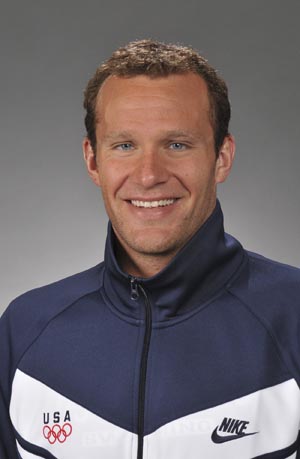
Devin Rose...Olympian?

So I turned on the television, and there he was:
image source
The Olympian. Who knew? 

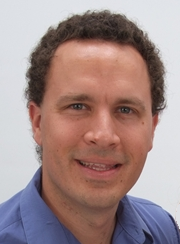
I mean, all I had ever seen was this picture:


Congrats Devin! Although you won't make the drive to Florida, I look forward to seeing you in London. You are the man, after all. 


June 26, 2012

Almost Not Catholic Live: In Defense of Purgatory


Here is the first part of a talk I gave at my parish last week.

You can get it here. (I could not get any of the players to work).

I have written four posts about Purgatory. The first one was a short reflection in 2009, entitled:

"Purgatory: It's Your Choice"

The next three posts actually reflect the content covered in this talk. They are as follows:

Purgatory: Is it Against Christian Sensibilities?

Purgatory in Church History

Purgatory in the Bible

I also recommend the following resources on 
Purgatory (in no particular order):

Purgatory is Real

The Bible Teaches Purgatory (pdf)

"Where is Purgatory in the Bible?"

Scripture AND Tradition References on Purgatory (33 Scripture passages, 28 patristic passages)

Catholic Answers on Purgatory

Our Catholic Faith

Lord Shea on Purgatory

Decent Wikipedia article


June 23, 2012

Myth Busters: Catholicism Teaches Universalism


Getting Catholicism Wrong
Since 1995
This post is part Myth Busters and part reply to this article by the gents at CARM. In fact, for SEO purposes, I shall supply the title of that post:

Is the Catholic Catechism's view on the Muslim god wrong?

First, let me just say that the title of CARM's article misses the boat all together. In no place does the Catholic Church teach that the Muslim view of God, per se, is accurate. Further, the strategic use of "god" (lower-case "g") is disingenuous. When we speak of a metaphysical reality where there is only one "God", any other "God" would be "god". In a metaphysical reality where there are multiple "gods", then we should use "god" -- since there is no unique "God". This technique subtly attempts to do centrifuge on the metaphysical similarities between all mono-theistic religions. A real sham, I say! Secondly, what the Church affirms is that Muslims do have some very important parts right. So, while the Christian view is that Christ gives us the perfect and complete view of God; nevertheless, just because one perspective is perfect and complete does not render another view -- especially within the same metaphysical paradigm -- bereft of any value at all.

I have written in other places about Universalism in general (go here, here, here, and here). For this purpose, I will only focus on Islam, and will do so in relationship to a question I received recently:
I have been studying the Catholic faith and the catechism 841 question on your blog has  stumped me. Would you read the below and respond (the article by CARM)? I couldn't find a Catholic response that addresses the fact that Muslims deny that Jesus, son of Mary, is God.
The simple answer:

Can you tell the difference? God can.
There are two types of "Muslims". There are those that actively deny Christ, and there are those that do not. Question(s): Do all 1.6 billlion Muslims knowingly deny Christ? Should we assign every Muslim, just because they were born into that religion, to hell? Answer: I think not. Let us together look at the relevant portion of the Catechism of the Catholic Church (841):
The Church's relationship with the Muslims. "The plan of salvation also includes those who acknowledge the Creator, in the first place amongst whom are the Muslims; these profess to hold the faith of Abraham, and together with us they adore the one, merciful God, mankind's judge on the last day."
Does the "plan of salvation" include those, as St. Paul says in Romans 2:
"For when Gentiles, who do not have the law, by nature do what the law requires, they are a law to themselves, even though they do not have the law. They show that the work of the law is written on their hearts, while their conscience also bears witness, and their conflicting thoughts accuse or even excuse them on that day when, according to my gospel, God judges both secrets of men by Christ Jesus."
I think so. So, the Church is trying to acknowledge what is redeemable in the people of other religions. Not the religions, per se. Since the Church is the shepherd of all of humanity ("What you bind on earth"), she must be careful in how she deals with each and every child of God who is made in His image and likeness. You do not treat God's children in a cavalier way; acting as if you can throw away whole portions of humanity without a second thought. Nevertheless, notice the proceeding context:
"Outside the Church there is no salvation"

How are we to understand this affirmation, often repeated by the Church Fathers? Re-formulated positively, it means that all salvation comes from Christ the Head through the Church which is his Body:

Basing itself on Scripture and Tradition, the Council teaches that the Church, a pilgrim now on earth, is necessary for salvation: the one Christ is the mediator and the way of salvation; He is present to us in his body which is the Church. He himself explicitly asserted the necessity of faith and Baptism, and thereby affirmed at the same time the necessity of the Church which men enter through Baptism as through a door. Hence they could not be saved who, knowing that the Catholic Church was founded as necessary by God through Christ, would refuse either to enter it or to remain in it. This affirmation is not aimed at those who, through no fault of their own, do not know Christ and his Church:

Those who, through no fault of their own, do not know the Gospel of Christ or His Church, but who nevertheless seek God with a sincere heart, and, moved by grace, try in their actions to do His will as they know it through the dictates of their conscience - those too may achieve eternal salvation. "Although in ways known to himself God can lead those who, through no fault of their own, are ignorant of the Gospel, to that faith without which it is impossible to please him, the Church still has the obligation and also the sacred right to evangelize all men."
Church of the Holy Sepulchre
The key phrase is "no fault of their own". That is where God comes in. He is the ultimate judge of matters eternal. That is why the Church canonizes saints but she does not canonize the damned.

Now turning to the CARM article, let's look together at what our friend has to say (with my comments afterward):
"If the Catholic Church is stating in paragraph above, in the Catechism of the Catholic Church, that there are those within the Muslim community who may find salvation by becoming Christians and not remaining Muslims, then I would agree.  But, it does not appear to be saying this. (It is implied when taken into context with the preceding section "There is no salvation outside of the Church". "The Church" meaning His Body, and therefore in order for Muslims to be saved they must be incorporated into Christ. There is no other Way of salvation)

What is disturbing is the statement that "together with us they [Muslims] adore the one, merciful God, mankind's judge on the last day."  So, Catholics and Muslims both "adore the one, merciful God."  Quite frankly, it would seem that the Roman Catholic church has a faulty understanding of the God of Islam."
It is not a matter of the "Roman Catholic church" having a "faulty understanding of the God of Islam". It is about The Church acknowledging what is true in their (Muslims (people)-- not Islam per se -- which is a religion) imperfect and faulty understanding of God. Let me say that again. There is a difference between Muslims and Islam. One is a people, the other is a religion. St. Paul affirmed that the Athenians had found some truth in their "altar to an unknown God" (Acts 17:23). Simply because they did not have the complete picture, the total Revelation, found only in Christ, it does not follow that they had NO truth. Of course that is not the case -- even for the polytheists in Greece! Same goes with Muslims. The Church is not saying that Muslims have a similar theology of the "one God", but that many Muslims do acknowledge: (1) one God, (2) His mercy and (3) His judgement. That in no way implies our theology is the same on even these three points, but that on these three points we do share a commonality -- which can be a bridge to evangelism and also an opening for God to work in their hearts.

Slick goes on to say:
"Islam acknowledges that it serves the God of Abraham, Isaac, and Jacob.  But in so doing it is stating that Abraham, Isaac, and Jacob, were Muslims!  Furthermore, Islam denies that God is a Trinity."
Again, his analysis is beside the point. The Church's position is not to imply that they have the right theology, but rather -- like the Athenians (you know those people in the Bible) -- they have found some truth in their imperfect, distorted image of God. Just because I imperfectly know my wife, doesn't mean I'm ignorant of her completely. Slick then triumphantly asks:
"Since the Trinity is the true biblical doctrine of God, how can the Muslims who deny the Trinity "adore the one, merciful God?"
Oddly, Fundamentalists don't think Jews
 are worshiping a "false God"
The same way the Jews did (and do) who did not know the Revelation of the Holy Trinity. They were not worshiping a different God in the Old Testament, they just have an incomplete picture of Him. The point of all of this, and the point that is sorely lost on Slick and others, is that only God can judge the human heart. The Church must affirm this very important mystery, a mystery that does not stagnate her missional efforts but rather compels her to evangelize. Why? Because the mystery of salvation, the mystery of God's mercy to mankind, stirs us with joy to share the message. Simply because it is possible for some to be saved through implicit faith does not mean that many or most will be.

Thus, as Catholics we must evangelize because of the goodness of God. It is the goodness of God that leads men to repentance. It is His kindness and long-suffering that softens the sinner's heart. Yet knowing that it is the human heart that we are talking about, it is impossible for us -- the Church -- to cross the sacred boundary of that tender place where only the still, small voice can gently say:

"Behold, I stand at the gate, and knock. If any man shall hear my voice, and open to me the door, I will come in to him, and will sup with him, and he with me." (Revelation 3:20)

Will you?


UPDATE: One should note that my inclusion of Romans 2:14-16 in no way implies that there is some kind of salvation a part from Christ. The Law, first and foremost, accuses of wrong -- either given in revelation or through natural law written on our hearts (in this way it is the "schoolmaster"). However, it is precisely because God can judge the heart, and we cannot, that we cannot simply assign large groups of people to help for whom we cannot see their heart. God gives sufficient grace to all. Only he knows if they respond to that grace or resist it. If they resist it, they damn themselves.


I'm including this update because someone was concerned that my rendering of Romans 2:14-16 would lead souls to hell. The problem with that idea is that if you are conscious enough to even consider the ramifications of this passage, you are likely outside its scope. 

4 Reasons I'm Catholic

In response to this four-part series by Michael Greiner, I decided to write this. There are many reasons why I'm Catholic. However, may you now consider just four: 

1. I found the fullness of Christ in the Catholic Church.

2. I believe in the Real Presence of Christ in the Eucharist.

3. I do not believe in the man-made tradition of sola scriptura.

4. The Catholic Church is THE Church that Jesus founded. 

Amen.

June 21, 2012

Understanding the Hierarchy of Knowledge

Resident Genius
Recently in a combox at Called to Communion, Dr. Mike Liccione (who blogs at Sacramentum Vitae) made this comment. Instead of leaving my comment there and muddying up the dialogical waters, I thought I would just share my thoughts here.

Mike said:
That’s because truths of faith are supernatural, not natural, so that by definition they cannot be shown to be factual by any method of human reasoning, no matter how reliable that method may be. For that reason, our epistemic access to the revealed truths of faith must ultimately rely on authority–specifically, divine authority. And given as much, the central task for the apologist is to show that accepting some agency’s claim to divine authority is reasonable, even though he cannot prove, by human experience and reasoning alone, that such a claim is actually true.
Bravo! I think I have tried to make this point a thousand different ways. This is the crux of the matter. What is interesting is that I understood this distinction before I converted -- in fact -- before Catholicism was on my radar. Then, it was Catholic apologists who showed me that it was reasonable that such a claim (the authority of the Catholic Church) was true (apologists like, Blessed Newman, Scott Hahn, Jacques Maritain and Edith Stein, to name a few). Before their efforts, I nearly despaired the possibility of theological dogma.

Notice that theology doesn't even make it on this "chart"
You guys really messed
this up
Let me just add, and for the benefit of the interested reader (not Mike), that in the history of philosophy (the history of ideas, even), theology used to be at the top of the epistemic pyramid -- the hierarchy of knowledge (scientia). It (theology) was that for which we could be most certain. Through a laundry list of historical, philosophic moves, that pyramid has been turned on its head, and today, men think that the natural sciences give us the most certain knowledge (which used to be at the bottom of the pyramid). Thus, I'm led to believe that many brush aside Mike's distinction because they have no tacit, visceral, or even primitive grasp of what is at stake. "Of course we know the earth is round," they say, "but of theology, we know not what." To the modern ear, this sounds right. However, to the Christian of times past, this is profoundly wrong, since the knowledge of theology rests upon God's movement toward us -- not man's movement toward God. So, while the tentative nature of other species of knowledge is acceptable, such should not be the case for the divine science. If there is anything that God wants us to know, it is that for which he has made known in His Son. That is why His Son promised, "But the Helper, the Holy Spirit, whom the Father will send in My name, He will teach you all things, and bring to your remembrance all that I said to you." (John 14:26)

Who is getting taught "all things"? Is it John Calvin? Jimmy Swaggart? Me? I can hear the immediate objection:

"Brent, don't you believe that God speak to the hearts of individual Christians?"

You bet, I do!

However, that is not the Catholic question. The Catholic question is to whom is God speaking to speak on behalf of Him to His Church? Has the voice of the prophet died -- a gift given by Christ at His ascension? We cannot have faith unless we hear, and hear unless someone is sent. Are there no "sent ones" anymore? What is the relationship between faith and the Church? Which is why I ask all my Protestant brothers and sisters to look at their theology and realize that cessationism -- the doctrine that the charismatic gifts of the Holy Spirit ceased with the death of the last Apostle -- is cart-for-the-horse with Protestantism. That is why any non-Reformed, non-cessationist Christian must come home to the Roman Catholic Church. Now. Before Protestantism destroys your faith or you become a total and complete heretic and give up all Christian dogma in favor of some inner light.

That is where the train is chugging. 

June 20, 2012

Total Consecration to Who?


That's right.

Jesus through Mary. Or in the lingua ecclesiae: Ad Jesum Per Mariam. 

Do it. In fact, let's do it together.

My friend, Marc Bad-arsenic Barnes, challenged me (while he was working on this site) to do it. And you know what? I need to step up to the plate. About two months ago, I got St. Louis de Montfort's book. Oh yeah, and I had read this book too. So, the hand writing was on the wall, and when a finger is writing on the wall, and it's not your finger, nor anyone else's finger in the room, you best not disrespect that finger.

Seriously, don't disrespect the finger.

Do the consecration.

June 18, 2012

Why Did Protestantism Make Sense...

Dr. Feser
...in the 15th and 16th century forward, and not in any preceding centuries? Read this to get a glimpse of what I studied when I was at the University of Dallas trying to "fill in the gaps" on my journey into the Catholic Church. The article is by the fabulously talented Dr. Edward Feser, so get over there and read it and give yourself an education! In brief, the ontological/epistemological "flip" in early modern philosophy made Protestantism possible. We might call this current era the era of "theory" --  of the concept, à la Protestantism here we come.

On a side note, my talk that was scheduled for Thursday evening has been moved to tonight (Monday). So, if you were planning on coming Thursday, try to make it tonight. I will put this talk up on the blog!

June 15, 2012

A Blog You Probably Don't Know I'm Reading

Blessed John Duns Scotus
The Smithy

In his own words:

"A mediaevalist trying to be a philosopher, a philosopher trying to be a mediaevalist, and a friar in a medieval order writing about theology, philosophy, scholarship, books, the middle ages, and especially the life, times, and thought of the Doctor Subtilis, the Blessed John Duns Scotus."

The author, Lee Faber, is a graduate student at Notre Dame.

On a personal note, I studied Scotus's De primo principio at the University of Dallas with Dr. William A. Frank, and I found Scotus to be dense, intellectually and spiritually penetrating, and worthy of attention for any serious academic interested in mediaeval thought or metaphysics. Thus, my interest in this blog (as a semi-serious, academic-type). As a Jacques Maritain fanboy, I'm hardly shy about my Thomistic leanings. Nonetheless, I don't like myths, and the myth that Scotus is some kind of proto-Luther, gateway to all bad thinking is just that -- a myth. Lee does a good job of pointing out both how misunderstood Scotus is and how wrong most of his critics are.

June 9, 2012

Does God Hate Religion?

I find this meme, that "God hates religion", to be tired and near-sighted. However, I can sympathize with it. I preached it myself for years. I used to say that Jesus tore down the veil between us and God, and then religion puts it back up. However, I don't believe this anymore.

This is a good "thing". Other
creatures don't do this.
Religion is simply a part of our human capacity. God made us as religious creatures. He also made us to live in community. Considering both aspects of the human person (religious and social), institutions are the natural extensions of the way we preserve what is good, true, and beautiful in our communal life of worshiping God. Religion without Christ is neither to be disdained nor praised. It is simply humans being human, and should be admired as a part of our human capacity -- something distinct from all other creatures (Although all of creation does praise God!, but they do so involuntarily. Our voluntary praise implies love.). With Christ, that which is natural (the religious inclination), by grace, is perfected. It will reach its full perfection in heaven.

Some say that the Christian religion can be reduced to "trust in Him to be our Savior and Redeemer". I agree. It is the "working out your salvation with fear and trembling", the putting into practice that "trust" that is at issue. With St. James, I say, "You show me your faith, I will show you my works." In other words, my life must demonstrate that I do in fact trust God. It is not my works that earn (as a wage) my salvation, but without works my "trust" is empty pleading. I am not a sum total of my mental acts, but a sum total of my "being-in-the world". This "being-in-the-world" means that my beliefs are represented by my existence: my actions, my thoughts, my deeds, and what I fail to do. In other words, a man cannot love his wife, without actually loving her.

Don't close your eyes. You
must love what you can see,
to love what you cannot.
Furthermore, if I say I trust Christ but reject the Church he founded, knowing that it is the Church he founded, I no more trust Christ than I trust Jim Jones. Because if I cannot love what I see (the Church), how can I love who I cannot see (Christ)? Instead, Christ through His Church erects a direct path, a Way, to Himself. No longer is salvation "there" or is Christ to be found "in the mountains", but instead we know where Christ is to be found. He is to be found in His Church. Since the Church is His Body, the Church is not an extra layer of mediation but an extension of the ministry of Jesus (Ephesians 3:6). Without trepidation we can know this, because He promised He would personally ensure that the gates of hell would not prevail against His Body. In fact, since the Church is His Body, if the Church fails, He fails. Of course, He cannot. So, from this, if I trust the Church, by direct extension, I trust Christ. Many try to compare the Church to Israel (and by doing try to point to the possibility of the Church defecting), but such a comparison fails to consider the import of the Church being Christ's Body. Israel was never the Body of Christ.

Thus, just the opposite is true from my opening comment. Any system (religion) that removes the Church erects a new veil between me and the Father, because it is our Lord's good will that we would know Him in His Holy Church.

June 8, 2012

I will be giving three talks

Me and my family with our pastor, Fr. Gilbert Medina,
at my daughter's First Holy Communion
Book your flights.

Cancel your dates.

Clear your schedules.

I will be giving three talks at my parish, St. Mary of the Lakes in the coming weeks. The schedule is as follows:

Tuesday, June 12, 2012 at 7:00 PM
"From Pentecost to St. Peter:
The Story of My Conversion to Catholicism"

Thursday, June 14, 2012 at 7:00 PM
"Constantine or Christ?
Where Did the Catholic Church Come From"

Thursday, June 21, 2012 at 7:00 PM
"Answering Common Objections to Our Catholic Faith:
Mary, Purgatory, Confession and More!"

Bring a Friend! There will be Q&A after every talk.

The address of the parish is 218 Ocklawaha Avenue, Eustis, FL 32726.

With this said, I will not be blogging as much for a while. Capish? I hope to see even just one of you very soon. If you are at the event, and are a reader of my blog (and we haven't met), be sure to come see me after the event so we can chat. Also, please bring Protestants, non-believers, but please don't bring pets.


Peace to you on your journey.

June 5, 2012

June 3, 2012

There Will Always Be Snake Handlers

I read this story and had to share it with you all.

Andrew Hamblin is "certain" he has a "real faith"
When Christianity seems like a farce, and when there is no credibility to the doctrinal veracity of a given position since there is no principled method for sifting through the various opinions, men will go to extremes to make sure they are still alive. They will even put themselves in harm's way just to pulse-check their commitment to their belief system. Doubt will make you mad. Madness makes you doubt your existence.

As my last post noted, Protestantism cannot provide certainty for a believer. This lack of certainty forces man to live below the standard of what it means to truly be human. It might explain, in part, the death of natural law in our society (or maybe another unintended effect of the Reformation). Not sure. Either way, when man lives in this way, he will act in other ways below his humanity. When man has given up on religion that is in accord with reason, all options are on the table.

Copperheads included.

Let me just say, that to be fair, all religions have their kooks. However, one must ask themselves, "Is a religion's kook the fruit of the system or in spite of it?"

When one thinks of the kooks of Catholicism, one immediately can identify that such a person is abusing a given teaching or practice. The "world-view", so to speak, of the Catholic in no way births the snake-handler. The moment he picks up a snake, the Church says, "put that down silly", and the second time might sound a little more serious. In other words, there is a Matthew 18:17 "ecclesia", and even a Protestant will admit that the Catholic Church would lay the smack-down on the snake handler.

I will also admit that most Protestant communities would reject this practice. The question, nonetheless, is why? Why should we reject this practice? On what grounds? Because a particular Protestant denomination says so? The Bible says so? When Brother Dale of LaFollette, Tennessee "takes it to the ecclesia", Brother Dale finds Pastor Hamblin with a chest-full of rattlesnakes. He did what his Bible said, and the word was confirmed in the mouth of two or more witnesses. Let it be established, alleluia! Plus, Pastor Hamblin will just ask Brother Dale to look in his Bible:
"And these signs shall follow them that believe; In my name shall they cast out devils; they shall speak with new tongues; They shall take up serpents; and if they drink any deadly thing, it shall not hurt them; they shall lay hands on the sick, and they shall recover."-Mark 16:17-18
Delivered from heaven in 1611
In the hills of Tennessee, I do not think a discussion about textual variants, monastic additions, and alternative endings to the Gospel of Mark is going to go very far. "My sheep hear my voice", and no Bible scholar is going to tell a "true believer" that a part of their Bible, which God has given them as the holy oracle in their night-stand is irrelevant. In their mind, either you believe the Bible or you don't. If you don't, of course, you could just find another church in LaFollette.

The point is that either you pick up snakes and trust God, or you are simply playing church.

Pastor Hamblin isn't playing.

As Hamblin said in the article, "The same man that walked upon the water said, 'They shall take up serpents.' There's a realness in the signs of God."

Like Luther, Pastor Hamblin received his anointing directly from God, and he thinks he has the Bible on his side. He is a priest, prophet and king, and the signs and wonders that follow his ministry confirm his inclination that he is on a holy mission from the Holy One. He has the keys of the kingdom, and nobody is going to shout down the devil louder than him. If placed before the Diet of LaFollette, Pastor Hamblin would no doubt fail to recant, claiming that he was excommunicated by them because he believed in the "real" Gospel. They, not him, believe in something less than the fullness of the faith.

One problem is that Tennessee outlawed snake-handling in 1947. Bummer. However, it appears that Pastor Hamblin will not be giving up snake-handling. He is willing to die or be imprisoned for what he perceives is the "apostolic" faith. This mental state, I will argue, is the direct result of the Protestant Reformation. This, of course, will not make friends or influence people, but it sticks, and it sticks for three reasons:
1. The primacy of the individual conscience demands that Pastor Hamblin follow his conscience. The Protestant thinks the Catholic is a cultist because he "blindly" follows the Catholic Church. In reality, the Protestant is always and everywhere one step away from creating their own cult. Of course, we do not call them cults, we call them sects, but the personality-centric nature of many of them cannot help but cause pause for reflection.

2. This story brings to light the unworkability of Protestantism for the average folk. If Protestantism is True, then Christ clearly built an "ecclesia" for two classes of men: the learned and the unlearned. Not a gift from God, Christianity is a religion for the intelligent, and the dumb and simpleton should just fall in line
3. It blows up the notion of essentialism. As the saying goes, "In essentials unity, in non-essential liberty, in all thing charity." Is "snake-handling" an essential doctrine? If it isn't, then there is no reason we should reject it. It is just a part of living in the almost-not-yet kingdom of Protestant Christianity. Oh, how snakes have their way of ruining an Edenic view of this Protestant idea.
For another good take on the topic of snake handling, check out this post by F. Longnecker. 

June 2, 2012

Do We Need Certainty Regarding Dogma?


This post is a slight adaptation of a comment I recently left at the website Called to Communion. If you have not already, I highly recommend making the site a regular part of your reading diet.
_______________________________________

The question of "epistemic certainty" was germane to my own spiritual journey. Albeit, I did not dip my toe in the Tiber because of it, but I certainly did begin to question the basic framework of my ecclesial home which eventually led me to Rome.

Mixer-upper of ontology
and epistemology
Let me just say, that in epistemology there are distinguishable features of “knowing”. For any type of knowledge we have, we can recognize and distinguish (1) the knower, (2) the thing known and (3) the method by which we know a thing. On 1 and 2, we agree with our Protestant friends. I make this point because often questions of epistemology in Catholic and Protestant dialog quickly devolve into conversations about “total depravity” or “the nature of revelation”. I am willing to grant the one who holds to “total depravity” that, in fact, they know stuff despite their theological commitment to a position that seems to undermine the possibility of any kind of certainty with regards to the function of their fallen cognitive faculty. That is besides the point, because I can move that fact to the bottom and top of the fraction for both of us and redact it out of the formula.

We also agree that the deposit of faith comes to us from God, and thus is a supernatural object of knowledge. Therefore, we agree fundamentally as to the nature of the knower and the nature of the thing known. However, we disagree fundamentally on the methodology by which we know the thing. This, I think, is the onus of Michael Liccione's article, and the reason the Protestant should click over to it, read and wrestle with it; keeping in mind the distinct epistemological contention he raises.

In short, the distinction between opinion and dogma, which outside of theology just means opinion or fact, should shed light on what is at stake. In short, the credibility of Christianity is at stake. Think about it. It would appear that for all species of knowledge accessible to the human faculty, there is a principled method by which humans can agree, if used, will result in certain knowledge (e.g., observation, historical study, abstraction, etc. — and in theology, dogma). “Certain” here not meaning the removal of all doubt (for we are irrationally prone to it), but rather meaning a certain trust in the credibility of a method that produces results worthy of assent. The ball drops twice. George Washington is always the first president. A=A. Then comes theology.

The Catholic position does not thrust upon theology something external to itself. It is not, as some have alluded, a wanting for more than God would have us have. It is, in fact, simply asking of theology what is requisite itself for attaining something more than just opinion in general, and since theology is a supernatural object, it is fitting that it would require a supernatural methodology (of courses in harmony with natural processes). This just means we are being human as God has made us. If God did not want us to have certainty regarding theology, then he would have created us without rational minds. If we did not have rational minds, then we would be fine if the ball drops and does not drop, that there is no rational principle in the world or in the mind of God, and that it does not matter what baptism really does as long as you believe something (an approach to the world more resembling Islam than Christianity).

To hold to this principle, the principle of what I will call “theological nihilism”, flavored with a positivism imbued by an evangelical vigor, is to act less than human. It is to look at the image of God in you and to reject it in favor, ironically, of your own opinion. This, of course, is the sin of Adam: to become less than human by becoming the autonomous man. The primacy of the individual conscience bit Adam in his soul, for between the fruit and his mouth was a decision that he knew better — that somehow his latest interpretation of the commandment was more enlightened than his previous interpretation.

The Church, the ground and pillar of truth, is the principled method by which we can distinguish between opinion and fact. I can “tell it to the church” (Matthew 18:17), and get an answer that if I reject, I become as a tax collector or pagan.

That is the “difference”.

The Chair of St. Peter