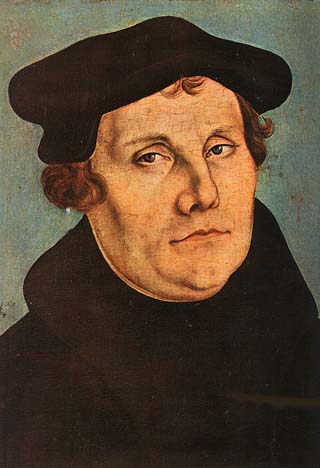
Showing posts with label Protestantism. Show all posts

July 20, 2012

Protestantism: The Musical

This post was originally conceived as "Will the Real Protestant Please Stand Up". It is in response to the ever-changing goal-post of what stands for "Protestant orthodoxy". It was also inspired by this.


___________________________________________________

[The scene opens with an empty stage. A lone voice, not on stage, breaks the silence.]

Voice 1: Moving targets. The big tent. You aren't welcome.

Voice 2: Who?

Voice 1: You Catholics.

Voice 2: Okay, I get it.

Voice 3: Smaller tent.

Voice 1: You aren't welcome.

Voice 2: Who?

Voice 1: The JW folks.

Voice 3: Why?

Voice 1: Because they don't believe.

Voice 2: I...see?

Voice 3: Smaller tent.

[A young guy who appears to be in his early twenties, skinny jeans, a mint green Express For Men shirt, dark-fauxish hawk hair-do, runs on stage. He is singing everything he says.]

young guy: I am going to start a church tomorrow. It's going to be called "Clean". I'm converting an old waste management facility. It's going to be mean.

Voice 3: Are you guys Catholic?

(His voice rises in a defiant yet exultant tone, almost like Tevye's "Tradition" but in a more metro-sexual kind of way.)

young guy: No!

[Reformed dude with a british accent runs on stage. He is wearing flat-front dress pants, penny loafers and a blue-stripped dress shirt with a pull-over sweater vest. He also has a dark-fauxish hawk hair-do and is singing.]

Reformed dude: You are most certainly not Protest-ant! You don't hold to the Reformed doctrines of worship and govern-ment. Moreover...moreover...moreover...you do not administer the sacra-ments.

young guy: Dude, I totally feel you. But, we are totally Protestant. We believe in sola scriptura, fide and gratia.

"sola scriptura, fide and gratia" 


(he repeats this 3 times in a swaying tone)

I went to seminary. I just didn't lose my passion for Katy Perry [he jumps up and points to the sky]. At Clean, we call them Straight up Word, Straight up Trust, Straight up Freedom.

"Straight up Word, Straight up Trust, Straight up Freedom"  (he repeats this 3 times in a swaying tone)

 We are Protestant. Whether you believe it or not, we will not relent.

[His voice fades off, repeating the last phrase. He moves to the back of the stage, and spins and points to the opposite corner of the stage.  There, enters three women: long skirts, buns, but kicking their legs and dancing across the stage like the rockettes. At this point, the audience realizes that a Pink Floyd song was playing in the background]

three ladies: "We don't need no pope [instead of education]. We don't need no pope. We don't need no pope. We don't need no pope. We don't need no pope. We don't need no pope. We don't need no pope. We don't need no pope."


Replace "Teacher" with "Magisterium" and this becomes
a kind of Protestant theme song

[At this very moment, two women "bishops" come on stage, fully "vested", doing some kind of sacred procession to Mother Earth. At the same time, 3 young, male, southern baptist seminarians enter the stage. Each of them has blond hair, cleanly parted to the right side.]

Baptist seminarian #1: Have you ever heard of Tim Tebow?

[Right as he asks that question, an enormous American flag is hoisted down creating the scrim for the scene. A young man, dressed up as Tebow but clearly much more diminutive than the real Tebow, runs on stage (they couldn't find anyone as jacked up as Tebow.]

Baptist seminarian #2: Did you know that Pentecostals are going to hell because they believe in a doctrine of the devil? (he repeats this over and over again)

Voice 3: Would the real Protestant stand up?

[Silence settles on the stage. By now, at least fifty other Christian denominations have entered. One is carrying a large peace sign. The other a sign saying that God hates everyone. A minister is sprinkling a baby in a corner, while what appears to be a lay-person is forcefully trying to restrain the minster while simultaneously attempting to full-emersion baptize him...]

Voice 2: Would the real Protestant stand up?

Baptist Seminarian #3: Yes!

Reformed dude: Yes!

Pentecostal rockettes: Yes!

young guy: Yes!

Random guy with a snake: Yes!

woman bishop 1: Yes!


July 5, 2012

Impossible, Awkward, Protestant Moments

Sorry, man. You ain't Prot
enough. Nice beard, though.
I'm a former Protestant. I'm not some cradle Catholic imaging what it is like to be a Protestant. I was one. I know to some, I was not Protestant enough. I was, in their view, born into a community at maybe (to borrow a Catholic phrase) no fault of my own, that wasn't Protestant enough. Oh foolish man that I was, born into a tradition that wasn't Protestant enough!

Luther, Calvin, where art thou???? Save me from this wretched sect that is not Protestant enough!

I was Pentecostal. Not like this, but kind of sort of. Then again, I did really like Reformed theology, especially the doctrines of sola gratia, fide and scriptura. Does that make me Protestant enough? That has to count for something, even if I didn't worship in a place like this. It is all so confusing.

I don't know.

"Go collect all the symbols of fish you can find"
Anyways, I want to now consider some passages of Scripture and some scenarios that are what I call "Catholic ghosts in the Protestant machine." Or, as my title states: impossible, awkward Protestant moments. In other words, a Protestant rendering of Scripture makes these passages awkward if not impossible. Let's first consider John 6 (the way it should read on a Protestant view of the passage):
So Jesus said to them, “Truly, truly, I say to you, unless you eat the metaphorical flesh of the Son of Man and drink His metaphorical blood, you have no life in yourselves. He who eats My metaphorical flesh and drinks My metaphorical blood has eternal life, and I will raise him up on the last day. For My flesh is true metaphorical food, and My blood is true metaphorical drink. He who eats My metaphorical flesh and drinks My metaphorical blood abides in Me, and I in him. As the living Father sent Me, and I live because of the Father, so he who eats Me metaphorically, he also will live because of Me. This is the metaphorical bread which came down out of heaven; not as the fathers ate and died real bread; he who eats this metaphorical bread will live forever.”

These things He said in the synagogue as He taught in Capernaum.

Therefore many of His disciples, when they heard this said, “This is a difficult metaphorical statement; who can listen to it? I mean, we can barely understand the metaphor.” But Jesus, conscious that His disciples grumbled at this difficult metaphorical teaching, said to them, “Does this cause you to stumble? It shouldn't. Remember, it's only a metaphor! It is the Spirit who gives life; my real flesh profits nothing; the words that I have spoken to you are metaphorical! 
As a result of this incredibly obtuse metaphor, many of His disciples withdrew and were not walking with Him anymore. So Jesus said to the twelve, “You do not want to go away also, do you?” Simon Peter answered Him, “Lord, to whom shall we go? You have metaphorical words of eternal life.
And at the Last Supper:
"While they were eating, Jesus took some bread, and after a blessing, He broke it and gave it to the disciples, and said, “Even though I spoke the entire world into existence, don't be confused. Take, eat; this is merely the great symbol My body.” And when He had taken a cup and given thanks, He gave it to them, saying, “Again, do not be confused that I am changing anything with the power of my words. Drink from it, all of you; for this is merely the great symbol of My blood of the covenant, which is poured out for many for forgiveness of sins."
And Matthew 16:
Now when Jesus came into the district of Caesarea Philippi, He was asking His disciples, “Who do people say that the Son of Man is?” And they said, “Some say John the Baptist; and others, Elijah; but still others, Jeremiah, or one of the prophets.” He said to them, “But who do you say that I am?” Simon Peter answered, “You are the Christ, the Son of the living God.” And Jesus said to him, “Blessed are you, Simon Barjona, because flesh and blood did not reveal this to you, but My Father who is in heaven. I also say to you that you are Peter which means rock, and upon this rock, the rock of your confession not the name I just gave you, sorry if that is confusing, I will build My church; and the gates of Hades will not overpower it. I will give you, as in all believers who have the same faith as you not to be confused with the you you, the keys of the kingdom of heaven; and whatever you bind on earth shall have been bound in heaven, and whatever you loose on earth shall have been loosed in heaven.”
Let's also consider some other awkward aspects of Protestantism in light of history, theology, and Scripture:

3rd Century Bishop making the
sign of the cross
Question: Why did Protestants get rid of the sign of the cross? If sola scriptura includes tradition as many Reformed Protestants claim, why throw out the sign of the cross? This seems to me to be a glaring example of throwing out the baby with the bath water. If, in fact, Protestants threw out the baby with the bath water in this example, what else did they throw out?

Question: Many Protestants like to claim St. Augustine as a kind of Protestant church father. How does a Bishop of Hippo becomes the heir to bishop-less churches?

Question: When Jesus breathed on his Apostles, he said "the sins you retain will be retained." Where does the practice of retaining sins happen in Protestantism?

Question: Why did Protestants take the corpus off of the cross? I get it. Jesus is no longer on the cross. However, that does not mean that we should not reverence Christ on the cross. It is through His sacrifice on the cross that we receive our redemption. So, again, why take the body of Christ off of the cross?

Question: Since Protestants believe that they can be the rightful heirs to Christianity by simply following the Scriptures, that being Apostolic is merely acting a certain way, why couldn't or didn't someone in the Old Testament take the Old Testament Scriptures and claim to be the true Israel?

Just some thoughts. What do you think?

June 18, 2012

Why Did Protestantism Make Sense...

Dr. Feser
...in the 15th and 16th century forward, and not in any preceding centuries? Read this to get a glimpse of what I studied when I was at the University of Dallas trying to "fill in the gaps" on my journey into the Catholic Church. The article is by the fabulously talented Dr. Edward Feser, so get over there and read it and give yourself an education! In brief, the ontological/epistemological "flip" in early modern philosophy made Protestantism possible. We might call this current era the era of "theory" --  of the concept, à la Protestantism here we come.

On a side note, my talk that was scheduled for Thursday evening has been moved to tonight (Monday). So, if you were planning on coming Thursday, try to make it tonight. I will put this talk up on the blog!

June 3, 2012

There Will Always Be Snake Handlers

I read this story and had to share it with you all.

Andrew Hamblin is "certain" he has a "real faith"
When Christianity seems like a farce, and when there is no credibility to the doctrinal veracity of a given position since there is no principled method for sifting through the various opinions, men will go to extremes to make sure they are still alive. They will even put themselves in harm's way just to pulse-check their commitment to their belief system. Doubt will make you mad. Madness makes you doubt your existence.

As my last post noted, Protestantism cannot provide certainty for a believer. This lack of certainty forces man to live below the standard of what it means to truly be human. It might explain, in part, the death of natural law in our society (or maybe another unintended effect of the Reformation). Not sure. Either way, when man lives in this way, he will act in other ways below his humanity. When man has given up on religion that is in accord with reason, all options are on the table.

Copperheads included.

Let me just say, that to be fair, all religions have their kooks. However, one must ask themselves, "Is a religion's kook the fruit of the system or in spite of it?"

When one thinks of the kooks of Catholicism, one immediately can identify that such a person is abusing a given teaching or practice. The "world-view", so to speak, of the Catholic in no way births the snake-handler. The moment he picks up a snake, the Church says, "put that down silly", and the second time might sound a little more serious. In other words, there is a Matthew 18:17 "ecclesia", and even a Protestant will admit that the Catholic Church would lay the smack-down on the snake handler.

I will also admit that most Protestant communities would reject this practice. The question, nonetheless, is why? Why should we reject this practice? On what grounds? Because a particular Protestant denomination says so? The Bible says so? When Brother Dale of LaFollette, Tennessee "takes it to the ecclesia", Brother Dale finds Pastor Hamblin with a chest-full of rattlesnakes. He did what his Bible said, and the word was confirmed in the mouth of two or more witnesses. Let it be established, alleluia! Plus, Pastor Hamblin will just ask Brother Dale to look in his Bible:
"And these signs shall follow them that believe; In my name shall they cast out devils; they shall speak with new tongues; They shall take up serpents; and if they drink any deadly thing, it shall not hurt them; they shall lay hands on the sick, and they shall recover."-Mark 16:17-18
Delivered from heaven in 1611
In the hills of Tennessee, I do not think a discussion about textual variants, monastic additions, and alternative endings to the Gospel of Mark is going to go very far. "My sheep hear my voice", and no Bible scholar is going to tell a "true believer" that a part of their Bible, which God has given them as the holy oracle in their night-stand is irrelevant. In their mind, either you believe the Bible or you don't. If you don't, of course, you could just find another church in LaFollette.

The point is that either you pick up snakes and trust God, or you are simply playing church.

Pastor Hamblin isn't playing.

As Hamblin said in the article, "The same man that walked upon the water said, 'They shall take up serpents.' There's a realness in the signs of God."

Like Luther, Pastor Hamblin received his anointing directly from God, and he thinks he has the Bible on his side. He is a priest, prophet and king, and the signs and wonders that follow his ministry confirm his inclination that he is on a holy mission from the Holy One. He has the keys of the kingdom, and nobody is going to shout down the devil louder than him. If placed before the Diet of LaFollette, Pastor Hamblin would no doubt fail to recant, claiming that he was excommunicated by them because he believed in the "real" Gospel. They, not him, believe in something less than the fullness of the faith.

One problem is that Tennessee outlawed snake-handling in 1947. Bummer. However, it appears that Pastor Hamblin will not be giving up snake-handling. He is willing to die or be imprisoned for what he perceives is the "apostolic" faith. This mental state, I will argue, is the direct result of the Protestant Reformation. This, of course, will not make friends or influence people, but it sticks, and it sticks for three reasons:
1. The primacy of the individual conscience demands that Pastor Hamblin follow his conscience. The Protestant thinks the Catholic is a cultist because he "blindly" follows the Catholic Church. In reality, the Protestant is always and everywhere one step away from creating their own cult. Of course, we do not call them cults, we call them sects, but the personality-centric nature of many of them cannot help but cause pause for reflection.

2. This story brings to light the unworkability of Protestantism for the average folk. If Protestantism is True, then Christ clearly built an "ecclesia" for two classes of men: the learned and the unlearned. Not a gift from God, Christianity is a religion for the intelligent, and the dumb and simpleton should just fall in line
3. It blows up the notion of essentialism. As the saying goes, "In essentials unity, in non-essential liberty, in all thing charity." Is "snake-handling" an essential doctrine? If it isn't, then there is no reason we should reject it. It is just a part of living in the almost-not-yet kingdom of Protestant Christianity. Oh, how snakes have their way of ruining an Edenic view of this Protestant idea.
For another good take on the topic of snake handling, check out this post by F. Longnecker. 

May 31, 2012

Coming Soon! A New CARM Ecumenical Series


In the spirit of ecumenical joy, I will be starting a series of posts in response to articles published at the "Christian Apologetics and Research Ministry" (CARM) website. Let me start off by saying one good thing about CARM: they have many decent articles on topics other than Catholicism. (There. I did it. I did my intellectual duty to say something nice. Back to the regularly scheduled blog-post.) Many Catholics believe that Protestants think of them as their brother or sister in Christ, and, in fact, many do. However, this is not always the case. In the section on "Roman Catholicism", CARM founder Matt Slick explains why he included a section on the Roman Catholic Church (with comments in blue):
It is necessary to write a page on Roman Catholicism because there are significant differences between Protestant and Roman Catholic doctrines (and various Protestant sect's doctrine is insignificantly different?). Protestants accuse the Catholics of being unscriptural and the Catholics state that the Protestants do not have the true faith carried through the centuries by the Catholic Church. On which ever side you fall, the real issue is whether or not the Roman Catholic Church is representing true Christianity.

If you are a Roman Catholic, please understand that this site is not meant to offend you in any way (let me define offensive as a poor attempt to understand the position you are arguing against -- let's see if this holds). This site is dedicated to examining the truth, all truth, and comparing it to the Bible. No matter who it is or what group is proclaiming truth, we know that the Bible is the Word of God (I will test that theory, specifically regarding the "Bible" as canon) and that no truth from God will contradict it. I urge you to examine what is here on this site and see if what is being taught here is true. If you do, you will be doing exactly what the Bible commands: to examine all things (1 Thess. 5:21; 1 Pet. 3:15; 2 Tim. 2:15; Acts 17:11; Jude 3). Since the Catholic Church holds the Bible to be the word of God, I am putting Catholic doctrine to the biblical test.

If you are a Protestant, you will probably (unless you believe to the historic doctrine of baptism regeneration) feel more comfortable browsing these pages since they will, essentially, confront Roman Catholic teachings. It is apparent that the Roman Church has added much to the scope of Christian doctrine that is not revealed in scripture ("apparent" only begs the question, but let's proceed). This is an issue that needs to be addressed. It is vital.
In reference to the Catholic reliance upon (gasp) "Tradition", Mr. Slick goes on to say:
Matt Slick
Apparently, it is Tradition that is the source of doctrines which are clearly not taught in the Bible, but which the Catholic Church still says are implicit within its text and elucidated through Apostolic Tradition. Some of them are as follows: The Mass, Penance, Veneration of Mary, Purgatory, Indulgences, the Priesthood, the Confessional, the Rosary, Venial and Mortal Sins, and statues in the Church.
What is interesting about his list is:

1. All the elements of the The Mass come explicitly from Scripture (e.g., consecration, altar, Scripture reading, sign of peace, etc.), setting aside a few phrases and gestures that harken back to both Christian and Jewish traditions. See also The Mass in Scripture.

2. Penance. Boy this is awkward. "No, I say to you: but unless you shall do penance, you shall all likewise perish." Luke 13:3

3. Veneration of Mary- "Every generation will call me blessed." This is a complicated issue, but to say that veneration is "clearly not taught in the Bible" is a hermeneutic decision not the result of a clear-as-day proof-text. If a distinction between veneration and worship can be made -- and there is, then there is nothing in Scripture even approaching a disapprobation of venerating Mary.

4. Setting aside the rest of the list for time's sake, the great irony is that the phrase "implicit within its text and elucidated through Apostolic Tradition" could be replaced with "implicit within its text and elucidated through evangelical-Protestant tradition" as an explanation and/or apology for Mr. Slick's particular doctrinal commitments. Especially considering that he denies baptismal regeneration. In other words, no man is a tradition-less island unto himself.

At this point, I am starting to gather that CARM is not inviting me to write a guest article. Anyways, remember they are a "research" ministry. In an attempt, I guess, to bring fellow Protestants into the illuminati of the inner circle of Roman Catholic theology, Mr. Slick kindly offer his reader a "terminology section". Since the term "Tradition" plays so heavy right out of the gate in his contention with Roman Catholic doctrine, I was interested to find out how he defines that term.
Tradition - handing down through the centuries from mouth to mouth of the teachings of Jesus. It began with the apostles and continues unbroken to the present bishopric of the Catholic Church.
Nice try.

For starters, Tradition is not exclusively oral. In fact, most of the Traditions of the Church can be found in the writings of the early Church Fathers. Tradition does include the teachings of Christ as handed off to the Apostles. These teachings and way of life and worship are preserved in the liturgical and sacramental life of the Church. They are not only preserved but grow -- being active, living and dynamic -- in Christ's Church through the work of the Holy Spirit.

In the spirit of outreach (I gather), and just below the "copy and paste" section on the Catechism whereby Mr. Slick enjoys an out-of-context-extravaganza, there is a section that is a kind of "Coming Out Network International". In this case, and unlike the Coming Home Network, the "outers" are former priests. Many of the original Protestants were former priests, thus, there is nothing really sensational about a few priests defecting. However, what is amazing, according to Mr. Slick, with regards to their stories is:
"As you can see, even Roman Catholic Priests can discover the truth found in God's word and escape the error of the Roman Catholic system of works righteousness.  To God be the glory." (source)
Not so fast...
In an effort to improve the Google meta-associations between Mr. Slick's articles and the truth, I will be periodically writing posts in response to published CARM articles. Let this post serve notice, and may my personal conversion story bare witness, that even a Protestant can discover the "ground and pillar of truth" and escape the error(s) of Protestantism. (Hint: 1 Timothy 3:15) 


Glory be to God. 


March 31, 2012

Protestant Development of Doctrine

15th Century Mass
Stop It!
Luther: "Wait a minute, I didn't think that..."
Let's Kick It Up A Notch!
Azusa Street Revival (Notice "Apostolic Faith"...we must be getting closer)
True Worship: Thank you Reformation (Look, Protestants are "United"!)
"Did...did...did...did I do that?"