July 29, 2011

Top 3 Videos of the Week: Former Methodist Minister, Ambrosian Rite & Unusual Prayer

It is Friday. It is time for videos. It is time for me to stop writing in short and choppy sentences.

Here's the lineup: A former Methodist minister explains why he became Catholic, witness the beauty of holiness in the Ambrosian Rite (yes after St. Ambrose who baptized St. Augustine) and lastly a pause to stop, reflect, and remember that no matter what you think about the prayer, at least he's not messing with the liturgy so it ain't that bad.

Enjoy your weekend!


 CONVERSION


THEOLOGY


JUST FOR FUN


hat tip to CMR

July 28, 2011

Teeth, Fatima, Popcorn and NFP

This post is in honor of Natural Family Planning Awareness Week


Tonight my daughter pulled out her first tooth. I am not too happy about it. Not because the tooth wasn't ready to come out but because I wasn't ready for the tooth to come out. I don't have a thing for teeth being installed in one's mouth, well sort of, but what I am getting at is that I'm not really happy about my daughter growing up. [insert daddy pout face]

Then just about 2 minutes ago (when I started writing this), my 2-1/2 year old son came out of his room and said, "I want Lady Fatima movie and popcorn."

Precious.

Brent, you are thinking, what does this have to do with NFP?

Natural Family Planning implies that what we do in our bedroom impacts the living room and the bathroom for that matter (I normally wake up every morning and wipe two butts--kids butts!). It implies that our bodies are made as a gift and that when that gift is fully realized, it can give us more than we bargained for but in a great way.

NFP is not contraception. It is a conversation. It is an ongoing conversation between you, your spouse, her body and God. It is not just chit-chat but rather the kind of dynamic communication that matters.

My point is that a life full of pulled out teeth, Fatima kids movies, popcorn, and hugs and kisses is a really good life. This week, I celebrate NFP and what it has given me; namely, an awesome conversation that has given me four little beautiful conversations:

"Leah"

"Yes, daddy."

"I love you"

"Hey what about me, I love my daddy"

"Dean, I love you too baby"

"Jude, come over here and give daddy a big kiss"

[I'm chocking on his mega-kiss]

"I can't forget my Gemma!"

[she's smiling as if her face is about to explode off her body]

Ahhh...

If you want to learn more about NFP, click on the image below or here to find out more.

July 26, 2011

Sure Hope and the Not-So-Certain Certainty

Am I saved?
Recently, it was brought to my attention by Devin Rose that an individual is claiming that a number of Catholic converts will be greeted by our Lord with the words, "Depart from me, I never knew you." The damned in question are Christians who were previously Reformed Protestants and are now Catholic and ergo doomed for eternal separation from God. According to our friend's cell phone connection to the Father, the damned in question who held to the Reformed Gospel are now sealed to a fate with Beelzebub.

Maybe.

Here's my problem with this line of reasoning. If the Catholic converts are destined for eternal separation from God and were in fact Reformed at one time, an important part--dare I say crux--of reformed theology goes up in smoke. This isn't my first pony show. Pointing to the Bible won't convince the Arminian or the Calvinist that one is right and the other is wrong. So let's not go there. Instead, let's consider the Reformed confession (WCF), since according to it, it is the summary of the Biblical data, and amend it slightly to make our jurist's claim more coherent with the Reformed confession.

The Westminster Confession of Faith XVII states (my additions in red):
  • They, whom God has accepted in His Beloved, effectually called, and sanctified by His Spirit, can neither totally nor finally fall away from the state of grace, but shall certainly persevere therein to the end, and be eternally saved. Unless they, of course, be of the Romanist belief, and hold to the doctrines of infused grace, pious concern for Mary or show inordinate filial affection for so-called "saints". If one, no matter how strong their belief in the effectual call, hold to such doctrines let them be certain only of flame and torment.
  • This perseverance of the saints depends not upon their own free will (unless they use that will to become Catholic), but upon the immutability of the decree of election, flowing from the free and unchangeable love of God the Father--who ceases to love only those who kiss the ring of the "Holy Pontiff"; upon the efficacy of the merit and intercession of Jesus Christ, the abiding of the Spirit, and of the seed of God within them (which is plucked out, as by a sickle, with every invocation of a "saint"), and the nature of the covenant of grace: from all which arises also the almost certainty and kind of infallibility thereof.
  • Nevertheless, they may, through the temptations of Satan and of the world, the prevalency of corruption remaining in them, and the neglect of the means of their preservation, fall into grievous sins--let us exclude the Catholic Church from that list, for she is of a completely different kind in evil and dishonor. Such is her sin and the belief thereof, which the angels shutter in terror, for in her is found no salvation but only damnation; and, for a time, continue therein: whereby they incur God's displeasure, and grieve His Holy Spirit, come to be deprived of some measure of their graces and comforts, have their hearts hardened, and their consciences wounded; hurt and scandalize others, and bring temporal judgments upon themselves.
I call this the "not-so-certain certainty". How can our dear prosecutor be certain of his salvation if he claims that those who previously held his position concerning the Gospel, who believed it and placed their lives upon its foundation will be lost? No, our dear eternal jurist cannot be sure of his salvation. In fact, no such certainty can exist in that paradigm, only the fleeting certainty of a circular and self-affirming theology that is grounded not in the person of Jesus Christ but in the confidence of self-righteousness and "certain" knowledge of scriptures. It is no more than psychological self-congratulations.

If you are interested, I'll share with you another view: Sure Hope. The Holy Father, Pope Benedict XVI, reminds us in his encyclical Spe Salvi:
“Hope”, in fact, is a key word in Biblical faith—so much so that in several passages the words “faith” and “hope” seem interchangeable. Thus the Letter to the Hebrews closely links the “fullness of faith” (10:22) to “the confession of our hope without wavering” (10:23). Likewise, when the First Letter of Peter exhorts Christians to be always ready to give an answer concerning the logos—the meaning and the reason—of their hope (cf. 3:15), “hope” is equivalent to “faith”. We see how decisively the self-understanding of the early Christians was shaped by their having received the gift of a trustworthy hope, when we compare the Christian life with life prior to faith, or with the situation of the followers of other religions. Paul reminds the Ephesians that before their encounter with Christ they were “without hope and without God in the world” (Eph 2:12). Of course he knew they had had gods, he knew they had had a religion, but their gods had proved questionable, and no hope emerged from their contradictory myths. Notwithstanding their gods, they were “without God” and consequently found themselves in a dark world, facing a dark future. In nihil ab nihilo quam cito recidimus (How quickly we fall back from nothing to nothing)[1]: so says an epitaph of that period. In this phrase we see in no uncertain terms the point Paul was making. In the same vein he says to the Thessalonians: you must not “grieve as others do who have no hope” (1 Th 4:13). Here too we see as a distinguishing mark of Christians the fact that they have a future: it is not that they know the details of what awaits them, but they know in general terms that their life will not end in emptiness."
He goes on to say:
"In our language we would say: the Christian message was not only “informative” but “performative”. That means: the Gospel is not merely a communication of things that can be known—it is one that makes things happen and is life-changing. The dark door of time, of the future, has been thrown open. The one who has hope lives differently; the one who hopes has been granted the gift of a new life."
 And finally,
“Faith is the hypostasis of things hoped for; the proof of things not seen”. For the Fathers and for the theologians of the Middle Ages, it was clear that the Greek word hypostasis was to be rendered in Latin with the term substantia. The Latin translation of the text produced at the time of the early Church therefore reads: Est autem fides sperandarum substantia rerum, argumentum non apparentium—faith is the “substance” of things hoped for; the proof of things not seen. Saint Thomas Aquinas[4], using the terminology of the philosophical tradition to which he belonged, explains it as follows: faith is a habitus, that is, a stable disposition of the spirit, through which eternal life takes root in us and reason is led to consent to what it does not see. The concept of “substance” is therefore modified in the sense that through faith, in a tentative way, or as we might say “in embryo”—and thus according to the “substance”—there are already present in us the things that are hoped for: the whole, true life. And precisely because the thing itself is already present, this presence of what is to come also creates certainty: this “thing” which must come is not yet visible in the external world (it does not “appear”), but because of the fact that, as an initial and dynamic reality, we carry it within us, a certain perception of it has even now come into existence. To Luther, who was not particularly fond of the Letter to the Hebrews, the concept of “substance”, in the context of his view of faith, meant nothing. For this reason he understood the term hypostasis/substance not in the objective sense (of a reality present within us), but in the subjective sense, as an expression of an interior attitude (see WCF), and so, naturally, he also had to understand the term argumentum as a disposition of the subject. In the twentieth century this interpretation became prevalent—at least in Germany—in Catholic exegesis too, so that the ecumenical translation into German of the New Testament, approved by the Bishops, reads as follows: Glaube aber ist: Feststehen in dem, was man erhofft, Überzeugtsein von dem, was man nicht sieht (faith is: standing firm in what one hopes, being convinced of what one does not see). This in itself is not incorrect, but it is not the meaning of the text, because the Greek term used (elenchos) does not have the subjective sense of “conviction” but the objective sense of “proof”. Rightly, therefore, recent Protestant exegesis has arrived at a different interpretation: “Yet there can be no question but that this classical Protestant understanding is untenable”[5]. Faith is not merely a personal reaching out towards things to come that are still totally absent: it gives us something...Faith draws the future into the present, so that it is no longer simply a “not yet”. The fact that this future exists changes the present; the present is touched by the future reality, and thus the things of the future spill over into those of the present and those of the present into those of the future."
This all of course flows from the logic of Scripture which was affirmed in the sixth session of the Council of Trent:
CANON XV.-If any one saith, that a man, who is born again and justified, is bound of faith to believe that he is assuredly in the number of the predestinate; let him be anathema.

CANON XVI.-If any one saith, that he will for certain, of an absolute and infallible certainty, have that great gift of perseverance unto the end, unless he have learned this by special revelation; let him be anathema...

CANON XXII.-If any one saith, that the justified, either is able to persevere, without the special help of God, in the justice received; or that, with that help, he is not able; let him be anathema.

CANON XXIII.-If any one saith, that a man once justified can sin no more, nor lose grace, and that therefore he that falls and sins was never truly justified (the only possible explanation for our eternal jurist); or, on the other hand, that he is able, during his whole life, to avoid all sins, even those that are venial,-except by a special privilege from God, as the Church holds in regard of the Blessed Virgin; let him be anathema.

CANON XXVI.-If any one saith, that the just ought not, for their good works done in God, to expect and hope for an eternal recompense from God, through His mercy and the merit of Jesus Christ, if so be that they persevere to the end in well doing and in keeping the divine commandments; let him be anathema.
Let us put our confident hope in the merits of Jesus Christ! However, may we never presume to know, as if we were God exactly who will or exactly who will not persevere. And may we, as Catholics never--so as to make imposition upon the Divine Will--pass judgment upon our brother or sister who by God's mercy may be given their chance in their dying breath to repent. It is for this reason and this reason alone--His Mercy--that we have "sure hope" of the reality that transcends this temporal journey, but not just that, a reality that informs the here-and-now and transforms us continually into the image of the Only Begotten of the Father.

July 24, 2011

Communion of the Saints and a Few Other Things Protestants Could Ruin

I've been thinking about the Communion of the Saints. You know, the Catholic Church's universal teaching that some Christians deny under the auspices that Jesus is the only Mediator between God and man (true) but that Catholics throw interference on because they rely on saints and stuff (false). So, I thought to myself...

...taking this line of reasoning to its logical end what might other scenarios look like?

Scenario #1: The Sunset
Two friends are walking on a beach, and one friend stops to admire the sunset and in a moment of inspiration declares, "Isn't God just awesome? I can just feel His presence right now."

Shocked at his words, his friend responds in a scolding tone, "Friend, friend, friend. I know what you are thinking, but you are wrong. We walk by faith not by sight. You may think you feel God's presence through this sunset, but you know that Jesus is the only Mediator between you and God. Stop looking at this darkly colored glass and thank God right now that it is nothing more to you than a fifty cent light bulb. 

Then, in a really awkward way, he throws his first in the air and chants, "Sola Gloria Dei!"

Convinced, the two friends leave the beach never to return in their lives but instead spend their days in quiet prayer in a building that doubles as a barn, free of all ungodly mediation.

OR...

Scenario #2: The Newborn Baby
A mother, just home from the hospital, clutches her new little one in her hands. Admiring the handi-work of God, she senses God's presence enveloping her.

Her husband, noticing nervously what is happening out of the corner of his eye, places his copy of L'Institutes on the table next to his chair and walks over cautiously but ready to correct.

"I can see that you are admiring this child of ours," he says, "but remember that's a totally depraved mongrel you've got in your hands. Even more my dear, God may have predestined him to hell, so don't get too attached. It is the plight of us who will persevere. Bear it well, my dear, bear it well."

"I know, I know," he continues holding his hand over his mouth, "that you and I both were moved to great emotions not long ago in the delivery room, but we should not forget that experience in no way communicated God to us. There is only one Mediator between God and man and that little critter is not it."

OR...

Scenario #3: The Symphony
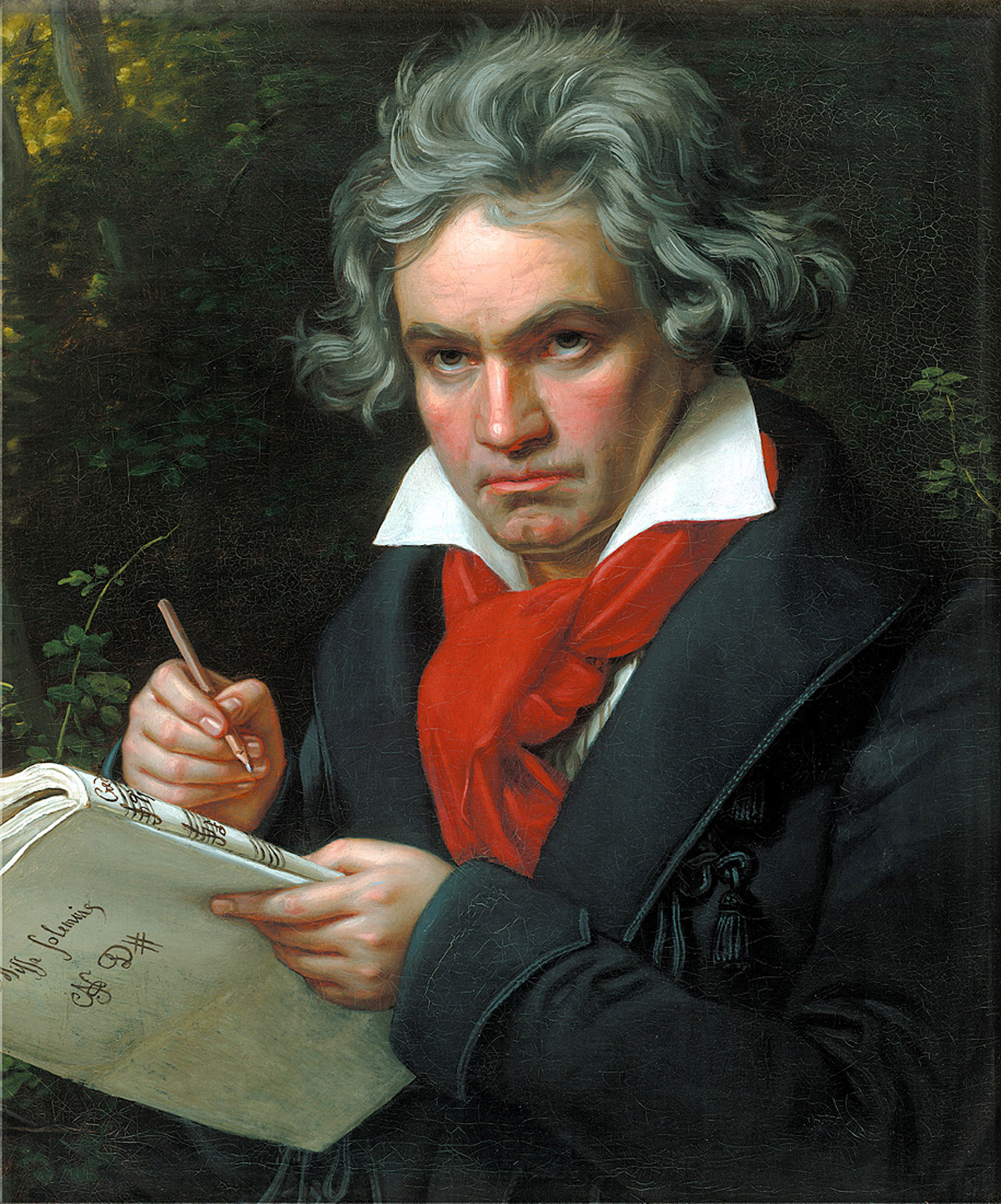
In his study, a middle aged man relaxes to the sound of Beethoven's Symphony No.9. All of a sudden, the man is overcome with beauty and in a moment of repentance cries out to God, "Have mercy on me!"

Just in time, his dear and most sagacious wife enters his study. Aghast at what has clearly transpired, she rushes to the controller and hastily shuts off the music.

Her husband nervously opens his eyes, slightly, tears still in the corners.

"What were you thinking? she yells. "Don't you know that there is One Mediator between God and man?"

Not knowing what to say, he tries to utter a word, but she starts up again.

"What will you say to Him? What will you say? On the judgment day, when you stand before God and he asks you, why did you not come right to me through my Son? Why did you trade in the pure Gospel for a prayer played on the harps of mere mortals?"

Full. Stop.

 
Thank God no one really does this stuff. Though, I can also hear the objection. In your examples, Brent, God is reaching out to us, and with the Communion of the Saints we are reaching out to God. That is true, but explain to me just exactly what that difference brings to bear on Christ's mediation? A mediator stands between the communication both ways. If Christ, the creator of the universe, can use his creation to share Himself with us, and make it so obvious that we would flock to beaches and mountain ranges to experience the life of God, how much more should we respond to the beauty and heavenly bliss of our departed brethren who look not at the face of the sun but at the Son of God?

So while you are at it, thank God for our heavenly family. May we always, with great filial affection, place our hope in them who have gone beyond the veil and see our Lord face to face. May our sure hope be in that reward that is for those who anticipate the heavenly family and who do not despise even those least among us--having our mind set on things above (Col 3:2). May every sunset, every new born child, every symphony and every Saint of God draw us closer to that which it is ALL ordered--the One Mediator with the Father--the Incarnate One--Jesus Christ (1 Tim 2:5). 

Therefore, it is with St. Paul that we, like him, ask you "that supplications, prayers, intercessions, thanksgivings be made for all men" (1 Tim 2:1). And since this exhortation was clearly not at odds with Christ's mediation, I humbly ask:

"All the angels and saints, pray for us!" 
Amen.

July 23, 2011

Pope Leo XIII and the Holy Rosary

The Rosary is the summary of the Gospel. That statement alone tends to confound non-Catholics because when they hear the Rosary all they hear is Mary. I can sympathize since I would have concurred not too long ago. But, ignorance doesn't justify ignorance. If you break up the words of the Rosary into 4 parts (not to mention the part where you meditate on the life of Christ) you get: (1) acknowledgement of salvation coming to men and the presence of God, (2) the unique and singular glory of Christ and His ark, (3) an affirmation of Christ's divinity and (4) an acknowledgement of the victory of the mystical Body of Christ in heaven. The Rosary is truly Christotelic.


Pope Leo XIII, of pious memory, wrote eleven encyclicals about the Holy Rosary. I've listed them below with links and I wanted to share with you what I thought were some great quotes with some comments.

1. Iucunda Semper Expectatione (On the Rosary)

 "It is certain, therefore, that she suffered in the very depths of her soul with His most bitter sufferings and with His torments. Moreover, it was before the eyes of Mary that was to be finished the Divine Sacrifice for which she had borne and brought up the Victim."

2. Laetitiae Sanctae (Commending Devotion to the Rosary) 

"There are three influences which appear to Us to have the chief place in effecting this downgrade movement of society. These are -- first, the distaste for a simple and laborious life; secondly, repugnance to suffering of any kind; thirdly, the forgetfulness of the future life...For We are convinced that the Rosary, if devoutly used, is bound to benefit not only the individual but society at large."

What more can restore the dignity of simple tasks (the simplicity of the prayer), suffering (meditating on Christ's life), and the future ("at the hour of our death") than praying the Holy Rosary?

3. Magnae Dei Matris (On the Rosary)

"It pleased Christ to take upon Himself the Son of Man, and to become thereby our Brother, in order that His mercy to us might be shown most openly; for "it behooved him in all things to be made like unto his brethren that he might become a merciful and faithful high priest before God."[Heb 2:17] Likewise because Mary was chosen to be the Mother of Christ, our Lord and our Brother, the unique prerogative was given her above all other mothers to show her mercy to us and to pour it out upon us."

4. Octobri Mense (On the Rosary)

"The Eternal Son of God, about to take upon Him our nature for the saving and ennobling of man, and about to consummate thus a mystical union between Himself and all mankind, did not accomplish His design without adding there the free consent of the elect Mother, who represented in some sort all human kind, according to the illustrious and just opinion of St. Thomas, who says that the Annunciation was effected with the consent of the Virgin standing in the place of humanity...Thus as no man goeth to the Father but by the Son, so no man goeth to Christ but by His Mother...We adore the beloved Savior, lavish of His blood and of His life; we dread the inexorable Judge...[Mary] is the mighty Mother of the Almighty; but-what is still sweeter -- she is gentle, extreme in tenderness, of a limitless loving-kindness. As such God gave her to us."

5. Superiore Anno (On the Recitation of the Rosary) 

"May our Heavenly Patroness, invoked by us through the Rosary, graciously be with us and obtain that, all disagreements of opinion being removed and Christianity restored throughout the world, we may obtain from God the wished for peace in the Church."

Even as divisions within the Church plague us, may we implore the one who drew the disciples together with her in the upper room, who constantly seeks to watch over her Son's prayer, "that they all may be one" (John 17:21).

6. Supremi Apostolatus Officio (On Devotion to the Rosary) 

"We have deemed it most opportune for similar reasons to institute solemn prayers and to endeavor by adopting those addressed to the Blessed Virgin in the recital of the Rosary to obtain from her son Jesus Christ a similar aid against present dangers. You have before your eyes, Venerable Brethren, the trials to which the Church is daily exposed; Christian piety, public morality, nay, even faith itself, the supreme good and beginning of all the other virtues, all are daily menaced with the greatest perils...That great saint indeed, divinely enlightened, perceived that no remedy would be more adapted to the evils of his time than that men should return to Christ, who "is the way, the truth, and the life," by frequent meditation on the salvation obtained for Us by Him, and should seek the intercession with God of that Virgin, to whom it is given to destroy all heresies. He therefore so composed the Rosary as to recall the mysteries of our salvation in succession, and the subject of meditation is mingled and, as it were, interlaced with the Angelic salutation and with the prayer addressed to God, the Father of Our Lord Jesus Christ."

7. Vi E Ben Noto (On the Rosary and Public Life)

"Let it be your work, venerable brethren, to revive this Christian feeling among your people, an interest in the Catholic cause, a confidence in Our Lady' help, and a spirit of prayer. It is certain that the august Queen, invoked thus well by her man sons, would deign to hear their prayer, console Us in Our sorrow, and crown Our efforts for the Church...by granting better times."

8. Adiutricem (On the Rosary) 

"It is mainly to expand the kingdom of Christ that We look to the Rosary for the most effective help. On many occasions We have declared that the object which at the present time engrosses Our most earnest attention, is the reconciliation to the Church of nations which have become separated from her. We recognize, at the same time, that the realization of Our hopes must be sought chiefly in prayer and supplication addressed to almighty God...The mystery of Christ's immense love for us is revealed with dazzling brilliance in the fact that the dying Saviour bequeathed His Mother to His disciple John in the memorable testament: "Behold thy son." Now in John, as the Church has constantly taught, Christ designated the whole human race, and in the first rank are they who are joined with Him by faith. It is in this sense that St. Anselm of Canterbury says: "What dignity, O Virgin, could be more highly prized than to be the Mother of those to whom Christ deigned to be Father and Brother!"

9. Augustissimae Virginis Mariae (On the Confraternity of the Holy Rosary)

"God predestined her from all eternity to be the Mother of the Incarnate Word, and for that reason so highly distinguished her among all His most beautiful works in the triple order of nature, grace and glory, that the Church justly applies to her these words: "I came out of the mouth of the Most High, the first-born before all creatures" (Ecclus 24:5).

10. Diuturni Temporis (On the Rosary)

"Impelled, therefore, by a constant desire that Christians should ever be convinced of the efficacy and dignity of the Rosary of Our Lady, We first of all pointed out that the origin of this form of prayer is divine rather than human, showing it to be an admirable garland woven from the Angelic Salutation, together with the Lord's Prayer, joined to meditation, and that this form of prayer was most powerful and particularly efficacious for attaining eternal life. For besides the special excellence of the prayers, it affords a powerful protection to faith and conspicuous models of virtue in the mysteries proposed for contemplation. We showed also how easy the devotion is and how suited to the people, offering an absolutely perfect model of domestic life in meditation on the Holy Family at Nazareth, and that therefore Christendom had never failed to experience its salutary effects."

11. Fidentem Piumque Animum (On the Rosary)

"The Fathers and Doctors in subsequent times have taught that this is a matter of such grave necessity, that if men neglect it they hope in vain for eternal salvation. Every one who prays finds the door open to impetration, both from the very nature of prayer and from the promises of Christ. And we all know that prayer derives its chief efficacy from two principal circumstances: perseverance, and the union of many for one end. The former is signified in those invitations of Christ so full of goodness: ask, seek, knock (Matt 7:7), just as a kind father desires to indulge the wishes of his children, but who also requires to be continually asked by them and as it were wearied by their prayers, in order to attach their hearts more closely to himself. The second condition Our Lord has born witness to more than once: If two of you shall consent upon earth concerning anything whatsoever they shall ask, it shall be done to them by My Father who is in heaven. For where there are two or three gathered in My name, there am I in the midst of them (Matt 18:19-20)."

______________________________________________

Is it any wonder that Our Lady would appear in Fatima in 1917, fourteen years after the passing of Pope St. Leo XIII? As a point of interest, there was not one encyclical letter written about the Holy Rosary between 1903 and 1936. Did anything happen between those years? (ahem...World War I)

In summary:

PRAY THE ROSARY!

It Be Hat Tippin Time!

I'm not particularly fond of artificial celebrations: kindergarten graduations (and middle school ones), 19 week old newborn birthday parties, "it's-been-six-weeks" dating gifts, 8 month anniversary of your colon being removed luncheons, or money for cleaning your room. Yep all of these pretty much annoy me. Quick. High-five me for nothing! Yes!

And then you have a baby, and you get all sentimental, and you invite your neighbors over, and they wonder what is going on, and you show them little johnny's poo in the toilet. Oh my. Well, this post isn't that bad.

You may have noticed that I wrote a few entries in this blog in 2009. That was right after I came into the Church, but I didn't keep it up. In March of this year the blog really started, and today (actually tomorrow) marks 4 months of consistent insta-press effort on my part. I started this blog as a way to share with my friends and family the reasons I became Catholic, but in the process realized that blogging is like showering in public--no privacy. In this case it's a good thing, as the circle of "friends and family" I was writing to got a whole lot bigger. I also hoped to begin the process again of communicating truth; out of the cave of no-man's land, and as a Catholic-man, encourage those who find themselves on a journey: all of us.

The blog has caused foliage to spring from my face
First, a big thank you to my wife who allowed me to take up this new hobby that now invades our lives. I'm learning balance and it helps that she's cute. Second, thank you for everyone that has stopped by, made a comment, sent a link to a friend, shared a post on Facebook, or tweeted or re-tweeted something I wrote. I've also learned about the combox "troll", met new converts and hopefully new ones, and have a much better overall appreciation for blogging than I did before as it relates to the discipline of writing.

In no particular order, here are my hat tips (blog-thank you):

1. The Czar because he called me his comrade

2. The Chief New Media Officer for his genuine altruism

3. A man who fishes in the Tiber for finding my bait

4. Soon to be Dr. Taylor Marshall for sage advice on the kind of good, good blogging can accomplish

5. Called to Communion for giving me the courage to do this to begin with by offering me a forum to test the waters of the dreaded combox

6. Mark Shea for a shout out

7. Leila at www.littlecatholicbubble.blogspot.com for making me a Bubble Buddy

8. Devin Rose for being da man (not to mention his awesome book)

9. Stephen Ray for a tweet

10. Tito Edwards for regularly featuring my writing on www.ncregister.com and www.thepulp.it

11. For every convert, revert, or cradle-C who never left who has stopped by, added me to their blog roll or left a comment in the about me form

12. My Protestant upbringing that gave me an intense love for and relationship with Jesus that led me home to His Church. Thank you.

Do you have a blog? Leave a link or share something you've learned from your experience of blogging that would help me or others.

July 20, 2011

Mary's Song: The Verse I Never Saw


On August 3 at 2pm est, my interview from Marcus Grodi's radio show Deep in Scripture will air. The theme of the show is "The Verse(s) I Never Saw", and I've selected three scripture passages that I would like to discuss with Marcus. As a preview of the show, one of the passages I've selected is Luke 1:46-55, or what we refer to as the Magnificat or Canticle of Mary. The passage reads:
And Mary said: "My soul doth magnify the Lord. And my spirit hath rejoiced in God my Savior. Because he hath regarded the humility of his handmaid; for behold from henceforth all generations shall call me blessed. Because he that is mighty, hath done great things to me; and holy is his name. And his mercy is from generation unto generations, to them that fear him. He hath showed might in his arm: he hath scattered the proud in the conceit of their heart. He hath put down the mighty from their seat, and hath exalted the humble. He hath filled the hungry with good things; and the rich he hath sent empty away. He hath received Israel his servant, being mindful of his mercy: As he spoke to our fathers, to Abraham and to his seed for ever."
More than a year before I ever considered the Catholic Church, in a time of prayer and Scripture reading, I came across this passage. Immediately, the Lord convicted me.

How could I be so callous to the mother of Jesus? I claimed to love him, have a relationship with him, but thought very little of his mother. Moreover, at the most important point in the history of salvation up until this time, Mary was declaring that "all generations will call me blessed". I had a background in the Hebrew language from my undergraduate, and so I knew that this word blessed didn't mean "awesome job" or "nice one" or "Mary, you sure are a great incubator". No this implied a prophetic reality, and unfortunately last I remembered there was no place in my tradition where we call her blessed, or more specifically invoked the blessing of the Lord upon her.

What is the blessing of the Lord on her?

Just a few verses above in Luke 1:28, we get a record of the heavenly blessing delivered by the Angel Gabriel from heaven to earth so that no one could dispute it:

"Hail, full of grace, the Lord is with thee: 
blessed art thou among women."

Whoa nellie. We definitely DID NOT say that phrase. We did not return to Mary the blessing declared by Gabriel's mouth, the word that brought salvation to the world, the word that revealed the one "set apart" as the Woman prophesied about in Genesis. We were not a part of the prophetic fulfillment of Mary's song. Sadly, Her chorus had fallen on deaf ears.

Further, how was it that Mary could rejoice in God her savior (past tense) and what were the great things he had done for her? At this point in my journey, that was just food for thought.

At the word on the lips of the Blessed Virgin, recorded in Holy writ, my theology changed that day. As a Protestant, I loved Mary from that moment forward. I could not resist the conviction of the Holy Spirit. Even more, I knew that I had to find that Church that returned to Mary, in every generation, the blessing delivered through the angelic oracle. Actually, I had yet to come to that conclusion, but I knew at the least that my tradition, nowhere, called her blessed in every generation, and that was a problem I should probably look into.

Hat tip to the czar for the pic

July 17, 2011

The Role of Converts in the Catholic Church: The Prodigal Son


Let me preface this post by saying that it will take me my entire life to comprehend just a smidgen of the rich beauty and truth found in the Church. Another convert, David Hall, compared the Church to an ocean, and his old tradition to a water pale--one you can drink from and finish, the other envelopes you in its sheer vastness.

Since coming into the Church, I've been overwhelmed with love and acceptance. To all, I bid a heartfelt thank-you. However, I've also realized that there are some Catholics who don't rejoice at the new found zeal of a convert. Instead, they kind of smugly resent the fact that "we" think we know the faith, when in fact "they" have been Catholic their entire life, and as a neophyte, we should resign ourselves to quietude on the back pew--thank you very much.

As I have reflected upon this particular situation, I am struck by how much the story of the prodigal son applies. Now bare in mind, I'm not saying that I ever left Christ, but what I am admitting is that, at no fault of my own, I was born into the trough. My naissance was not in the house that Christ built, but instead I was reared as a spiritual expatriate living under a lean-to in the spiritual bush. This might seem an outrageous or polemical claim, but let me explain what I mean.

If there are seven sacraments, and if they are the ordinary way we receive grace, and if grace is the gift of God that empowers us to new life in Him (CCC 1997) and:
  • If the church I was in put off baptism until much later in life;
  • did not recognize marriage as a sacrament;
  • did not believe the Eucharist was the sacrament of Christ's body and blood;
  • had no sacrament of Confirmation;
  • denied the licitness of the sacrament of Confession;
  • had no formal sacrament of Extreme Unction;
  • and had no Holy Orders
Then if you compare that church with the Church with all seven sacraments, you get the picture I am talking about.

And then we come Home. 

So what does the Father do?
  • He hears our Confession
  • Places a robe on our shoulders to reflect the renewal of our Baptismal vow
  • Places a ring upon our hand (Confirmation)
  • Places sandals upon our feet (the whole Gospel/the Catholic faith)
  • Slaughters the lamb for a feast (Holy Eucharist)
This is marvelous! The son who was fed on the scraps and left to beg is now at the table of his father and can feast like a true son. Over in the corner, is the eldest son--faithful, practical and plodding--yet when the prodigal comes back, he won't even enter the house at the word that his brother has returned.

And so, too, with the words of the Father is my word to every cradle Catholic, whether you rejoice that I'm in the Church or are hesitant because of my zeal:

"You have always been here, all (that the Father has) is yours!"

I am a witness, not of what you don't have, but of what you have always had. To remind everyone whose been on the farm forever, that the fruit on the tree is not just for looking at. Converts don't act this way because we know more, we act this way because we have lived with less for so long. The cake has not lost its sweetness, it has only just begun to fill our palate with its everlasting joy. I know that temperance is a virtue, but let me revel a bit while my wounds heal.

Cradle Catholics, I admire you. I wish I were you. Don't ever think the grass is greener. It isn't. I know, I know, you hear people talk about our scandals, our problems, but they have them too. Christ is the Truth, so to be in His Church and have the fullness of the Truth is to have the fullness of Christ. Feast while you are on the father's farmstead. Revel, again, in the mystery, beauty and power of the sacraments. For in them, Christ comes to meet us, his bride, and to give himself to us as a foretaste of that heavenly and eternal encounter.

As a convert, I can learn so much from the cradle Catholic: the gentile and serene way of living the faith, the abiding love of the saints, the precious devotion to our Lord in the Eucharist, the liturgical life and Church traditions integrated into one's very existence. In all these ways and more, I must learn from the elder son--the son who stayed home--what it means to simply be.

Pray for me, elder brother or sister. Pray for me.

July 15, 2011

Top 3 Videos of the Week: Pentecostal Pastor, Fr. Barron on the Eucharist & A Catholic-Protestant Debate

It's Friday! Which means, besides being oh so close to the weekend (and two days away from my son's fourth birthday), it is time for the top 3 videos of the week. First up, we have a Pentecostal convert from the Four-Square denomination. Second, you can enjoy Father Barron on the real presence of Christ in the Eucharist (thanks to CNMO). Lastly, I have provided for you a very funny video that is especially funny towards the very end (3:30). If you don't watch the whole thing, just skip to the end (3:30). You can say "thank you" for the laugh in the comment box.

CONVERSION


THEOLOGY


hat tip to B. Vogt


JUST FOR FUN

July 11, 2011

Anti-Catholicism Antidote: Of Gods And Men and Us

As a follow up to my post which explored 3 types of anti-Catholic hate--genetic, demonic and political--I want to now consider the solution, the cure, the antidote to this hate.


"Greater love than this no man hath, that a man lay down his life for his friends."
John 15:13

Of Gods and Men tells the true story of 7 Cistercian monks who lived, prayed, worshiped and served together in a war-torn village in Algeria. They were truly in an anti-Catholic context--genetic, political and demonic hate for the Church abounded everywhere. I will attest to the fact that the way the movie portrays them is exceptionally authentic, having had first-hand encounters with Cistercians while studying under and worshiping with them during our short stay in Irving, TX.

Cistercian Abbey, Irving, TX
Besides my personal, profound respect for the martyrs in Of Gods and Men, I was struck by how they overcame the hate that surrounded them. Here's what I learned:

I. Genetic hate is overcome through proximal love

In the movie, the monks are the only Christians in their community. The Muslims, some of whom are fundamentalists, have grown to respect the monks, even rely upon them. Ultimately, this points to the way in which the monks lived with the people. They were not Christ to them from a far off, a distant religious commentator on the state of affairs, peering down their proverbial nose at all those in dissent of the truth. Instead, the monks became Christ to those around them and lived out the Incarnational ministry of our Lord. They lived with a constant sense of awareness of the community's needs and were sensitive to the ways in which their actions might bring scandal to the community.
“The Incarnation, for us, is to allow the filial reality of Jesus to embody itself in our humanity. The mystery of Incarnation remains what we are going to live.” -Brother Christian
This particular theme in the movie convicted me. How often are we quick to "set right" those who throw stones at the Church? How often do we fail to consider their authentic human needs? Sure, we can point to ways in which certain Catholic apostolates act in our communities to reach out to those in dire straits; nonetheless, this does not abrogate our responsibility to act. The "little-way"--the way of prayer, penance and service--is our best method for extracting the pathogen of anti-Catholic poison injected into our society through the mirky waters of hereditary ignorance.

During the Passion, our Lord bent down and washed the feet of his disciples. That act of humility, set the bar--in a twist--high for what it would take to reach the world. It also reinforced what our Lord taught about the good Samaritain. In the popular story, many times we over-focus on who acted justly. When we do this, we fail to notice something more subtle our Lord is teaching us. 

Samaritains were hated, a displaced group, a "mixed-race"; so when Christ used the Samaritain as the good example, he was challenging his disciples' prejudices. As the disciples struggled to re-invision their view of Samaritains, Christ was teaching them the model of healing hate and overcoming prejudice. Only immanent love, in-your-business love can overcome generations of hereditary, uncritical hate for the Church. Moreover, we should remind ourselves that as Catholics we are many times the ones holding the blame for the perceptions others carry about us. Forget about sex-abuse scandal, living a nominal Catholic life, showing indifference to our Lord in the Eucharist and in the poor, or not knowing our faith are all good reasons why our brothers and sisters who do not profess our faith may justifiably reject Her claims. 

Shame on me, for I must become like the Samaritain.

II. Political hate is wrought powerless through self-giving love

Catholicism has always lived between the two punitive charges of being "overly sympathetic" or "too dogmatic". In the movie the monks were a threat to both the fundamentalist right-wing and the fascist left-wing. We want health care so we are too left. We want health care for the unborn so we are too right.

The monks live beyond these political pigeon holes, and through self-giving love make both the right and left leaning factions powerless to augment their mission. They don't acquiesce to the claim of stubbornness, but are resolved in the face of such a claim to show how self-less love always cares the least about the personal injury a conviction brings upon oneself. Nor do the monks acquiesce to the pressure to give up their care for those who had no right to it--the outsider, the foreigner--in the name of an ironic self-serving justice and equity.

This is what we must do as well as Catholics. Defeat anti-Catholicism with a healthy dose of resolve. We will not give up. In the face of extremism seeking to redefine reality or pretend that what is concealed in a womb isn't real, we must remind those who surround us that we will blow a trumpet until the walls fall down. The trumpet will be the unwavering gift of our lives to those in need of peace, healing and life, and will make friends of those are enemies claim to serve. In so doing, we will heap coles upon their heads and disarm their weapons, beating them--one act of love at a time--into plowshares.

III. Demonic hate is defeated by self-sacrificing love

"The disciple is never greater than his Master"
In the end, as in real life, someone must die. That is the story of salvation and ultimately the true message of redemption, namely that when Christ was being led to the cross, and the devil rejoiced, the devil was wrong. We know that the devil roars about like a lion seeking whom he may devour, but that which consumes us cannot hold us. We should not seek out martyrdom, and the monks did not either yet simply resolved that as: 
“Wildflowers don’t move to find the sun’s rays. God makes them fecund wherever they are.” -Brother Christian
Where can we find the place that God will make us fecund? How can we, like our beloved Cistercian friends, cry, "Je reste!" (I'm staying!). St. Paul reminds those that face the evil day to prepare themselves to "stand" (Eph 6:13). Are we ready? They were. The Church has always pushed back the gates of hell and enlarged her tent through martyrdom. Tertullian in his Apologeticus said that, "the blood of the martrys is the seed of the Church", and that still holds true today. We should not think that the "servant is greater than his master" (John 15:20) nor that the little-way is the easy-way.

I want to end this last section abruptly to open up the comboxes and get your thoughts. How can we die for our faith even when we are not called to martyrdom? How can we live so authentically committed to our call to love that we will die to everything else but that calling?

What can we do?

July 10, 2011

Reason #2584-Why I'm Catholic

Answers to Questions

From the Czar at
www.patrickvandapool.com
The Catholic Church doesn't claim to have ALL the answers. However, she does answer a lot of questions. In fact, there isn't a single verse in the Bible that is ostensibly important that she glosses. She also doesn't gloss the witness of the Church Fathers. On my journey to the Church I became forlorn with a particular phenomenon. Whenever I would begin to take up a particular Church teaching, I would go online in search of the best arguments against that teaching. I would look in scholarly journals, books, and occasionally I would go into the "combox"--that place at the end of a blog post where all of us get a little pulpit time--looking for a rebuttal to the Catholic position. The distressing thing about that experience was that the dialogue always went something like this:
Protestant: The Catholic Church teaches X

Catholic: The Catholic Church does not teach X, she teaches Y

Protestant: The Catholic Church teaches X

Catholic: Like I said, The Church does not teach X, she teaches Y

play/rewind/play/rewind/play...
For an example, let's take one hot-button subject. Some Christians claim that Catholics worship Mary. Let's look at a few their reasons:

1. The Rosary- The Rosary is a Marian prayer. Mary is said "x" times more than Jesus, therefore, Jesus is less important then Mary, therefore Catholics worship Mary.

Catholic: The Rosary is a meditation on the life, death, resurrection and merits of Christ. The words act as a background chant whereby the Christian, with Mary, contemplates the person of Jesus Christ. The prayer comes directly from Scripture and the recommendation of the Council of Ephesus.

Reply: But, Catholics worship Mary....I know they do!

Catholic: No, we don't.

Reply: Yes, you do.

play/rewind/play/rewind/play...
__________________________________________________________________

2. The Immaculate Conception- You say Mary was without sin. That means she is equal with Jesus, which means you believe she is a deity. Gotcha! You worship Mary!

Catholic: Actually, the Immaculate Conception says as much about Christ as it does about Mary. In fact, it speaks specifically to the holiness of Christ. God did save Mary, but not like you and I. He saved her at  the moment of her conception. To sanctify, to make holy, means to "set-apart", and in the case of Mary she was uniquely set-apart to be the ark of the new covenant for the glory of God revealed in the person of Jesus Christ. In Revelation 11:19, the ark of the covenant is on display in heaven. What could that be? It certainly couldn't be the ark of the old covenant, could it? So, if not, what or rather who is it? 

Reply: Jesus said all have sinned and fallen short of the glory of God. You don't believe in the Bible because of your man-made traditions. Err... and let me check my Bible on that Revelation passage and get back with you--probably some Romish addition.

Catholic: Does a handicapped child sin?

Reply: Well, um, (hem-haw-hem-haw)...

Catholic: Well since we can think of exceptions to what Christ is saying, we know He is using hyperbole to drive home a point. Taking into consideration the rest of Scripture, I'm fairly certain that you and I don't fall under any exception, but since there can be exceptions we cannot say de facto that Mary sinned. Did you get a chance to look at Revelation?

Reply: (internal dialogue: my Geneva commentary Bible glossed Rev 11:19) You worship Mary and are clearly deceived by the errors of Rome.

Catholic: Huh?

play/rewind/play/rewind/play...
__________________________________________________________________

3. Other Marian Prayers- Catholics have a lot of different prayers to Mary. It's like they are obsessed with her. That obsession is idolatrous and therefore they worship her.

Catholic: When you were a child did you ever write notes to your mother--long notes, expressing your love and admiration for her?

Reply: Yes, but I never worshiped her like you worship Mary.

Catholic: No, we don't worship her, we just love her a lot because she is the one predestined to be the Mother of the Savior of the World. She gave God her very flesh, and while in her womb, Jesus and Mary shared the same blood coursing through each other's veins.

Reply: Come on! Anyone could have been Jesus' mother...you guys just spend way too much time loving Mary. You can't possibly love Jesus enough and therefore Mary has become an idol to you. If she is an idol, you worship her, therefore you worship Mary.

Catholic: No, we don't worship her. We can love Mary because God's love has been shed in our heart by the Holy Spirit. Sin causes us to close in on ourselves, to make love small, to selfishly imagine a God who is like us. However, since God is love, we know that love gives. All of creation is a testament to God's incredible gratuity to you and me. God sent his son Jesus so that we could share in the life of the Holy Trinity. When we get to heaven, we participate in the love of the Trinity as the Body of Christ. To love Mary isn't to detract form Christ, but rather, when done properly, confirms our love for Christ and affirms that we believe in the very mission he came to accomplish--to make a family that can call God Abba. 

Reply: But, but...you worship Mary, I know you do.

Catholic: No, we don't. 

play/rewind/play/rewind/play...
__________________________________________________________________

If you aren't Catholic and are reading this, stop doing this. It doesn't win converts with long attention spans. It isn't honest to the human heart that longs for truth. play/rewind/play/rewind/play...is a propaganda technique and not suitable for dialogue.

Outside of the combox, I found wonderful articles and books that tried to more carefully deal with Catholic doctrine. Though, what I found troubling about those sources was that they either (a) continued to misrepresent the Catholic position in some way or (b) failed to consider that their conclusions actually would lead you to the Catholic Church.

A great example of this can be found online for your viewing pleasure over at www.calledtocommunion.com. You certainly do get what I described above at times, but at other times you get really thoughtful responses. I recently was speaking with Bryan Cross, one of the main contributors at CTC, and told him that I actually believed the level of confusion in the comboxes could be helpful for some to see the truth of Catholicism. Let me explain.

If the Catholic position isn't true, then it would seem obvious that it would be universally not true. In other words, there should be a universal argument that defeats the Catholic position. What the comboxes prove is just the opposite. Thousands upon thousands of comments opining as to this reason or that why the Catholic position on a subject is not true. This is interesting for two reasons:

1. What one barks the most and loudest at is the most real threat. The Catholic Church's claims, unlike other claims, have more dissenters than comprehensible. Why? Could it be that what we are most afraid of might be true?

You think so?
Watch what happens next...
2. Most of the dissenting opinions from Catholic doctrine contradict each other. In other words, if one of the opinions is true, then the others aren't. What that entails, many times, is a kind of domino effect. If one dissenting opinion is true on one issue, it excludes another opinion which entails the exclusion of something that is true. If affirming "X" implies an untruth, than it cannot be true. That was a lot of abstract language, let me make it concrete. Some people claim that Mary as Theotokos is an error of Rome that leads to Mary worship. However, if we affirm that the Council erred, then we have no principled way of saying that other councils did not err. If other councils could err, then we cannot trust them. If we cannot trust them, then we cannot trust our understanding of the Trinity or Christology. So, you can see, by assuming one position there is a domino effect of assuming other positions that would necessarily, even form the dissenter's vantage be heterodox.

How do I get the post to end?

Not sure, other than to say, I'm glad the Catholic Church has answers, and it is imperative as Catholics that we learn them because the human heart is made for truth...not sound bites or sophistry.
St. Francis de Sales, pray for us!

July 8, 2011

Top 3 Videos of the Week: Christine's Conversion, UNWANTED & CNMO

CNMO
This is a truly exciting week for the entire world. The release of the website for the ground-breaking, mind-bending, life-changing, method morphing....book (pre-order here), The Church and the New Media, has been released. [cue Superman music] Brandon Vogt, formerly known as blogger, has reappeared out of the telephone booth as Chief New Media Officer (CNMO) leading the reader into unchartered terabytes. I will tell you that it is a must read, so go ahead and set aside a quarter or so a day so you can justify making the purchase. Actually, it's really easy to justify given that Brandon is forgoing royalties to empower Kids in Kenya with technology and training. [Superman music stop]


CONVERSION


If you don't understand why this is theology-philosophy, email me and we can chat.

Directions: Go to Youtube and press "Like" then go to the Facebook
Page and press "Like"--Mission Complete
(oh yeah, and pre-order it here)


BONUS


Hat tip to Taylor Marshall

Click Here to Subscribe
to AlmostNotCatholic Via RSS

If you are viewing this in an email and cannot view the videos, click on the header of each video to go directly to YouTube. If you are viewing this in a browser and would like to get the blog delivered to your digital doorstep, just submit your email below. Don't worry, I will not send you heavenly ham coupons or sell your email to QVC.


July 6, 2011

Book Review: An Essay on the Development of Christian Doctrine

Blessed Newman's book, An Essay on the Development of Christian Doctrine--like no other--convinced me that the Catholic Church was the Church Jesus Christ established. At the least, if the Catholic Church wasn't that Church than that Church did not exist. Here's my humble and almost certainly inadequate and unworthy review:

"Newman, his heart still pulsing with almost Luther-like zeal for reformation of his own church (Anglican), sits down to pen in the Oxford library an essay that by today's standards would be an opus. To imagine the erudition and practical knowledge it would take to craft something of its magnitude, something that woud lead Newman himself to a conclusion that he may not have been willing to concede before writing, one would have to think in the category of Einstein to get a framework for comprehending the intellectual leviathan at work. Catholic doctrine is a tree, its germ the seed of the faith planted in the Church at the Incarnation. In sum, as it was said to me, if you don't want to be Catholic then don't buy this book."

The book is also available for free, along with many other titles by Blessed Newman, at www.newmanreader.org.

July 5, 2011

Why I Didn't Convert for Father _________


This post is not about Father Corapi. I'm not here to claim I can understand all of the evidence, the recent press release from SOLT, nor am I competent or credible to make judgments since it isn't my place. However, I can tell you what I do know.

I'm a former Pentecostal-Charismatic who literally was brought up on scandal. Preacher sleeping around? Been there. Milking the people for money? Done that.

What I do want to say is that I didn't become Catholic for a person. Well, sort of. What I mean is that I didn't become Catholic because of Father Goatee, Bishop Regalia, or Cardinal Cajetan. I became Catholic because She is the Church that Jesus founded--plain and simple. Once we figure that out, we are beyond scandal. We become like St. Peter when many had fallen away because of the scandalous words of Christ--"unless ye eat my flesh and drink my blood"--and so with him we reply:

"Where can I go, you have the words of life?"  (John 6:68)

We are with Peter.

Catholicism is a love affair with Jesus Christ. The Pope is awesome because Jesus gave the first one the Keys of the Kingdom. We are dismayed but not overcome when one of our shepherds runs afoul. We pray. We watch. We are vigilant. Yet we know that the Church will go on. The gates of hell have tried this before unsuccessfully. Isn't two-thousand years enough proof? Don't be confused or led astray. Many are hurt right now, scratching their heads and asking "why" or "how". That's okay. It's natural. But what I don't want anyone to do is lose their faith.

Too many holy men and women have spilt their blood so that you and I can be Catholic. Don't be Catholic or become Catholic for any other reason than for the reason for which those men and women died: The Catholic Church is the Church of Jesus Christ. 

Amen.
St. Sebastian pray for us!

July 4, 2011

Who Cares About Health Care?

My First Daughter-Leah Elaine
Winner of...Life
A month ago, my friend Brandon Vogt wrote a great article on his blog discussing how the Visitation is a type of Social Justice cure-all. I might be overstating his aim with the phrase "cure-all"; nevertheless, I tried to post a comment but somehow I pushed a button I didn't mean to and--presto--my comment was gone.

Mucho frustrato...

So, I'm going to try it again here. In his article he distinguished between 3 types of Catholics:
  • The 'Spiritualist' Catholics - Those with little to no concern for justice, compassion, and peace. According to this group, religion shouldn't mettle with politics, charity, or 'good works.'
  • The 'Peace and Justice' Catholics - Those typically concerned with poverty, war, torture, care for creation, and systemic injustice.
  • The 'Pro-Life' Catholics - Those typically concerned with abortion, euthanasia, embryonic stem-cell research, and other 'life' issues. (Note: I use the 'Pro-Life' label for this group not because the other two groups are anti-life but because this term is most commonly used to describe this set of Catholics.)
My comments here are not to detract from Brandon's wonderful insights. Instead, I want to bring to bear what I think is germane in this discussion.

The fundamental issue in this debate is life. If one does not value life at its book ends (conception and natural end), then what does is it matter how you treat the in-between? Who cares about health care if life isn't valuable. Life as such is like a book without a cover--the pages are bound to fly around everywhere. To put it more forcefully, if one does not value life at it's conception, he or she has no principled ground to value it at any other time, or at best that decision is ad hoc and therefore grounded not in the mystery of life itself, but in the subjective conscience. It turns the human being into a Warhol. It is precisely this movement that leads to the subjectification of the value of life and necessarily devolves into "camps" of social justice--one group chooses to disregard foreign life, another unborn life and another geriatric life. Yet, all of these groups will choose to fight for a particular kind of life under the auspices of patriotism, humanism or something of the sort. The good news is that we all get it, at least tacitly, that life is valuable. However, what stalls the health care debate or any debate concerning our care for life isn't that we don't know it's important, but that we all don't know why its important.

[spoiler alert]

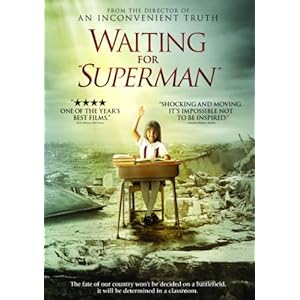
I recently watched the documentary, Waiting for Superman, and there was a forward-thinking teacher who started an amazing school in Harlem who made the profound observation that our children today recognize that they are getting the short-end of the stick. His observation, of course, came within the context of education, but I think it applies more broadly. The movie climaxes with a telling example of a group of children who *lose* a drawing to get into charter schools and are thereby relegated to attend their poor performing schools.

[spoiler end]

The sad reality is that children today have the cards stacked against them from inception. To lose anything in this life is to win simply because you had the chance to lose at all. We should take stock in the experiences of wanting to do more, to get it right, to help each other. In those moments, we are all closer than we were before in realizing what is fundamental to each of us--existence.

But to deprive another person of that most fundmental value--life--is to make enemies of everyone. If I can't develop empathy for the weakest and most defenseless among us, how can I develop proper empathy for anyone at all? Who cares that you can't get the heart-transplant you need, my TiVo isn't working. As bastardly as that sounds, everyday children are slaughtered at the altar of a better, more entertained, fun and exciting life. The movie gets it almost right. Just look at the decline in down syndrome in our society. We haven't developed in utero gene therapy, we've just learned how to give kids no stick at all.

So who cares about health care?

We all do.

Why?

We all don't know, and that is the problem. Until we can agree why life is important, justice tribalism will prevail and you can expect that prescription drug to continue to cost a little bit more every year.


Sign up by email to get the latest