Showing posts with label conversion. Show all posts

November 22, 2012

A Thanksgiving Conversion Story

These are the images you find when
you search "Social Studies"
This is a republish from last year with some slight modifications.

Some 11 years ago, I started teaching. My first set of classes included an eleventh grade Bible class and a seventh grade "social studies" course. The phrase "social studies"-- I explained recently to a visiting priest in our parish from Oxford -- is the American way of saying "history." I think "social studies" makes it sound more scientific as if history were merely the by-product of men sitting around a fire, smoking pipes and telling stories. I personally think social studies sounds like the work of a fiction novelist where some kind of large, puppet master is staring down upon society under a microscope studying us.

All that to say, about this time 10 years ago, I began my lesson on the history of the Separatist movement that eventually culminated in the Mayflower's journey across the Atlantic. The textbook I was forced to use for this seventh grade class was put together by Bob Jones University. If you are not already familiar, Bob Jones University is an anti-Catholic, fundamentalist school. In turn, their books have no citations (fundamentalist) and make every effort to put down the Church in favor of "simple Christianity" or "Bible believers" (anti-Catholic). This chapter was no exception. In fact, I let my students tear out an entire section of one chapter because it was so blatantly anti-Catholic. Although I was by no means Catholic at the time, I knew that such rhetoric had no place in a history book, and that polemics was not in the best interest of the normal development of a young mind. So in grandiose fashion, I allowed the students to march up to the front of the class and dispose of a part of their textbook in my trash can.

From that moment forward, of course, I was epic.

Once they all sat back down and gathered themselves from the exhilarating experience of book mutilation, we looked at the chapter again and to my surprise, the author allowed for one detail to slip through the cracks:

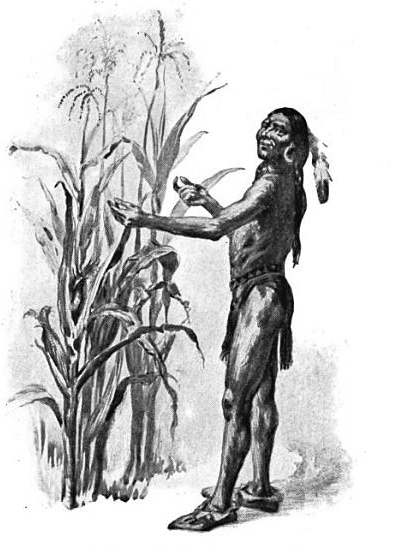
Catholic Squanto
Squanto was saved from slavery by monks. 

By MONKS!

Facts conveniently left out:
1. A Protestant sold him into slavery
2. The Monks were Catholic
3. Squanto was Catholic

The Bob Jones University propaganda machine contributed a seed toward the conversion of Brent to Catholicism? Say, what?

I remember thinking to myself, "Self, isn't it weird that God is providentially using Catholic monks to help the establishment of the plymouth colony?"

I will confess that I did not run right out and beat the doors down of the nearest Cathedral and convert. Nope. However, what did happen in my heart was the gentle acknowledgment that God seemed to be using Catholics, and when you formerly thought of Catholicism as "dead religion" that is a baby-step worth noting.


HAPPY THANKSGIVING TO ALL! GO TO MASS AND START YOUR DAY OF THANKSGIVING THE BEST WAY POSSIBLE!

(HT: Taylor Marshall)

May 30, 2012

A Protestant Pastor Becomes A Catholic Deacon

This is a video of my friend's first sermon as a Catholic deacon. He was a pastor for 33 years in an evangelical, Protestant denomination.  


I also encourage you to check out his blog, Heart for God.

Enjoy!

March 8, 2012

Conversion Tip Redux - Dear Lagniappe

Happy Almost Birthday to my blog!
(16 days to go)
And in the spirit of birthdays, I thought I would comment a little more on my last post. In the combox, my friend Lagniappe wrote:
"Discern(ing) - what doth it meaneth?  The post pronounces the random (chance) of flipping open a phone book and, voila!!!, this is God's direction (I get your point just a bit of hyperbole on my part) (#1).  Now, the quote:
"He is also capable of helping you discern the claims of the Catholic Church.  Ask Him to help you make the decision. Beg him to "show you the truth". You are not testing God, you are asking God for help."  Discerning requires more than a mental ascent to whatever, or a mystical epiphany, or a divine revelation of truth.  Mi Amigo, the very word, discern (as a verb), requires an examination or a judgment.  Thus, more than blind luck is required. Are you positing that one truly seeking the Roman Catholic way will find it apart from the obvious search of and through actual materials (#2)?  Will the sheer magnitude of a seeker's resolve to find this truth apart from serious inquiry result in a magic moment (#3)?
1. The phone book analogy was meant to draw out the magnitude of the task of finding a Protestant Church amongst the thousands of competing options in comparison to the magnitude of discerning the Catholic claim of being the Church Jesus personally founded. You see, many times people make the Catholic Church the "impossible find", so buried in history and Latin theology that the unlearned will never have a chance. "Sorry simple charlie," they say. Catholicism is only for the man of letters. The yeoman -- you're just out of luck.

But that isn't the case. I find something extraordinary in the Catholic Church. I find EVERYONE here. Supreme Court Justices -- who know how to blow holes in every kind of argument, farmworkers, learned theologians, and third grade educated grandmothers, all dipping their hand in the water font, genuflecting and silently kneeling in reflection after they receive the Body and Blood of our Lord.

2. No. But, I would be careful to imply that prayer is some kind of "blind luck". The intellectual duty of "loving God with your mind" certainly entails looking through actual materials. As a sage once said in another post:

"Pray more than you read blogs"

I'm the first critic of blogs. They can become like McDonald's hamburgers -- easy to eat but with little nutritive value. I did not convert to Catholicism through online blogs. I converted through the careful reading of tens of thousands of pages of books. However, not everyone will have the luxury of reading tens of thousands of pages of books. I happen to have at the time (a) a job that gave me the financial resources to buy those books, (b) time in the evening to read non-stop and (c) eventually the resources to not work for 7 months and do nothing but read (and debate non-Catholics and Catholics). So, far from "blind luck", as one who understood both the implications of becoming Catholic and the absolute necessity of examining various arguments against Catholicism, I agree that I had no "short-cut" option. However...

3. I believe in prayer. The Lord said we should, "Ask, seek and knock."Christ also said:
"But of whom of you that is a father shall a son ask bread, and the father shall give him a stone? or also a fish, and instead of a fish shall give him a serpent?" - Luke 11:11
I understand that neither of these versus have Roman Catholicism, per se, in their cross-hairs. But, what both establish is a principle. It is a principle I learned as a Pentecostal. The principle is this: we do not need to be afraid of asking God for help and believing he will give it to us. He will not give us a serpent if we ask for a fish. He will not give us a harlot church if we ask Him for his. Does this mean that we can abdicate our duty to study, discern or judge? Of course not. Though the journey I described in #2 would have been futile had it not included hours on my knees begging God:

"Please don't lead me to Catholicism! If this is not of you, throw me off the path! Please, Lord, anything but the Catholic Church!"

Anyone interested in Catholicism, please pray this prayer.

Now, you may immediately object to where my journey terminated, you might even say I was duped, deceived, etc. That's your prerogative. However, notice that my advice leads me open to the very real possibility that God won't lead someone reading this blog to the Catholic Church. So be it. I would rather someone prayerfully discern Catholicism, then lose spiritual oxygenation on their journey.

Peace to you on yours

March 6, 2012

Conversion Tip #158127

18 Days Until the 1-Year Anniversary
of Almost Not Catholic
Therefore, in the spirit of unrestrained and unmetered sagacity, I so offer this conversion tip #158127:

Pray more than you read blogs.

Even Catholic blogs. Because believe it or not, just like (you may have thought) God can lead you to a random Protestant church in the phone book, He is also capable of helping you discern the claims of the Catholic Church. 

Ask Him to help you make the decision. Beg him to "show you the truth". You are not testing God, you are asking God for help. 

Do it.

Pray.

and... 


Consider celebrating the one year anniversary of Almost Not Catholic by subscribing via feed burner. It's easy -- pain free even. Click here to make it happen.


Peace to you on your journey.

January 18, 2012

From the Combox...Will We Grow Apart if I Convert?

In response to my last combox question, it was expressed to me by Mrs. Anonymous that she was afraid that if she became Catholic she would grow apart from her husband.

That's a fair and honest concern.

In fact, I'm pleased that she is concerned about growing apart from her husband. Anytime a spouse learns anything new, does anything new, etc., it can be an opportunity for distance to grow in a relationship. My wife and I have a vow to never keep any secrets from each other. If someone tells us something, that person has to understand that they have told the opposite spouse. Why? Because when you keep places of your heart hidden from your spouse, those places of your heart act like a tether let out. Gradually over time, spouses can grow a part. Soon, and you never even realized it happened, you have A LOT of secrets you do not tell your spouse about. Maybe you have an entire life that you are living, and he or she is not a part of it. Not good.

RED FLAG

As I've said before, a conversion to Catholicism won't heal a marriage where communication is not wide-open. Does her husband know about her reading my blog? If not, she should tell him. Now. This cannot be a secret indulgence, it will only possibly cause pain later. In marriage, asking for forgiveness afterwards is never the right strategy.

Nonetheless, an important part of marriage is communication and acceptance. In this case, her husband is a Christian. Unless he has communicated directly that he thinks the Catholic Church is the whore of babylon, is unwilling to find out if that is true or not, and is committed to keeping his anti-pope flag hung up in his room, then I think she can still proceed with prayerful caution. (I don't guess she is asking that the papal flag be hung over their canopy bed.)

YELLOW FLAG

Thus, caution and prayer is key. If God is taking her on this spiritual journey, He wants to include her husband in some way. I am not saying this as some kind of prophet but rather by just exercising the intuitive spiritual muscle of common sense. She is one-flesh with her husband. As such, God moves in and through each spouse individually for the benefit of the other. As spouses, speaking in the first person, we are truly each other's crosses of salvation. This happens in my own marriage all the time. ALL THE TIME. God helps my wife grow in areas that directly challenge me spiritually; areas that many times I am too proud to confront on my own. No biggie. That's why God gave her to me! I'm just glad there is a channel through which God can speak to me when I've tried to turn them all off.

WHITE FLAG

"Sorry babe, the the new Madden
game is out", ain't cutting it.
She shouldn't give up. She needs to continue to pray and work on opening the lines of communication. Marriage is no fun when we have to hide behind the walls of repercussions; especially when they are repercussions for good things we are doing. Sure, if I spend all our money and we cannot buy food, I should expect to hear it from my wife. However, if I simply want to have a respectful conversation about how we are going to raise our kids, the discipline of going to church, and my own spiritual life, I should not fear reprisal. That's just straight-up not cool. Conversely, following Christ requires carrying a cross. The question then becomes, how much are we all willing to suffer for:

and

Peace to you on your journey.

January 11, 2012

From the Combox...Testing God & Certainty

Mrs. Anonymous is back and with another question (you can find her first two here and here). First, let me say that her questions are always welcome and in her case I take no offense at her hiding under the pseudonym "anonymous". She does not take pot-shots at me under that pseudonym, so I find her even asking a question to be courageous to begin with. She recently asked in the blogger combox [My comments in blue and a full response after]:
"I really enjoy reading your blog and I'm very sorry for being a "Mrs. Anonymous," but I have good reason to be...and it's not for lack of courage, I can assure you. Now, if I were disrespecting you under cover of anonymity, then I could understand your distaste [Normal people understand this]. However, that is not the case with me. I greatly appreciated your post in response to my further questions (sorry I didn't reply to it earlier, but life was busy) [I UNDERSTAND--just glad you are still reading!]. I would like to tell you that I am not sure what to think right now about Catholicism. I find myself being intrigued by, even hoping that, the idea (sorry, but at this point, for me, it's still just an idea) that the Catholic church might actually be all that it claims. However, I don't know how to be sure [question 1]. I've even prayed, "Lord, if this is the Truth, then please draw my husband toward it, too, without my prompting. Then, I'll know for sure." But, then, that would be testing God or asking Him for a sign, would it not [question 2]? I don't want to be like the guy on his roof during a flood who keeps praying for God to save him...you know the story, right? I mean, what if your blog (which sparked my interest) is like the helicopter that God has sent, but then I wave it away saying, "No thanks, when God gives me a sign, it will be more clear..." Perhaps you might say God is drawing me, but if He is, then wouldn't He draw my husband, too? We don't have children yet and I really don't want to raise kids if Mommy is Catholic, but Daddy is Protestant [question 3]."
Wow! What wisdom. I think I may change this blog's name to "Christ's Helicopter for His Church!" (ooh, that would make a nice header) As an aside, one thing I love about pentecostals is that they are spiritually perceptive. You show a lot of wisdom in understanding that God is using the experiences you are even having now to draw you closer to Him. He certainly is. To your questions, for the sake of communicating clearly, I want to break them up into three different ones and then answer them directly:

1. If God is drawing me, wouldn't he be drawing my husband too?

Maybe, but not necessarily. We are all in different places in our lives. God knows the end and the beginning at the same time (Alpha and Omega). When he draws one spouse, he may be drawing them as a means of drawing the other spouse. I obviously do not know in your specific situation. However, I would encourage you to continue to pray and allow this journey to change you for the better. Even though you will know more as it goes on, don't become the "know-it-all". Listen more, and be more attentive to what your husband has to say regarding matters of faith. Don't just look for what he says that you may be learning is not true, but try to find the things that he is affirming or are implicit in his statements that in fact you see are affirmed by the Catholic faith.

That is one of the things I try to do on this blog. Show people that we believe a lot of Catholic "stuff" or that our rejection of certain Catholic notions is a hypocrisy in lieu of other Christian sensibilities we have.

The relevant portion of the Catechism of the Catholic Church says (assuming a "Jesus-only" invalid baptism):
"In marriages with disparity of cult the Catholic spouse has a particular task: "For the unbelieving husband is consecrated through his wife, and the unbelieving wife is consecrated through her husband." It is a great joy for the Christian spouse and for the Church if this "consecration" should lead to the free conversion of the other spouse to the Christian faith.141 Sincere married love, the humble and patient practice of the family virtues, and perseverance in prayer can prepare the non-believing spouse to accept the grace of conversion." CCC 1637
2. Can I test God?

Easy answer, no (Luke 4:12). I want to qualify this, though. Can you ask God to "help my un-belief"? Of course. How he does that is up to Him. Let's be honest with each other. This whole Catholic thing has got you scared. I know, I was in your shoes. You may be starting to realize that either:

A. The Catholic Church is the Church Jesus Christ, himself, founded

OR

B. She is the great whore from the book of Revelation dragging men and women to hell

If A or B, OH MY!!! Both send spiritual chills down your spine but for opposite reasons. Good, we are on the same page. Asking God to "give you a sign" may not be wrong if what you are asking is "God, help me to see the truth here". God knows your heart, I don't. Be honest with Him--which from your comment appears you already are.

3. How can I know for sure?

This could be an entire post or a series of posts. Instead, I will redact it down so as to make this as easy as possible:

When we say "for sure" we mean certainty. In thinking about certainty, there are two possible answers:

A. A psychological state whereby one cannot be convinced otherwise because there is not a smidgen of doubt

OR

B. We have a reasonable confidence correlative to the type of knowledge we are talking about.

"A" does not exist. We can doubt ANYTHING. Is it rational to doubt anything? Absolutely not, but that is besides the point. We can. Therefore, let's dismiss A and discuss B.

There are different types of knowledge and therefore different types of certainty (you can read more about it here). I won't be exhaustive here, but let's think about three different types of truth claims:

1. If I drop this ball, it will fall to the ground

2. 1 is not, not 1

3. The Catholic Church is the Church Jesus founded

#1 is a statement of "physics". We can verify this through our sense experience alone (empirical) using reason. Is our understanding of the physical world ever foiled? Sure. Nonetheless, we can have physical certainty about some facts without always living in some type of tension or state of doubt. In other words, if you jump off of a roof, you are certain that you will hit the ground.

#2 is a statement of metaphysics. It flows from both the law of identity (A=A), but ultimately is an expression of the law of non-contradiction (A≠ not A). This simply means (as Blessed Scotus would say), "to be burned and not to be burned are not the same thing". We do not know this by physics but by metaphysics. Hence, if your friend tells you that she has a bank account, you do not then tell your other friend that she does not have a bank account. You don't say this simply because you do not want to lie, but rather that it is a law of thought that governs how we think.

#3 is a moral statement. What I mean is that you or I have to make a judgement, whereas in #1 we follow the cues, and #2 we deny at our own peril. Let's think about number #3 in a different way. How do you know "for sure" that you were born in the city your birth certificate claims? Certainly not in the way you know #1 or #2. So, you have to make a judgement. The Catholic Church has always taught that one can know certain universal characteristics of God through human reason alone (Romans 1:20). Like one would go about identifying the "Founding Fathers", the Catholic Church can be identified as the "Church Jesus founded". Search history and examine for yourself.

What next? If the Catholic Church is the Church Jesus founded, and Jesus is God-Incarnate, then...

Peace to you on your journey

December 30, 2011

Why the "Holy Family"?

When I was a Protestant, we did not have the concept of the "Holy Family". The idea was just glaringly absent. Why? I suppose that it was because, on the Protestant view I was inculcated, they were not holy. No one but Jesus, that is. Jesus was holy. Mary and Joseph, not so much.

What about "father" Abraham?

Holy

What about Joseph in the Old Testament?

Holy

What about Moses?

Holy

What about...

Moses: A Much More
Seemingly Fantastic Story
You get the picture. There were the heroes of the faith, or what we might call those "set apart" (the greek meaning of the word "holy"). They were the great "cloud of witnesses", whom we held in high esteem, respected for their faith, virtue and courage. In some weird kind of western, post-"enlightened" vantage, we imagined that press-time in the Bible equaled importance for God and so we re-arranged our priorities. Moses got about 10 out of the 22 weeks of Sunday school, Mary 1/4 of a day. Then again, the cult of the Bible was bound to lead to such conclusions. Why would God give so little page space to Mary but so much to Moses? Is not Moses more important than Mary?

This kind of quantitative reductionism, besides being less than erudite, is spiritually blind and inept. It fails to consider that the Scripture is a telling of salvation history--not a catechism--written in almost strictly narrative form, and that the climax of any story should always get more attention than the rest. It is the point of a story, right? The climax.

The climax of salvation history begins with the Holy Family. It is the complete undoing of the sin of the garden. If in creation we learn one thing, we learn that God desired a family--and so we exist. Subsequently, he granted us a share in the divine life and allowed us to "make man in our image in likeness"--so to speak (I got 4 of them so far!). Yet from the beginning, even without children, we were making complete fools out of ourselves. Conspiracy, murder, devilry, you name it, the first family was a picture of disfunction. This disfunction unfolds in our own history, and replays, sometimes getting worse, while at other times acquiescing to that which is still noble in us. Yet, the story is still the same: failure, sin and grabs for inordinate power that lead to ordinary powerlessness.

The New First Family
So enters the Holy Family. On this feast, as a Catholic, I am reminded that the garden is not to be my fixed point of reference. No. The Second Adam came to re-fix my gaze. He not only heals the blind eyes, He gives them a new picture of life! Where shall we find this life? None other than in the Holy Family! A father--nobel, courageous, quiet and strong, a mother--spotless, listening, praying, full of nurture, and a Son--who draws heaven and earth together in the ineffable mystery of the unicity of His nature. It is a great tragedy to miss this family--especially for those who love the Savior. It is likened unto one who is healed by Him, only to fix one's eyes back on the first garden. For we will always have but one of two choices: the garden or Nazareth.

We like the garden because it reminds us so much of ourselves.

Yet in the stable, fleeing to Egypt, and at the temple, we see the Holy Family. The entire story climaxes in this famille petite. We want something big, something epic, and so we fix our eyes on Moses, Elijah, or someone else. Do not get me wrong, they are important, but if you do not understand how in The Story this small family huddled around a babe in swaddling clothes is the raison d'etre, you have yet to fix your eyes beyond the garden--which is ultimately to say that you have not stopped gazing at your own navel. Even more, while your gaze was there--at the garden, you did not hear the Lord say:
"I will put enmities between thee and the woman, and thy seed and her seed: she shall crush thy head, and thou shalt lie in wait for her heel."-Genesis 3:15
The entire story between this moment and the moment the Holy Family appears can be summed in this verse. It was merely a lying in wait. Wait and see for what?

I think you know the answer.

It all started with a family set a part for the climax of His-tory. 

Holy Family, pray for us!

December 21, 2011

Co-Mediatrix!!! What Gives?

When I was Protestant and studying the Catholic faith, I happened upon the word "co-mediatrix" in Scott Hahn's book Hail Holy Queen. Despite what you may think about my long-term papist leanings, this word sent me into a Zwinglian down-ward spiral. I was Martin Luther for at least four days after reading that book. With all the reformation furor I could muster, I marched around my house saying (to myself):
"Co-mediatrix! Mediatrix! Meeediiiaaatrix! Who do these Catholics think they are? There is one mediator between God and man and that is Jesus. I stand with Luther!"
Bible Abuse #259292:
"All Things To All People"
Setting aside the kill-joy of that closing remark, I was dogged in my opposition to Roman Catholic additions to Christian theology (what were in my mind) --as I would have put it (notice how I added "Roman": it is a Protestant way of making anything Catholic sound bad because the word "Roman" is so abused in their world. Don't tell them a book of the Bible is named "Roman(s)".) During one of my evenings of reformation solidarity, I went to my ecclesial community to lead people in song on my electric guitar (accompanied by band). The song was a Third Day version of a hymn which was kind of a Protestant war-cry for me. I would not stand for "co-mediatrix" for even a minute, and so I belted out the chorus imagining I was bringing down the Catholic religion with the reverberation of every power chord. Sound waves are powerful, you know.

If Luther could not do it, maybe I could on an Ibanez, S-series.

Q: How did I get over this theological pot hole?

A: I stopped and asked myself what "co" meant.

That was my real objection. Right? What does "co" mean, doesn't it mean "equal"? For starters, it is a latin pre-fix for "together". Unfortunately, the modern ear (which has been bastardized by abuses of the English language) hears "equal". However, you cannot get from "together" to "equal" without some serious bastardization. As examples, let us consider common words where we use the pre-fix "co":

Cooperation

Coordinate

In both of these examples, "co" simply implies that something is "together" with the root word. If someone is cooperating with me, I would not think they are being "equal" with me. In fact, their cooperation might imply just the opposite. The only time we think of the pre-fix "co" in terms of equality is when we say someone is "co-equal" or the "co-winner". In these cases, the root word does all the work, but somehow "co" gets the credit. Thus, in the case of an action, it is not necessary to imply equality nor is it natural to do so.

Why co-meeediiiatrix!!!! (emphasis is mine to demonstrate just how scary this word is to a Protestant ear--it was to mine) Il est très simple.

As an example (not proof-text), in 2 Corinthians 6:1, we are described as "co-laborers", "co-workers" or those "helping" him (not to mention the entire theme of "In Christ" throughout all of St. Paul's writings). What are we helping him do? Or rather, what is He doing that we are helping accomplish? Does Jesus need help washing His car? Building widgets? Walking little old ladies across the road? ("yes" to the last one) Of course not (almost). What is Jesus doing?
"For there is one God, and one mediator of God and men, the man Christ Jesus" -1 Timothy 2:5

"My little children, these things I write to you, that you may not sin. But if any man sin, we have an advocate with the Father, Jesus Christ the just" -1 John 2:1
Jesus is the One Mediator--tru dat. How does this work? Would not our participation in His mediation take away from His mediation? Not if our work as co-mediators is grounded in our union with Him. That is exactly what St. Paul goes on to talk about in 2 Corinthians--he revels before those in Corinth in the panoply of ways he has shared in the ministry of Christ (poverty, suffering, affliction, joy, etc.). What does this have to do with Mary as Co-Mediatrix?

"Don't worry. We have these in the youth hall."
For starters, Mary is the greatest of creatures. Why? Because she was Mother of the Word Incarnate, duh. When you spend your entire life ignoring the Mother of the Word Incarnate in a failed attempt of "giving Jesus all your attention" while sharing that attention with NASCAR, TLC, and Wii, then it makes sense that you would have no problem dismissing her importance in between games of NASCAR kart racing. The point is that if non-Catholic Christians can teach their children that "Father Abraham had many sons" and "Zaccheus was a wee little man, and a whee little man was he" while dragging Mary begrudgingly out at Christmas only to have her hit the curb as fast as an evangelical Christmas tree on December 27th, than there is going to be a Marian disconnect on a visceral level. Are you Protestant? Do you have no affections for Mary? That makes sense.

Having affections for Mary and her being co-Mediatrix are two different things. I get that. But, the minor objection(s) many times fuel the major objection, and in this case the minor objection is pure emotion--or rather the lack there of. Setting aside any callousness to Mary, we can see from the Biblical witness understood through the Tradition of the Church that Mary is truly the "New Eve". As such--qua creature--she is the greatest. She receives every possible reward we can receive first and in the greatest degree. Thus, she is--like us--a co-laborer with Christ. Her union with Christ allows her to participate in the ministry of mediation that you and I also enjoy in a much more diminished capacity. We give cups of cold water from our vantage. She does her work from hers.


This post is not a full-blown apologia for the title "co-mediatrix". You can read some great stuff to that effect here here, or here. You can also read Scott Hahn's book Hail Holy Queen, if and only if you can set aside your Marian callousness that has accumulated through years of NASCAR kart racing. My point was merely to peel back a few layers of what can appear, at first blush, a very scary onion. What I hope you see now, at the least, is that the title has both a Biblical and historical precedent, and can make much more sense in a world where the Blessed Virgin Mary is displayed like this all year:


Instead of like this (once a year):


WANT MORE ALMOST NOT CATHOLIC? JOIN THE JOURNEY...

December 19, 2011

Reply...Again...Conversion: The Way of the Cross

"Anonymous" replied to my recent post, again using blogger, so for her benefit, yours and mine, I am responding to her recent question on the blog. She said:
"Thank you for answering my question, but it leads to another. What if a husband or wife wishes to convert to Catholicism, but the spouse is unwilling, uninterested or maybe even adamently against it?Particularly, as in the second comment above, what if the wife wishes to convert, but the husband does not. What is she to do in the eyes of the Church? Submit to her husband or go against his wishes, since Christ said we must follow him no matter what or who stands in our way? Can one spouse convert and the other, not? What if (not that it would have been) that had been your situation? Would you have still converted without your wife's joining you? It seems it would be a sticky situation. You are very blessed that she happily joined you, but not everyone has it so easy, especially when the roles are reversed and it is the wife who is considering converting, to her utter personal shock and surprise, I might add. Like you, she too, never imagined (and still hasn't admitted to herself that she is) she would ever consider Catholicism."
First, let me say that I completely understand the sentiment in your last comment. I, too, never dreamed of becoming Catholic. All roads were not conspicuously leading to Rome. I am going to give you two takes on the matter. I asked my wife this question, and here is what she said:
"My gut reaction is convert no matter what....I don't know what I would actually say if I was the one having to respond to this email. It seems to me, though, that converting to Catholicism is as tantamount as becoming a Christian. I would never tell someone to reject becoming a Christian because of marital reasons. Isn't that what the Catholic Church is? Christianity, our Salvation, the way Christ has given us himself on this earth?...."
I love my wife. Her feminine sagacity comes in short thoughts like this that get right to the heart of the matter. For prudential purposes, I would add the following:
  • Conversion, even when both are not on the same page, is easier if the existing marriage is solid. Any communication problem you may have will be accentuated by this particular conflict, if you let it.
  • Go slow. There is no reason to rush. When you are a catechumen (learning about Catholicism in RCIA), Mother Church calls you Her own. I recommend finding a local parish and starting RCIA. Maybe your husband would go with you? Maybe he would be willing to have a conversation about what you learn? Most importantly, pray about this every day. Ask God for help: in your heart, marriage, mind, in the work He has called you to do as a mother...everything. Pray, pray. and pray again.
  • Allow your journey to Catholicism to be a chance to grow closer to God. To be closer to His Church is to be closer to Him. To be closer to Him is to be more like him. Your husband and everyone else will notice. 
  • Ask the saints to pray for you, especially Blessed Mary. I know this one probably sounds weird to you at this point. It did to me too. I recommend praying this little prayer I prayed:
Our Mother
"Dear God, if the saints are not in heaven, make them to not hear my prayers. I'm not sure if this is the right thing, but I'm starting to believe that the Catholic Church is the Church you founded. You said that if I ask for bread, you would not give me a scorpion. Well, this is one of those situations. If this is not of You, throw me off this path. I see where it is heading, and I don't want to go there but I'm afraid I will have to unless you throw me off this path. I love you, God."

St. ____________, pray for me.

Amen.


You are in my family's prayers. 


Want more Almost Not Catholic? Join the journey...

December 18, 2011

From the Combox...On the Eucharist

I recently received two comments via blogger on my most recent post and because they were not done in Disqus, they did not show up on the post. Nevertheless, I wanted to respond to both of them. The first question was:
"I was wondering how its been for your wife and if your families have been accepting and supportive."
A: In the beginning it was mixed--to put it mildly. Now, things are better. In fact, I would dare say that some people are on a journey (as we all are). I had one family member buy the Lamb's Supper by Scott Hahn. My wife, of course, joined me on the journey and is a happy Catholic. The thing is, people that know me understand my conversion to Catholicism as a continuity of what has always been a lifelong pursuit of Jesus Christ. I am Catholic because he founded the Catholic Church. No other reason.

The other question was:
"I'm a professed Pentecostal in a state of... Reform? Not really sure about very many things right now except that i feel lost and like I've built my house on sand. My husband was a minister. Certain circumstances have brought us to a point of questioning. I had a thought out of seemingly nowhere the other day: why would a Pentecostal ever convert to Catholicism?! So i googled and came across your conversion story. Wow. You addressed some questions I've raised within myself. And other subjects I had never questioned. Well frankly, I'm at the point of questioning most everything I've ever known regarding religion. I love the experience of the infilling of the Holy Ghost! Yet…I must admit something is missing. There is a void that has not been filled. I never dreamed that I would one day consider Catholicism. I am intrigued by your testimony. Your journey. I have babies. I cannot afford to be in limbo any longer! My husband won't hear of it... Yet, at this point he wants nothing to do with any church and is the most cynical towards the Catholic Church. Please pray for us in our journey! Questions: what about immersion baptism in Jesus' name? The infilling of the Holy Ghost? How do you stand on these subjects now? What has this conversion been like for your wife? I cut my hair months ago. Relief!!! No more struggling with damaged hair and not a single headache since! I'd had regular migraines for years!!! I have prayed and studied about it and feel completely at peace with cutting my hair. I believe we interpret so many things wrong! Anyhow, my two struggles? 1. Am I hindering my husband? He says no, but I still feel concerned about how my actions affect him. 2. People. Judgmental, condemning people. Maybe I'm too prideful and just don't want people upset with me but why ever it is; they get to me! I'll tell you this because it is an example of how i feel about most of the things I am struggling with. Hope i haven't been too mouthy! Just feel a need to ask you those things. Thank you!"
First, you and everyone else considering Catholicism are in my prayers every day. I understand there are so many hurdles to get over when considering Catholicism. As my friend says, "Anti-Catholicism is a tradition of men"; and a hard one to rid at that. For readers that may not understand where the commenter is coming from, it appears she may be a part of a Pentecostal Holiness Church of some sort. Sadly, they may practice "Jesus-only" baptism. I"m not sure.

To her question regarding baptism, I was a Pentecostal who believed in Trinitarian baptism. The mode (or method) of baptism is quite another question, and one that we can tackle a different way. I did a series of posts on baptism you can find here, here, here, here, here and here (read them in that order). You should also read a great post at Catholic Answers entitled "Infant Baptism".

Regarding the gift of the Holy Spirit, as Catholics we believe this gift is given at the Sacrament of Holy Confirmation. It is the official "laying on of hands" that continues in Mother Church to this day. It is one of the 7 Sacraments of the Catholic Church. The Pentecostal or Charismatic baptism of the Holy Spirit is a unique experience and one the Catholic Church affirms as a genuine work of God. I recommend this article by the current papal preacher, Father Raniero Cantalamessa, OFM.

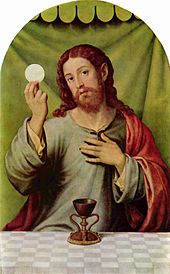
However and to add, I would say that the greatest gift God has for us is found in the Holy Eucharist. It is the Most Blessed Sacrament, the fulfillment of all the Old Testament feasts, the way our Lord gives himself fully and freely to His bride until He comes again, and is the great mystery of the faith (the internet does not have enough words to describe our Lord in the Most Blessed Sacrament).

Our Blessed Lord said as much in John 6:48-68:

"I am the bread of life. Your ancestors ate the manna in the desert, but they died; this is the bread that comes down from heaven so that one may eat it and not die. I am the living bread that came down from heaven; whoever eats this bread will live forever; and the bread that I will give is my flesh for the life of the world."

The Jews quarreled among themselves, saying, "How can this man give us (his) flesh to eat?"

Jesus said to them, "Amen, amen, I say to you, unless you eat the flesh of the Son of Man and drink his blood, you do not have life within you. Whoever eats my flesh and drinks my blood has eternal life, and I will raise him on the last day. For my flesh is true food, and my blood is true drink. Whoever eats my flesh and drinks my blood remains in me and I in him. Just as the living Father sent me and I have life because of the Father, so also the one who feeds on me will have life because of me. This is the bread that came down from heaven. Unlike your ancestors who ate and still died, whoever eats this bread will live forever."

These things he said while teaching in the synagogue in Capernaum. Then many of his disciples who were listening said, "This saying is hard; who can accept it?" Since Jesus knew that his disciples were murmuring about this, he said to them,

"Does this shock you? What if you were to see the Son of Man ascending to where he was before? It is the spirit that gives life, while the flesh is of no avail. The words I have spoken to you are spirit and life. But there are some of you who do not believe." Jesus knew from the beginning the ones who would not believe and the one who would betray him. And he said, "For this reason I have told you that no one can come to me unless it is granted him by my Father." As a result of this, many (of) his disciples returned to their former way of life and no longer accompanied him. Jesus then said to the Twelve, "Do you also want to leave?" Simon Peter answered him, "Master, to whom shall we go? You have the words of eternal life."

_____________________________________________________

To whom shall we go?

Peace to you on your journey...

December 14, 2011

Reason #679038 Why I'm Catholic

BEER

I know this is a superficial, shallow, and Protestants-do-it-too reason. 

Who cares.

[I was never a part of one of those denominations, therefore, I can still vaunt the benefits of sober-minded drink without being obligated to enter into one of those communions. Thus, this reason is not a reason I am Catholic and not ____________________ Protestant. It is merely a reason I enjoy being Catholic. Post continue...]

What is the bad news?
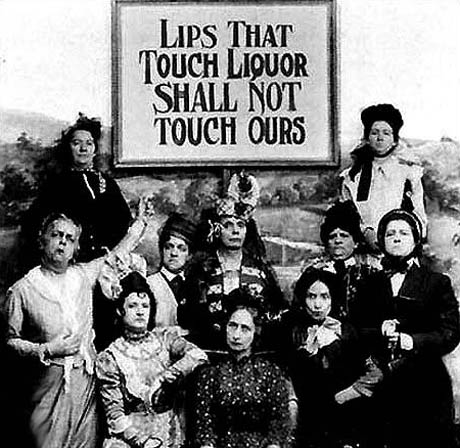
Prohibition and its tradition that continues in Bible-alone evangelical circles makes drinking a beer in public--especially down here in the "Bible-belt"--dubious. I knew a football coach who had to drive an hour outside of his city to have a beer in public for fear of ridicule (he actually crossed a state line!).

Ridiculous! Don't the Bible-alone belters know:

“Give beer to those who are perishing, 
wine to those who are in anguish; 
let them drink and forget their poverty 
and remember their misery no more.” Proverbs 31:6

According to the beatitudes, real Christians will have their fair share of anguish, poverty and misery. But, be of good cheer, Jesus gave us beer! (or something like that)

Anyways, as a Catholic we are not prohibited from drink. We are prohibited from drunkenness. I recently spent some time with a priest. We had a few beers, discussed prayer, theology and liturgy. Good stuff. When I left that encounter--with a very holy priest I will have you, I thought to myself jokingly how that would have been impossible in my old life. A holy man of God would not let drink enter his lips--much less mix theology with Shock Top. 

I remember thinking this myself about 10 years ago, and then I went to Norway. I had some beer while I was there visiting some friends, and after realizing that beer tastes good and is a great activity to engage in with friends because of its intended conviviating effects, I concluded that:

Drinking ≠ Immediately losing your morals

Drinking ≠ Sleeping with one thousand people and contracting a disease

Drinking ≠ Brawls, bras, and bros

Drinking ≠ you name it

Now, this might all seem silly to you cradle Catholics. But, and Father Longenecker can attest being a graduate of fundy-U, "Bible-belters" are taught that beer = all of those things (unless you are watching your favorite football team on Sunday in the privacy of your own home). Propagating this idea is the way you keep people away from it--which will inevitably lead to Catholicism (joke). I have actually had a conversation with someone who was afraid of "what they would do" if they had one drink. Looking at his girth, it was pretty obvious to me this person was not afraid of "what they would do" if they had more than one cupcake. I digress.

To end this un-end-able post, let me just say that it is good to be Catholic.

Peace to you on your journey

November 25, 2011

Reason #9745 Why I'm Catholic

tradition
with a small "t"
Image Credit: NTM
“Wherever the Catholic sun doth shine, 
There’s always laughter and good red wine. 
At least I’ve always found it so. 
Benedicamus Domino!” 
-Hilaire Belloc

Put simply, any religion worth its weight will develop a culture around it. It is what we do as human beings to preserve something that is good. A culture is a way of living, and the way in which that "way" is passed on is tradition (not a scary word). In the Old Testament, we notice an elaborate culture that emerges among the Jewish people, a culture that is on display even to this day.

Ah, you see, the Catholic religion is no different. How much more the New Covenant--that God came to earth--should create a real and genuine way of being! Yet, Catholic culture and identity was at times more apparent in society. The last 50 years have been tough, but I notice a resurgence in Catholic identity taking place. This starts first in our liturgical celebration: for worship is truly what we have received from Christ. In worship we grow in love for our Lord, most especially in and by the gift of the Holy Eucharist. This happens in a rythme, a cycle, called the Liturgical Year, and as you probably know, we are beginning to commence a new one. What does this have to do with my reasons for being Catholic? Good question.

I am Catholic because when I look at what the religion has produced as far as culture goes, I notice two things. First, Catholicism is wholly Christocentric. Everything we do as Catholics points to Christ. We feast and fete the entire life of Christ, the life of his mother, and the life of his holy ones who have lived among us. Well, mostly we feast and fete. Historically, Catholic Christianity has also produced a general mood of penance. Meatless Fridays. Lent. Holy Week. "Offering it up". All of these make sense of the new old words: "through my fault, through my fault, through my most grievous fault.”

Second, I also notice the most evil and direct affront to Her tradition. Satan seems to desire, above all else, to quash this culture--the tradition of the Catholic Church lived in the lives of the people--because it is Her culture that keeps alive the intense memory of his Great Foe. In politics and theatre, men are quick to both remove the effects of Her tradition from the public view while simultaneously in the public view making a direct mockery of them. Sadly, the devil roars about in the Church seeking whom he may devour. Bishops, priests, and lay are targets all the same. And the goal, you ask? 

The destruction of Catholic culture. Why? Repeat:

Because it is Her culture that keeps alive the intense memory of satan's Great Foe.

With the introduction of the new missal, begin this Advent not in rebellion to Mother Church. Rather, embrace Her, embrace the change as a way to be consonant with the Tradition (big "T"), which will help us--the people of God--to develop a more integrated tradition (little "t") that will truly "proclaim His death until He comes in glory".


Let's drink to that!

Benedicamus Domino!

November 22, 2011

Squanto and My Conversion

These are the images you find when
you search "Social Studies"
Some 10 years ago, I started teaching. My first set of classes included an eleventh grade Bible class and a seventh grade "social studies" course. The phrase "social studies"--I explained recently to a visiting priest in our parish from Oxford--is the American way of saying "history". I think "social studies" makes it sound more scientific as if history were merely the by-product of men sitting around a fire, smoking pipes and telling stories. I, personally, think social studies sounds like the work of a fiction novelist. In my mind, I think of some kind of large, puppet master staring down upon society under a microscope.

Back to the point of how Squanto, the infamous Native American guide to the Pilgrims, has anything to do with my conversion to the Catholic religion.

About this time, 9 years ago, I began my lesson on the history of the Separatist movement that eventually culminated in the Mayflower's journey across the Atlantic. The textbook I was forced to use for this seventh grade class was put together by Bob Jones University. If you are not already familiar, Bob Jones University is an anti-Catholic, fundamentalist school. In turn, their books have no citations (fundamentalist) and make every effort to put down the Church in favor of "simple Christianity" or "Bible believers" (anti-Catholic). This chapter was no exception. In fact, I let my students tear out an entire section of one chapter because it was so blatantly anti-Catholic. Although I was by no means Catholic at the time, I knew that such rhetoric had no place in a history book, and that polemics was not in the best interest of the normal development of a young mind. Therefore, I told them to tear out the section. So in grandiose fashion, I allowed the students to march up to the front of the class and dispose of a part of their textbook in my trash can.

They loved it.

Once they all sat back down, we looked at the chapter again and to my surprise, the author allowed for one detail to slip through the cracks:

Catholic Squanto
Squanto was saved from slavery by monks. 

By MONKS!

Facts conveniently left out:
1. A Protestant sold him into slavery
2. The Monks were Catholic
3. Squanto was Catholic

History Fail. Social Studies success! Bob Jones University propaganda machine success! A seed toward the conversion of Brent to Catholicism...

...What?

I remember thinking to myself, "Self, isn't it weird that God is providentially using Catholic monks to help the establishment of the plymouth colony?"

I will confess that I did not run right out and beat the doors down of the nearest Cathedral and convert. Nope. However, what did happen in my heart was the gentle acknowledgment that God seemed to be using Catholics. When you formerly thought of Catholicism as "dead religion" that is a baby-step worth noting.

Duly. Noted.


HAPPY THANKSGIVING TO ALL! GO TO MASS AND START YOUR DAY OF THANKSGIVING THE BEST WAY POSSIBLE!

(HT: Taylor Marshall)

November 18, 2011

Is Protestantism a Theory?

 Version #21,743 of 38,103
I mentioned on my Journey Home episode that while examining my own faith, I came to the realization that Protestantism was a theory (at this point Catholicism was not on the radar yet). A few commenters have asked me about this. Recently while reading Hilaire Belloc's book, The Great Heresies, Belloc says something very similar:
"[Protestantism] did not, after the various heretical propositions had been condemned, set up a separate religion over against the old orthodoxy. Rather did it create a certain separate moral atmosphere which we still call "Protestantism". It produced indeed a crop of heresies, but not one heresy. The Protestant attack differed from the rest especially in this characteristic, that its attack did not consist in the promulgation of a new doctrine or of a new authority, that it made no concerted attempt at creating a counter-Church, but had for its principle the denial of unity. It was an effort to promote that state of mind in which a Church in the old sense of the word--that is, an infallible, united, teaching body, a Person speaking with Divine authority--should be denied; not the doctrines it might happen to advance, but its very claim to advance them with unique authority." (pp. 97 & 12; Tan Books & Publishers, 1991).
A Shocking Image to Our
21st Century Sensibilities
By denying a Magisterial Authority in the Church Jesus established, one denies the unicity of the Church (Ecclesiae unitatem). One of the most important factors in being able to identify any thing at all is its unicity. We cannot find a thing if it is disintegrated. Or rather, what we will find is a disintegrated thing, but not the thing per se. Therefore, if the Church is not united to one head, Christ, and that is manifest visibly by a Magisterial Church invested with the same authority as Christ, then one has no hope in identifying the Church Jesus established. She is a chimera at worst, only invisible at best. If either, one would never know if he were leaving Her thus eliminating the possibility of "schism from". This is why the Holy Father calls Protestant churches "ecclesial communities" since they are merely a group of Christians choosing to form a community around their shared theology. They can leave that community and start another if they like, since there is no visible church and therefore no sin in leaving (schism) that community to start or join another. Thus, what one finds is a disintegrated thing (res dis unitatem)--not an "infallible, united, teaching body, a Person speaking with Divine authority".

Church Board:
"We all agree, so we joined this club that runs a church"
Ultimately, when I was a Protestant, I joined a church based upon a shared theology--theory--about Christianity. A theology is a theory when it is merely the by-product of human artfulness. Thus, as I learned more things, I changed my community to one that shared my theory (or was really close to it). When one identifies the Church Jesus founded, he will find that she teaches things that he does not agree with and that he may never fully understand or accept on the grounds of his own intellect. Nonetheless, he does not join her ranks because it is a church of men convinced of the same theory. No, it is a Church united visibly as a "thing" in reality (res Ecclesiae), whose existence can only be explained by Her head's (Christ) divine intervention and providence (will). That is precisely what the Catholic Church proclaims to be:

"CCC 831. Secondly, the Church is catholic because she has been sent out by Christ on a mission to the whole of the human race:
All men are called to belong to the new People of God. This People, therefore, while remaining one and only one, is to be spread throughout the whole world and to all ages in order that the design of God's will [not human invention or artfulness] may be fulfilled: he made human nature one in the beginning and has decreed that all his children who were scattered should be finally gathered together as one. . . . The character of universality which adorns the People of God is a gift from the Lord himself whereby the Catholic Church ceaselessly and efficaciously seeks for the return of all humanity and all its goods, under Christ the Head in the unity of his Spirit.

Amen.

November 4, 2011

Don't Be Catholic...

This was originally published earlier this week at virtuouspla.net. If you have not already, check out what is going on over there.
___________________________________


...for the wrong reasons.

Is this the real Catholic Church?
In the last few months, I've stumbled upon a number of blogs and combox participants who lament the Catholic Church they've found since becoming Catholic. Some of them even appear disillusioned. I've also read a number of posts by Protestants who are adamantly opposed to conversion on the grounds that there are two Catholic Churches: the one you read about and the one that actually exists.

I want to respond to these problems with a few observations. First, I should say that I was lucky enough to be exposed to nominal, heterodox Catholicism very early in my journey. In fact, my first experience in RCIA was devastating to my wife's journey. I won't go into details, but will only relay that had Catholicism been measured by that experience it would be found drastically wanting.

The problem, though, with judging the Catholic Church on such an experience is manifold--and a casual reader would even feel the force of admitting. For starters, you don't come to the Catholic Church like you come to a Protestant sect. You are not looking for an über awesome local church that "feeds your soul" and gives you chill bumps. If you become Catholic for that reason, you would have become Catholic on accident. A Catholic journey is one where you are looking for the Church Christ established. She is not the sum-total of one parish, because she is not some evangelical mega-church.

Second, a mere perusing of the New Testament will quickly lead you to the conclusion that while Christ established a Church, it was a Church full of humans. Bickering brothers, a hot-headed leader, and 8.3%  (1/12) followers of which are guaranteed to sell their soul to the devil. If you think you will find something different in the Church Jesus Christ established, think again. It's the barque of St. Peter we are sailing in, and there's all kinds of animals on board.

Lastly, stop looking for the ideal which is mostly just some form of the "American dream" church. The "American dream" is the left-overs of Manifest Destiny smoking the pipe of modernist industrialism, all the while pining for an inhuman Romantic ideal grounded in our European sensibilities. Some people want to fall in love with an angelic Church. Unfortunately, you will have to die to get into that one--so stay tuned. The Catholic Church is made up of people like you and I, and the last time I checked...

So, I can hear my objector saying, "So, what's the difference between the Catholic Church and another Church. Brent, you are basically saying the Catholic Church isn't perfect, but neither is my Protestant church. So what gives?"

The difference is in the ontological reality. In other words, if I tell you my wife isn't perfect and then tell you your wife isn't perfect, it doesn't mean that I'm just as well off to go home with your wife tonight. Poetry about the beloved will always be grandiose, and an evening cleaning up around the house with the beloved--her hair up in a do--might lead someone to consternation over the paradox between poetry and reality. Of course, this only shows the the interpreter's failed grasp at all the contours of love.

Moreover, at the centre of our faith is the Eucharist, and ultimately a belief in the abiding presence of the divine Paraclete (helper), the Holy Spirit, who we ask to "come upon these gifts to make them holy, so that they may become for us: the body and blood of our Lord, Jesus Christ." Like bread and wine, we are simple. Yet somehow in the mystery of God's eternal plan, He has sent His Spirit to be with us until the end of the age, to lead us into all truth, to fill up His Body--the Church: the ground and pillar of truth. We believe that about the Church he established so we don't leave her--in spite of ourselves.

So, be Catholic for a good reason, with faith in the Triune God and not some romantic idealism.

I'm not saying you won't get anything epic...
Peace to you on your journey

October 28, 2011

A Conversion Essay Worth Reading

If you are in the mood for conversion stories, you need to check out this one by another ORU graduate vis-a-vis Yale Divinity School. It is elegantly written, and reminded me of my journey because of the influence of Blessed Newman on both Michael and me. So, in this case, I get the benefit of sharing with you reasons for my conversion while at the same time not having to lift a finger to do so. Sort of (I'm watching my fingers lift right now).

Michael Rennier and Family
From his essay:

"I can say this, in turning to the Catholic Church I do not turn to something foreign and alien to Anglicans or evangelicals. I turned, rather, to the Catholic Church in order to become more fully what I already was. I have been raised [Pentecostal] to expect joyfully the activity of the Holy Spirit in my life; I expect Him all the more. I have come to understand the beauty of the English liturgy, the patterns that are formed through Common prayer, the primacy of Scripture, and salvation through Christ alone apart from my own efforts; I believe in those all the more."

PLEASE DO READ THE REST OF IT HERE...

October 11, 2011

Reason #1 Why I'm Catholic

Jesus Christ

I know. Anyone could say this. So what. I am and I will (I just did). Just because I'm Catholic doesn't mean I can't gush with my affection for Christ. Don't confuse Catholicism with a religion purely of the mind. A 2,000 year learning curve and numerous genius saints can create the false illusion that Catholicism for anyone less than a brain surgeon doesn't exist. It actually keeps some people out of the Church.

"Oh, that Catholicism is not for me. I'm too simple."

"I don't understand all their terminology. It's just too hard."

In one sense, theology is like any other ology. Just like it doesn't take a biologist to be a good lover, it doesn't take a theologian to be a great saint. To know the beloved is to become the beloved which is the message of the Gospel: God became man that we could become sons and daughters of God. Pope Benedict XVI reminds us of this in his book Jesus of Nazareth:
"The Fathers of the Church say that when God created man 'in his image' he looked toward the Christ who was to come, and created man, according to the image of the 'new Adam,' the man who is the criterion of the human... Jesus is 'the Son' in the strict sense - he is of one substance with the Father. He wants to draw all of us into his humanity and so into this Sonship, into his total belonging to God."
St. Athanasius put it rather forcefully when he said, "For the Son of God became man so that we might become God” [De Incarnatione 54.3]. In Adversus Haereses, St. Irenaeus tells us that God sent his Word so that we could be "partakers in the divine nature" (2 Peter 2:12). St. Chysostom clarifies how we partake of this nature:
"Wherefore with full assurance let us partake as of the Body and Blood of Christ: for in the figure of Bread is given to thee His Body, and in the figure of Wine His Blood; that thou by partaking of the Body and Blood of Christ, mayest be made of the same body and the same blood with Him. For thus we come to bear Christ in us, because His Body and Blood are distributed through our members; thus it is that, according to the blessed Peter, we become partakers of the divine nature" (source)
I'm Catholic because Jesus came to earth and established a Church so that all of humanity could be re-configured, re-made, and renewed into the image of Himself. Catholicism is the story of the epic unfolding of that love affair.

May the Body and Blood of Christ bring me to everlasting life.

Amen.