![]() |
| The Catholic Church is full of saints because the medicine works. |
Showing posts with label the saints. Show all posts
October 10, 2012
September 20, 2012
Blog Idea Light: The Saints. The Bible.
I am working on a larger version of this post (in-between battling all manner of illness, working my tail off, and enjoying college football season and a really cute two month old), but I wanted to leave you a small tidbit to think about. One of the central tenants of Protestantism is that the Bible deserves to be with the people. It is the common man's Book. This little meme is meant to contravene certain clerical notions of Catholicism. The short question I have for my Protestant friends, is where is their St. Theresa of Avila?
Seriously. I have recently become aware of the fact that all "leaders" of the Protestant faith are trained theologians. Even groups that use to disavow education now proudly announce their academic credentials. Then there is St. Theresa of Avila.
"We Prots believe the Bible is for the everyday man!" - Dr. Albert Fisher, Dean of the School of Theology
Enters St. Theresa of Avila.
Awkward moment.
![]() |
| Doctor of the Catholic faith |
"We Prots believe the Bible is for the everyday man!" - Dr. Albert Fisher, Dean of the School of Theology
Enters St. Theresa of Avila.
Awkward moment.
Labels:
apologetics,
St. Theresa of Avila,
the saints
April 11, 2012
What should you name your kid?...My Gemma and St. Gemma
| My Gemma |
If God blesses you with children, name them after Saints.
Why?
Why not?
Two reasons.
First, a recent study came out which showed that 1 in 5 parents admit that they regret the name they gave their child. Did you think some movie was so awesome and the actor so cool that you just had to name your child after him? Do you now (since you've grown up) think the movie is a dud, and is the actor punch-drunk all over the front cover of tabloids in the supermarket?
Bummer.
| My daughter Leah (3 years ago), who probably will not be the next soccer star. Yes, her name is not a saint name. We were not Catholic. |
Lastly, a gambit of studies (here's one) demonstrate that people don't trust names that are not common. In fact, only a century ago, choosing a common name was the thing to do. Parents didn't think it was cool to "show off" or demonstrate their own personal "uniqueness" on their child's name. Instead, the names "Mary" and "John" were the most popular (saint names). But then again, neither did society think that a child was an object to be thrown-away at epic rates. Think about it. If I said, "Will you let _________ borrow your car, or Frank borrow your car," which scenario makes you more comfortable? Just like the blank space, a name we are unfamiliar with breeds an immediate suspicion or lack of trust. One might even say that such behavior is a necessary, evolutionary mechanism by which we protect ourselves. In other words, the "dark alley" of the unknown is never the better option in whatever form it may take.
Second, name your children after saints because...well...YOU WANT THEM TO BE SAINTS! In most instances (barring "Scholastica"), the name is (1) a common or familiar name and of course (2) one that will give them a fantastic example to follow! That is what I like to call a parent WIN/WIN! Parenting is already difficult -- especially in the world we live today. We are given our children for such a short window of time, and our primary role as parents is to set them on the road to heaven.
Of course, Holy Baptism, Confirmation, Holy First Communion, Holy Confession, and catechesis in the home are the major ways that we work to accomplish that goal. However, choosing your child's name can help too.
![]() |
| St. Gemma Galgani, ora pro nobis! |
Labels:
parenting,
ramblings,
St. Gemma Galgani,
the saints
February 25, 2012
Eucharistic Reflection
People lived with God Incarnate and thought him only a nice teacher, carpenter or prophet. St. John said, though, that when we beheld Christ we beheld “the glory of the only begotten of the Father” (John 1:14). Even at the Cross, the soldiers were casting lots while the salvation of the world was happening above their heads. Do you fail to perceive the glory of God in the Eucharist? Of course, this cannot be the fault of the Eucharist; in the same way that it was not Christ’s fault that one woman touched his garment and was healed while the crowds thronged around him unfazed. Let us now consider the words of the holy ones regarding the most August Sacrament of the Altar:
“Do grant, oh my God, that when my lips approach Yours to kiss You, I may taste the gall that was given to You; when my shoulders lean against Yours, make me feel Your scourging; when my flesh is united with Yours, in the Holy Eucharist, make me feel Your passion; when my head comes near Yours, make me feel Your thorns; when my heart is close to Yours, make me feel Your spear.” -St. Gemma Galgani
“This food we call the Eucharist, of which no one is allowed to partake except one who believes that the things we teach are true, and has received the washing for forgiveness of sins and for rebirth, and who lives as Christ handed down to us. For we do not receive these things as common bread or common drink; but as Jesus Christ our Savior being incarnate by God’s Word took flesh and blood for our salvation, so also we have been taught that the food consecrated by the Word of prayer which comes from him, from which our flesh and blood are nourished by transformation, is the flesh and blood of that incarnate Jesus.” -St. Justin Martyr
“And just as He appeared before the holy Apostles in true flesh, so now He has us see Him in the Sacred Bread. Looking at Him with the eyes of their flesh, they saw only His Flesh, but regarding Him with the eyes of the spirit, they believed that He was God. In like manner, as we see bread and wine with our bodily eyes, let us see and believe firmly that it is His Most Holy Body and Blood, True and Living. For in this way our Lord is ever present among those who believe in him, according to what He said: “Behold, I am with you all days even to the consummation of the world.” (Mt. 28, 20)” -St. Francis of AssisiPeace to you on your journey!
Consider subscribing to Almost Not Catholic. Click here to make it happen.
Labels:
Eucharist,
Lent,
the saints
July 24, 2011
Communion of the Saints and a Few Other Things Protestants Could Ruin
I've been thinking about the Communion of the Saints. You know, the Catholic Church's universal teaching that some Christians deny under the auspices that Jesus is the only Mediator between God and man (true) but that Catholics throw interference on because they rely on saints and stuff (false). So, I thought to myself...
...taking this line of reasoning to its logical end what might other scenarios look like?
A mother, just home from the hospital, clutches her new little one in her hands. Admiring the handi-work of God, she senses God's presence enveloping her.
Her husband, noticing nervously what is happening out of the corner of his eye, places his copy of L'Institutes on the table next to his chair and walks over cautiously but ready to correct.
"I can see that you are admiring this child of ours," he says, "but remember that's a totally depraved mongrel you've got in your hands. Even more my dear, God may have predestined him to hell, so don't get too attached. It is the plight of us who will persevere. Bear it well, my dear, bear it well."
"I know, I know," he continues holding his hand over his mouth, "that you and I both were moved to great emotions not long ago in the delivery room, but we should not forget that experience in no way communicated God to us. There is only one Mediator between God and man and that little critter is not it."
OR...
In his study, a middle aged man relaxes to the sound of Beethoven's Symphony No.9. All of a sudden, the man is overcome with beauty and in a moment of repentance cries out to God, "Have mercy on me!"
Just in time, his dear and most sagacious wife enters his study. Aghast at what has clearly transpired, she rushes to the controller and hastily shuts off the music.
Her husband nervously opens his eyes, slightly, tears still in the corners.
"What were you thinking? she yells. "Don't you know that there is One Mediator between God and man?"
Not knowing what to say, he tries to utter a word, but she starts up again.
"What will you say to Him? What will you say? On the judgment day, when you stand before God and he asks you, why did you not come right to me through my Son? Why did you trade in the pure Gospel for a prayer played on the harps of mere mortals?"
Full. Stop.
Thank God no one really does this stuff. Though, I can also hear the objection. In your examples, Brent, God is reaching out to us, and with the Communion of the Saints we are reaching out to God. That is true, but explain to me just exactly what that difference brings to bear on Christ's mediation? A mediator stands between the communication both ways. If Christ, the creator of the universe, can use his creation to share Himself with us, and make it so obvious that we would flock to beaches and mountain ranges to experience the life of God, how much more should we respond to the beauty and heavenly bliss of our departed brethren who look not at the face of the sun but at the Son of God?
So while you are at it, thank God for our heavenly family. May we always, with great filial affection, place our hope in them who have gone beyond the veil and see our Lord face to face. May our sure hope be in that reward that is for those who anticipate the heavenly family and who do not despise even those least among us--having our mind set on things above (Col 3:2). May every sunset, every new born child, every symphony and every Saint of God draw us closer to that which it is ALL ordered--the One Mediator with the Father--the Incarnate One--Jesus Christ (1 Tim 2:5).
Therefore, it is with St. Paul that we, like him, ask you "that supplications, prayers, intercessions, thanksgivings be made for all men" (1 Tim 2:1). And since this exhortation was clearly not at odds with Christ's mediation, I humbly ask:
...taking this line of reasoning to its logical end what might other scenarios look like?
![]() |
| Scenario #1: The Sunset |
Two friends are walking on a beach, and one friend stops to admire the sunset and in a moment of inspiration declares, "Isn't God just awesome? I can just feel His presence right now."
Shocked at his words, his friend responds in a scolding tone, "Friend, friend, friend. I know what you are thinking, but you are wrong. We walk by faith not by sight. You may think you feel God's presence through this sunset, but you know that Jesus is the only Mediator between you and God. Stop looking at this darkly colored glass and thank God right now that it is nothing more to you than a fifty cent light bulb.
Then, in a really awkward way, he throws his first in the air and chants, "Sola Gloria Dei!"
Convinced, the two friends leave the beach never to return in their lives but instead spend their days in quiet prayer in a building that doubles as a barn, free of all ungodly mediation.
OR...
![]() |
| Scenario #2: The Newborn Baby |
Her husband, noticing nervously what is happening out of the corner of his eye, places his copy of L'Institutes on the table next to his chair and walks over cautiously but ready to correct.
"I can see that you are admiring this child of ours," he says, "but remember that's a totally depraved mongrel you've got in your hands. Even more my dear, God may have predestined him to hell, so don't get too attached. It is the plight of us who will persevere. Bear it well, my dear, bear it well."
"I know, I know," he continues holding his hand over his mouth, "that you and I both were moved to great emotions not long ago in the delivery room, but we should not forget that experience in no way communicated God to us. There is only one Mediator between God and man and that little critter is not it."
OR...
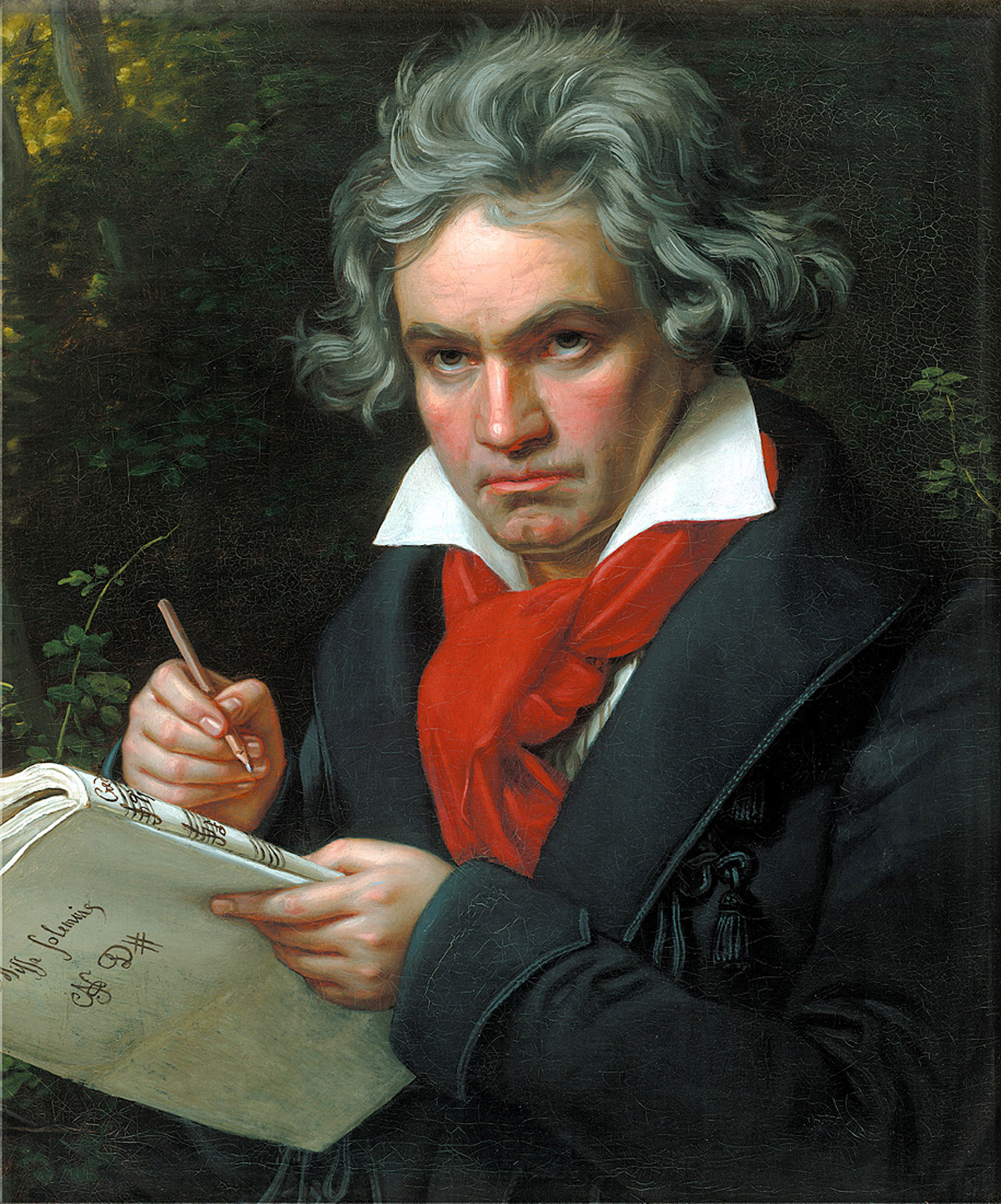
![]() |
| Scenario #3: The Symphony |
Just in time, his dear and most sagacious wife enters his study. Aghast at what has clearly transpired, she rushes to the controller and hastily shuts off the music.
Her husband nervously opens his eyes, slightly, tears still in the corners.
"What were you thinking? she yells. "Don't you know that there is One Mediator between God and man?"
Not knowing what to say, he tries to utter a word, but she starts up again.
"What will you say to Him? What will you say? On the judgment day, when you stand before God and he asks you, why did you not come right to me through my Son? Why did you trade in the pure Gospel for a prayer played on the harps of mere mortals?"
Full. Stop.
Thank God no one really does this stuff. Though, I can also hear the objection. In your examples, Brent, God is reaching out to us, and with the Communion of the Saints we are reaching out to God. That is true, but explain to me just exactly what that difference brings to bear on Christ's mediation? A mediator stands between the communication both ways. If Christ, the creator of the universe, can use his creation to share Himself with us, and make it so obvious that we would flock to beaches and mountain ranges to experience the life of God, how much more should we respond to the beauty and heavenly bliss of our departed brethren who look not at the face of the sun but at the Son of God?
So while you are at it, thank God for our heavenly family. May we always, with great filial affection, place our hope in them who have gone beyond the veil and see our Lord face to face. May our sure hope be in that reward that is for those who anticipate the heavenly family and who do not despise even those least among us--having our mind set on things above (Col 3:2). May every sunset, every new born child, every symphony and every Saint of God draw us closer to that which it is ALL ordered--the One Mediator with the Father--the Incarnate One--Jesus Christ (1 Tim 2:5).
Therefore, it is with St. Paul that we, like him, ask you "that supplications, prayers, intercessions, thanksgivings be made for all men" (1 Tim 2:1). And since this exhortation was clearly not at odds with Christ's mediation, I humbly ask:
"All the angels and saints, pray for us!"
Amen.
Amen.
Labels:
ramblings,
the saints
June 29, 2011
Why All Christians Believe in the Communion of the Saints
I have been reading Jimmy Akin's book The Fathers Know Best where he catalogs many quotes from the Church Fathers regarding various doctrines taught by the Catholic Church. I am having a hard time getting the impetus to finish my series on Confession, despite Akin's section in the book on it, since the practice is both not against Christian sensibilities and has a direct scriptural reference that is undeniable. Nonetheless, I will try to do more on that post (when I write it) than merely say "see" and point to the obvious historical reality that Sacramental Confession is practiced in all the apostolic churches of antiquity among the other venerable things they do.
For now, I wanted to share with you something I was thinking about and get your feedback. Last night while eating dinner with my culinarily gifted wife and 4 rambunctious and talkative children, I had an epiphany.
Every Christian practices a belief in the Communion of the Saints whether they want to admit it or not.
Maybe their understanding isn't robust, maybe they fail to appreciate what they are doing or maybe they even ignore a vast segment of the saints...
Yet they still act like they believe.
What do I mean? Well, the example is so obvious that when I thought of it, I laughed inside.
In ANY church, the pastor will pray in front of the congregation. When the pastor prays, the congregation generally takes a position like this, especially when the stage is elevated and you have to hold your head at an awkward angle.
The point is that at the moment of the prayer, everyone joins their hearts to the pastor's prayer. They rely on his prayer to be effectual. They come into agreement with what he is praying. The pastor becomes a type of mediator between the congregation and God.
Aren't these all the reasons why Protestants object to the Catholic view of the communion of the Saints? We ask for their prayers as participators in Christ's mediation and we rely on their intercession and join our hearts with theirs in agreement that God's will be done on earth as it is in heaven.
I wish every Christian would just admit it. It would do a lot towards Christian unity if we would stop hiding behind the firing lines of anti-Catholic rhetoric and really consider what we ALL do as Christians. Even if a protestant doesn't understand that this is what she or he is doing or ad hoc ignores those Christians in heaven, it still holds that we all rely on our communion with each other in our spiritual life.
Someone might deny what I've written. But to do so, they would have to go to their church this Sunday and do something like this:
(In front of the congregation)NOT SO MUCH...
[Pastor] "Dear God..."
(In the silence of her heart)
[Sally] "You know God that although my eyes are closed while that man prays, I am the one coming straight to you. Hear me oh Lord as my heart leap frogs the man talking out loud right now"
[Pastor] "...we all love you so much and are glad we can gather to worship this morning..."
[Sally] "God, despite his use of the pronoun we, I am singularly before thy throne in need of no other but you."
[Pastor] "...Lord, we especially ask for your help for Sister Betty as she goes into the hospital this week...
[Sally] "despite what it appears, that I am entrusting Sister Betty to the prayers of pastor, in my faith alone I confide in alone to touch your heart for the benefit of Sister Betty. It is mere pageantry that Pastor speaks on our behalf."
[Pastor] "As I preach today, open the ears of the people that they may hear the word of God and change their lives for your glory. In the name of Jesus we pray, Amen."
[Sally] "Please know Lord that I, not like the pagans or Catholics down the street, know that only my prayer directly to you oh Lord doth benefit my soul. In this moment, while I acknowledge the kind but misguided gesture of my pastor, my trust is directly in you to bring about my conversion. I am but an island on which for you to live. Amen."
![]() |
| Not a scary picture |
Saints of God...Pray for Us!
Labels:
conversion,
the saints
June 12, 2011
Why Catholics (Can) Love Mary
You will hear people claim that Catholics spread the love around too much. Their love for Mary, the Saints, the Pope, etc., gives them a spiritual handicap in their ability to love Christ. Yesterday, during Holy Mass I was reflecting on how the flesh of Jesus is the very flesh that Mary gave to Him.
So I thought to myself, in a way, partaking of Christ is partaking of Mary. Then I had another thought along those same lines. The Saints that are in heaven are now mystically incorporated into His Body, and so in a way I am partaking of them as well.
[Insert faith police]
See! You cannot even have an intimate moment with Christ without Mary and the Saints. You have made them into idols that divide your time and affections.
[Politely asking faith police to sit down and listen]
And then it occurred to me that this dilemma is a false dilemma. In fact, it assumes a kind of grocery store view of love and the faith.
Like in the picture above, this view of love and the faith envisions Jesus as 'Aisle 7' at the grocery store of Christianity. Catholics, according to this view, spend too much time going down other aisles and therefore neglect the "Jesus Aisle".
The problem with this view is manifest in the analogy. Let's consider just a few Biblical examples.
Jesus taught that some people wouldn't even know they had loved Christ as much as they thought they had. "When did we love you?" they will ask. "When you did it unto the least of my brothers you did it to me" (Matt 25:40).
In another place, a zealous persecutor of the Church learned that when he persecuted the Church, he persecuted Christ (Acts 26:14).
Apparently, even while still on earth and imperfectly united to Christ, the Church and Christ share a unique relationship whereby when one is effected the other is also. When one of the least of his brother's wound is washed, somehow the water makes its way to glory. When his sister is visited in jail and momentarily healed of fear and loneliness, somehow Christ is the object of that encounter.
Yet, in heaven, we share even more intimately with this very purpose of salvation. Yes, Christ came to save us, but not simply to sanctify us on aisle 9 reserved for humanity while holy ping-pong gets an end-cap. No, Christ came to incorporate us into the very life of the Holy Trinity--the life of Love.
The epistle of Love, 1 John, talks about this mystery of our identity in Christ. The author introduces the third chapter by reminding the reader that God's love has made us children of God and that the world rejects us because it rejected Him. The letter goes on to teach us that when we attain to the beatific vision, we will understand this relationship--that we are like Him. Yet no longer through a glass dimly, somehow while gazing upon our Lord we will see our true eschatological ontology. This is the mystery of the Body of Christ and that which the Saints have already obtained!
This dynamic infusion of God's love in our hearts, the righteousness won by Christ, empowers us to act for "no one who remains in him sins" and "the person who acts in righteousness is righteous, just as he is righteous".
What might be these "works of righteousness"?
One word: LOVE
It's time to get Mary out of the shopping cart, out of aisle 12 or out of the tub of Christmas plastic statues you have buried away in a storage bin.
Catholics can love Mary, the Saints, etc., because the love of God has been shed abroad in their hearts by the Holy Spirit. Catholics can love Mary, the Saints, etc., because in them they recognize the mystery of the Body of Christ. Marriage is an analog of this mystery, and the oneness and newness of that relationship portends only a glimmer of the reality of its spiritual analog. Thus, to love The Body of Christ is to love Christ. Therefore, let us throw aside the pagan and secular view of faith in the image above, and instead turn our eyes above and strain to see the heavenly vision in which by God's mercy and through our sure hope in Christ we can obtain to that fraternal and filial love that will sustain our very being for all eternity.
Amen.
Happy Feast of Pentecost to you all!
(when this whole thing started)
Labels:
Catholicism,
the saints
April 16, 2011
Catholic Saints and the Bible
![]() |
| The Psalms |
Is David talking to the angels in this prayer?
In Psalms 148, David continues in his heavenly salutation, "Praise him all his angels, praise him all his hosts."
There are the angels again. Who are the hosts? In the Hebrew language, the word is masculine and denotes a mass of people gathered for a strategic purpose. What is their purpose?
In Revelation 5:11, we get a glimpse of this company, "I looked again and heard the voices of many angels who surrounded the throne and the living creatures and the elders. They were countless in number". In this passage there are three categories of beings: (1) angels, (2) living creatures, and (3) elders.

We already know that David speaks directly to the angels in prayer. However, if he invokes the "host" in prayer, he is also invoking the living creatures and the elders.
Just a few versus before (Rev 5:8) and in Revelation 8, we are informed that the angels and elders in heaven bring before God the prayers of the "holy ones" (Saints). In a recent post, I talked about the nature of how the early Church viewed their departed brethren. In the light of Christ's victory over death, the Church, guided by the Holy Spirit to understand the Sacred Tradition and Scripture it had received, taught that the Saints were in heaven and that we needed their prayers. Further, it was not until the end of the world and the creation of the new heavens and earth that all would be united in heavenly bliss. Until that time, those in heaven would play a strategic intercessory role in the Church.
St. Paul in 1 Corinthians 12:21 says that the "eye cannot say to the hand, 'I do not need you'". Just because our brothers and sisters are in heaven--out of site and out of mind, maybe--we still need them. Even more, because they are perfectly united to Christ in heaven, their prayers are most effectual (James 5:16, "the fervent prayer of a righteous person is very powerful").
"But, they are dead, they cannot do anything," one might argue. Besides the evidence above that they are doing something, Jesus said that "God is not the God of the dead but the living" (Mark 12:27). Remember, "we walk by faith not by sight (2 Cor 5:7). Death is not the end of anything eternal, but only the end of what is temporal. In Christ, death has been disarmed from delivering its fatal blow. So, should we cry when someone dies? Of course. We cry on this side of glory, but it is on that side of glory that they deliver the tears to the throne of God.If you don't believe that we can ask the Saints for prayers, that they aren't in heaven praying for us, or that as Christians we cannot know either way, I hope you are willing to at the least admit that (1) it isn't against Christian sensibilities, (2) that there is evidence in the early Church for it, and (3) that Sacred Scripture isn't void of any direct or indirect references to it.
Though in the face of such evidence, I hope you would prayerfully ask your departed brother and sisters in Christ for their prayers and that you would ask Christ to forgive you for ignoring them. And, that you would consider coming home (or back home) to the Catholic Church.
Labels:
Bible,
the saints,
theology
April 12, 2011
The Saints and Church History
![]() |
| The Council of Constantinople |
"May God by the prayers of the Saints, show favour to the world, that you may be strong and eminent in all good things as an Emperor most truly pious and beloved of God." Letter of the Second Ecumenical Council of Constantinople, A.D. 381
Such is the sentiment of those ancient Christians as they emerged from the waters of persecution for over three centuries. Having spent those years meditating on the mysteries, protecting them through codified language, symbolic gestures, and hidden meeting places, the Church could now shine forth like the sun to a world that had given up its pagan dark day.
One can argue that there is not explicit teaching in scripture admonishing one to ask the Saints for their prayers. We will examine this Biblical claim in my next post. However, I think it is foolhardy to put forward a view of a stale Christianity, shackled by a primitive intuition, unable to learn anew what exactly this new Kingdom means particularly as it unfolds.
That is why there is evidence from the very beginning, even when writing was suppressed for lack of time and resources that Christians knew that those who passed through the veil from life to death were not separated from us; that Christ's victory meant a communion whereby "death has lost its sting." Here are just a few examples of this primitive Christian belief:
"[The Shepherd said:] ‘But those who are weak and slothful in prayer, hesitate to ask anything from the Lord; but the Lord is full of compassion, and gives without fail to all who ask him. But you, [Hermas,] having been strengthened by the holy angel [you saw], and having obtained from him such intercession, and not being slothful, why do not you ask of the Lord understanding, and receive it from him?’" -The Shepherd, A.D. 80
"In this way is he [the true Christian] always pure for prayer. He also prays in the society of angels, as being already of angelic rank, and he is never out of their holy keeping; and though he pray alone, he has the choir of the saints standing with him [in prayer]" Clement of Alexandria, Miscellanies, A.D. 208
"Beneath thy tenderness of heart
we take refuge, O Theotokos,
disdain not our supplications in our necessity,
but deliver us from perils,
O only pure and blessed one."
Egyptian Liturgy for the Nativity of Christ, 3rd Century A.D.
"Then [during the Eucharistic prayer] we make mention also of those who have already fallen asleep: first, the patriarchs, prophets, apostles, and martyrs, that through their prayers and supplications God would receive our petition . . . " St. Cyril of Jerusalem, Catechetical Lectures, A.D. 350
As the Holy bishops made their way to Constantinople, emerging from the ruins of a crumbling empire, we know with certainty that they were not estranged from their departed brothers and sisters. No, let us not imagine for even a moment that for one second the early Christians imagined that those who had been beheaded, crucified, lit on fire, tortured, driven to the edges of society unto death for the sake of Christ were now ambivalent to His bride's struggle. Nor did death steal from them the glory of their prayers. As wheat falls to the ground, so too did these great martyrs and teachers fall to the ground, only to fool death and destroy the works of Satan even more.
Their prayers as the "righteous" were most "effectual" for them and are most effectual for us. May we not be ignorant that they see face-to-face the One our hearts long for (Benedictus Deus) and whose prayers, as we rely on them, glorify God who comes to make all things new. May all Christians, whether militant, purging or glorified be One, even as the Holy Trinity is one. And that all God's people would say, "Amen" in the company of so great a cloud of witnesses. But let us remember that it should not be that they gaze at us as if we were their terrestrial witnesses, but that they are, rather, our heavenly witnesses, and that we must turn to them as such guides who have gone before us to enter into their rest in the Holy City.
Amen.
Labels:
the saints,
theology
April 8, 2011
The Catholic View of the Saints: Is it against Christian Sensibilities?
The eye cannot say to the hand, "I do not need you"- 1 Corinthians 12:21
The Saints. When you didn't grow up Catholic (like me) that means a football team. A not very good football team at that (sans all this new success). It might also conjure up a tune ("Oh when the saints, go marching in...). I digress, but, hey, my kids are dancing now.
In evaluating the Catholic understanding of the Saints a number of issues arise: prayers to them, their role in our lives, who they are, and a few other issues that fall under the sub-domain of one of those. Before I look at the historical and biblical understanding of the Saints, I first want to address what I call "Christian sensibilities".
What I am aiming at is the "gut reaction". To use examples from other orders of experience, when someone of a foreign origin walks into your office what do you think? When someone hands you a strange food, what do you feel? When you walk into a Church and notice paintings and statues of Biblical and Church heroes what is your reaction? I like to think of this as a kind of Christian litmus test in very much the same way it is a litmus test for things like our respect for human life or our true racial sentiments.
![]() |
| Not a Catholic teaching |
On my journey to the Catholic Church, I always tried to pause a moment and step back from the rhetoric and debate and ask myself, "Is this a Christian thing to think?" I mean, if the Catholic Church taught that Obi-Wan Kenobi is real and must be obeyed, then we had...well...problems.
In 1 Corinthians, Paul warns us that we are not at liberty to reject another part of the body. Even more, from our experience and a second grade education we understand that most of what is really happening with our body we cannot see. Some of this is geographical (the back of your head, where you sit, etc.) However, most of what we cannot see happening is because it is meant to be out of our view. In fact, the health of the body is predicated on you not seeing your heart beating, your spleen working, or your bones stressing under the pressure of Thanksgiving seconds.
At this point, I'll suspend my momentum and not delve into Holy Scripture. That is for another day. What I will ask is a few questions. Questions not so unlike the kind of questions one might ask a friend who is a semi-bibliophobe standing outside of Barnes and Nobles. That's the way I felt. Not about books, of course, but about the Saints (and not the football team this time). It's like I was standing out in a storm and I could smell the fresh coffee, see the smiling faces, almost hear the pages turning but I wouldn't go in. I was frozen. Why was I so afraid of my celestial family?
With all the suffering Christians face on earth, are our brothers and sisters in heaven really doing this?
If we asked them for some help, will they do this?
Is heaven a big happy hugfest?
Or, is it more like this?
A heaven full of scholars, noblemen, peasants, husbands, wives, nuns, monks, athletes, soldiers, martyrs and minstrels, all before the face of God in perfect union with Christ filled to the full with the Holy Spirit. And as the Spirit looks upon the earth and groans at our sin and suffering, it is with and through the Saints that we hear the noise.
Yes, the Saints are the pharmacists and Jesus is the doctor. He writes the prescription and the Saints fill it. St. Rose of Lima, patroness of my family and the Americas, pray for us! (and you)(hat tip to Taylor Marshall for the pharmacist analogy)
Labels:
Christian Sensibilities,
conversion,
the saints,
theology
April 7, 2011
The Saints and the Second Pill
In my last post I talked about the "second pill" in the movie The Matrix. The second pill is the pill of truth. Here's a short list of some individuals who chose to swallow the pill of Truth. Let's see where it got them:
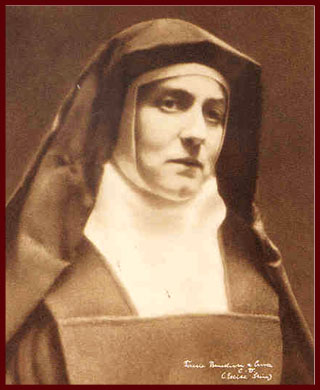
| Edith Stein- Jew turned atheist |
| St. Teresa Benedicta of the Cross (Edith Stein)- turned Carmelite nun who wrote Finite and Eternal Being |
![]() |
Sitting Bull- I just think this is beyond cool (After his conversion should we call him "Kneeling Bull"? Thanks Taylor for the pic) |
![]() |
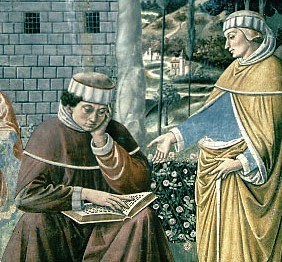
John Newman- Anglican clergy |
![]() |
| Blessed John Henry Newman- Saint, Cardinal, and perennial defender of the Catholic Church |
![]() |
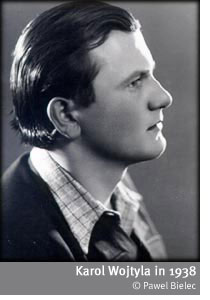
| Blessed Pope John Paull II- son of Mary, Saint, and Papa of the Universal Church What will you do with the Truth? |
Labels:
the saints
Subscribe to:
Posts (Atom)