 |
| Emmanuel! |

December 25, 2012
December 23, 2012
Protestant Idolatry
No, I'm not talking about Bibliolatry. I'm talking about that time of the year when almost every Protestant goes into the woodshed and retrieves this:

 |
| "It's Christmass. The time of year when we all get to act like Catholics." |
And this collection of plastic statues will be placed directly in front of the protesters home or place of worship. Some even put them in their place of worship. And, to all shock and astonishment, this is less offensive to the Protestant sensibility than this:
 |
| Scary Catholic Statue |
Think about it.
God -- Creator, Healer, Omnipotent, Holy... -- came to earth in the womb of the Blessed Virgin Mary. In your view, which of the two portrayals is more fitting? I know, I know. Catholics, also, whip out these plastic renditions of the Holy Family. Sure, we do. But, ignoring those criticism for a moment, the point is what we keep up all year, and what is not kept up all year.
Why, pray tell, is it okay to banish all statuaries, but during Christmas accept a plastic nativity of our Lord, His Mother, and St. Joseph? It is like passing over crème brûlée for a Twinkie and then lying on your weight-watchers e-report that you were "disciplined". It is not so much the plastic in general that bothers me, but rather the plastic in total. In other words, and in the slightly altered words of the cashier at Walmart, "(why) is plastic okay?"
Please understand that this small rant does not come from a foreign place, but rather a place I, too, have lived. At Christmas, before I was Catholic, I somehow glossed over my disdain for statuaries -- my sensibilities slightly dulled by the proximity of the Incarnation to my mind. I allowed the Holy Family to join me en sculpture, and I was never the worst for it. In fact, I hope you did not just miss my words there. "The proximity of the Incarnation to my mind" is precisely what changes everything. The prohibition against "graven images" had to do with the Image-not-yet-come. It was about keeping us reliant upon His salvation, not ours (see: golden calf). But when He did, send The Image, the world was forever marked, our imagination forever incapable of not copying the Masterpiece that dwelt among us.
Why?
Because we beheld His glory.
And so, in the form of our art, we declare that Image until the end of time.
Amen.


December 17, 2012
Love & Newtown: A Perspective
I'm over here contemplating what good we can learn, as parents, in the face of senseless tragedy.
December 12, 2012
I Agree, Let's "Stand to Reason"!
A kind reader wrote to me recently:
So, I replied:
If I do work, I will be qualified.
I don't work, therefore I'm disqualified.
This formulation shows how sophistic the original construction was. If "works" are not qualified, then the premise above must be true, but it is not true. Let me explain further:
If not-A, then not-B.
Not-A, therefore, not-B.
However, that is not the same thing as saying:
If A, then B.
Just because "not-A, then not-B" tells me nothing about A. Which demonstrates why Koukl's original construction is simply incomplete. And that, my friends, is "standing on reason".
Note: A modus tollens would look like this:
I do not resist grace, I work.
I do not work, therefore I resist grace.
I understand that in Catholic teaching one can't work their way to salvation, however on Greg Koukl's radio show podcast, "Stand to Reason," on 10/15/2012 at 24:40, he and a caller talk about how "modus tollens" proves that the Catholic view of justification is "justification by works." They assert the following based on 1 Corinthians 9:27:
source

If I do not work, I will be disqualified.
I don't work, therefore I'm disqualified.
My question is, are they using "modus tollens" appropriately and if they are using it correctly, how is it not justification by works? I know from reading that initial justification can't be had by works. However, after initial justification we have to do works, but if we are still being justified then how isn't it "Justification by works"? I hope this makes sense and doesn't take up too much of your time.Good question, and graciously put.
So, I replied:
There is nothing in the Catholic position that denies the force of a valid inference (modus tollens). Moreover, Koukl's argument is not modus tollens. It is modus ponens. And the conclusion does not follow from the premise, because "I will be" is future tense and "I am" is present tense (ht: Bryan Cross). Therefore, what is wrong is his formula, because it is an incomplete formula.
"If I do not work, I will be disqualified.
I don't work, therefore I'm disqualified."
This construal would be to make the Catholic position Palagian. Which would seem to construe all theological positions that required works to be Palagian. However, that is not true. What is missing is the kind of works. Without grace, no work can be efficacious and no failure to work would disqualify you. However, when one has grace in his soul (i.e., participation in the divine life of God through His Son, Jesus Christ by the Holy Spirit), one must respond to that grace. In the words of Sacred Scripture, you show me your faith, I will show you my works.
So let's consider a new argument:
If I do not work, I resist grace.
If I resist grace, therefore I'm disqualified.
What would have to be shown is that there is no special, qualitative, difference between works of the flesh (i.e., simple human effort) and works wrought by the Spirit. Of course, there are.
If X, then Y. Y, therefore, X. This is true. What Greg is missing is the syllogism that arrives at the premise. In this case, if one has works he does not ipso facto have grace. Therefore, the thrust of his argument fails because he fails to make a crucial distinction between different kinds of works.Consider the inverse of Mr. Koukl's argument:
If I do work, I will be qualified.
I don't work, therefore I'm disqualified.
This formulation shows how sophistic the original construction was. If "works" are not qualified, then the premise above must be true, but it is not true. Let me explain further:
If not-A, then not-B.
Not-A, therefore, not-B.
However, that is not the same thing as saying:
If A, then B.
Just because "not-A, then not-B" tells me nothing about A. Which demonstrates why Koukl's original construction is simply incomplete. And that, my friends, is "standing on reason".
Note: A modus tollens would look like this:
I do not resist grace, I work.
I do not work, therefore I resist grace.
December 9, 2012
Blessed Scotus, You da man!
Did you know that Blessed John Duns Scotus made a lively, erudite and simple defense of the Immaculate Conception?
So there, Faber.
If you would like to read more about his arguments, I've found a well documented piece here.
 |
| Doctor Maria |
If you would like to read more about his arguments, I've found a well documented piece here.
December 2, 2012
Do You Worship The Child?
 |
| Infant of Prague |
It is not too difficult for me to travel back in the not-so-distant-past and remember. Remember when I did not worship The Child. Many do not worship Him. I am ready to admit that it is not some deep theological insight that keeps so many Christ-lovers from loving Him as The Child. They simply do not. Don't search for a significant reason. It is liking asking why a man in Madrid does not eat apple pie. He does not eat it because it is not of the local fare.
So as we enter this season of Advent, I stop and pause to consider why I spent most of my life not worshiping The Child. Even three pagans, the three sages we all sing about this time of year, understood the basic premise that compels one to bend one's knee:
Jesus is God.
 |
| That's me up there |
Crazy.
Yet this is how traditions of men work. They rob our plate of what is natural to it. Which explains it. It explains how a Christ-lover could hold back his affection for The Child -- The Creator-come-down and made helpless for us. As we are warned in Sacred Scripture, traditions of men make the Word of God of no effect. And during this season, as you travel around the cornucopia of Christians traditions, you will notice that such traditions have made The Child glaringly absent. He is in the manger, but no one cares. No one worships. There is no effect.
And no one cares enough to worship, because the local fare simply does not offer Him on the spiritual plate. God is with us is great consolation, but seeing Him in The Child requires that faith to exercise its muscle. Rising from the tomb, even some of the scoffers were willing to admit there must be something to this Fellow, but it is in the manger that we are required to truly believe.
But even more, will we act like Elizabeth in the presence of The Mother of Her Lord and proclaim "Emmanuel!"? Will we? Will we worship Life itself in utero.

In the mind of God before all ages, prophesied about in the beginning, Mary was perfectly, immaculately, set apart to carry within Her none other than God. The Holy of Holies would become a womb -- and God was better than the Israelites in preparing a place for Himself. And at the words of an angel, all of creation cried out in exultation that their Savior was close. Yes, the words of Emmanuel ring true on the day of His birth, but they ring true, all the same, the day He was conceived. For if you have ever been party to the intimate news of conception, you will know that there is a similar joy like the delivery room that sweeps over the heart upon hearing the words, "I'm pregnant."
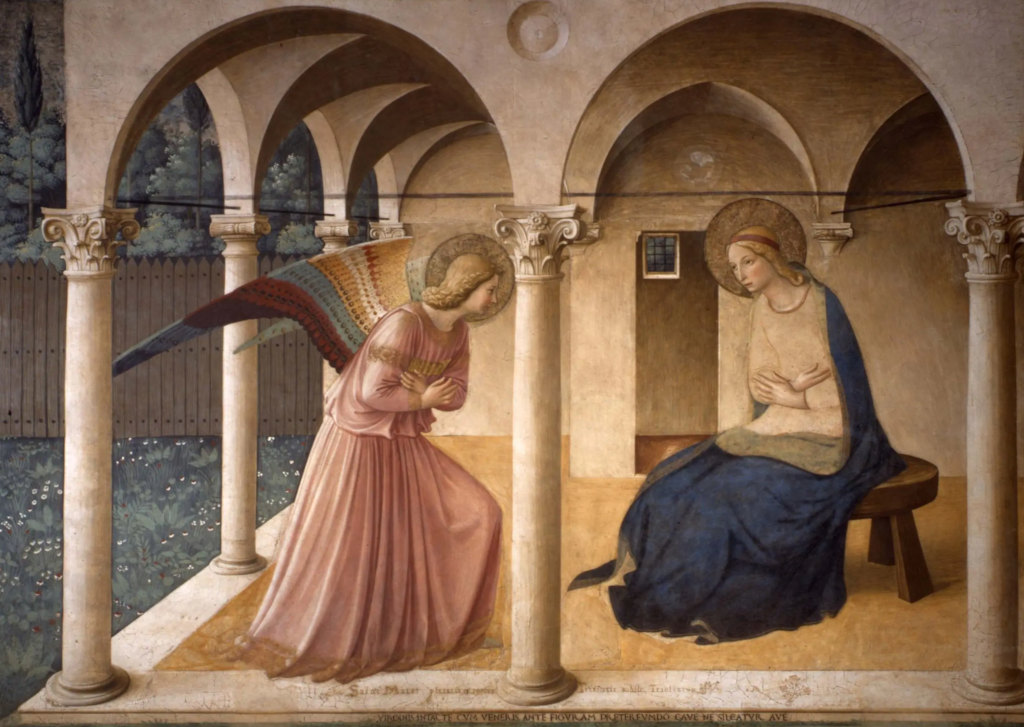
For it was for love that He came down. So amidst this news, caught up in the mystery of it all, nine months pass so quickly. And He is born. And what do we do? What do you do? Do you pause? Are you confused? If so, why? Why, in the presence of or thought of the King of the Universe qua child do you hold back your worship? Even as you hesitate, the three wise men -- maybe only wise because of their appropriate response -- pause on that eternal evening and worship The Child.
"Come, Lord Jesus. If only as The Child that I might love and worship you. Amen."
November 30, 2012
November 27, 2012
Some Thoughts About the Canon and Participation
 |
| A Fragment of The Dead Sea Scrolls |
If...
1. There is no such thing as Sacred Tradition -- the Bible is the sole rule of faith
AND
2. The Jews had the right to canonize the Old Testament -- and they did
3. Therefore (from #1), the canon of the New Testament (not a particular book) is a tradition of men
4. If it is a tradition of men, it makes the word of God of no effect (bearing in mind a first century Jew hearing and believing the words of Christ about tradition could come to this conclusion later)
5. If #'s 2-4, then the first century Jew would be right to reject the New Testament canon
6. Therefore, there is no New Testament canon
Now, thinking like a first century Jew and a Protestant Christian, a Protestant must admit #1, #3, #4. A Protestant may not admit #2, but then would have to admit to a Catholic canon -- which they do not. Since they do not admit to either a Catholic canon or #2, they would have to vest the Reformers with the authority to close the Old Testament canon.
If they admit to #2, then they admit that there is no New Testament canon.
Option 1: No New Testament canon
Option 2: The Reformers were graced to close the Old Testament canon
Note: This is a thought experiment. Any objections, rebuttals, etc. are appreciated and should be noted in the spirit of dialog not in a condescendingly pedagogical tone that assumes this was not a thought experiment.
Thank you. - Staff
____________________________________
Theological Aside
I argue that Christian Scriptures are equally predicated on God's action and the author's action. In other words, Scripture is an expression of both God's logos and the author's unique logos. Through the diversity of authors, God communicates His will and plan and in so doing demonstrates His incredible power to use fragile creatures like you or I to relay the very words of God. Far from equivocal, each writer uses his unique style, experiences, and vantage to tell God's story. Through the inspiration of the Holy Spirit, earthen vessels pour out heavenly wealth.
Did you know that Muslims reject Christian Scriptures for just this reason, and that they also reject Christ as God for the same reason? They see humanity and divinity as being incompatible. The Incarnation is scandalous. But we know that is not the Christian story...
 |
| The Participants |
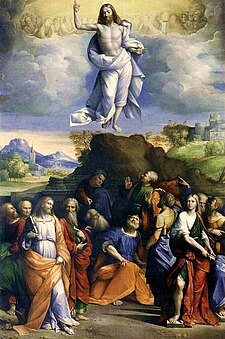
Instead, He invites the the Church He founded to participate with the Holy Spirit in leading the Church into all truth. Unlike the Old Testament, the spirit is in the Church not just with Her.
What is the canon, you ask?
Ask, the Church.
When you ask the Church, through her divine participation in the work of the Holy Spirit, you receive the mind of Christ who is the head of the Church.
Glory be to God!
November 22, 2012
A Thanksgiving Conversion Story
 |
| These are the images you find when you search "Social Studies" |
Some 11 years ago, I started teaching. My first set of classes included an eleventh grade Bible class and a seventh grade "social studies" course. The phrase "social studies"-- I explained recently to a visiting priest in our parish from Oxford -- is the American way of saying "history." I think "social studies" makes it sound more scientific as if history were merely the by-product of men sitting around a fire, smoking pipes and telling stories. I personally think social studies sounds like the work of a fiction novelist where some kind of large, puppet master is staring down upon society under a microscope studying us.
All that to say, about this time 10 years ago, I began my lesson on the history of the Separatist movement that eventually culminated in the Mayflower's journey across the Atlantic. The textbook I was forced to use for this seventh grade class was put together by Bob Jones University. If you are not already familiar, Bob Jones University is an anti-Catholic, fundamentalist school. In turn, their books have no citations (fundamentalist) and make every effort to put down the Church in favor of "simple Christianity" or "Bible believers" (anti-Catholic). This chapter was no exception. In fact, I let my students tear out an entire section of one chapter because it was so blatantly anti-Catholic. Although I was by no means Catholic at the time, I knew that such rhetoric had no place in a history book, and that polemics was not in the best interest of the normal development of a young mind. So in grandiose fashion, I allowed the students to march up to the front of the class and dispose of a part of their textbook in my trash can.
From that moment forward, of course, I was epic.
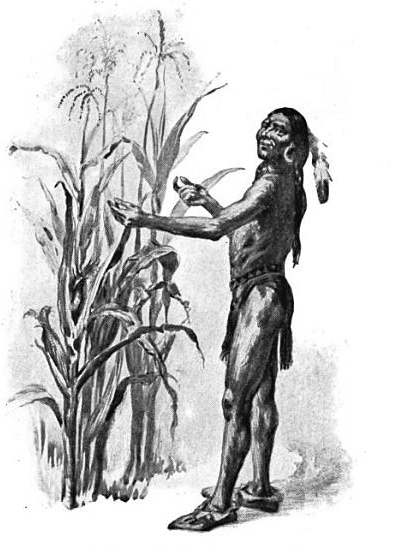
Once they all sat back down and gathered themselves from the exhilarating experience of book mutilation, we looked at the chapter again and to my surprise, the author allowed for one detail to slip through the cracks:
 |
| Catholic Squanto |
By MONKS!
Facts conveniently left out:
1. A Protestant sold him into slavery
2. The Monks were Catholic
3. Squanto was Catholic
The Bob Jones University propaganda machine contributed a seed toward the conversion of Brent to Catholicism? Say, what?
I remember thinking to myself, "Self, isn't it weird that God is providentially using Catholic monks to help the establishment of the plymouth colony?"
I will confess that I did not run right out and beat the doors down of the nearest Cathedral and convert. Nope. However, what did happen in my heart was the gentle acknowledgment that God seemed to be using Catholics, and when you formerly thought of Catholicism as "dead religion" that is a baby-step worth noting.
HAPPY THANKSGIVING TO ALL! GO TO MASS AND START YOUR DAY OF THANKSGIVING THE BEST WAY POSSIBLE!
November 21, 2012
Simplifying the Simply Simple
 |
| "Take this and eat it. This is my body." |
this apologetics moment brought to you by:
|
| Jesus Christ. "I am the king of the universe and created the world, so why don't you think I can do that up there?" |
November 19, 2012
November 12, 2012
What To Do About Cultural Catholics (Part II)
In a previous installment on this blog, I discussed the phenomenon that is cultural catholicism. Like being a fan of the New York Yankees, cultural catholicism guarantees that the adherent owns some kind of lucky charm, but has no idea who is actually on the team, the batting average of even one player, or what the team record is. This all translates into that awkward moment where you introduce yourself, and "the catholic" sends the message that:


 There is no alternative. Christ built a Church, not a constitution. Politics won't solve the problem of cultural Catholicism, nor will it set straight the crooked thoughts of the fundamentalist troll. No. The absolute necessity of the new evangelization has never been more readily and obviously apparent. There is a trap, though. When we hear, "new evangelization", we generally think "proselytization". However, that is not what the Church is asking us to do. Unlike the "new proselytization", the new evangelization starts in our own hearts. It is not a foreign or even domestic mission trip. Instead, the new evangelization begins with a personal encounter with Christ, whereby we open up our entire life to Him. We can no longer just meet Him on Sunday.


Which is very frustrating. Even more frustrating then that fundamentalist troll who says:

You see, the troll, when thought about in the proper perspective, is mostly harmless. Yet there is a relationship between the former (cultural catholic) and the latter (fundamentalist troll), and it is worth noting. A Catholic who leaves the faith because of the "apologetic insights" of a fundamentalist is almost always a cultural catholic. They "come to Jesus", repenting of their abortion supporting ways, porn stash, and/or, of course, worship of Mary. They "never knew" any of it was wrong, or as his new narrative goes, "I just never found Jesus in the Catholic Church -- too much man-made stuff" (and the small group members give him a big hug followed by cake and punch).
It's good to be here, he says.
And like Zaccheaus, they climb up in the tree, and some die there. Others leave. While some make their way back home -- like me. My journey, of course, was circuitous in a multi-generational kind of way. Although it took me probably 400 years to get back home, while in the tree myself, I heard Christ's words and I came down.
"I will build my church, and the gates of hell will not prevail against her."
If you haven't already, you should take the quiz, but either way, the point is simple:
We must be converted.
 There is no alternative. Christ built a Church, not a constitution. Politics won't solve the problem of cultural Catholicism, nor will it set straight the crooked thoughts of the fundamentalist troll. No. The absolute necessity of the new evangelization has never been more readily and obviously apparent. There is a trap, though. When we hear, "new evangelization", we generally think "proselytization". However, that is not what the Church is asking us to do. Unlike the "new proselytization", the new evangelization starts in our own hearts. It is not a foreign or even domestic mission trip. Instead, the new evangelization begins with a personal encounter with Christ, whereby we open up our entire life to Him. We can no longer just meet Him on Sunday.
When this happens, even the dude with the hat sideways above will take notice. Notice is what we need, because over last few weeks, I think we all get the idea that our voices are mostly irrelevant. Which tells me something. It tells me that we are playing nice too much, playing politics instead of living our faith. When you live your faith, expect a response. Some will convert in the light of lived-out Truth. However, one must choose how he adjusts his eyes to the light. The history of Christianity tells us that some, when encountering The Light, lash-out, unable or unwilling to adjust to its radiance. They try to snuff it out, and for a moment or a life, it appears that they are able.
Let me remind you:
"I will build my church, and the gates of hell will not prevail against her."
In other words: bring it. Darwin has nothing on us, or rather we are the species that just won't go down, and there is nothing in our DNA -- at least under a microscope -- that will tell the difference. However, you can look into our blood to figure it out. You just have to look with different eyes. If you look more closely, with a different vantage, you will see what the world both misses and needs.
Do you see it? For even in God's first iterations with man, he informed us that the life is in the blood. Yes, The Life is in the blood.
Be converted to Christ. It is the only thing that will change the world. It can even change the hearts of cultural catholics and fundamentalists.
November 6, 2012
What Happens When Contraception Fails...
...and the back up plan fails.
Particularly pay attention to 3:50 and thereafter.
Lord, Have Mercy On Us.
October 23, 2012
October 21, 2012
Man Made Traditions

"Making void the word of God by your own tradition, which you have given forth. And many other such like things you do." - Mark 7:13
FOR EXAMPLE:
2. A Eucharist that is a mere symbol. - Luke 22:19
3. Marriage that confers no grace. - Verses
4. Pastors without Holy Orders. - 1 Corinthians 11:24
5. Singles struggling without the religious life. - Matthew 19:12
6. Ministers who will not hear confessions. - John 20:22
7. Prayer without the belief in healing. - James 5:15
8. Demoniacs without a rite to deliver them. - Mark 16:17
Just to name a few...
October 15, 2012
October 10, 2012
The Catholic Church is Full of Sinners
 |
| The Catholic Church is full of sinners because she is a hospital. |
 |
| The Catholic Church is full of saints because the medicine works. |
 |
| Treatment. |
October 6, 2012
September 28, 2012
Marian Dogma: Kiddie Style
Dear Protestant Friends,
Today, I would like to ask of you a favor. I would like for you to ask your child -- or some child -- the question, "Who is Jesus?" After you listen to the answer, I'm sure you will respond with many wonderful things for which we agree. I would request that you would only be careful to mention that Jesus is our brother (Hebrews 2).
This news should delight the child. Then I would only ask for you to remind the child that Jesus's mother is Mary. After which, ask the child, "Is Mary our Mother?"
The child's response should tell it all.
St. Paul tells us that God confounds the wise with the simple things. Ironically, the complexity of Catholic Marian dogma can be reduced to this most simple, basic intuition: Theotokos. It sounds very greek, and that is because it is, but one shouldn't confuse it for a complex theological insight. The complexity of Catholic dogma works in reverse: God reveals Himself to us in what appears at first blush little, simple ways.
A baby.
A tree.
Water.
Then we realize it is God we are dealing with and not a small child. Thus, as soon as we begin to meditate upon what it is that God reveals, we realize that the baby is God, the tree is eternal life, and that the water will soak through our skin. Revelation doesn't mean simplicity, it just means that God makes apprehensible what otherwise would not be apprehensible.
If you are struggling with Marian dogma, I would encourage you to take two steps back and make sure you understand the first intuition. Look. There.
See. I told you it wasn't so bad.
Today, I would like to ask of you a favor. I would like for you to ask your child -- or some child -- the question, "Who is Jesus?" After you listen to the answer, I'm sure you will respond with many wonderful things for which we agree. I would request that you would only be careful to mention that Jesus is our brother (Hebrews 2).
This news should delight the child. Then I would only ask for you to remind the child that Jesus's mother is Mary. After which, ask the child, "Is Mary our Mother?"
The child's response should tell it all.
St. Paul tells us that God confounds the wise with the simple things. Ironically, the complexity of Catholic Marian dogma can be reduced to this most simple, basic intuition: Theotokos. It sounds very greek, and that is because it is, but one shouldn't confuse it for a complex theological insight. The complexity of Catholic dogma works in reverse: God reveals Himself to us in what appears at first blush little, simple ways.
A baby.
A tree.
Water.
Then we realize it is God we are dealing with and not a small child. Thus, as soon as we begin to meditate upon what it is that God reveals, we realize that the baby is God, the tree is eternal life, and that the water will soak through our skin. Revelation doesn't mean simplicity, it just means that God makes apprehensible what otherwise would not be apprehensible.
If you are struggling with Marian dogma, I would encourage you to take two steps back and make sure you understand the first intuition. Look. There.
 |
| Here. |
Peace to you on your journey
September 21, 2012
Why I Do Not Respond to Everybody
1. I somehow missed your comment.
2. I do not have time to respond. If you need a response, that is what the internets is for. I'm sure there is someone out there in the internets who would be happy to talk to you.
3. Your comment is not worth a response. That means, your argument is not strong enough to even consider putting my hand to the keyboard.
4. You are making comments that are irrelevant to the post to which your comment is posted.
5. I accidentally deleted your comment.
For all my readers, the new comment moderation was put into effect because I had someone spending all of the waking moments of his or her life posting red-bull induced, anti-Catholic, worn-out-fundamentalist comments. Then, this person decided to contact me directly and tell me that they would "never leave me alone".
Scary stuff.
I also have another poster who feels that he is qualified to debate the Pope, the college of Bishops or anyone, anytime, anywhere. That guy is a real stud. I wish I were that studly. I guess I will just have to be married for 10 years, have five kids, and a good job. Let me openly admit something -- right out loud on the internets. I am not qualified to debate the Pope, the college of Bishops, AND I do not have time to debate internet peoples.
Rule #1: Do not start something you cannot finish.
So, why don't I respond to everybody?
See "Rule #1".
 |
| "I can answer your question, don't you know." - internet person |
3. Your comment is not worth a response. That means, your argument is not strong enough to even consider putting my hand to the keyboard.
4. You are making comments that are irrelevant to the post to which your comment is posted.
5. I accidentally deleted your comment.
For all my readers, the new comment moderation was put into effect because I had someone spending all of the waking moments of his or her life posting red-bull induced, anti-Catholic, worn-out-fundamentalist comments. Then, this person decided to contact me directly and tell me that they would "never leave me alone".
Scary stuff.
I also have another poster who feels that he is qualified to debate the Pope, the college of Bishops or anyone, anytime, anywhere. That guy is a real stud. I wish I were that studly. I guess I will just have to be married for 10 years, have five kids, and a good job. Let me openly admit something -- right out loud on the internets. I am not qualified to debate the Pope, the college of Bishops, AND I do not have time to debate internet peoples.
Rule #1: Do not start something you cannot finish.
So, why don't I respond to everybody?
See "Rule #1".
September 20, 2012
Blog Idea Light: The Saints. The Bible.
I am working on a larger version of this post (in-between battling all manner of illness, working my tail off, and enjoying college football season and a really cute two month old), but I wanted to leave you a small tidbit to think about. One of the central tenants of Protestantism is that the Bible deserves to be with the people. It is the common man's Book. This little meme is meant to contravene certain clerical notions of Catholicism. The short question I have for my Protestant friends, is where is their St. Theresa of Avila?
Seriously. I have recently become aware of the fact that all "leaders" of the Protestant faith are trained theologians. Even groups that use to disavow education now proudly announce their academic credentials. Then there is St. Theresa of Avila.
"We Prots believe the Bible is for the everyday man!" - Dr. Albert Fisher, Dean of the School of Theology
Enters St. Theresa of Avila.
Awkward moment.
 |
| Doctor of the Catholic faith |
"We Prots believe the Bible is for the everyday man!" - Dr. Albert Fisher, Dean of the School of Theology
Enters St. Theresa of Avila.
Awkward moment.
September 10, 2012
Suffering

The scandal of the gospel is that Christ came simultaneously as a sufferer and for the suffering. And at that and to make matters more confusedly interesting, most suffering is senseless. Even pain at the expense of a hot stove is senseless. Although we can derive meaning from it -- that we should not put our hand here or there -- it is senseless nonetheless.
This idea, that suffering is senseless, is kind of counter linguistic, for the phrase "senseless" implies that what is at stake is something without sense. Yet, as we know, suffering is far from sense-less. In fact, it is full of sensuosity. Instead, what we mean by this phrase "senseless" is that suffering is outside of the pale of normal human endeavor. As sensuous animals, we do not try for it (unless of course we are pathological). In other words, suffering, as such, is not a sense for which we try to grasp, but rather the very thing for which we try to avoid.
"No pain, no gain."
A voice from the crowd chimes in, right at this moment in this blog post, to get a rise. I say that the adage doesn't approach what we mean by suffering. No one sticks his hand on a stove to grow. No one chooses cancer.
No, it is counterintuitive to embrace suffering. It is a scandal to our human appetites. It is upside down.
It is God hanging on a tree. Dead.
|
| SUCCESS |

And we wonder why western civilization sits at the dawn of its extinction.
So what spurred this post? Two things.
First, all of my children are or have been sick. Throwing up. It has been miserable. Work has been good, honest, but grueling. It has been raining. My knee hurts on and off. Now, I don't mention all of this to complain. I'm not complaining. I'm telling you what motivated me to write this post. Remember?
Second, I'm reminded of my conversion to the Catholic faith. It is almost four years now. It was a conversion, despite my already converted heart to Christ. In a way, it represents my complete and total conversion to Christ. Why?
Because the Church holds up suffering as she does. She holds it up high, as high as her founder held it. She reminds all of us that the cross is both our history and our destiny. That the kings of this world have it all wrong, and that the king of this world had it all right. Yes, he asks us, "Will you live for me?" But unless that grain of wheat die, it can never live.
So I return to my opening theme.
Will we turn away from suffering disgusted? Or, will we see something more? As Catholics, the Church asks us to see something more. To see our connectedness, not only with each other, but ultimately with the One for whom bore the marks of our temporal suffering to make those marks fill up an eternal scale.
I struggle to succumb to my human appetites. I want to turn away from suffering. I thank God for Mother Church -- and for Her Lord that will never lead her away from the cross. Even St. John noticed a lamb slain in heaven. Let us not forget.
Amen.
September 4, 2012
Where I've Been
Well guys, I imagine you are thinking:
"I use to read this really neat-o blog called Almost Not Catholic, but now it appears that he has gone the way of the vandapool."
Shall we call it "vandapooling"?
Vandapooling (verb): starting a blog, only to realize that it was a bad idea, and then closing it down. Having free time again.
Example sentence:
"Brent created www.almostnotcatholic.com, only to vandapool everyone."
Another example:
"Guess what guys? I just started this awesome blog about blah, blah, blah called www.blahblah.com. Just kidding. I totally just vandapooled you!"
No, I'm not doing that.
My family is two months into #operationhavefivekids (<---yes, I just used a twitter hash tag in my post). A part of #operationhavefivekids is having a 2 month old, which is a lot of work. Also, a part of #operationhavefivekids is #operationfeedfivekids. That requires a lot of work. So, that is what I'm doing = revenue generating work ≠ blogging.
I am working on a post, and have a few more for which I am ruminating.
In the mean time, pray for me and I will pray for you. And...
 |
| Ora Pro Nobis! |
August 23, 2012
Why St. Rose of Lima is the Patroness of My Family
This was originally published June 13, 2011.

 |
| An Oklahoma sunset--A metaphor for our life at this point |
Without trying to write a book in this post, let's just say that the next year was the darkest of our life. A few days after the horrible news, my wife had to undergo a procedure to get the baby out (D&C). Sadly, the doctors refused to call our baby a "baby", but rather "products of conception". The culture of death does not let life even have a cameo appearance.
I'll never forget when I went to pick up the remains of our daughter, I came to a room in the hospital where it was obvious they kept biological waste. The technician knew why I was there, but looked at me as if I were from another planet. No one did what we were doing.
I drove to the funeral home, my daughter sitting in a white container next to me in the driver's side seat. Dead. I was numb. I'll never forget the feelings I had that afternoon, and even as I sit here and type this now a little tear wells in the corner of my eye.
We had a funeral. I wrote a song. We passed out roses to everyone; even bought a rose covered gravestone. Her name was Grace Elaine and she lies in a plot in Broken Arrow, OK. I can close my eyes and vividly imagine being there, with her, amongst all the other little fallen angels. I love her. I will always love her for she is a part of me. Due to the stress of the situation, I contracted shingles (a more painful version of chicken-pox for adults), not to mention that the whole scenario plunged my wife into a mild depression.
Even worse, now we were afraid we would never have children again...
Almost two years later, Leah Elaine Stubbs was born, and everything changed. If you've read my conversion story you know that it was when Leah was born that my spiritual journey that led us to the Catholic Church began. In some sense it began when Grace died because it was around that time that we began questioning the licitness of birth control. When we came into the Church in 2008, Danielle and I decided to give our already born children their own special saint. We prayed about it, and Dean, our second child, was given to the care of St. Sebastian. Leah received St. Rose of Lima.
Fast forward 3 years. Our dearest friends, David and Kendel Williams, are visiting us for the baptism of our daughter Gemma (child number 5--living child number 4). The kids are in bed, and we are about to present them with some godparent gifts. I have a knack for the theatrical aside, so I begin to express to them both how much they meant to us and how much it meant to Danielle and I both that they cared so much about our children. Specifically, I reminded them about how 3 years ago when we visited them in Oklahoma, they still had the rose from Grace's funeral up in their house. That meant so much to us that our daughter's memory was alive somewhere.
Suddenly my wife jumped out of her seat and dashed into the kitchen--pale faced. When she came back, she had this look like she was going to say something important and her countenance was almost eerie.
"Brent, do you remember when Grace died?", she asked.
"No, I can't," I replied (I'm awful with dates just awful).
"August 23," she said adamantly, "The Feast of St. Rose of Lima".
And then I knew. Our little rose--the one whose grave we had adorned with roses 3 years before we even knew a St. Rose of Lima existed--Grace Elaine, had made it before the face of God. St. Rose of Lima, the patroness of the Americas, had met my daughter maybe even held her in her arms. I'm not sure. Either way, God had assigned her a task. Bring them home to His Church. What had seemed so meaningless now had meaning. We already believed that our daughter was in heaven praying for us, but now we knew.
August 23 was a date that had been shrouded in tragedy and heartache. Somehow by God's amazing grace, it is now a day that is adorned with the glory of God. Isn't that just like the Good News?
"The Spirit itself bears witness with our spirit that we are children of God, and if children, then heirs, heirs of God and joint heirs with Christ, if only we suffer with him so that we may also be glorified with him. I consider that the sufferings of this present time are as nothing compared with the glory to be revealed for us." -Romans 8:16-18
St. Rose of Lima, pray for us!
August 19, 2012
St. John on the Eucharist
 |
| The Bible we use |
Because you do know, don't you, that walking on water is a real miracle?
While my children were taken in by this small but grandiose detail, I was struck by the context of the story. If we truly believe that St. John had a purpose, and that the purpose was divinely inspired, then we can see that there is a lot more going on than just Jesus deciding to take a mid-night, stormy stroll across Lake Kinneret. Instead, God wants us to notice something. He wants to give our carnal eyes the horizon of the Spirit. Namely, He wants us to see what He is capable of doing, so we will believe what He says He will do.
You see, the story just before the mid-night stroll across the top of the lake would seem out-of-place if there were nothing right after that starry night lake walk. However, there is. Thus, the almost incredulous story of Jesus feeding the five thousand with a few loaves and fish makes perfect sense. We would not expect it, but given its context we can understand it.
The Biblical Context
As we enter John 6, let us remember from where we have come. In the beginning of John 5, Jesus re-writes the rules of the Sabbath to include miracle working (vv.1-17). Then, we find out that He is claiming to be God, and that He has authority (vv.18-29). Jesus ends this chapter with a sharp rebuke against those who do not listen to Him. Here's the re-cap: He's God, He has authority, you should listen to Him. Got it? So, as we turn the page to chapter six, we can hardly imagine what will come next, but what comes next does not disappoint.
 |
| "Do what? Are you serious, Jesus?" |
Fresh off-of putting Walmart out of business, next Jesus decides to turn to Evinrude -- He's going to walk on water. Again my question: did anyone see how Jesus walked on the water? Notice in the story that no one says, "Look! I can see that Jesus's feet are just slightly over the water, he is clearly hovering." There was no physical explanation, although there was a tangible miracle. Also, it was dark, and no doubt the disciples' fear was justified. Yet there only response upon hearing that it was Jesus and not a ghost?
They were glad. That's it.
Joy.
The Bread of Life
 |
| The flesh will not help you understand this |
"It is the Spirit who gives life; the flesh is no help at all."
And this makes perfect sense given the context. In the mind of God, before all time, it was well pleasing to have the story of His Son feeding the five thousand and walking on water just before His Son's words to "eat his flesh and drink his blood". Who can believe that Jesus can do the other two miracles? Really, how could He? Certainly, the flesh is no help at all! While one can put the fish and bread to his lips, and see that Jesus walked upon the water, I say (and someone else does too) it is more blessed for those that believe who do not see (hint: Eucharist)! Moreover, neither do we, as Catholics, know how the bread and wine become the Body and Blood of Our Lord Jesus Christ.
It is a mystery. Yet, like the disciples, we do not see that it is Jesus, we hear that it is Jesus. And upon hearing, what is our response?
Joy.
We have seen the loaves and fish. We have seen Him walk on water. Why should we doubt Him now? And so I ask you, who would you expect to follow our Lord onto the water? None other than the one, who upon hearing the "hard saying" of our Lord, said:
"Lord, to whom shall we go? You have the words of eternal life, and we have believed, and have come to know, that you are the Holy One of God.”
And if He's the Holy One of God, then I say the Eucharist just makes perfect sense.
August 14, 2012
The Assumption in 29 Words
If Mary was not assumed into heaven, she was lost.
She was not lost.

She was Assumed.
It is only fitting.
And there is no evidence to the contrary.
The Assumption of Mary: Is it against Christian sensibilities?
The Assumption in the Bible
The Assumption in Church History
She was not lost.

She was Assumed.
It is only fitting.
And there is no evidence to the contrary.
__________________
Also see:The Assumption of Mary: Is it against Christian sensibilities?
The Assumption in the Bible
The Assumption in Church History
August 11, 2012
Sacred Scripture on Tradition
I commend you because you remember me in everything and maintain the traditions even as I have delivered them to you. -1 Corinthians 11:2 (notice that his letter is referencing what he had previously “delivered”)
So then, brethren, stand firm and hold to the traditions which you were taught by us, either by word of mouth or by letter. -2 Thessalonians 2:15
Now we command you, brethren, in the name of our Lord Jesus Christ, that you keep away from any brother who is living in idleness and not in accord with the tradition that you received from us. -2 Thessalonians 3:6
What you have learned and received and heard and seen in me, do; and the God of peace will be with you. -Philippians 4:9
Up next...a review of Dave Armstrong's book 100 Biblical Arguments Against Sola Scriptura.
I think he should have just titled it:
Why I Still Can't Find Sola Scriptura in the Bible
Doctrinal Hanging Chads: Why Scripture Presupposes Sacred Tradition
or
Sola Scriptura, Spaghetti Monsters, and Other Loch Ness Arguments
August 9, 2012
New Media Godfather
 |
| Stubbs & Vogt Families |
August 4, 2012
Is the Church Subordinate to the Gospel?
Or, is the Church a part of it?
In one sense, the answer to both questions is "yes". In another sense, the answer to both questions is "no". The sense in each case is different, and different not just for the case but for the type. For starters, let us define our terms.
The Gospel is the "Good News" of Jesus Christ.
The Church is the Body of Christ.
Is the Church subordinate to the Gospel? If by subordinate, we mean "a servant of," then yes. She is a servant of the Gospel because she receives the Gospel from her Divine Head. Just as all the parts of the body "serve" the head, so too is the Church subordinate to the Gospel.
However, does the Gospel -- in certain cases or in some sense -- negate the Church? Of course not. Why? Because the Church is a part of the Good News. Some believe that the Gospel is a very narrow, redacted message. However, let me ask you a question. Are the "Beatitudes" of Jesus a part of the Gospel? I don't think the answer to that question is in the negative. If you do, I will let you explain your reasons to Jesus on the judgement day (awkward moment). What I mean, or at the least am implying by this, is that the Gospel includes the complete and total message of Christ.
Regarding this message, the idea of "saving the world" is good news, but God did not stop there. The idea of "dying on the cross" is good news, but God did not stop there. The idea of "rising again" is good news, but God did not stop there. No. He proceeded to found a Church, gave that Church the "keys of the kingdom", and organized her and provided for her in such a way that she would exist until the end of the earth.
That is the Gospel. The "full Gospel", as we used to say. It is what I like to call the "better news", in relationship to a Gospel that presumes ecclesial deism. No. God did not leave us to our own devices. He did not put on a billboard a simple message and then fly away into the clouds, offering only the gnosis of salvation. There is message, but there is also a means. Christ is the Truth, but He is also the Way and the Life.
As St. Cyprian aptly put it:
In one sense, the answer to both questions is "yes". In another sense, the answer to both questions is "no". The sense in each case is different, and different not just for the case but for the type. For starters, let us define our terms.
|
| The Culmination of the "Good News" |
The Church is the Body of Christ.
Is the Church subordinate to the Gospel? If by subordinate, we mean "a servant of," then yes. She is a servant of the Gospel because she receives the Gospel from her Divine Head. Just as all the parts of the body "serve" the head, so too is the Church subordinate to the Gospel.
However, does the Gospel -- in certain cases or in some sense -- negate the Church? Of course not. Why? Because the Church is a part of the Good News. Some believe that the Gospel is a very narrow, redacted message. However, let me ask you a question. Are the "Beatitudes" of Jesus a part of the Gospel? I don't think the answer to that question is in the negative. If you do, I will let you explain your reasons to Jesus on the judgement day (awkward moment). What I mean, or at the least am implying by this, is that the Gospel includes the complete and total message of Christ.
Regarding this message, the idea of "saving the world" is good news, but God did not stop there. The idea of "dying on the cross" is good news, but God did not stop there. The idea of "rising again" is good news, but God did not stop there. No. He proceeded to found a Church, gave that Church the "keys of the kingdom", and organized her and provided for her in such a way that she would exist until the end of the earth.
That is the Gospel. The "full Gospel", as we used to say. It is what I like to call the "better news", in relationship to a Gospel that presumes ecclesial deism. No. God did not leave us to our own devices. He did not put on a billboard a simple message and then fly away into the clouds, offering only the gnosis of salvation. There is message, but there is also a means. Christ is the Truth, but He is also the Way and the Life.
As St. Cyprian aptly put it:
"You cannot have God for your Father unless you have the Church for your Mother."
August 1, 2012
July 31, 2012
July 27, 2012
St. Peter on the Perspicuity of Scripture
"As also in all his epistles [Paul's], speaking in them of these things; wherein are some things hard to be understood, which the ignorant and un-steadfast wrest, as they do also the other scriptures, unto their own destruction.." -2 Peter 3:16
Notice:
- The ignorant twist Scripture
- The un-steadfast twist Scripture
- They do so to their own destruction
Would being learned and stable guarantee that one would understand Scripture?
According to the learned Apostle St. Peter, no. Apparently, some of the things that St. Paul wrote about were "hard to be understood". Earlier in the chapter, St. Peter says that he is writing this letter and the previous letter to remind them of what he preached, lest they deny the second coming of Christ (v.4).
What is St. Peter's proof for steadfast belief in this essential doctrine? Look at 2 Peter 3:5-10.
"For when they maintain this, it escapes their notice that by the word of God the heavens existed long ago and the earth was formed out of water and by water, through which the world at that time was destroyed, being flooded with water. But by His word the present heavens and earth are being reserved for fire, kept for the day of judgment and destruction of ungodly men. But do not let this one fact escape your notice, beloved, that with the Lord one day is like a thousand years, and a thousand years like one day. The Lord is not slow about His promise, as some count slowness, but is patient toward you, not wishing for any to perish but for all to come to repentance. But the day of the Lord will come like a thief, in which the heavens will pass away with a roar and the elements will be destroyed with intense heat, and the earth and its works will be burned up."
Scripture. Tradition. The Teaching Office of the Church."This is now, beloved, the second letter I am writing to you in which I am stirring up your sincere mind by way of reminder, that you should remember the words spoken beforehand by the holy prophets and the commandment of the Lord and Savior spoken by your apostles." (vv.1-2)

You get all three of these in this passage:
- A reference to oral teaching
- A reference to Scripture
- A magisterial interpretation of Scripture
This is the Biblical model.
So, why would the Christian Church stop this after the death of the last Apostle? They would if cessationism is true. That is why I think the doctrine of cessationism is essentially linked to the existence of Protestantism. Luther doesn't go all the way with it, but Calvin does. As he states in his Institutes:
"The gift of healing, like the rest of the miracles, which the Lord willed to be brought forth for a time, has vanished away in order to make the new preaching of the Gospel marvelous forever." (Battle translation, 1960, p.1467).For Christ, miracles were a marvelous part of the Gospel (Luke 4:18). So, the gift of the infallible teaching office of the church either died with the Apostles or it did not. Either way, the Apostle Peter has weighed in on the subject of the Protestant doctrine of perspicuity, and even cessationism won't change that.
July 24, 2012


July 20, 2012
Myth Busters: Primitivism
Setting aside your preference for baby chub, do you prefer this...
...to this?

Or this...

to this?

Yet many object to the Catholic faith because of its maturity. They don't exactly say it that way, but generally the objection comes in the form of some type of claim that the first Christians were "Messianic", Jewish, blew shofars, ate matzo balls (exaggeration), met in homes and certainly didn't have all the pageantry, form and "pomp" of Catholicism. They think that this is a sound and solid argument against the Catholic Church. Of course, these same folks cannot deny that in the first century, Christians began to call themselves "Catholic" so as to distinguish the apostolic Church from the sects. However, even that act, of calling themselves Catholic -- on their view, is an example of a departure from the primitive and what is oft implied "pure" nascent church.
To unpack the error of this view, one must first discern whether or not (a) their view of the primitive Church is accurate, (b) whether or not their can be authentic development (i.e., organic growth) in the Church and lastly (c) if their view can be substantiated as a preference either by reason and/or revelation. For pedagogical purposes, I will deal with these points in reverse order.
1. It is against reason to prefer that which is prior correlative to that which caused it.

The myth of "primitivism" is an irrational proclivity toward an awkward synthesis of the ornate and the immature. The primitivist wants what is old -- that's why he asks for the "old time religion", but he also wants what is young. He wants a very small old man, or he wants a six-foot tall infant. However, what makes an old man so valuable is that he is not young, and it is the youthfulness of the infant that makes it so vulnerable. We prefer an infant to nothing, but when making a decision we prefer the counsel of the old man. Nonetheless, some still object that the wise young man can become the stupid old codger.
True.
However, when we consider any object, it is obvious to all that whatever it is we are talking about tends toward some end (teleo). The end is namely that for which it was purposed. In the picture above, we see a certain end, or namely that for which the architect(s) intended. However, as you know, this castle will not remain like this. External causes will act on it, even internal causes intrinsic to the material itself will cause it to decompose and eventually cease to exist.
There are two possible ends: life or death. If the Church is merely a natural object, then we should expect it to decay. If the Church is a supernatural object, founded by Christ, we should expect the reverse. Anything less is what Bryan Cross aptly calls "ecclesial deism".
2. All living things grow. So, too, the Church grows and by the power of the Holy Spirit is maturing into the full stature of Christ (Eph 4:13).
In Luke 13:18-19, Christ gives us a glimpse into the life of the Church. In Blessed Newman's famous Essay on the Development of Christian Doctrine, he examines whether it possible for authentic development to take place. He discusses a number of criteria, and instead of going into all of them (you can read the book for yourself), I will summarize what I believe to be the most germane.
First, before I look at Newman's criteria, one should be aware of the numerous developments in the doctrine of the Catholic Church in the first four centuries:
I have yet, to this day, to find one Catholic dogma to be in violation of any of these principles of doctrinal development. Further, it is only the Christian who rejects all creeds and councils in favor of the creed of creed-less Christianity, who rejects all doctrinal development prima facie on a fundamentalist rendering of sola scriptura. Sadly, as my article on doctrinal development demonstrates, fundamentalism does the same thing to truth that liberalism does. In fact, the fundamentalist rejects doctrinal development because it appears to be liberalism. However, doctrinal development does just the opposite: it conserves.
The plant, when it grows, conserves its uniqueness. It persists in existence through its growth. The non-growing thing decays, and fails to persist in existence precisely because it does not grow.
What about God? Are you advocating for a type of open theism?
No way.
God is completely different than (other) creation, and, the Church is His New Creation.
What about Scripture? It doesn't grow.
In one sense it doesn't, but in another sense it does. Obviously, the Church has closed the canon and there will be no more passages of Scripture added to it. However, in her doctrinal development, the Church recognizes the expansive, potent, and inestimable riches of the deposit of faith found in Sacred Scripture. In fact, a view that closes one off from development of doctrine makes the Sacred Text reductive, less potent, and expendable.
3. The primitive Church (1st century) was already Catholic, and any claim otherwise is the error of the Judaizers.
The error of the Judaizers was to hold to the belief that the Mosaic ceremonial law and customs were to be strictly enforced in the Christian community. It is true that for the first 40-50 years of Christianity, it is was viewed primarily as a sect of Judaism. This fact, however, should not be confused with the idea that Christianity is in fact a sect of Judaism. That view is grossly incomplete and fails to grasp the universal goal of Christ's salvific work (John 1:29). Further, many of the early theological issues dealt with the gradual development of Christianity's clean break with Judaism as a religion. This is evidenced in both Galatians and Acts and portended in Christ's prophecy about the destruction of the temple (Matt 24:2). We might say it wasn't until 70 AD and the destruction of the temple that the Church could truly established her identity separate from the cult of the temple; not because she was always separate from that cult but that culturally, the temple dominated the mind share of the people.
When we examine Matthew's account more closely, it is not just a coincidence that Christ says, "not one stone here will be left upon another, which will not be torn down" and that earlier in his ministry, St. Matthew recounts that Christ called St. Peter "the rock" (Matt 16:18), that the Church is built upon stones, the cornerstone of which is Christ (Eph 2:20). In a sense, we should expect that the "old stones" of the temple were still being cast down between our Lord's ascension and the destruction of the temple.
At this point, I could really just rehash another one of my posts. Instead, I will turn your attention to my post:
Myth Buster: Constantine Founded the Catholic Church
Considering the first two paragraphs (above) and the post about Constantine, it should be clear to see how, what, and why the Church emerges as she does in the late first century. The Old Temple, and its cult, has been destroyed. The New Temple has been built, whose cornerstone is Christ, and whose steward is a rock for whom the Church will lean upon for unity until His return. Of course, we know that the great scandal of unity and the Petrine See is that it has caused many times just the opposite. But, we should not be surprised. Our Lord told us it would be so.
In conclusion, primitivism is only preferable for natural objects. However, even for natural objects that are animate, many times we prefer what is after to what is before because it is precisely in the process of the passing of time that the value of the thing comes to the fore. However, for supernatural objects, we should never prefer what is before simply because it is before.
That is irrational, unbiblical and a-historical.
 |
| Me at 2 |

Or this...
to this?
Before I begin, let's think about the pictures above. Should I prefer the child or the small sapling simply because they come first? Obviously not. It would be foolish to desire the former over the later, because it was precisely for the later that the former came into existence."So He was saying, “What is the kingdom of God like, and to what shall I compare it? “It is like a mustard seed, which a man took and threw into his own garden; and it grew and became a tree, and the birds of the air nested in its branches.” Luke 13:18-19
Yet many object to the Catholic faith because of its maturity. They don't exactly say it that way, but generally the objection comes in the form of some type of claim that the first Christians were "Messianic", Jewish, blew shofars, ate matzo balls (exaggeration), met in homes and certainly didn't have all the pageantry, form and "pomp" of Catholicism. They think that this is a sound and solid argument against the Catholic Church. Of course, these same folks cannot deny that in the first century, Christians began to call themselves "Catholic" so as to distinguish the apostolic Church from the sects. However, even that act, of calling themselves Catholic -- on their view, is an example of a departure from the primitive and what is oft implied "pure" nascent church.
To unpack the error of this view, one must first discern whether or not (a) their view of the primitive Church is accurate, (b) whether or not their can be authentic development (i.e., organic growth) in the Church and lastly (c) if their view can be substantiated as a preference either by reason and/or revelation. For pedagogical purposes, I will deal with these points in reverse order.
1. It is against reason to prefer that which is prior correlative to that which caused it.
The myth of "primitivism" is an irrational proclivity toward an awkward synthesis of the ornate and the immature. The primitivist wants what is old -- that's why he asks for the "old time religion", but he also wants what is young. He wants a very small old man, or he wants a six-foot tall infant. However, what makes an old man so valuable is that he is not young, and it is the youthfulness of the infant that makes it so vulnerable. We prefer an infant to nothing, but when making a decision we prefer the counsel of the old man. Nonetheless, some still object that the wise young man can become the stupid old codger.
True.
However, when we consider any object, it is obvious to all that whatever it is we are talking about tends toward some end (teleo). The end is namely that for which it was purposed. In the picture above, we see a certain end, or namely that for which the architect(s) intended. However, as you know, this castle will not remain like this. External causes will act on it, even internal causes intrinsic to the material itself will cause it to decompose and eventually cease to exist.
There are two possible ends: life or death. If the Church is merely a natural object, then we should expect it to decay. If the Church is a supernatural object, founded by Christ, we should expect the reverse. Anything less is what Bryan Cross aptly calls "ecclesial deism".
2. All living things grow. So, too, the Church grows and by the power of the Holy Spirit is maturing into the full stature of Christ (Eph 4:13).
In Luke 13:18-19, Christ gives us a glimpse into the life of the Church. In Blessed Newman's famous Essay on the Development of Christian Doctrine, he examines whether it possible for authentic development to take place. He discusses a number of criteria, and instead of going into all of them (you can read the book for yourself), I will summarize what I believe to be the most germane.
First, before I look at Newman's criteria, one should be aware of the numerous developments in the doctrine of the Catholic Church in the first four centuries:
- Trinity
- Hypostatic Union
- Two natures in one person (Homoousian)
- The canon of Scripture
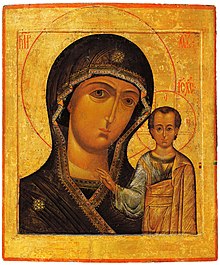
- Mary as Theotokos
- What comes after does not destroy what comes before
- What comes after finds its raison d'être in what comes before
- What comes after has a kind of DNA relationship to what comes before
 |
| Theotokos |
The plant, when it grows, conserves its uniqueness. It persists in existence through its growth. The non-growing thing decays, and fails to persist in existence precisely because it does not grow.
What about God? Are you advocating for a type of open theism?
No way.
God is completely different than (other) creation, and, the Church is His New Creation.
What about Scripture? It doesn't grow.
In one sense it doesn't, but in another sense it does. Obviously, the Church has closed the canon and there will be no more passages of Scripture added to it. However, in her doctrinal development, the Church recognizes the expansive, potent, and inestimable riches of the deposit of faith found in Sacred Scripture. In fact, a view that closes one off from development of doctrine makes the Sacred Text reductive, less potent, and expendable.
3. The primitive Church (1st century) was already Catholic, and any claim otherwise is the error of the Judaizers.
The error of the Judaizers was to hold to the belief that the Mosaic ceremonial law and customs were to be strictly enforced in the Christian community. It is true that for the first 40-50 years of Christianity, it is was viewed primarily as a sect of Judaism. This fact, however, should not be confused with the idea that Christianity is in fact a sect of Judaism. That view is grossly incomplete and fails to grasp the universal goal of Christ's salvific work (John 1:29). Further, many of the early theological issues dealt with the gradual development of Christianity's clean break with Judaism as a religion. This is evidenced in both Galatians and Acts and portended in Christ's prophecy about the destruction of the temple (Matt 24:2). We might say it wasn't until 70 AD and the destruction of the temple that the Church could truly established her identity separate from the cult of the temple; not because she was always separate from that cult but that culturally, the temple dominated the mind share of the people.
When we examine Matthew's account more closely, it is not just a coincidence that Christ says, "not one stone here will be left upon another, which will not be torn down" and that earlier in his ministry, St. Matthew recounts that Christ called St. Peter "the rock" (Matt 16:18), that the Church is built upon stones, the cornerstone of which is Christ (Eph 2:20). In a sense, we should expect that the "old stones" of the temple were still being cast down between our Lord's ascension and the destruction of the temple.
At this point, I could really just rehash another one of my posts. Instead, I will turn your attention to my post:
Myth Buster: Constantine Founded the Catholic Church
Considering the first two paragraphs (above) and the post about Constantine, it should be clear to see how, what, and why the Church emerges as she does in the late first century. The Old Temple, and its cult, has been destroyed. The New Temple has been built, whose cornerstone is Christ, and whose steward is a rock for whom the Church will lean upon for unity until His return. Of course, we know that the great scandal of unity and the Petrine See is that it has caused many times just the opposite. But, we should not be surprised. Our Lord told us it would be so.
In conclusion, primitivism is only preferable for natural objects. However, even for natural objects that are animate, many times we prefer what is after to what is before because it is precisely in the process of the passing of time that the value of the thing comes to the fore. However, for supernatural objects, we should never prefer what is before simply because it is before.
That is irrational, unbiblical and a-historical.
Subscribe to:
Posts (Atom)