November 29, 2011

The Problem with "Easy Believism"

Some people say, "All you need to do is believe." This is normally accompanied by a short prayer and a DVD collection of Disney animated movies. In order to illustrate the problem with this, I invite you to read a short script that demonstrates the issue:

A man is in his hotel room. It is 2a.m. He is tired of living his life the way he has. He wants CHANGE. He was let down a few years ago, I think it was November, but this time its different. Remembering that the hotel he checked into was "Jesus Inn", he flicks on the tv realizing that every room is subscribed to the TBN network--"24 channels, 24 hours, until the trumpet blows". On the first channel, a preacher is intently looking at the screen as if he were talking to him:

Preacher 1: "Have you repented of your sin? Do you really hate your sin? Jesus wants to save you, but you must repent of your sin. So repeat after me, "Dear Jesus. I am so sorry for my sins. I am sorry for living my life for the devil. I renounce the devil..."

The man quickly turns the channel.

Man: (thinking to himself) "That guy was crazy. I want change, not something to make me feel bad."

He suddenly realizes that another preacher is preaching.

Preacher 2: "Did you know Jesus loves you? He really does? If you want to go to heaven and not hell, repeat after me, "Dear Jesus. I'm sorry for the way I've lived my life up until now. I've messed up. I blew it. I need your help..."

Man: (again to himself) "I blew it?" It wasn't my fault. My dad messed me up. My uncle too. Who does that guy think he is?

The man changes the channel three times, imagining that maybe he would get a different result. He does:

HT: The Czar
Preacher 3: "Repeat after me, "Dear Jesus. I want to have an amazing life, now. Amen. If you prayed that prayer call the number on the screen and tell us. We want to send you a book, 5 Ways to Crank up your Saved Life, it will only cost you the price of shipping. Love gifts are always accepted."

Man: "I'm saved! Hooray! I feel so much better."

____________________________________________________________

The idea that you could say a prayer and go to heaven is relatively new. Hints of this notion are resident in the early Evangelical movements, especially the ones that rejected the necessity of baptism. It took on full steam during the "Great Awakenings" in the US in the 1700's. A Christianity Today article even admits that you will be hard pressed to find a "sinner's prayer" before Charles Finney* (1772-1875). Finney admitted that his method was a replacement for the Apostolic method of baptism. If that is not enough to make you abandon "easy believism" theology, stop reading my blog now. Unsubscribe and move on. I am no good for you.

Interestingly enough, you can trace the history of the movement and find that the sinner's prayer, like my satire above, has gradually been redacted. In the beginning, sinner's were invited to the front row. They were told "salvation was looming over their heads". The sinner's prayer was a process leading up to a confession, a coaxed confession, but a confession nonetheless. Eventually, Billy Graham would popularize it in a form we are very much aware of today:
"Lord Jesus, I need You. Thank You for dying on the cross for my sins. I open the door of my life and receive You as my Savior and Lord. Thank You for forgiving my sins and giving me eternal life. Take control of the throne of my life. Make me the kind of person You want me to be."
In a digital sermonette, some still try to retain a more robust sinner's prayer. Nevertheless, it is not uncommon today for evangelical or non-denominational churches who employ the sinner's prayer to simply add it on to the end of almost any sermon. The sermon for the day could be "5 Ways to Make your Marriage Better". That message would be appropriate at a marriage seminar, but generally there is this awkward moment where the pastor will say, "And if you don't know Jesus, you are going to have a hard time with any of this (smile, insert laughter). If you want Jesus and desire to live with him forever, repeat after me..."

Plain and simple, "easy believism" is just another possible novelty of Protestantism. I know there are many Protestants who reject it, and we agree that it should be rejected. However, one should stop and ask "in what spiritual climate was this idea able to grow?" I expect that in this century, a new religion that is already emerging will dominate the airwaves. This religion will be in the tradition of "easy believism" and will make it possible for just about anyone to say they are "Christian".


"For the gate is small and the way is narrow that leads to life, and there are few who find it."- Matthew 7:14

Peter said to them, "Repent, and each of you be baptized in the name of Jesus Christ for the forgiveness of your sins; and you will receive the gift of the Holy Spirit."- Acts 2:38


*Finney disdained Catholicism, but also called the Westminster Confession the "paper pope". Gotta love Protestantism!

November 28, 2011

November 27, 2011

Another Reason Not to Blog as Much: My Wife is Pregnant!

Praise God!
We are expecting number 5! This is our sixth child, the first went to heaven in the womb. We feel so blessed to welcome this new life into our family. His or her siblings are equally as excited.

When my wife told me a few weeks ago, I made the sign of the cross and prayed, awed at the power of God and His sovereign will to bestow upon me the great gift of life. Truly the Holy Spirit has visited us! I don't deserve this! I shutter in holy fear at the responsibility before me: the responsibility to get souls to heaven! 

Ave Maria! (sorry about all the exclamation points)

People often ask us, "Are you done yet?" To that question, I am reminded:

St. Thérèse de Lisieux - Doctor of the Church (ninth child)
St. Ignatius Loyola - founder of the Jesuits (eleventh)
St. Francis Xavier - perhaps the greatest missionary (thirteenth)
St. Catherine of Siena - Doctor of the Church (twenty-fourth)
(ht: tm)

Will my next child be Saint Stubbs? Okay, so I hope he or she changes his or her name because Saint Stubbs sounds like some checking company in east Africa who co-opted a holy name to lure in the gullible.

On second thought, you never know...

God bless you all!

November 25, 2011

Reason #9745 Why I'm Catholic

tradition
with a small "t"
Image Credit: NTM
“Wherever the Catholic sun doth shine, 
There’s always laughter and good red wine. 
At least I’ve always found it so. 
Benedicamus Domino!” 
-Hilaire Belloc

Put simply, any religion worth its weight will develop a culture around it. It is what we do as human beings to preserve something that is good. A culture is a way of living, and the way in which that "way" is passed on is tradition (not a scary word). In the Old Testament, we notice an elaborate culture that emerges among the Jewish people, a culture that is on display even to this day.

Ah, you see, the Catholic religion is no different. How much more the New Covenant--that God came to earth--should create a real and genuine way of being! Yet, Catholic culture and identity was at times more apparent in society. The last 50 years have been tough, but I notice a resurgence in Catholic identity taking place. This starts first in our liturgical celebration: for worship is truly what we have received from Christ. In worship we grow in love for our Lord, most especially in and by the gift of the Holy Eucharist. This happens in a rythme, a cycle, called the Liturgical Year, and as you probably know, we are beginning to commence a new one. What does this have to do with my reasons for being Catholic? Good question.

I am Catholic because when I look at what the religion has produced as far as culture goes, I notice two things. First, Catholicism is wholly Christocentric. Everything we do as Catholics points to Christ. We feast and fete the entire life of Christ, the life of his mother, and the life of his holy ones who have lived among us. Well, mostly we feast and fete. Historically, Catholic Christianity has also produced a general mood of penance. Meatless Fridays. Lent. Holy Week. "Offering it up". All of these make sense of the new old words: "through my fault, through my fault, through my most grievous fault.”

Second, I also notice the most evil and direct affront to Her tradition. Satan seems to desire, above all else, to quash this culture--the tradition of the Catholic Church lived in the lives of the people--because it is Her culture that keeps alive the intense memory of his Great Foe. In politics and theatre, men are quick to both remove the effects of Her tradition from the public view while simultaneously in the public view making a direct mockery of them. Sadly, the devil roars about in the Church seeking whom he may devour. Bishops, priests, and lay are targets all the same. And the goal, you ask? 

The destruction of Catholic culture. Why? Repeat:

Because it is Her culture that keeps alive the intense memory of satan's Great Foe.

With the introduction of the new missal, begin this Advent not in rebellion to Mother Church. Rather, embrace Her, embrace the change as a way to be consonant with the Tradition (big "T"), which will help us--the people of God--to develop a more integrated tradition (little "t") that will truly "proclaim His death until He comes in glory".


Let's drink to that!

Benedicamus Domino!

November 22, 2011

Squanto and My Conversion

These are the images you find when
you search "Social Studies"
Some 10 years ago, I started teaching. My first set of classes included an eleventh grade Bible class and a seventh grade "social studies" course. The phrase "social studies"--I explained recently to a visiting priest in our parish from Oxford--is the American way of saying "history". I think "social studies" makes it sound more scientific as if history were merely the by-product of men sitting around a fire, smoking pipes and telling stories. I, personally, think social studies sounds like the work of a fiction novelist. In my mind, I think of some kind of large, puppet master staring down upon society under a microscope.

Back to the point of how Squanto, the infamous Native American guide to the Pilgrims, has anything to do with my conversion to the Catholic religion.

About this time, 9 years ago, I began my lesson on the history of the Separatist movement that eventually culminated in the Mayflower's journey across the Atlantic. The textbook I was forced to use for this seventh grade class was put together by Bob Jones University. If you are not already familiar, Bob Jones University is an anti-Catholic, fundamentalist school. In turn, their books have no citations (fundamentalist) and make every effort to put down the Church in favor of "simple Christianity" or "Bible believers" (anti-Catholic). This chapter was no exception. In fact, I let my students tear out an entire section of one chapter because it was so blatantly anti-Catholic. Although I was by no means Catholic at the time, I knew that such rhetoric had no place in a history book, and that polemics was not in the best interest of the normal development of a young mind. Therefore, I told them to tear out the section. So in grandiose fashion, I allowed the students to march up to the front of the class and dispose of a part of their textbook in my trash can.

They loved it.

Once they all sat back down, we looked at the chapter again and to my surprise, the author allowed for one detail to slip through the cracks:

Catholic Squanto
Squanto was saved from slavery by monks. 

By MONKS!

Facts conveniently left out:
1. A Protestant sold him into slavery
2. The Monks were Catholic
3. Squanto was Catholic

History Fail. Social Studies success! Bob Jones University propaganda machine success! A seed toward the conversion of Brent to Catholicism...

...What?

I remember thinking to myself, "Self, isn't it weird that God is providentially using Catholic monks to help the establishment of the plymouth colony?"

I will confess that I did not run right out and beat the doors down of the nearest Cathedral and convert. Nope. However, what did happen in my heart was the gentle acknowledgment that God seemed to be using Catholics. When you formerly thought of Catholicism as "dead religion" that is a baby-step worth noting.

Duly. Noted.


HAPPY THANKSGIVING TO ALL! GO TO MASS AND START YOUR DAY OF THANKSGIVING THE BEST WAY POSSIBLE!

(HT: Taylor Marshall)

November 18, 2011

Is Protestantism a Theory?

 Version #21,743 of 38,103
I mentioned on my Journey Home episode that while examining my own faith, I came to the realization that Protestantism was a theory (at this point Catholicism was not on the radar yet). A few commenters have asked me about this. Recently while reading Hilaire Belloc's book, The Great Heresies, Belloc says something very similar:
"[Protestantism] did not, after the various heretical propositions had been condemned, set up a separate religion over against the old orthodoxy. Rather did it create a certain separate moral atmosphere which we still call "Protestantism". It produced indeed a crop of heresies, but not one heresy. The Protestant attack differed from the rest especially in this characteristic, that its attack did not consist in the promulgation of a new doctrine or of a new authority, that it made no concerted attempt at creating a counter-Church, but had for its principle the denial of unity. It was an effort to promote that state of mind in which a Church in the old sense of the word--that is, an infallible, united, teaching body, a Person speaking with Divine authority--should be denied; not the doctrines it might happen to advance, but its very claim to advance them with unique authority." (pp. 97 & 12; Tan Books & Publishers, 1991).
A Shocking Image to Our
21st Century Sensibilities
By denying a Magisterial Authority in the Church Jesus established, one denies the unicity of the Church (Ecclesiae unitatem). One of the most important factors in being able to identify any thing at all is its unicity. We cannot find a thing if it is disintegrated. Or rather, what we will find is a disintegrated thing, but not the thing per se. Therefore, if the Church is not united to one head, Christ, and that is manifest visibly by a Magisterial Church invested with the same authority as Christ, then one has no hope in identifying the Church Jesus established. She is a chimera at worst, only invisible at best. If either, one would never know if he were leaving Her thus eliminating the possibility of "schism from". This is why the Holy Father calls Protestant churches "ecclesial communities" since they are merely a group of Christians choosing to form a community around their shared theology. They can leave that community and start another if they like, since there is no visible church and therefore no sin in leaving (schism) that community to start or join another. Thus, what one finds is a disintegrated thing (res dis unitatem)--not an "infallible, united, teaching body, a Person speaking with Divine authority".

Church Board:
"We all agree, so we joined this club that runs a church"
Ultimately, when I was a Protestant, I joined a church based upon a shared theology--theory--about Christianity. A theology is a theory when it is merely the by-product of human artfulness. Thus, as I learned more things, I changed my community to one that shared my theory (or was really close to it). When one identifies the Church Jesus founded, he will find that she teaches things that he does not agree with and that he may never fully understand or accept on the grounds of his own intellect. Nonetheless, he does not join her ranks because it is a church of men convinced of the same theory. No, it is a Church united visibly as a "thing" in reality (res Ecclesiae), whose existence can only be explained by Her head's (Christ) divine intervention and providence (will). That is precisely what the Catholic Church proclaims to be:

"CCC 831. Secondly, the Church is catholic because she has been sent out by Christ on a mission to the whole of the human race:
All men are called to belong to the new People of God. This People, therefore, while remaining one and only one, is to be spread throughout the whole world and to all ages in order that the design of God's will [not human invention or artfulness] may be fulfilled: he made human nature one in the beginning and has decreed that all his children who were scattered should be finally gathered together as one. . . . The character of universality which adorns the People of God is a gift from the Lord himself whereby the Catholic Church ceaselessly and efficaciously seeks for the return of all humanity and all its goods, under Christ the Head in the unity of his Spirit.

Amen.

November 16, 2011

3 Reasons Why Jesus Would Be Rejected

Are three reasons why people reject the Catholic Church today. I've been thinking about this for some time, ruminating about the common objections I hear against Catholicism. They can be summarized in three distinct yet overlapping categories: ontological, moral and epistemic.

On the first, many deny that the Catholic Church is who She says She is. This is the ontological objection. They deny the "who" and therefore dismiss Her as a fraud or mere denomination. The second, the moral, is the complaint that the Catholic Church is full of sinners. Luther had this problem--although he admitted his solution did not fix it per se, just covered it up with snow (insert laugh)--and so too today, especially in lieu of the abuse scandal, is the Church riddled with accusations--true as it is--of being a house of sinners. We are teeming with them. Lastly, the epistemic complaint is that the Catholic Church claims to always be right, to speak with infallible veracity--or so it goes. I know better, says the reply, the Bible tells me so, looky here, or something like it is leveled against what appears on the outside an egomaniacal power-play. Who does the Catholic Church think she is?

Of course, all of these complaints could be leveled against Christ. In that way, the Catholic Church can claim She is eerily similar to Her head. [Hold your objections for a moment and keep reading] On one point the analogy seems to go afoul as Christ is not full of sin, but I will explain the parallel in a moment. Let's consider these three objections, not so much with the Catholic Church in mind, but rather with Christ himself as our referent. I will then return to the Church and ask you to consider how the logic of the objections (notice I did not say legitimacy) against Christ have equal force upon the Church.

Again, I am emphasizing the logic of the objections as distinct from the factual legitimacy of the objections. I make this distinction because generally we accept or reject a statement based on the former. We almost never have the facts before us nor have we properly investigated them. Therefore, we consider the logic of a statement, and upon those merits, accept it or reject it. What's at stake then is the first push-back many non-Catholics have regarding Catholicism, which is at the level of logic not evidence. What I will show is that the Christian objector to Catholicism does not fairly apply this logic and has likely not considered the evidence, something I am not claiming will necessarily require them to become Catholic but will hopefully make their objections to Her less canard-like.

1. Who Jesus was
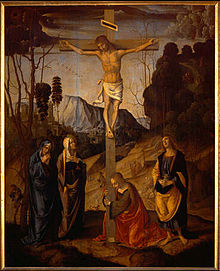
Can He Be God?
He was either--as C.S. Lewis put--a lunatic, liar or Lord. Anyone who claims they are God can only be one of the three: Lord if True, liar if sane or purely mad. It did not matter whether or not you thought Christ's teaching was true or false. Not to say that in his teaching men were not compelled to believe. However, men are compelled to believe all kinds of things by preaching. Our Lord knew that about us, it is why he described us as little chicks in need of a mother hen or as dumb sheep.

At the heart of it, we must believe that Christ is God. This belief is the foundation for every other belief. This is an act of faith, warranted by both the supernatural work of grace in our heart by the Holy Spirit and the evidence of this claim as corroborated by: (1) the prophecies Christ fulfilled, (2) His supernatural life and most importantly (3) His death, burial and RESURRECTION. Yes, truly in the resurrection--his power to conquer death--can we know He is who he says he is.

2. Who He picked as His disciples

The Doubter
Jesus did not pick the brightest bunch. Even if you just gloss over the New Testament, it is pretty evident that his team is regularly missing the point. Upon receiving the Holy Spirit in Acts, things got better. However, the one who denied Christ thrice is back at it again, pretending he would not eat with Gentiles. Sheesh! This was the guy Jesus adamantly asked to "Feed my sheep", prayed that His faith would not fail Him, and changed his name like the patriarch of the First Covenant (Abraham).

Oh, and I forgot to mention that Judas fellow. Not so good. Sold his soul to the devil. So imagine yourself a first century Jew. This Jesus is claiming he is God and his crew is a bunch of rag-tag, epic fail sorts, who are petulant at times ("who's going to be first?") and one of whom is a devil. Would not the Jews have good reason to say something like this:

"Jesus, we really like you, but clearly you are not the One you say you are. We know God exists, but I just can't follow your team. They are way too dysfunctional. I just want to go back to a simple life of private prayer. You know, me, myself and God."

3. His Authority

It would have been nice had Jesus said. "You have heard that "X", and you are right!!!" Instead we get things like "Woe (curse) unto you, if...." and "You have heard that "X", but I say!"

"Jesus is like way too judgmental" (chomping on gum)

Jesus did not mince words. He also did not leave things up for debate or discussion. He taught definitively and explained to his disciples in such a way that they could understand. The Gospels are a proverbial chest full of short, easy sayings to understand but hard to swallow. Not sure what God thinks about the poor? What is our obligation to those in prison? What about divorce? Jesus lays the wood on all of these counts. He is no university professor. He is the Word of God and His intended audience is you and I. He makes no qualms about His credentials and promises that the Holy Spirit would come to assist His Church to both "teach all things" and "remind them of what He had said" (John 14:26).

Interestingly enough, many scholars have shown that Jesus took some pretty big liberties in interpreting the Old Testament. We grant him those liberties because...well...He's God! However, the point I am implying is that it is precisely because of his ontology (God) that we accept his interpretive decisions. We do not accept them because they are the only reasonable interpretations of the passages. In other words, reasonable men can disagree with Christ. Faithful men cannot. Christ's interpretive decisions are not unreasonable but they are also not rationally unassailable. God did not give the self-pious man that easy of a way out. No. By submitting to Christ and through submission alone, do we see the inestimable wisdom of Jesus's words; not merely through some process of self-reflection.

The Church: The Great Scandal of Christ
One of Her Doctors
Christ's Church today is rejected for the same reasons He was. First, many just do not believe She is who She says She is. The miraculous history of the Church, human albeit but miraculous nonetheless, is a sign of contradiction in the world. Her prophetic witness just by Her existence seems to evidence that Christ has Risen and has imbued his Church with that same power. Despite schism, internal conflict, bad-bad leaders (at times) and treacherous followers, the Catholic Church is still here. Yep, still here. Every generation has written Her off. The second-generation Reformation project assumed that She would just go away. 

This Blow Did
 Not Finish Her Off
Here She is. Out of the tomb and alive and kicking.

Do you believe that Christ's Church is the one he founded? If not, why do you practice your faith in a church founded by someone other than Christ? Have you considered the preponderance of the mere existence of the Catholic Church and the improbability of her existence through mere natural powers? 

Second, many reject Christ's Church because of her followers and leaders. Just like the first century Jews, they have strong grounds to walk away simply because the Church's members are not that impressive. For example, if the same percentage of Catholic Bishops were devils like say Judas, that would be 425 turn-coat Bishops. Ave Maria! The United States only has 390 Bishops!

Do you reject the Catholic Church because of the sexual abuse by some priests and the protection of those priests by some Bishops? (See: Abuse in Context--ALL COMMENTS WILL BE DELETED THAT DO NOT TAKE INTO CONSIDERATION THIS LINK) Is the Catholic Church not credible to you because her members are so sinful? Because a high percentage of Catholics in the US practice contraception which is explicitly condemned by the Church? Do the sins of the few cloud any possible vision of the beauty and holiness of the many? Moreover, does the human fragility of this Church, that She acts as a hospital for sinners, somehow get out of focus Her divine origin and supernatural guidance and protection?

Lastly, the Catholic Church is the only Church in the world that teaches like Christ. I will grant you that it could be just a big charade. However, it should be noted that the Scriptures witness both our Lord's admonition to listen to the Pharisees when they are on the seat of Moses (Matthew 23:2) and the idea that "he taught them as one having authority, and not as their scribes" (Matthew 7:29). Since we know that the word "scribes" is co-extensive with Pharisees (from Mark's treatment), what gives? The point is that Jesus is the new Temple and new Seat of Moses. He is Truth. When He passed off His keys to His steward St. Peter, He knew that he (St. Peter) too would have to sit on His seat--the Chair of St. Peter. This seat is temporary but necessary until the Return of the King.

Jesus's ministry started in the old temple, opening the scroll, and infallibly declaring "this is that" which Isaiah prophesied. The Church's ministry, ingrafted into the new Temple (Christ) began the same way, only this time St. Peter was sitting in the new Chair, infallibly declaring "this is that" which Joel prophesied. I think it is more than coincidence that the New Testament witnesses the continual hypocrisy of St. Peter even after the coming of the Holy Spirit. Our Lord made sure to instruct those who were listening to pay attention to those who sat on the Seat of Moses. In their ears, his admonition resonated but not at the new covenant level it should have. Our Lord was preparing them for the attention they needed to give to the new seat, and it is laid bare in Scripture the obvious parallel between our Lord's actions and St. Peter's.

Lastly, the trajectory of Catholic dogma has been such as to run parallel but opposite to the current of society. While society has been steadily tracking to hold to a subjectivist, relativist view of reality, the Catholic Church solidified her understanding of the infallible nature of the teaching authority of the Magisterium.

Scandalous. What a great shock to the modern ears! Infallible? Hasn't psychology, history, natural science and philosophy proven this impossible?

What a gross over-statement. 

The point of all of this is a simple observation: The Catholic Church is rejected for many of the same reasons one would reject Christ. 
  • They reject the Church's teachings because they fail to appreciate "who" She is
  • They reject the Church because sinners are in Her fold
  • They reject the Church's teachings because they are too dogmatic


Lord Jesus, grant us faith to believe. Amen.

enter your email below to get almostnotcatholic delivered to your digital door 

November 14, 2011

2 Reasons I'm Not Blogging (Video) As Much

This video somewhat violates my "no bloggy-blog" rule. Oh well. It fits within the theme of this site for two good reasons:

1. You will now meet two of the reasons I am Catholic.

2. I hope this video promotes the culture of life and encourages men to have kids. Its awesome!

November 8, 2011

Works (Scary!) Based Religion?

I was recently in a conversation with someone we will call a "friend". The friend asked me where I went to church, and I explained that I was Roman Catholic. Surprised, knowing that I went to Oral Roberts University and could converse like a Protestant, my friend had the gumption to immediately ask something like:

"Isn't that a works based religion?"

Wowzer!

My friend the czar has already done a sufficient job of pointing out the Bible's take on works.
Courtesy of www.patrickvandapool.com

As a disclaimer, I understand that the core of the objection has to do with some fundamental disagreements about theology or namely the question, "How are we saved?" However, popular notions of the phrase belie something more shallow, and I am becoming more aware that people do not become Catholic for more shallow reasons than profound ones. You see, many people do not become Catholic for two odd but similar and understandable reasons. The first person does not become Catholic because he never grapples with the big claims of Catholicism--he is too caught up in the peripherals, misnomers and caricatures. The second person does not become Catholic because he has considered all of the deep issues, agrees with the Church but cannot get over the peripherals, misnomers and caricatures. An ounce of prejudice can take years of re-education, and it is ignorance at the level of sensibility I am mainly after because it is ignorance which keeps so many dancing on the western shores of the Tiber.

I understand what someone means by the question, "Isn't that a works based religion?". They mean to imply (not really ask) that Catholicism teaches that one earns your way to heaven. However, this is not prima facie (on the face) obvious from the question. That is why it is commonly misconstrued and not a really good question. I can think of various caricature-like, implicative questions to ask a Protestant who says they are, for example, a member of "ABC" church:

"Isn't that new religion?"

"Wasn't that started by a man?"

"Don't you guys believe that you can sin it up and go to heaven?"

These aren't good questions. Though, and sometimes, putting the shoe on the other foot is important.

It should also be noted that the question ("Isn't that a works based religion?") is an evangelistic ploy trying to plant a seed of doubt in their listener's mind so as to convert them to their sect. The immediate rejoinder from the anti-works inquisitor is to make some comment about rosaries, Our Fathers, or some other "works" that Catholics think they "have" to do to get to heaven. They have to go to Mass! Every week! Sad. Sad. Sad.

And so it occurred to me. Well not really occurred, but more like I was reminded of something. Specifically this:

"Pray without ceasing" -1 Thessalonians 5:17 (WBRT*)

Wowzer! That's some kind of works based religion. I'm sweating to death over here trying to keep up. I thought if I had faith in Christ that was enough. What if I don't pray without ceasing? Does verse 18 read: "But don't worry if you forget or are lazy because faith alone is all you need!"? Not so much.

But I started thinking to myself, do Christians have prayer camps?

Umm....
YES!
So in the "non-works based religion" they have child-prayer-labor camps. I know a lot of the non-works based religion adherents would decry the child-prayer-labor camps. They would call them extreme and be saddened by the long-term effects of the child-prayer-labor camps. But, how does this work anyways? The non-works based religion people get their cake and eat it too. They get to not be a part of the works based religion (a la Catholicism) but pretty much set their marks of communal demarcation in their back yard if they want? 

"Hey Jim! Your neighbors who go to church with you are practicing a works based religion"

"Mark, I have no idea what you are talking about. They don't practice my religion because I have a non-works based religion"

"Jim, doesn't Mark ride with you to church?'

"Yeah Mark, but he rides in the back seat"

Catholics don't even get a break for un-catechized, uneducated, superstitious, poor people who claim they are Catholic because someone 200 years ago believed in Jesus--people that may live 4,000 miles away. The non-works based religion people get to discredit the other non-works based religion adherent down the street or even in their pew. I guess that is what happens when religion is tantamount to holding to a theory and not actually being a part of something. Getting back to prayer...

A religion where you don't do anything is really worth nothing. While the fundmental question and conversation about salvation and works is very important, the sentiment wrapped up in this bad question is sentiment that should be disregarded as wholly un-Christian. The entire point of the Gospel was so that we would fulfill these words:
"So let your light shine before men, that they may see your good works, and glorify your Father who is in heaven." -Matthew 5:16
"Having your conversation good among the Gentiles: that whereas they speak against you as evildoers, they may, by the good works, which they shall behold in you, glorify God in the day of visitation" -1 Peter 2:12
more stealage
Jesus made it so plain that St. Peter pretty much copies and pastes. Nice work. We new St. Peter had a tendency of being rash, and in this case it appears he just picked up St. Matthew's gospel and read to his scribe out loud. The point is that works are necessary and the New Testament is chalked full of that implication. Our gut level prejudice about Catholicism should not preclude the use of the nasty term "works". Only if you were stuck on a toilet for hours on end fretting about your eternal destiny would you come up with rubbish to the contrary. Come on, who would have time to do anything if they were stuck on the toilet all day? You would have to be worried about the whole works thing. And you would probably start an entire new religion to boot.

*Works Based Religion Translation

November 7, 2011

3 Posts to Share With You

I started this blog seven short months ago. Most of my original articles have gone relatively unread. That is okay. However, I wanted to bring to your attention their value by doing a post that links to three that in my estimation are worth your time. If you disagree after reading them, I apologize. Below is a link with a brief description:

Cardinal Burke and the True Pastors of the Church

Learn about what a Cardinal in the Catholic Church does during his "free time".


The Assumption in Church History

Why did the Church declare the Assumption a dogma (post 3 of 3)?


Is the Catholic view of the Saints against Christian Sensibilities?

Are Catholics crazy for their belief in the communion of Saints?

November 4, 2011

Don't Be Catholic...

This was originally published earlier this week at virtuouspla.net. If you have not already, check out what is going on over there.
___________________________________


...for the wrong reasons.

Is this the real Catholic Church?
In the last few months, I've stumbled upon a number of blogs and combox participants who lament the Catholic Church they've found since becoming Catholic. Some of them even appear disillusioned. I've also read a number of posts by Protestants who are adamantly opposed to conversion on the grounds that there are two Catholic Churches: the one you read about and the one that actually exists.

I want to respond to these problems with a few observations. First, I should say that I was lucky enough to be exposed to nominal, heterodox Catholicism very early in my journey. In fact, my first experience in RCIA was devastating to my wife's journey. I won't go into details, but will only relay that had Catholicism been measured by that experience it would be found drastically wanting.

The problem, though, with judging the Catholic Church on such an experience is manifold--and a casual reader would even feel the force of admitting. For starters, you don't come to the Catholic Church like you come to a Protestant sect. You are not looking for an über awesome local church that "feeds your soul" and gives you chill bumps. If you become Catholic for that reason, you would have become Catholic on accident. A Catholic journey is one where you are looking for the Church Christ established. She is not the sum-total of one parish, because she is not some evangelical mega-church.

Second, a mere perusing of the New Testament will quickly lead you to the conclusion that while Christ established a Church, it was a Church full of humans. Bickering brothers, a hot-headed leader, and 8.3%  (1/12) followers of which are guaranteed to sell their soul to the devil. If you think you will find something different in the Church Jesus Christ established, think again. It's the barque of St. Peter we are sailing in, and there's all kinds of animals on board.

Lastly, stop looking for the ideal which is mostly just some form of the "American dream" church. The "American dream" is the left-overs of Manifest Destiny smoking the pipe of modernist industrialism, all the while pining for an inhuman Romantic ideal grounded in our European sensibilities. Some people want to fall in love with an angelic Church. Unfortunately, you will have to die to get into that one--so stay tuned. The Catholic Church is made up of people like you and I, and the last time I checked...

So, I can hear my objector saying, "So, what's the difference between the Catholic Church and another Church. Brent, you are basically saying the Catholic Church isn't perfect, but neither is my Protestant church. So what gives?"

The difference is in the ontological reality. In other words, if I tell you my wife isn't perfect and then tell you your wife isn't perfect, it doesn't mean that I'm just as well off to go home with your wife tonight. Poetry about the beloved will always be grandiose, and an evening cleaning up around the house with the beloved--her hair up in a do--might lead someone to consternation over the paradox between poetry and reality. Of course, this only shows the the interpreter's failed grasp at all the contours of love.

Moreover, at the centre of our faith is the Eucharist, and ultimately a belief in the abiding presence of the divine Paraclete (helper), the Holy Spirit, who we ask to "come upon these gifts to make them holy, so that they may become for us: the body and blood of our Lord, Jesus Christ." Like bread and wine, we are simple. Yet somehow in the mystery of God's eternal plan, He has sent His Spirit to be with us until the end of the age, to lead us into all truth, to fill up His Body--the Church: the ground and pillar of truth. We believe that about the Church he established so we don't leave her--in spite of ourselves.

So, be Catholic for a good reason, with faith in the Triune God and not some romantic idealism.

I'm not saying you won't get anything epic...
Peace to you on your journey