
Showing posts with label Catholicism. Show all posts
Showing posts with label Catholicism. Show all posts
January 23, 2013
In the Words of Cardinal Dolan...
...as he so elegantly explains the counter-cultural nature of the Catholic Church. The piece is simply brilliant:


October 21, 2012
Man Made Traditions

"Making void the word of God by your own tradition, which you have given forth. And many other such like things you do." - Mark 7:13
FOR EXAMPLE:
2. A Eucharist that is a mere symbol. - Luke 22:19
3. Marriage that confers no grace. - Verses
4. Pastors without Holy Orders. - 1 Corinthians 11:24
5. Singles struggling without the religious life. - Matthew 19:12
6. Ministers who will not hear confessions. - John 20:22
7. Prayer without the belief in healing. - James 5:15
8. Demoniacs without a rite to deliver them. - Mark 16:17
Just to name a few...
July 20, 2012
Myth Busters: Primitivism
Setting aside your preference for baby chub, do you prefer this...
...to this?

Or this...

to this?

Yet many object to the Catholic faith because of its maturity. They don't exactly say it that way, but generally the objection comes in the form of some type of claim that the first Christians were "Messianic", Jewish, blew shofars, ate matzo balls (exaggeration), met in homes and certainly didn't have all the pageantry, form and "pomp" of Catholicism. They think that this is a sound and solid argument against the Catholic Church. Of course, these same folks cannot deny that in the first century, Christians began to call themselves "Catholic" so as to distinguish the apostolic Church from the sects. However, even that act, of calling themselves Catholic -- on their view, is an example of a departure from the primitive and what is oft implied "pure" nascent church.
To unpack the error of this view, one must first discern whether or not (a) their view of the primitive Church is accurate, (b) whether or not their can be authentic development (i.e., organic growth) in the Church and lastly (c) if their view can be substantiated as a preference either by reason and/or revelation. For pedagogical purposes, I will deal with these points in reverse order.
1. It is against reason to prefer that which is prior correlative to that which caused it.

The myth of "primitivism" is an irrational proclivity toward an awkward synthesis of the ornate and the immature. The primitivist wants what is old -- that's why he asks for the "old time religion", but he also wants what is young. He wants a very small old man, or he wants a six-foot tall infant. However, what makes an old man so valuable is that he is not young, and it is the youthfulness of the infant that makes it so vulnerable. We prefer an infant to nothing, but when making a decision we prefer the counsel of the old man. Nonetheless, some still object that the wise young man can become the stupid old codger.
True.
However, when we consider any object, it is obvious to all that whatever it is we are talking about tends toward some end (teleo). The end is namely that for which it was purposed. In the picture above, we see a certain end, or namely that for which the architect(s) intended. However, as you know, this castle will not remain like this. External causes will act on it, even internal causes intrinsic to the material itself will cause it to decompose and eventually cease to exist.
There are two possible ends: life or death. If the Church is merely a natural object, then we should expect it to decay. If the Church is a supernatural object, founded by Christ, we should expect the reverse. Anything less is what Bryan Cross aptly calls "ecclesial deism".
2. All living things grow. So, too, the Church grows and by the power of the Holy Spirit is maturing into the full stature of Christ (Eph 4:13).
In Luke 13:18-19, Christ gives us a glimpse into the life of the Church. In Blessed Newman's famous Essay on the Development of Christian Doctrine, he examines whether it possible for authentic development to take place. He discusses a number of criteria, and instead of going into all of them (you can read the book for yourself), I will summarize what I believe to be the most germane.
First, before I look at Newman's criteria, one should be aware of the numerous developments in the doctrine of the Catholic Church in the first four centuries:
I have yet, to this day, to find one Catholic dogma to be in violation of any of these principles of doctrinal development. Further, it is only the Christian who rejects all creeds and councils in favor of the creed of creed-less Christianity, who rejects all doctrinal development prima facie on a fundamentalist rendering of sola scriptura. Sadly, as my article on doctrinal development demonstrates, fundamentalism does the same thing to truth that liberalism does. In fact, the fundamentalist rejects doctrinal development because it appears to be liberalism. However, doctrinal development does just the opposite: it conserves.
The plant, when it grows, conserves its uniqueness. It persists in existence through its growth. The non-growing thing decays, and fails to persist in existence precisely because it does not grow.
What about God? Are you advocating for a type of open theism?
No way.
God is completely different than (other) creation, and, the Church is His New Creation.
What about Scripture? It doesn't grow.
In one sense it doesn't, but in another sense it does. Obviously, the Church has closed the canon and there will be no more passages of Scripture added to it. However, in her doctrinal development, the Church recognizes the expansive, potent, and inestimable riches of the deposit of faith found in Sacred Scripture. In fact, a view that closes one off from development of doctrine makes the Sacred Text reductive, less potent, and expendable.
3. The primitive Church (1st century) was already Catholic, and any claim otherwise is the error of the Judaizers.
The error of the Judaizers was to hold to the belief that the Mosaic ceremonial law and customs were to be strictly enforced in the Christian community. It is true that for the first 40-50 years of Christianity, it is was viewed primarily as a sect of Judaism. This fact, however, should not be confused with the idea that Christianity is in fact a sect of Judaism. That view is grossly incomplete and fails to grasp the universal goal of Christ's salvific work (John 1:29). Further, many of the early theological issues dealt with the gradual development of Christianity's clean break with Judaism as a religion. This is evidenced in both Galatians and Acts and portended in Christ's prophecy about the destruction of the temple (Matt 24:2). We might say it wasn't until 70 AD and the destruction of the temple that the Church could truly established her identity separate from the cult of the temple; not because she was always separate from that cult but that culturally, the temple dominated the mind share of the people.
When we examine Matthew's account more closely, it is not just a coincidence that Christ says, "not one stone here will be left upon another, which will not be torn down" and that earlier in his ministry, St. Matthew recounts that Christ called St. Peter "the rock" (Matt 16:18), that the Church is built upon stones, the cornerstone of which is Christ (Eph 2:20). In a sense, we should expect that the "old stones" of the temple were still being cast down between our Lord's ascension and the destruction of the temple.
At this point, I could really just rehash another one of my posts. Instead, I will turn your attention to my post:
Myth Buster: Constantine Founded the Catholic Church
Considering the first two paragraphs (above) and the post about Constantine, it should be clear to see how, what, and why the Church emerges as she does in the late first century. The Old Temple, and its cult, has been destroyed. The New Temple has been built, whose cornerstone is Christ, and whose steward is a rock for whom the Church will lean upon for unity until His return. Of course, we know that the great scandal of unity and the Petrine See is that it has caused many times just the opposite. But, we should not be surprised. Our Lord told us it would be so.
In conclusion, primitivism is only preferable for natural objects. However, even for natural objects that are animate, many times we prefer what is after to what is before because it is precisely in the process of the passing of time that the value of the thing comes to the fore. However, for supernatural objects, we should never prefer what is before simply because it is before.
That is irrational, unbiblical and a-historical.
 |
| Me at 2 |

Or this...
to this?
Before I begin, let's think about the pictures above. Should I prefer the child or the small sapling simply because they come first? Obviously not. It would be foolish to desire the former over the later, because it was precisely for the later that the former came into existence."So He was saying, “What is the kingdom of God like, and to what shall I compare it? “It is like a mustard seed, which a man took and threw into his own garden; and it grew and became a tree, and the birds of the air nested in its branches.” Luke 13:18-19
Yet many object to the Catholic faith because of its maturity. They don't exactly say it that way, but generally the objection comes in the form of some type of claim that the first Christians were "Messianic", Jewish, blew shofars, ate matzo balls (exaggeration), met in homes and certainly didn't have all the pageantry, form and "pomp" of Catholicism. They think that this is a sound and solid argument against the Catholic Church. Of course, these same folks cannot deny that in the first century, Christians began to call themselves "Catholic" so as to distinguish the apostolic Church from the sects. However, even that act, of calling themselves Catholic -- on their view, is an example of a departure from the primitive and what is oft implied "pure" nascent church.
To unpack the error of this view, one must first discern whether or not (a) their view of the primitive Church is accurate, (b) whether or not their can be authentic development (i.e., organic growth) in the Church and lastly (c) if their view can be substantiated as a preference either by reason and/or revelation. For pedagogical purposes, I will deal with these points in reverse order.
1. It is against reason to prefer that which is prior correlative to that which caused it.
The myth of "primitivism" is an irrational proclivity toward an awkward synthesis of the ornate and the immature. The primitivist wants what is old -- that's why he asks for the "old time religion", but he also wants what is young. He wants a very small old man, or he wants a six-foot tall infant. However, what makes an old man so valuable is that he is not young, and it is the youthfulness of the infant that makes it so vulnerable. We prefer an infant to nothing, but when making a decision we prefer the counsel of the old man. Nonetheless, some still object that the wise young man can become the stupid old codger.
True.
However, when we consider any object, it is obvious to all that whatever it is we are talking about tends toward some end (teleo). The end is namely that for which it was purposed. In the picture above, we see a certain end, or namely that for which the architect(s) intended. However, as you know, this castle will not remain like this. External causes will act on it, even internal causes intrinsic to the material itself will cause it to decompose and eventually cease to exist.
There are two possible ends: life or death. If the Church is merely a natural object, then we should expect it to decay. If the Church is a supernatural object, founded by Christ, we should expect the reverse. Anything less is what Bryan Cross aptly calls "ecclesial deism".
2. All living things grow. So, too, the Church grows and by the power of the Holy Spirit is maturing into the full stature of Christ (Eph 4:13).
In Luke 13:18-19, Christ gives us a glimpse into the life of the Church. In Blessed Newman's famous Essay on the Development of Christian Doctrine, he examines whether it possible for authentic development to take place. He discusses a number of criteria, and instead of going into all of them (you can read the book for yourself), I will summarize what I believe to be the most germane.
First, before I look at Newman's criteria, one should be aware of the numerous developments in the doctrine of the Catholic Church in the first four centuries:
- Trinity
- Hypostatic Union
- Two natures in one person (Homoousian)
- The canon of Scripture
- Mary as Theotokos
- What comes after does not destroy what comes before
- What comes after finds its raison d'être in what comes before
- What comes after has a kind of DNA relationship to what comes before
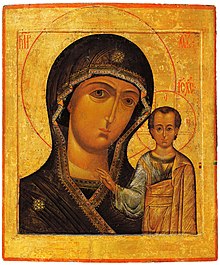 |
| Theotokos |
The plant, when it grows, conserves its uniqueness. It persists in existence through its growth. The non-growing thing decays, and fails to persist in existence precisely because it does not grow.
What about God? Are you advocating for a type of open theism?
No way.
God is completely different than (other) creation, and, the Church is His New Creation.
What about Scripture? It doesn't grow.
In one sense it doesn't, but in another sense it does. Obviously, the Church has closed the canon and there will be no more passages of Scripture added to it. However, in her doctrinal development, the Church recognizes the expansive, potent, and inestimable riches of the deposit of faith found in Sacred Scripture. In fact, a view that closes one off from development of doctrine makes the Sacred Text reductive, less potent, and expendable.
3. The primitive Church (1st century) was already Catholic, and any claim otherwise is the error of the Judaizers.
The error of the Judaizers was to hold to the belief that the Mosaic ceremonial law and customs were to be strictly enforced in the Christian community. It is true that for the first 40-50 years of Christianity, it is was viewed primarily as a sect of Judaism. This fact, however, should not be confused with the idea that Christianity is in fact a sect of Judaism. That view is grossly incomplete and fails to grasp the universal goal of Christ's salvific work (John 1:29). Further, many of the early theological issues dealt with the gradual development of Christianity's clean break with Judaism as a religion. This is evidenced in both Galatians and Acts and portended in Christ's prophecy about the destruction of the temple (Matt 24:2). We might say it wasn't until 70 AD and the destruction of the temple that the Church could truly established her identity separate from the cult of the temple; not because she was always separate from that cult but that culturally, the temple dominated the mind share of the people.
When we examine Matthew's account more closely, it is not just a coincidence that Christ says, "not one stone here will be left upon another, which will not be torn down" and that earlier in his ministry, St. Matthew recounts that Christ called St. Peter "the rock" (Matt 16:18), that the Church is built upon stones, the cornerstone of which is Christ (Eph 2:20). In a sense, we should expect that the "old stones" of the temple were still being cast down between our Lord's ascension and the destruction of the temple.
At this point, I could really just rehash another one of my posts. Instead, I will turn your attention to my post:
Myth Buster: Constantine Founded the Catholic Church
Considering the first two paragraphs (above) and the post about Constantine, it should be clear to see how, what, and why the Church emerges as she does in the late first century. The Old Temple, and its cult, has been destroyed. The New Temple has been built, whose cornerstone is Christ, and whose steward is a rock for whom the Church will lean upon for unity until His return. Of course, we know that the great scandal of unity and the Petrine See is that it has caused many times just the opposite. But, we should not be surprised. Our Lord told us it would be so.
In conclusion, primitivism is only preferable for natural objects. However, even for natural objects that are animate, many times we prefer what is after to what is before because it is precisely in the process of the passing of time that the value of the thing comes to the fore. However, for supernatural objects, we should never prefer what is before simply because it is before.
That is irrational, unbiblical and a-historical.
June 23, 2012
Myth Busters: Catholicism Teaches Universalism
 |
| Getting Catholicism Wrong Since 1995 |
Is the Catholic Catechism's view on the Muslim god wrong?
First, let me just say that the title of CARM's article misses the boat all together. In no place does the Catholic Church teach that the Muslim view of God, per se, is accurate. Further, the strategic use of "god" (lower-case "g") is disingenuous. When we speak of a metaphysical reality where there is only one "God", any other "God" would be "god". In a metaphysical reality where there are multiple "gods", then we should use "god" -- since there is no unique "God". This technique subtly attempts to do centrifuge on the metaphysical similarities between all mono-theistic religions. A real sham, I say! Secondly, what the Church affirms is that Muslims do have some very important parts right. So, while the Christian view is that Christ gives us the perfect and complete view of God; nevertheless, just because one perspective is perfect and complete does not render another view -- especially within the same metaphysical paradigm -- bereft of any value at all.
I have written in other places about Universalism in general (go here, here, here, and here). For this purpose, I will only focus on Islam, and will do so in relationship to a question I received recently:
I have been studying the Catholic faith and the catechism 841 question on your blog has stumped me. Would you read the below and respond (the article by CARM)? I couldn't find a Catholic response that addresses the fact that Muslims deny that Jesus, son of Mary, is God.The simple answer:
 |
| Can you tell the difference? God can. |
The Church's relationship with the Muslims. "The plan of salvation also includes those who acknowledge the Creator, in the first place amongst whom are the Muslims; these profess to hold the faith of Abraham, and together with us they adore the one, merciful God, mankind's judge on the last day."Does the "plan of salvation" include those, as St. Paul says in Romans 2:
"For when Gentiles, who do not have the law, by nature do what the law requires, they are a law to themselves, even though they do not have the law. They show that the work of the law is written on their hearts, while their conscience also bears witness, and their conflicting thoughts accuse or even excuse them on that day when, according to my gospel, God judges both secrets of men by Christ Jesus."I think so. So, the Church is trying to acknowledge what is redeemable in the people of other religions. Not the religions, per se. Since the Church is the shepherd of all of humanity ("What you bind on earth"), she must be careful in how she deals with each and every child of God who is made in His image and likeness. You do not treat God's children in a cavalier way; acting as if you can throw away whole portions of humanity without a second thought. Nevertheless, notice the proceeding context:
"Outside the Church there is no salvation"
How are we to understand this affirmation, often repeated by the Church Fathers? Re-formulated positively, it means that all salvation comes from Christ the Head through the Church which is his Body:
Basing itself on Scripture and Tradition, the Council teaches that the Church, a pilgrim now on earth, is necessary for salvation: the one Christ is the mediator and the way of salvation; He is present to us in his body which is the Church. He himself explicitly asserted the necessity of faith and Baptism, and thereby affirmed at the same time the necessity of the Church which men enter through Baptism as through a door. Hence they could not be saved who, knowing that the Catholic Church was founded as necessary by God through Christ, would refuse either to enter it or to remain in it. This affirmation is not aimed at those who, through no fault of their own, do not know Christ and his Church:
Those who, through no fault of their own, do not know the Gospel of Christ or His Church, but who nevertheless seek God with a sincere heart, and, moved by grace, try in their actions to do His will as they know it through the dictates of their conscience - those too may achieve eternal salvation. "Although in ways known to himself God can lead those who, through no fault of their own, are ignorant of the Gospel, to that faith without which it is impossible to please him, the Church still has the obligation and also the sacred right to evangelize all men."
 |
| Church of the Holy Sepulchre |
Now turning to the CARM article, let's look together at what our friend has to say (with my comments afterward):
"If the Catholic Church is stating in paragraph above, in the Catechism of the Catholic Church, that there are those within the Muslim community who may find salvation by becoming Christians and not remaining Muslims, then I would agree. But, it does not appear to be saying this. (It is implied when taken into context with the preceding section "There is no salvation outside of the Church". "The Church" meaning His Body, and therefore in order for Muslims to be saved they must be incorporated into Christ. There is no other Way of salvation)It is not a matter of the "Roman Catholic church" having a "faulty understanding of the God of Islam". It is about The Church acknowledging what is true in their (Muslims (people)-- not Islam per se -- which is a religion) imperfect and faulty understanding of God. Let me say that again. There is a difference between Muslims and Islam. One is a people, the other is a religion. St. Paul affirmed that the Athenians had found some truth in their "altar to an unknown God" (Acts 17:23). Simply because they did not have the complete picture, the total Revelation, found only in Christ, it does not follow that they had NO truth. Of course that is not the case -- even for the polytheists in Greece! Same goes with Muslims. The Church is not saying that Muslims have a similar theology of the "one God", but that many Muslims do acknowledge: (1) one God, (2) His mercy and (3) His judgement. That in no way implies our theology is the same on even these three points, but that on these three points we do share a commonality -- which can be a bridge to evangelism and also an opening for God to work in their hearts.
What is disturbing is the statement that "together with us they [Muslims] adore the one, merciful God, mankind's judge on the last day." So, Catholics and Muslims both "adore the one, merciful God." Quite frankly, it would seem that the Roman Catholic church has a faulty understanding of the God of Islam."
Slick goes on to say:
"Islam acknowledges that it serves the God of Abraham, Isaac, and Jacob. But in so doing it is stating that Abraham, Isaac, and Jacob, were Muslims! Furthermore, Islam denies that God is a Trinity."Again, his analysis is beside the point. The Church's position is not to imply that they have the right theology, but rather -- like the Athenians (you know those people in the Bible) -- they have found some truth in their imperfect, distorted image of God. Just because I imperfectly know my wife, doesn't mean I'm ignorant of her completely. Slick then triumphantly asks:
"Since the Trinity is the true biblical doctrine of God, how can the Muslims who deny the Trinity "adore the one, merciful God?"
 |
| Oddly, Fundamentalists don't think Jews are worshiping a "false God" |
Thus, as Catholics we must evangelize because of the goodness of God. It is the goodness of God that leads men to repentance. It is His kindness and long-suffering that softens the sinner's heart. Yet knowing that it is the human heart that we are talking about, it is impossible for us -- the Church -- to cross the sacred boundary of that tender place where only the still, small voice can gently say:
"Behold, I stand at the gate, and knock. If any man shall hear my voice, and open to me the door, I will come in to him, and will sup with him, and he with me." (Revelation 3:20)
Will you?

UPDATE: One should note that my inclusion of Romans 2:14-16 in no way implies that there is some kind of salvation a part from Christ. The Law, first and foremost, accuses of wrong -- either given in revelation or through natural law written on our hearts (in this way it is the "schoolmaster"). However, it is precisely because God can judge the heart, and we cannot, that we cannot simply assign large groups of people to help for whom we cannot see their heart. God gives sufficient grace to all. Only he knows if they respond to that grace or resist it. If they resist it, they damn themselves.
I'm including this update because someone was concerned that my rendering of Romans 2:14-16 would lead souls to hell. The problem with that idea is that if you are conscious enough to even consider the ramifications of this passage, you are likely outside its scope.
May 16, 2012
How to Share the Catholic Faith
I have been asked by former Protestants more than once how to share the Catholic faith. There are at least two reasons why the former Protestant -- now Catholic -- has some kind of hesitation or reservation as to the "how to" of sharing their Catholic faith. For starters, the road to Rome is littered with theological jargon and the exploring of theological issues not theretofore experienced. Thus, one comes under the rightful impression that the Church has been thinking about what she believes for 2,000 years, and that such an extended thought has yielded enough to ponder for a thousand lifetimes. I mean, She is older than plastic unlike at least 10,000 or so Christian denominations -- so it is kind of what you would expect.
This perceived complexity leaves the new convert stultified, thinking that by saying "x", they open up can "a" which necessarily leads to opinion "b-1", and we all know that "b-1" leads to what is behind door #2, and so on. This is only reinforced by spending more than a half an hour in a Protestant-Catholic combox on an article about the Papacy. Not to mention, that to the modern mind, St. Thomas Aquinas can seem pedant -- not his fault -- but still a problem nonetheless. All of this reinforcing the observation of how the modern convert to Catholicism struggles in the ocean that is Catholic theology.
Which leads to the second problem: an oversimplified Gospel. Now, I don't mean to say that the story of Christ's passion is not simple. It is. As we say every Sunday at Holy Mass, "We proclaim your Death, O Lord, and profess your Resurrection, until you come again." This is truly good news! So, the message of the story of our redemption is simple. However, the message of the Messenger was not. Of course, one is always free to go buck-wild and redact the New Testament to something like "Jesus loves me this I know", but that is a far cry from the demands, commands, and instructions Our Savior gave us while on earth. In fact, Christ is the Message, the logos, of the Father. All the books in the world -- even the Bible -- cannot contain the totality of His message. He is the Infinite Word. Thus, it is His message planted in His Church that lives, grows, and is protected by the Holy Spirit. It is the life of the Church -- the Sacred Living Tradition -- that is the continuation of the Incarnate presence of Our Lord on earth.
Yet there are those that think that the promise of the Holy Spirit was a movement, a dispensation even, that de-incarnated Christ. However, it was just the opposite. The Holy Spirit did not come as a ghost in the machine, instead He came as an indwelling presence in...The Church! This dynamism of Church/Spirit concretely gave the Spirit proximity. Men could not say, "The Spirit is here, or the Spirit is there! Go and find the Spirit". Despite the modern chari-evangelicostals insistence that the Spirit is all over the place, the Spirit is not all over the place. The Spirit is in Christ's Church. Why? Because that is where Jesus sent His Spirit.
Let me get back to the two horns of the new convert's dilemma. How can he overcome both the complexity of Catholic theology and his own inclination to oversimplify the Gospel (e.g. "The Roman Road")?
It is actually quite simple.
The story is the same as before only better!
Think about it. Before, the message went something like this (or at least by implication):
Option 1: Jesus died for your sins. He then sent the Bible as your roadmap to heaven. You now must become a Bible scholar, learn Hebrew and Koine Greek, and know the Reformed rules of hermeneutics lest you become a reprobate and go to hell. Isn't this great news! Oh yeah, and you might not be in the elect, but it is fun believing that you are.
Option 2: Jesus died for your sins. He established a Church that quickly went apostate. Power corrupts, and absolute power corrupts absolutely. For about 1,000 years, Christians were very ignorant because the Bible was only translated into the language everyone used for about half that period of time. Then, while on the toilet, this guy name Luther had this idea that changed the world. We are now inheritors of that great idea. Come join us on the crusade of truth!
Option 3: Jesus died for your sins. He loves you. If you died tonight, where would you go? Despite what it looks like on television or on your street corners, Christians are all together. The Church is the collection of all the people that really love God. No one can actually identify who that group is, so you are left joining a church that you like. You should probably make sure they are "Bible believing", which means they have a retired engineer who teaches a Sunday School class, Awana, and NO bongos in the worship service. I repeat: NO BONGOS!
Option 4: In order to be saved you must speak in tongues. Not really. But, everyone who really loves Jesus will speak in tongues one day. Jesus loves you and died so that you can own a Rolls Royce, a suburban, horizontal, zero-lot line apartment, and have a trophy wife.

Christ is with us to the end of the age, Alleluia!
That is how you share the Catholic faith.
 |
| The Vatican Library |
This perceived complexity leaves the new convert stultified, thinking that by saying "x", they open up can "a" which necessarily leads to opinion "b-1", and we all know that "b-1" leads to what is behind door #2, and so on. This is only reinforced by spending more than a half an hour in a Protestant-Catholic combox on an article about the Papacy. Not to mention, that to the modern mind, St. Thomas Aquinas can seem pedant -- not his fault -- but still a problem nonetheless. All of this reinforcing the observation of how the modern convert to Catholicism struggles in the ocean that is Catholic theology.
Which leads to the second problem: an oversimplified Gospel. Now, I don't mean to say that the story of Christ's passion is not simple. It is. As we say every Sunday at Holy Mass, "We proclaim your Death, O Lord, and profess your Resurrection, until you come again." This is truly good news! So, the message of the story of our redemption is simple. However, the message of the Messenger was not. Of course, one is always free to go buck-wild and redact the New Testament to something like "Jesus loves me this I know", but that is a far cry from the demands, commands, and instructions Our Savior gave us while on earth. In fact, Christ is the Message, the logos, of the Father. All the books in the world -- even the Bible -- cannot contain the totality of His message. He is the Infinite Word. Thus, it is His message planted in His Church that lives, grows, and is protected by the Holy Spirit. It is the life of the Church -- the Sacred Living Tradition -- that is the continuation of the Incarnate presence of Our Lord on earth.
Yet there are those that think that the promise of the Holy Spirit was a movement, a dispensation even, that de-incarnated Christ. However, it was just the opposite. The Holy Spirit did not come as a ghost in the machine, instead He came as an indwelling presence in...The Church! This dynamism of Church/Spirit concretely gave the Spirit proximity. Men could not say, "The Spirit is here, or the Spirit is there! Go and find the Spirit". Despite the modern chari-evangelicostals insistence that the Spirit is all over the place, the Spirit is not all over the place. The Spirit is in Christ's Church. Why? Because that is where Jesus sent His Spirit.
Let me get back to the two horns of the new convert's dilemma. How can he overcome both the complexity of Catholic theology and his own inclination to oversimplify the Gospel (e.g. "The Roman Road")?
It is actually quite simple.
The story is the same as before only better!
Think about it. Before, the message went something like this (or at least by implication):
Option 1: Jesus died for your sins. He then sent the Bible as your roadmap to heaven. You now must become a Bible scholar, learn Hebrew and Koine Greek, and know the Reformed rules of hermeneutics lest you become a reprobate and go to hell. Isn't this great news! Oh yeah, and you might not be in the elect, but it is fun believing that you are.
 |
| "It's all in here, I promise!" |
Option 3: Jesus died for your sins. He loves you. If you died tonight, where would you go? Despite what it looks like on television or on your street corners, Christians are all together. The Church is the collection of all the people that really love God. No one can actually identify who that group is, so you are left joining a church that you like. You should probably make sure they are "Bible believing", which means they have a retired engineer who teaches a Sunday School class, Awana, and NO bongos in the worship service. I repeat: NO BONGOS!
Option 4: In order to be saved you must speak in tongues. Not really. But, everyone who really loves Jesus will speak in tongues one day. Jesus loves you and died so that you can own a Rolls Royce, a suburban, horizontal, zero-lot line apartment, and have a trophy wife.
OR
Catholic Option: Jesus died for your sins. He established a Church. He vested that Church with His authority. He gave that Church his Mother and His Spirit. While it is full of broken people, He has protected the Church from teaching error for 2,000 years. She still exists today. Through unbroken apostolic succession and in union with the See of St. Peter -- the "prime minister" and prince of the Apostles -- The Catholic Church exists as The Church that Jesus established. This is fantastic news! You are not alone.

That is how you share the Catholic faith.
Peace to you on your journey.
March 8, 2012
Conversion Tip Redux - Dear Lagniappe
 |
| Happy Almost Birthday to my blog! (16 days to go) |
"Discern(ing) - what doth it meaneth? The post pronounces the random (chance) of flipping open a phone book and, voila!!!, this is God's direction (I get your point just a bit of hyperbole on my part) (#1). Now, the quote:1. The phone book analogy was meant to draw out the magnitude of the task of finding a Protestant Church amongst the thousands of competing options in comparison to the magnitude of discerning the Catholic claim of being the Church Jesus personally founded. You see, many times people make the Catholic Church the "impossible find", so buried in history and Latin theology that the unlearned will never have a chance. "Sorry simple charlie," they say. Catholicism is only for the man of letters. The yeoman -- you're just out of luck.
"He is also capable of helping you discern the claims of the Catholic Church. Ask Him to help you make the decision. Beg him to "show you the truth". You are not testing God, you are asking God for help." Discerning requires more than a mental ascent to whatever, or a mystical epiphany, or a divine revelation of truth. Mi Amigo, the very word, discern (as a verb), requires an examination or a judgment. Thus, more than blind luck is required. Are you positing that one truly seeking the Roman Catholic way will find it apart from the obvious search of and through actual materials (#2)? Will the sheer magnitude of a seeker's resolve to find this truth apart from serious inquiry result in a magic moment (#3)?
But that isn't the case. I find something extraordinary in the Catholic Church. I find EVERYONE here. Supreme Court Justices -- who know how to blow holes in every kind of argument, farmworkers, learned theologians, and third grade educated grandmothers, all dipping their hand in the water font, genuflecting and silently kneeling in reflection after they receive the Body and Blood of our Lord.
2. No. But, I would be careful to imply that prayer is some kind of "blind luck". The intellectual duty of "loving God with your mind" certainly entails looking through actual materials. As a sage once said in another post:
"Pray more than you read blogs"
3. I believe in prayer. The Lord said we should, "Ask, seek and knock."Christ also said:
"But of whom of you that is a father shall a son ask bread, and the father shall give him a stone? or also a fish, and instead of a fish shall give him a serpent?" - Luke 11:11I understand that neither of these versus have Roman Catholicism, per se, in their cross-hairs. But, what both establish is a principle. It is a principle I learned as a Pentecostal. The principle is this: we do not need to be afraid of asking God for help and believing he will give it to us. He will not give us a serpent if we ask for a fish. He will not give us a harlot church if we ask Him for his. Does this mean that we can abdicate our duty to study, discern or judge? Of course not. Though the journey I described in #2 would have been futile had it not included hours on my knees begging God:
"Please don't lead me to Catholicism! If this is not of you, throw me off the path! Please, Lord, anything but the Catholic Church!"
Anyone interested in Catholicism, please pray this prayer.
Now, you may immediately object to where my journey terminated, you might even say I was duped, deceived, etc. That's your prerogative. However, notice that my advice leads me open to the very real possibility that God won't lead someone reading this blog to the Catholic Church. So be it. I would rather someone prayerfully discern Catholicism, then lose spiritual oxygenation on their journey.
Peace to you on yours
February 14, 2012
There is a Luther inside all of us...
 |
| ...not this Luther |
 |
| ...not this one either (dang!) |
...but this one!
 |
| [insert potty word] |
[note: please ignore the Oneness heretic at minute 1:44]
I've been Catholic for 3.5 years now. In that span of time, I have witnessed more than a few converts who went back to Protestantism. I have also witnessed more than my fair share of those who would never darken her doors. There is a common theme and by now given my title, I am sure you know where this is headed.
Worms.
What?
 |
| Mr. Verms |
Real worms?
No, not real worms.
If you are a student of history, you know that I am referring to the Diet of Worms (pro-nounced "v-e-r-m-s" to make you sound way, like, in the know). At the Diet of Worms, Luther was pronounced a heretic and told he was getting the smack-down if he didn't come back to the fold. What happened? Looking at a phone book under the heading "churches" gives you a quick insight into how history played out. Bummer.
Though we think we are above it, we all have our wormy moments. What I mean, of course, is that we all come to a place in our lives where either the Church is right or we are right.
Church? Me? Church? Me? Church? Me?
Some leave over small things, while others over major theological issues. In almost every case for the Protestant who becomes Catholic and goes back to Protestantism, it appears that he or she imagined the Church as just the greatest protestant denomination of all time. Then, when the mental placeholder in their head was replaced by the reality of the Church, they take their toys and go home.
What do you mean there are pathetic priests?
What do you mean we only take communion under one species?
What do you mean by faith informed by agape?
The list could go on, and it does go on everyday, throughout the world, in the minds of countless who find the Church passé, outmoded or just plain wrong, dangit! But at the end of the day, all you or I or anyone is facing is their inner Luther. It is a crisis of faith. I have had it, I will admit.
I was in the Basilica in St. Louis, and Cardinal Burke was processing in. To my Protestant sensibilities the whole thing seemed a bit off, if just for a moment. Then, coming to my spiritual wits, I whispered to the Lord:
"Where can I go, you have the words of eternal life."
And so I settled down remembering that the YouTube video above would seem kind of "off " as well--as a substitute for worship--to a cradle Catholic
If the Catholic Church is the Church Jesus personally founded, then you should come into full communion with Her. Further, you should not leave her. If you leave Her, while understanding who she is, you leave Christ. Moreover, as a son of the Church, you should listen to her as your teacher. You should submit when you have your "Luther-an" moment.
Church? Me? Church? Me? Church? Me?
A: Church
Or you might end up like Luther saying things like:
"Who would have begun to preach, if we had known beforehand that so much unhappiness, tumult, scandal, blasphemy, ingratitude, and wickedness would have been the result?" [Walch. VIII. 564]
or
"Under the Pope, people were very fervent in building churches . . . Now that the true religion is taught, and that the people are properly instructed concerning good works, everybody is cold, so much so that we cannot help being surprised at it." [Walch. VI. 1211]
(ht: D. Armstrong)
You might also like:
Don't Be Catholic...
Consider subscribing to Almost Not Catholic. Click here to make it happen.
February 13, 2012
Even Chris Matthews Gets Catholicism
I often hear it lodged against the Catholic Church that her unity is only skin dip, that her ranks are full of dissidents and that she is just like the Protestant ecclesial communities--only with a facade of hegemonic control. I have read this complaint more than once. I admit that the Catholic Church is full of sinners. She is the genius behind the modern hospital system because She was and still is the original hospital...
...of souls.
This problem is exacerbated because most Christians sects form as a kind of rigorist response to some perceived evil: anywhere from card playing to short-shorts. Others develop out of a deep sense of personal agreement over some social concern, while others form around a shared theological interest that will mark their marquee: Pentecostal, Baptist, Methodist, etc. All that to say, all of them form out of a common agreement and thus their members share a cultic resemblance. Their lock-step behavior seems much more 'unified' than the diversity one can find in Catholicism. Even the one's who declare their doors to be "wide open" are rather homogeneously granola--if you get my meaning.
Recently, our president decided to kick the Catholic Church in the teeth. He then asked them to pay for the dental work. In the video below, pay close attention to what is said at minute 1:04-1:20. Chris Matthews notes that all of the dissenting Catholics, in this moment when the Catholic Church teaches what seems to be so backward to the modern man, understand what Catholicism is all about:
What. The. Church. Teaches.
This is no argument that what, in fact, she teaches is true. However, it is an argument that proves that even dissenters know they are dissenting in the Catholic Church. Catholic unity is found in the unity of truth--not in the unity of common held opinion. It's reason #2, I'm Catholic. (here's reason #1)
Yet, why do dissenters stay?
Yet, why do dissenters stay?
Well, like her founder, Judas's have a way of sticking around for the ride. That's just how we roll.
You might also like:
"When Church Shopping Makes Sense"
"Three Reasons Why Jesus Would Be Rejected"
Consider subscribing to Almost Not Catholic. Click here to make it happen.
You might also like:
"When Church Shopping Makes Sense"
"Three Reasons Why Jesus Would Be Rejected"
Consider subscribing to Almost Not Catholic. Click here to make it happen.
January 11, 2012
From the Combox...Testing God & Certainty
Mrs. Anonymous is back and with another question (you can find her first two here and here). First, let me say that her questions are always welcome and in her case I take no offense at her hiding under the pseudonym "anonymous". She does not take pot-shots at me under that pseudonym, so I find her even asking a question to be courageous to begin with. She recently asked in the blogger combox [My comments in blue and a full response after]:
1. If God is drawing me, wouldn't he be drawing my husband too?
Maybe, but not necessarily. We are all in different places in our lives. God knows the end and the beginning at the same time (Alpha and Omega). When he draws one spouse, he may be drawing them as a means of drawing the other spouse. I obviously do not know in your specific situation. However, I would encourage you to continue to pray and allow this journey to change you for the better. Even though you will know more as it goes on, don't become the "know-it-all". Listen more, and be more attentive to what your husband has to say regarding matters of faith. Don't just look for what he says that you may be learning is not true, but try to find the things that he is affirming or are implicit in his statements that in fact you see are affirmed by the Catholic faith.
That is one of the things I try to do on this blog. Show people that we believe a lot of Catholic "stuff" or that our rejection of certain Catholic notions is a hypocrisy in lieu of other Christian sensibilities we have.
The relevant portion of the Catechism of the Catholic Church says (assuming a "Jesus-only" invalid baptism):
Easy answer, no (Luke 4:12). I want to qualify this, though. Can you ask God to "help my un-belief"? Of course. How he does that is up to Him. Let's be honest with each other. This whole Catholic thing has got you scared. I know, I was in your shoes. You may be starting to realize that either:
A. The Catholic Church is the Church Jesus Christ, himself, founded
OR
B. She is the great whore from the book of Revelation dragging men and women to hell
If A or B, OH MY!!! Both send spiritual chills down your spine but for opposite reasons. Good, we are on the same page. Asking God to "give you a sign" may not be wrong if what you are asking is "God, help me to see the truth here". God knows your heart, I don't. Be honest with Him--which from your comment appears you already are.
3. How can I know for sure?
This could be an entire post or a series of posts. Instead, I will redact it down so as to make this as easy as possible:
When we say "for sure" we mean certainty. In thinking about certainty, there are two possible answers:
A. A psychological state whereby one cannot be convinced otherwise because there is not a smidgen of doubt
OR
B. We have a reasonable confidence correlative to the type of knowledge we are talking about.
"A" does not exist. We can doubt ANYTHING. Is it rational to doubt anything? Absolutely not, but that is besides the point. We can. Therefore, let's dismiss A and discuss B.
There are different types of knowledge and therefore different types of certainty (you can read more about it here). I won't be exhaustive here, but let's think about three different types of truth claims:
1. If I drop this ball, it will fall to the ground
2. 1 is not, not 1
3. The Catholic Church is the Church Jesus founded
#1 is a statement of "physics". We can verify this through our sense experience alone (empirical) using reason. Is our understanding of the physical world ever foiled? Sure. Nonetheless, we can have physical certainty about some facts without always living in some type of tension or state of doubt. In other words, if you jump off of a roof, you are certain that you will hit the ground.
#2 is a statement of metaphysics. It flows from both the law of identity (A=A), but ultimately is an expression of the law of non-contradiction (A≠ not A). This simply means (as Blessed Scotus would say), "to be burned and not to be burned are not the same thing". We do not know this by physics but by metaphysics. Hence, if your friend tells you that she has a bank account, you do not then tell your other friend that she does not have a bank account. You don't say this simply because you do not want to lie, but rather that it is a law of thought that governs how we think.
#3 is a moral statement. What I mean is that you or I have to make a judgement, whereas in #1 we follow the cues, and #2 we deny at our own peril. Let's think about number #3 in a different way. How do you know "for sure" that you were born in the city your birth certificate claims? Certainly not in the way you know #1 or #2. So, you have to make a judgement. The Catholic Church has always taught that one can know certain universal characteristics of God through human reason alone (Romans 1:20). Like one would go about identifying the "Founding Fathers", the Catholic Church can be identified as the "Church Jesus founded". Search history and examine for yourself.
What next? If the Catholic Church is the Church Jesus founded, and Jesus is God-Incarnate, then...

"I really enjoy reading your blog and I'm very sorry for being a "Mrs. Anonymous," but I have good reason to be...and it's not for lack of courage, I can assure you. Now, if I were disrespecting you under cover of anonymity, then I could understand your distaste [Normal people understand this]. However, that is not the case with me. I greatly appreciated your post in response to my further questions (sorry I didn't reply to it earlier, but life was busy) [I UNDERSTAND--just glad you are still reading!]. I would like to tell you that I am not sure what to think right now about Catholicism. I find myself being intrigued by, even hoping that, the idea (sorry, but at this point, for me, it's still just an idea) that the Catholic church might actually be all that it claims. However, I don't know how to be sure [question 1]. I've even prayed, "Lord, if this is the Truth, then please draw my husband toward it, too, without my prompting. Then, I'll know for sure." But, then, that would be testing God or asking Him for a sign, would it not [question 2]? I don't want to be like the guy on his roof during a flood who keeps praying for God to save him...you know the story, right? I mean, what if your blog (which sparked my interest) is like the helicopter that God has sent, but then I wave it away saying, "No thanks, when God gives me a sign, it will be more clear..." Perhaps you might say God is drawing me, but if He is, then wouldn't He draw my husband, too? We don't have children yet and I really don't want to raise kids if Mommy is Catholic, but Daddy is Protestant [question 3]."Wow! What wisdom. I think I may change this blog's name to "Christ's Helicopter for His Church!" (ooh, that would make a nice header) As an aside, one thing I love about pentecostals is that they are spiritually perceptive. You show a lot of wisdom in understanding that God is using the experiences you are even having now to draw you closer to Him. He certainly is. To your questions, for the sake of communicating clearly, I want to break them up into three different ones and then answer them directly:
1. If God is drawing me, wouldn't he be drawing my husband too?
Maybe, but not necessarily. We are all in different places in our lives. God knows the end and the beginning at the same time (Alpha and Omega). When he draws one spouse, he may be drawing them as a means of drawing the other spouse. I obviously do not know in your specific situation. However, I would encourage you to continue to pray and allow this journey to change you for the better. Even though you will know more as it goes on, don't become the "know-it-all". Listen more, and be more attentive to what your husband has to say regarding matters of faith. Don't just look for what he says that you may be learning is not true, but try to find the things that he is affirming or are implicit in his statements that in fact you see are affirmed by the Catholic faith.
That is one of the things I try to do on this blog. Show people that we believe a lot of Catholic "stuff" or that our rejection of certain Catholic notions is a hypocrisy in lieu of other Christian sensibilities we have.
The relevant portion of the Catechism of the Catholic Church says (assuming a "Jesus-only" invalid baptism):
"In marriages with disparity of cult the Catholic spouse has a particular task: "For the unbelieving husband is consecrated through his wife, and the unbelieving wife is consecrated through her husband." It is a great joy for the Christian spouse and for the Church if this "consecration" should lead to the free conversion of the other spouse to the Christian faith.141 Sincere married love, the humble and patient practice of the family virtues, and perseverance in prayer can prepare the non-believing spouse to accept the grace of conversion." CCC 16372. Can I test God?
Easy answer, no (Luke 4:12). I want to qualify this, though. Can you ask God to "help my un-belief"? Of course. How he does that is up to Him. Let's be honest with each other. This whole Catholic thing has got you scared. I know, I was in your shoes. You may be starting to realize that either:
A. The Catholic Church is the Church Jesus Christ, himself, founded
OR
B. She is the great whore from the book of Revelation dragging men and women to hell
If A or B, OH MY!!! Both send spiritual chills down your spine but for opposite reasons. Good, we are on the same page. Asking God to "give you a sign" may not be wrong if what you are asking is "God, help me to see the truth here". God knows your heart, I don't. Be honest with Him--which from your comment appears you already are.
3. How can I know for sure?
This could be an entire post or a series of posts. Instead, I will redact it down so as to make this as easy as possible:
When we say "for sure" we mean certainty. In thinking about certainty, there are two possible answers:
A. A psychological state whereby one cannot be convinced otherwise because there is not a smidgen of doubt
OR
B. We have a reasonable confidence correlative to the type of knowledge we are talking about.
"A" does not exist. We can doubt ANYTHING. Is it rational to doubt anything? Absolutely not, but that is besides the point. We can. Therefore, let's dismiss A and discuss B.
There are different types of knowledge and therefore different types of certainty (you can read more about it here). I won't be exhaustive here, but let's think about three different types of truth claims:
1. If I drop this ball, it will fall to the ground
2. 1 is not, not 1
3. The Catholic Church is the Church Jesus founded
#1 is a statement of "physics". We can verify this through our sense experience alone (empirical) using reason. Is our understanding of the physical world ever foiled? Sure. Nonetheless, we can have physical certainty about some facts without always living in some type of tension or state of doubt. In other words, if you jump off of a roof, you are certain that you will hit the ground.
#2 is a statement of metaphysics. It flows from both the law of identity (A=A), but ultimately is an expression of the law of non-contradiction (A≠ not A). This simply means (as Blessed Scotus would say), "to be burned and not to be burned are not the same thing". We do not know this by physics but by metaphysics. Hence, if your friend tells you that she has a bank account, you do not then tell your other friend that she does not have a bank account. You don't say this simply because you do not want to lie, but rather that it is a law of thought that governs how we think.
#3 is a moral statement. What I mean is that you or I have to make a judgement, whereas in #1 we follow the cues, and #2 we deny at our own peril. Let's think about number #3 in a different way. How do you know "for sure" that you were born in the city your birth certificate claims? Certainly not in the way you know #1 or #2. So, you have to make a judgement. The Catholic Church has always taught that one can know certain universal characteristics of God through human reason alone (Romans 1:20). Like one would go about identifying the "Founding Fathers", the Catholic Church can be identified as the "Church Jesus founded". Search history and examine for yourself.
What next? If the Catholic Church is the Church Jesus founded, and Jesus is God-Incarnate, then...
Peace to you on your journey
December 26, 2011
The Ecumenical One-Way Road, Apologetics and St. Stephen
Ecumenism takes as it starting point that Christ founded just one Church, not many churches; hence the Roman Catholic Church has as its ultimate hope and objective - that through prayer, study, and dialogue, the historically separated bodies may come again to be reunited with it. (source: wikipedia)
Apologetics (from Greek ἀπολογία, "speaking in defense") is the discipline of defending a position (often religious) through the systematic use of reason. (source: wikipedia)
However, false irenicism blurs the line between dogma and friendliness. In conversations where dogma gets put aside so that we can be "charitable", the relationship will likely atrophy, not grow, because the relationship is built upon being shallow and trite with what is most important to us: truth. Don't get me wrong. We can feed the hungry together in the name of Christian love without blurring the line of dogma. However, we cannot talk about what it truly means to worship, to be saved, or to minister by not setting dogma as the centerpiece of the discussion. Further, if your constitution cannot handle the ensuing conversation, then I recommend you commit such activity to prayer not participation...
...because ecumenism and apologetics are not arch nemeses. In a world where "proving" and "debating" in the sphere of anything but the natural sciences is tantamount to being "judgmental" or not "nice", religion comes across like grandma's bake-goods. No wonder our children give it up like Santa Claus--it's because we treat it like Santa Claus. Thus, intra-faith dialog can take on--in this spirit of grandma's bake-goods--an Oprah-esque character. At the end of the show, everyone is crying, hugging and nobody knows what-the-heck just happened. We all still disagree, and nobody goes home with anybody else, but gosh-darnit it feels so darn warm and fuzzy.
In a pharse:
Our separated brothers and sisters already know how awesome they are. The problem is that they think we bite. And you know what? A lot of the time we do: in our moral lives, in our liturgical shenanigans, in our less than clear presentation of the faith, in our failure to teach our children, and in our timidity to proclaim the Catholic faith in all its dogmatic beauty.
Why did you write this today, Brent? It's second day of Christmas, for good-ness sake. Yes, it is. And in the Catholic religion, the one instituted by the Savior whose birth we celebrated yesterday, today is the Feast of St. Stephen, the first martyr. St. Stephen died for the One, Holy, Catholic and Apostolic faith. As it was from the beginning and ever will be, evangelism begins with martyrdom:
We must die to our desire to be liked.
We must die to our desire to be popular.
We must be willing to lose everything for the sake of the Gospel.
Apologetics (from Greek ἀπολογία, "speaking in defense") is the discipline of defending a position (often religious) through the systematic use of reason. (source: wikipedia)
"The way and method in which the Catholic faith is expressed should never become an obstacle to dialogue with our brethren. It is, of course, essential that the doctrine should be clearly presented in its entirety. Nothing is so foreign to the spirit of ecumenism as a false irenicism, in which the purity of Catholic doctrine suffers loss and its genuine and certain meaning is clouded. (Unitatis Redintegratio)Catholic ecumenism should not be confused with some kind of general Christian or intra-Protestant ecumenism. Catholic ecumenism is a one-way road.
 |
| CATHOLIC ECUMENISM: A ONE-WAY ROAD |
By one-way-road, I do not mean a one-way communication channel whereby the Catholics do all the talking. However, Catholic + anyone dialog has a particular end as its goal. We should not pretend that dialog with the Catholic Church is just lip-flapping nor should we think that Christian unity is defined by those who merely "love Christ". That makes for common "fans" or face-bookish friends, not communion. One goal is a human one, the other divine. It is not merely that we would stand around a camp fire and hum "Amazing Grace". We desire all those who love Christ and find themselves separated from His Church--the visible Catholic Church--to be reunited to her. Our starting premise is dogmatic, nonetheless our tone can be irenic.
However, false irenicism blurs the line between dogma and friendliness. In conversations where dogma gets put aside so that we can be "charitable", the relationship will likely atrophy, not grow, because the relationship is built upon being shallow and trite with what is most important to us: truth. Don't get me wrong. We can feed the hungry together in the name of Christian love without blurring the line of dogma. However, we cannot talk about what it truly means to worship, to be saved, or to minister by not setting dogma as the centerpiece of the discussion. Further, if your constitution cannot handle the ensuing conversation, then I recommend you commit such activity to prayer not participation...
...because ecumenism and apologetics are not arch nemeses. In a world where "proving" and "debating" in the sphere of anything but the natural sciences is tantamount to being "judgmental" or not "nice", religion comes across like grandma's bake-goods. No wonder our children give it up like Santa Claus--it's because we treat it like Santa Claus. Thus, intra-faith dialog can take on--in this spirit of grandma's bake-goods--an Oprah-esque character. At the end of the show, everyone is crying, hugging and nobody knows what-the-heck just happened. We all still disagree, and nobody goes home with anybody else, but gosh-darnit it feels so darn warm and fuzzy.
Then how can we as Catholics be ecumenical?
Be concerned. Pray. Renew our Catholic identity. Be holy. Know the faith."Catholics, in their ecumenical work, must assuredly be concerned for their separated brethren, praying for them, keeping them informed about the Church, making the first approaches toward them. But their primary duty is to make a careful and honest appraisal of whatever needs to be done or renewed in the Catholic household itself, in order that its life may bear witness more clearly and faithfully to the teachings and institutions which have come to it from Christ through the Apostles.
For although the Catholic Church has been endowed with all divinely revealed truth and with all means of grace, yet its members fail to live by them with all the fervor that they should, so that the radiance of the Church's image is less clear in the eyes of our separated brethren and of the world at large, and the growth of God's kingdom is delayed. All Catholics must therefore aim at Christian perfection and, each according to his station, play his part that the Church may daily be more purified and renewed. For the Church must bear in her own body the humility and dying of Jesus, against the day when Christ will present her to Himself in all her glory without spot or wrinkle." -Unitatis Redintegratio
In a pharse:
BE CATHOLIC!
 |
| Maybe our problem is we do not see this enough |
Why did you write this today, Brent? It's second day of Christmas, for good-ness sake. Yes, it is. And in the Catholic religion, the one instituted by the Savior whose birth we celebrated yesterday, today is the Feast of St. Stephen, the first martyr. St. Stephen died for the One, Holy, Catholic and Apostolic faith. As it was from the beginning and ever will be, evangelism begins with martyrdom:
We must die to our desire to be liked.
We must die to our desire to be popular.
We must be willing to lose everything for the sake of the Gospel.
 |
| St. Stephen, pray for us |
December 18, 2011
From the Combox...On the Eucharist
I recently received two comments via blogger on my most recent post and because they were not done in Disqus, they did not show up on the post. Nevertheless, I wanted to respond to both of them. The first question was:
The other question was:
To her question regarding baptism, I was a Pentecostal who believed in Trinitarian baptism. The mode (or method) of baptism is quite another question, and one that we can tackle a different way. I did a series of posts on baptism you can find here, here, here, here, here and here (read them in that order). You should also read a great post at Catholic Answers entitled "Infant Baptism".
 Regarding the gift of the Holy Spirit, as Catholics we believe this gift is given at the Sacrament of Holy Confirmation. It is the official "laying on of hands" that continues in Mother Church to this day. It is one of the 7 Sacraments of the Catholic Church. The Pentecostal or Charismatic baptism of the Holy Spirit is a unique experience and one the Catholic Church affirms as a genuine work of God. I recommend this article by the current papal preacher, Father Raniero Cantalamessa, OFM.
However and to add, I would say that the greatest gift God has for us is found in the Holy Eucharist. It is the Most Blessed Sacrament, the fulfillment of all the Old Testament feasts, the way our Lord gives himself fully and freely to His bride until He comes again, and is the great mystery of the faith (the internet does not have enough words to describe our Lord in the Most Blessed Sacrament).
Our Blessed Lord said as much in John 6:48-68:
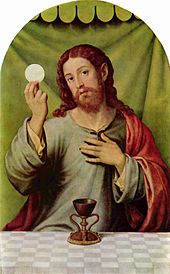 "I am the bread of life. Your ancestors ate the manna in the desert, but they died; this is the bread that comes down from heaven so that one may eat it and not die. I am the living bread that came down from heaven; whoever eats this bread will live forever; and the bread that I will give is my flesh for the life of the world."
The Jews quarreled among themselves, saying, "How can this man give us (his) flesh to eat?"
Jesus said to them, "Amen, amen, I say to you, unless you eat the flesh of the Son of Man and drink his blood, you do not have life within you. Whoever eats my flesh and drinks my blood has eternal life, and I will raise him on the last day. For my flesh is true food, and my blood is true drink. Whoever eats my flesh and drinks my blood remains in me and I in him. Just as the living Father sent me and I have life because of the Father, so also the one who feeds on me will have life because of me. This is the bread that came down from heaven. Unlike your ancestors who ate and still died, whoever eats this bread will live forever."
These things he said while teaching in the synagogue in Capernaum. Then many of his disciples who were listening said, "This saying is hard; who can accept it?" Since Jesus knew that his disciples were murmuring about this, he said to them,
"Does this shock you? What if you were to see the Son of Man ascending to where he was before? It is the spirit that gives life, while the flesh is of no avail. The words I have spoken to you are spirit and life. But there are some of you who do not believe." Jesus knew from the beginning the ones who would not believe and the one who would betray him. And he said, "For this reason I have told you that no one can come to me unless it is granted him by my Father." As a result of this, many (of) his disciples returned to their former way of life and no longer accompanied him. Jesus then said to the Twelve, "Do you also want to leave?" Simon Peter answered him, "Master, to whom shall we go? You have the words of eternal life."
To whom shall we go?
Peace to you on your journey...
"I was wondering how its been for your wife and if your families have been accepting and supportive."A: In the beginning it was mixed--to put it mildly. Now, things are better. In fact, I would dare say that some people are on a journey (as we all are). I had one family member buy the Lamb's Supper by Scott Hahn. My wife, of course, joined me on the journey and is a happy Catholic. The thing is, people that know me understand my conversion to Catholicism as a continuity of what has always been a lifelong pursuit of Jesus Christ. I am Catholic because he founded the Catholic Church. No other reason.
The other question was:
"I'm a professed Pentecostal in a state of... Reform? Not really sure about very many things right now except that i feel lost and like I've built my house on sand. My husband was a minister. Certain circumstances have brought us to a point of questioning. I had a thought out of seemingly nowhere the other day: why would a Pentecostal ever convert to Catholicism?! So i googled and came across your conversion story. Wow. You addressed some questions I've raised within myself. And other subjects I had never questioned. Well frankly, I'm at the point of questioning most everything I've ever known regarding religion. I love the experience of the infilling of the Holy Ghost! Yet…I must admit something is missing. There is a void that has not been filled. I never dreamed that I would one day consider Catholicism. I am intrigued by your testimony. Your journey. I have babies. I cannot afford to be in limbo any longer! My husband won't hear of it... Yet, at this point he wants nothing to do with any church and is the most cynical towards the Catholic Church. Please pray for us in our journey! Questions: what about immersion baptism in Jesus' name? The infilling of the Holy Ghost? How do you stand on these subjects now? What has this conversion been like for your wife? I cut my hair months ago. Relief!!! No more struggling with damaged hair and not a single headache since! I'd had regular migraines for years!!! I have prayed and studied about it and feel completely at peace with cutting my hair. I believe we interpret so many things wrong! Anyhow, my two struggles? 1. Am I hindering my husband? He says no, but I still feel concerned about how my actions affect him. 2. People. Judgmental, condemning people. Maybe I'm too prideful and just don't want people upset with me but why ever it is; they get to me! I'll tell you this because it is an example of how i feel about most of the things I am struggling with. Hope i haven't been too mouthy! Just feel a need to ask you those things. Thank you!"First, you and everyone else considering Catholicism are in my prayers every day. I understand there are so many hurdles to get over when considering Catholicism. As my friend says, "Anti-Catholicism is a tradition of men"; and a hard one to rid at that. For readers that may not understand where the commenter is coming from, it appears she may be a part of a Pentecostal Holiness Church of some sort. Sadly, they may practice "Jesus-only" baptism. I"m not sure.
To her question regarding baptism, I was a Pentecostal who believed in Trinitarian baptism. The mode (or method) of baptism is quite another question, and one that we can tackle a different way. I did a series of posts on baptism you can find here, here, here, here, here and here (read them in that order). You should also read a great post at Catholic Answers entitled "Infant Baptism".
However and to add, I would say that the greatest gift God has for us is found in the Holy Eucharist. It is the Most Blessed Sacrament, the fulfillment of all the Old Testament feasts, the way our Lord gives himself fully and freely to His bride until He comes again, and is the great mystery of the faith (the internet does not have enough words to describe our Lord in the Most Blessed Sacrament).
Our Blessed Lord said as much in John 6:48-68:
The Jews quarreled among themselves, saying, "How can this man give us (his) flesh to eat?"
Jesus said to them, "Amen, amen, I say to you, unless you eat the flesh of the Son of Man and drink his blood, you do not have life within you. Whoever eats my flesh and drinks my blood has eternal life, and I will raise him on the last day. For my flesh is true food, and my blood is true drink. Whoever eats my flesh and drinks my blood remains in me and I in him. Just as the living Father sent me and I have life because of the Father, so also the one who feeds on me will have life because of me. This is the bread that came down from heaven. Unlike your ancestors who ate and still died, whoever eats this bread will live forever."
These things he said while teaching in the synagogue in Capernaum. Then many of his disciples who were listening said, "This saying is hard; who can accept it?" Since Jesus knew that his disciples were murmuring about this, he said to them,
"Does this shock you? What if you were to see the Son of Man ascending to where he was before? It is the spirit that gives life, while the flesh is of no avail. The words I have spoken to you are spirit and life. But there are some of you who do not believe." Jesus knew from the beginning the ones who would not believe and the one who would betray him. And he said, "For this reason I have told you that no one can come to me unless it is granted him by my Father." As a result of this, many (of) his disciples returned to their former way of life and no longer accompanied him. Jesus then said to the Twelve, "Do you also want to leave?" Simon Peter answered him, "Master, to whom shall we go? You have the words of eternal life."
_____________________________________________________
To whom shall we go?
Peace to you on your journey...
December 5, 2011
5 Thoughts About the New Roman Missal

(this catechesis moment brought to you by "awkward moments")
_______________________________
Back to the post...everyone is writing about the new Roman Missal, so I thought I would weigh in and give my two-and-a-half cents:
1. A Better Translation.
Plain and simple, its just better. Why? It is more consonant with the Tradition. Why is that important? Exhibit A:
Exhibits B and C below.
2. For what?
"For many". Why not "for all"?
Why not "for many?"
In the Eucharistic liturgy, the old-new prayer said, "poured out for all." The new-old prayer says, "poured out for many."
Will everyone be saved? No. Evidence: Hitler.
Did Christ die for everyone? Yes.
Enter: Free will
3. Change we can believe in.
What is incredible to me is all the people that are up in arms about "changing the Mass". The same people who wanted clown masses, liturgical dancing, who cared less if the priest acted like a DJ, now are lamenting "consubstantial" (exhibit B). I got a new word for them: contradiction.
4. Did I hear "oblation"?
Yes, you did, and that is exhibit C. In this case, as evidence of the awesomeness of the new translation. Catholics do not re-sacrifice Christ, but it is a sacrifice. Oblation is just pure liturgical greatness.
Thank you Vatican, thank you.
5. "And with your spirit"
I said, "And with your spirit".
Try that again. "And with also your spirit?"
I think everyone messed this up. Week 2 was a little better.
Why the change? It comes from the Latin response "et cum spiritu tuo". I'll admit "and also with you" was a sesame street translation of "et cum spiritu tuo". For 1,400 years, Catholics said, "et cum spiritu tuo". Then we started saying, "W/U, LOL, and IMHO". J/K
Peace be with you.
And with your spirit.
Amen!
November 28, 2011


November 18, 2011
Is Protestantism a Theory?
 |
| Version #21,743 of 38,103 |
"[Protestantism] did not, after the various heretical propositions had been condemned, set up a separate religion over against the old orthodoxy. Rather did it create a certain separate moral atmosphere which we still call "Protestantism". It produced indeed a crop of heresies, but not one heresy. The Protestant attack differed from the rest especially in this characteristic, that its attack did not consist in the promulgation of a new doctrine or of a new authority, that it made no concerted attempt at creating a counter-Church, but had for its principle the denial of unity. It was an effort to promote that state of mind in which a Church in the old sense of the word--that is, an infallible, united, teaching body, a Person speaking with Divine authority--should be denied; not the doctrines it might happen to advance, but its very claim to advance them with unique authority." (pp. 97 & 12; Tan Books & Publishers, 1991).
 |
| A Shocking Image to Our 21st Century Sensibilities |
 |
| Church Board: "We all agree, so we joined this club that runs a church" |
"CCC 831. Secondly, the Church is catholic because she has been sent out by Christ on a mission to the whole of the human race:
All men are called to belong to the new People of God. This People, therefore, while remaining one and only one, is to be spread throughout the whole world and to all ages in order that the design of God's will [not human invention or artfulness] may be fulfilled: he made human nature one in the beginning and has decreed that all his children who were scattered should be finally gathered together as one. . . . The character of universality which adorns the People of God is a gift from the Lord himself whereby the Catholic Church ceaselessly and efficaciously seeks for the return of all humanity and all its goods, under Christ the Head in the unity of his Spirit.
Amen.
Subscribe to:
Posts (Atom)