(it is old-school, almost-not-catholic, apologetics)

Showing posts with label anti-catholicism. Show all posts
Showing posts with label anti-catholicism. Show all posts
November 19, 2012
January 29, 2012
How To Ruin A Urinal
Let's just say "a few days ago", my wife and I celebrated the 100 year anniversary of our parish's existence. After the Mass (said by a Successor of the Apostles--our bishop), we attended a wonderful dinner where about 500 parishioners came and feted the occasion. It was a superbly put on event, and we had a fabulous time. However, when I first arrived as is often the custom, I decided to frequent the loo. For anyone who might be ignorant, in the men's restroom there are these wall-hanging toilets. Unless you are an elf who stumbled upon a major metropolis en route to finding his long-lost father, you know these are meant for one thing: pee.
Now that we got that out of the way, I will say that as I stepped up to, um, you know, uh, relieve myself, I looked down on the floor and found this:
Not this exact one, but a Jack Chick tract like it called, "The Long Trip". In order to understand what I was thinking at this point, let's review some of the facts:
1. An all Catholic event was being hosted at a very nice banquet hall
2. An anti-Catholic tract was placed in the bathroom before the event
Could this be an accident?
OF COURSE NOT!!!
THIS WAS EVANGELISM TIME!!!
Think about it. You have a Catholic, literally, with his pants down. While emptying himself of his, well you-know, he reaches WAY down, picks up the tract, and "Bam, Boom, Kazaam! Holy Spirit got em!"
[The intended subsequent scene: "Brother, we are so glad you came out of that Romanist, Anti-Christ religion. We've been praying for you for years. We know you thought we are ecumenical and all (giggle). I can't wait for you to give your testimony in our chu-hurch about how God saved you in the bathroom."]
Or so thought the local ecclesial community/sect of a larger denominational stripe who printed this thing and is distributing them in my community.
Catholics, wake up! They are after your souls!

[Brent, what was so wrong with the tract? I mean, come on, was it really so bad? Give our separated brothers and sisters a break. They love Jesus, too. We are united by our baptism. "Kumbaya, my Lord, Kumbaya, Kumbaya My..."]
FAITH CHECK: WE ARE IMPERFECTLY UNITED BY OUR BAPTISM. IT IS INCOMPLETE. THEY ARE OUR SEPARATED BROTHERS AND SISTERS.
If I told my friend he had a long-lost brother, but that he will forever be separated from him, that just wouldn't cut it, would it? So, while many times we feel fondly about our separated brothers and sisters (as we should), the distance for them is just far enough to lob what they hope will be scud missile-like havoc on our Catholic faith. (see the above 3 links for relevant CCC sections)
Not convinced? Like a scud missile, the point is that you won't see it coming. Here's the tract in a nut-shell (paid for and printed by one of the largest, activist, main-line Protestant churches in my area):
Now that we got that out of the way, I will say that as I stepped up to, um, you know, uh, relieve myself, I looked down on the floor and found this:
 |
| How To Ruin A Urinal (or anything for that matter) |
1. An all Catholic event was being hosted at a very nice banquet hall
2. An anti-Catholic tract was placed in the bathroom before the event
Could this be an accident?
OF COURSE NOT!!!
THIS WAS EVANGELISM TIME!!!
Think about it. You have a Catholic, literally, with his pants down. While emptying himself of his, well you-know, he reaches WAY down, picks up the tract, and "Bam, Boom, Kazaam! Holy Spirit got em!"
[The intended subsequent scene: "Brother, we are so glad you came out of that Romanist, Anti-Christ religion. We've been praying for you for years. We know you thought we are ecumenical and all (giggle). I can't wait for you to give your testimony in our chu-hurch about how God saved you in the bathroom."]
Or so thought the local ecclesial community/sect of a larger denominational stripe who printed this thing and is distributing them in my community.
Catholics, wake up! They are after your souls!
[Brent, what was so wrong with the tract? I mean, come on, was it really so bad? Give our separated brothers and sisters a break. They love Jesus, too. We are united by our baptism. "Kumbaya, my Lord, Kumbaya, Kumbaya My..."]
FAITH CHECK: WE ARE IMPERFECTLY UNITED BY OUR BAPTISM. IT IS INCOMPLETE. THEY ARE OUR SEPARATED BROTHERS AND SISTERS.
If I told my friend he had a long-lost brother, but that he will forever be separated from him, that just wouldn't cut it, would it? So, while many times we feel fondly about our separated brothers and sisters (as we should), the distance for them is just far enough to lob what they hope will be scud missile-like havoc on our Catholic faith. (see the above 3 links for relevant CCC sections)
Not convinced? Like a scud missile, the point is that you won't see it coming. Here's the tract in a nut-shell (paid for and printed by one of the largest, activist, main-line Protestant churches in my area):
- Everyone born is on a road to death (true)
- On that road are all kinds of people (true)
- The road to heaven is narrow (true)
- If you reject Christ, you will go to hell (true)
What's wrong with that, Brent? I'll tell you: the pictures.
While #1 is true (although it can be intervened by infant baptism), the pictures that illustrate #2 and #3 tell us everything about the intention of the message. In #2, we see both a Catholic nun and what appears to be a Catholic cardinal on the "broad road". We also see what appears to be an Orthodox priest, a Buddhist monk and a Muslim on that road as well. Is it possible that a Catholic nun, a Catholic Cardinal and an Orthodox priest could end up in hell? Sure. But, that is not the point of the tract. It is not some nuanced take on theology, but rather a scud missile-like rebuttal of those religions (Catholicism included).
How do I know this?
 |
| Really. We love EVERYBODY |
Because, when the "gospel" is introduced in the tract, in true bigoted fashion, a white, blond dude on the side of the road is beckoning everyone to listen to the "good news". What is this good news? It is just another form of "easy believism".
I've already rebutted easy believism. However, what is more interesting is the end of the tract. At the end, the gentlemen who thought he had more time to believe in Christ dies, and Satan reveals himself as the one who tricked him into thinking he had more time. (It literally ends with Satan saying, "Hahahahaha").
I got two things to say, and then I'm out. First, I'm gonna flip the script. Let's try this one on for size:
- If Jesus established One, True, Church, then
- To be on the "narrow way", you need to be a part of that Church, and
- There is a "broad way" that seems right to a man but it leads to destruction
- "Seems right" is just another way of saying that the individual is the judge and jury of the religion,
- Therefore, If you are in a Christian religion where you are the judge and jury of what is "right" then you are on a "broad road". In other words, there will be as many roads as there are people.
- Outside of the Catholic faith, there are literally 30,000 different official versions of Christianity
One of those seems less narrow to me. Just saying. If the shoe fits, wear it. Or, I guess, if the shoe fits make sure the guy walks out with a pair.
Second, St. Paul makes it pretty clear in Romans 2 that "for when Gentiles who do not have the Law do instinctively the things of the Law, these, not having the Law, are a law to themselves, in that they show the work of the Law written in their hearts, their conscience bearing witness and their thoughts alternately accusing or else defending them, on the day when, according to my gospel, God will judge the secrets of men through Christ Jesus."
The Catholic Church affirms St. Paul's witness today by teaching that those who have not made an explicit confession of faith can still be saved if they respond to the grace God gives them. This, of course, does not mean they can reject Christ and be saved. That is impossible. There is no salvation outside of the saving work of Christ. What the Church affirms is that salvation is a mystery grounded in our union with Christ, a work done by the moving of the Holy Spirit. Neither you or I can contain the work of the Holy Spirit, and only God can judge the heart.
Thank God.
Thank God.
We can judge some thing(s).
Therefore, I judge this tract to be subversive, inaccurate, a waste of paper and a real ruiner of urination.
 |
| "Dear Mr. Chick and Associates, Please Leave us Alone." -Urinals |


December 26, 2011
The Ecumenical One-Way Road, Apologetics and St. Stephen
Ecumenism takes as it starting point that Christ founded just one Church, not many churches; hence the Roman Catholic Church has as its ultimate hope and objective - that through prayer, study, and dialogue, the historically separated bodies may come again to be reunited with it. (source: wikipedia)
Apologetics (from Greek ἀπολογία, "speaking in defense") is the discipline of defending a position (often religious) through the systematic use of reason. (source: wikipedia)
However, false irenicism blurs the line between dogma and friendliness. In conversations where dogma gets put aside so that we can be "charitable", the relationship will likely atrophy, not grow, because the relationship is built upon being shallow and trite with what is most important to us: truth. Don't get me wrong. We can feed the hungry together in the name of Christian love without blurring the line of dogma. However, we cannot talk about what it truly means to worship, to be saved, or to minister by not setting dogma as the centerpiece of the discussion. Further, if your constitution cannot handle the ensuing conversation, then I recommend you commit such activity to prayer not participation...
...because ecumenism and apologetics are not arch nemeses. In a world where "proving" and "debating" in the sphere of anything but the natural sciences is tantamount to being "judgmental" or not "nice", religion comes across like grandma's bake-goods. No wonder our children give it up like Santa Claus--it's because we treat it like Santa Claus. Thus, intra-faith dialog can take on--in this spirit of grandma's bake-goods--an Oprah-esque character. At the end of the show, everyone is crying, hugging and nobody knows what-the-heck just happened. We all still disagree, and nobody goes home with anybody else, but gosh-darnit it feels so darn warm and fuzzy.
In a pharse:
Our separated brothers and sisters already know how awesome they are. The problem is that they think we bite. And you know what? A lot of the time we do: in our moral lives, in our liturgical shenanigans, in our less than clear presentation of the faith, in our failure to teach our children, and in our timidity to proclaim the Catholic faith in all its dogmatic beauty.
Why did you write this today, Brent? It's second day of Christmas, for good-ness sake. Yes, it is. And in the Catholic religion, the one instituted by the Savior whose birth we celebrated yesterday, today is the Feast of St. Stephen, the first martyr. St. Stephen died for the One, Holy, Catholic and Apostolic faith. As it was from the beginning and ever will be, evangelism begins with martyrdom:
We must die to our desire to be liked.
We must die to our desire to be popular.
We must be willing to lose everything for the sake of the Gospel.
Apologetics (from Greek ἀπολογία, "speaking in defense") is the discipline of defending a position (often religious) through the systematic use of reason. (source: wikipedia)
"The way and method in which the Catholic faith is expressed should never become an obstacle to dialogue with our brethren. It is, of course, essential that the doctrine should be clearly presented in its entirety. Nothing is so foreign to the spirit of ecumenism as a false irenicism, in which the purity of Catholic doctrine suffers loss and its genuine and certain meaning is clouded. (Unitatis Redintegratio)Catholic ecumenism should not be confused with some kind of general Christian or intra-Protestant ecumenism. Catholic ecumenism is a one-way road.
 |
| CATHOLIC ECUMENISM: A ONE-WAY ROAD |
By one-way-road, I do not mean a one-way communication channel whereby the Catholics do all the talking. However, Catholic + anyone dialog has a particular end as its goal. We should not pretend that dialog with the Catholic Church is just lip-flapping nor should we think that Christian unity is defined by those who merely "love Christ". That makes for common "fans" or face-bookish friends, not communion. One goal is a human one, the other divine. It is not merely that we would stand around a camp fire and hum "Amazing Grace". We desire all those who love Christ and find themselves separated from His Church--the visible Catholic Church--to be reunited to her. Our starting premise is dogmatic, nonetheless our tone can be irenic.
However, false irenicism blurs the line between dogma and friendliness. In conversations where dogma gets put aside so that we can be "charitable", the relationship will likely atrophy, not grow, because the relationship is built upon being shallow and trite with what is most important to us: truth. Don't get me wrong. We can feed the hungry together in the name of Christian love without blurring the line of dogma. However, we cannot talk about what it truly means to worship, to be saved, or to minister by not setting dogma as the centerpiece of the discussion. Further, if your constitution cannot handle the ensuing conversation, then I recommend you commit such activity to prayer not participation...
...because ecumenism and apologetics are not arch nemeses. In a world where "proving" and "debating" in the sphere of anything but the natural sciences is tantamount to being "judgmental" or not "nice", religion comes across like grandma's bake-goods. No wonder our children give it up like Santa Claus--it's because we treat it like Santa Claus. Thus, intra-faith dialog can take on--in this spirit of grandma's bake-goods--an Oprah-esque character. At the end of the show, everyone is crying, hugging and nobody knows what-the-heck just happened. We all still disagree, and nobody goes home with anybody else, but gosh-darnit it feels so darn warm and fuzzy.
Then how can we as Catholics be ecumenical?
Be concerned. Pray. Renew our Catholic identity. Be holy. Know the faith."Catholics, in their ecumenical work, must assuredly be concerned for their separated brethren, praying for them, keeping them informed about the Church, making the first approaches toward them. But their primary duty is to make a careful and honest appraisal of whatever needs to be done or renewed in the Catholic household itself, in order that its life may bear witness more clearly and faithfully to the teachings and institutions which have come to it from Christ through the Apostles.
For although the Catholic Church has been endowed with all divinely revealed truth and with all means of grace, yet its members fail to live by them with all the fervor that they should, so that the radiance of the Church's image is less clear in the eyes of our separated brethren and of the world at large, and the growth of God's kingdom is delayed. All Catholics must therefore aim at Christian perfection and, each according to his station, play his part that the Church may daily be more purified and renewed. For the Church must bear in her own body the humility and dying of Jesus, against the day when Christ will present her to Himself in all her glory without spot or wrinkle." -Unitatis Redintegratio
In a pharse:
BE CATHOLIC!
 |
| Maybe our problem is we do not see this enough |
Why did you write this today, Brent? It's second day of Christmas, for good-ness sake. Yes, it is. And in the Catholic religion, the one instituted by the Savior whose birth we celebrated yesterday, today is the Feast of St. Stephen, the first martyr. St. Stephen died for the One, Holy, Catholic and Apostolic faith. As it was from the beginning and ever will be, evangelism begins with martyrdom:
We must die to our desire to be liked.
We must die to our desire to be popular.
We must be willing to lose everything for the sake of the Gospel.
 |
| St. Stephen, pray for us |
December 19, 2011
Reply...Again...Conversion: The Way of the Cross
"Anonymous" replied to my recent post, again using blogger, so for her benefit, yours and mine, I am responding to her recent question on the blog. She said:

"Dear God, if the saints are not in heaven, make them to not hear my prayers. I'm not sure if this is the right thing, but I'm starting to believe that the Catholic Church is the Church you founded. You said that if I ask for bread, you would not give me a scorpion. Well, this is one of those situations. If this is not of You, throw me off this path. I see where it is heading, and I don't want to go there but I'm afraid I will have to unless you throw me off this path. I love you, God."
You are in my family's prayers.
"Thank you for answering my question, but it leads to another. What if a husband or wife wishes to convert to Catholicism, but the spouse is unwilling, uninterested or maybe even adamently against it?Particularly, as in the second comment above, what if the wife wishes to convert, but the husband does not. What is she to do in the eyes of the Church? Submit to her husband or go against his wishes, since Christ said we must follow him no matter what or who stands in our way? Can one spouse convert and the other, not? What if (not that it would have been) that had been your situation? Would you have still converted without your wife's joining you? It seems it would be a sticky situation. You are very blessed that she happily joined you, but not everyone has it so easy, especially when the roles are reversed and it is the wife who is considering converting, to her utter personal shock and surprise, I might add. Like you, she too, never imagined (and still hasn't admitted to herself that she is) she would ever consider Catholicism."First, let me say that I completely understand the sentiment in your last comment. I, too, never dreamed of becoming Catholic. All roads were not conspicuously leading to Rome. I am going to give you two takes on the matter. I asked my wife this question, and here is what she said:
"My gut reaction is convert no matter what....I don't know what I would actually say if I was the one having to respond to this email. It seems to me, though, that converting to Catholicism is as tantamount as becoming a Christian. I would never tell someone to reject becoming a Christian because of marital reasons. Isn't that what the Catholic Church is? Christianity, our Salvation, the way Christ has given us himself on this earth?...."I love my wife. Her feminine sagacity comes in short thoughts like this that get right to the heart of the matter. For prudential purposes, I would add the following:
- Conversion, even when both are not on the same page, is easier if the existing marriage is solid. Any communication problem you may have will be accentuated by this particular conflict, if you let it.
- Go slow. There is no reason to rush. When you are a catechumen (learning about Catholicism in RCIA), Mother Church calls you Her own. I recommend finding a local parish and starting RCIA. Maybe your husband would go with you? Maybe he would be willing to have a conversation about what you learn? Most importantly, pray about this every day. Ask God for help: in your heart, marriage, mind, in the work He has called you to do as a mother...everything. Pray, pray. and pray again.
- Allow your journey to Catholicism to be a chance to grow closer to God. To be closer to His Church is to be closer to Him. To be closer to Him is to be more like him. Your husband and everyone else will notice.
- Ask the saints to pray for you, especially Blessed Mary. I know this one probably sounds weird to you at this point. It did to me too. I recommend praying this little prayer I prayed:
 |
| Our Mother |
St. ____________, pray for me.
Amen.
You are in my family's prayers.
Want more Almost Not Catholic? Join the journey...
December 18, 2011
From the Combox...On the Eucharist
I recently received two comments via blogger on my most recent post and because they were not done in Disqus, they did not show up on the post. Nevertheless, I wanted to respond to both of them. The first question was:
The other question was:
To her question regarding baptism, I was a Pentecostal who believed in Trinitarian baptism. The mode (or method) of baptism is quite another question, and one that we can tackle a different way. I did a series of posts on baptism you can find here, here, here, here, here and here (read them in that order). You should also read a great post at Catholic Answers entitled "Infant Baptism".
 Regarding the gift of the Holy Spirit, as Catholics we believe this gift is given at the Sacrament of Holy Confirmation. It is the official "laying on of hands" that continues in Mother Church to this day. It is one of the 7 Sacraments of the Catholic Church. The Pentecostal or Charismatic baptism of the Holy Spirit is a unique experience and one the Catholic Church affirms as a genuine work of God. I recommend this article by the current papal preacher, Father Raniero Cantalamessa, OFM.
However and to add, I would say that the greatest gift God has for us is found in the Holy Eucharist. It is the Most Blessed Sacrament, the fulfillment of all the Old Testament feasts, the way our Lord gives himself fully and freely to His bride until He comes again, and is the great mystery of the faith (the internet does not have enough words to describe our Lord in the Most Blessed Sacrament).
Our Blessed Lord said as much in John 6:48-68:
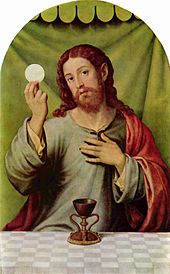 "I am the bread of life. Your ancestors ate the manna in the desert, but they died; this is the bread that comes down from heaven so that one may eat it and not die. I am the living bread that came down from heaven; whoever eats this bread will live forever; and the bread that I will give is my flesh for the life of the world."
The Jews quarreled among themselves, saying, "How can this man give us (his) flesh to eat?"
Jesus said to them, "Amen, amen, I say to you, unless you eat the flesh of the Son of Man and drink his blood, you do not have life within you. Whoever eats my flesh and drinks my blood has eternal life, and I will raise him on the last day. For my flesh is true food, and my blood is true drink. Whoever eats my flesh and drinks my blood remains in me and I in him. Just as the living Father sent me and I have life because of the Father, so also the one who feeds on me will have life because of me. This is the bread that came down from heaven. Unlike your ancestors who ate and still died, whoever eats this bread will live forever."
These things he said while teaching in the synagogue in Capernaum. Then many of his disciples who were listening said, "This saying is hard; who can accept it?" Since Jesus knew that his disciples were murmuring about this, he said to them,
"Does this shock you? What if you were to see the Son of Man ascending to where he was before? It is the spirit that gives life, while the flesh is of no avail. The words I have spoken to you are spirit and life. But there are some of you who do not believe." Jesus knew from the beginning the ones who would not believe and the one who would betray him. And he said, "For this reason I have told you that no one can come to me unless it is granted him by my Father." As a result of this, many (of) his disciples returned to their former way of life and no longer accompanied him. Jesus then said to the Twelve, "Do you also want to leave?" Simon Peter answered him, "Master, to whom shall we go? You have the words of eternal life."
To whom shall we go?
Peace to you on your journey...
"I was wondering how its been for your wife and if your families have been accepting and supportive."A: In the beginning it was mixed--to put it mildly. Now, things are better. In fact, I would dare say that some people are on a journey (as we all are). I had one family member buy the Lamb's Supper by Scott Hahn. My wife, of course, joined me on the journey and is a happy Catholic. The thing is, people that know me understand my conversion to Catholicism as a continuity of what has always been a lifelong pursuit of Jesus Christ. I am Catholic because he founded the Catholic Church. No other reason.
The other question was:
"I'm a professed Pentecostal in a state of... Reform? Not really sure about very many things right now except that i feel lost and like I've built my house on sand. My husband was a minister. Certain circumstances have brought us to a point of questioning. I had a thought out of seemingly nowhere the other day: why would a Pentecostal ever convert to Catholicism?! So i googled and came across your conversion story. Wow. You addressed some questions I've raised within myself. And other subjects I had never questioned. Well frankly, I'm at the point of questioning most everything I've ever known regarding religion. I love the experience of the infilling of the Holy Ghost! Yet…I must admit something is missing. There is a void that has not been filled. I never dreamed that I would one day consider Catholicism. I am intrigued by your testimony. Your journey. I have babies. I cannot afford to be in limbo any longer! My husband won't hear of it... Yet, at this point he wants nothing to do with any church and is the most cynical towards the Catholic Church. Please pray for us in our journey! Questions: what about immersion baptism in Jesus' name? The infilling of the Holy Ghost? How do you stand on these subjects now? What has this conversion been like for your wife? I cut my hair months ago. Relief!!! No more struggling with damaged hair and not a single headache since! I'd had regular migraines for years!!! I have prayed and studied about it and feel completely at peace with cutting my hair. I believe we interpret so many things wrong! Anyhow, my two struggles? 1. Am I hindering my husband? He says no, but I still feel concerned about how my actions affect him. 2. People. Judgmental, condemning people. Maybe I'm too prideful and just don't want people upset with me but why ever it is; they get to me! I'll tell you this because it is an example of how i feel about most of the things I am struggling with. Hope i haven't been too mouthy! Just feel a need to ask you those things. Thank you!"First, you and everyone else considering Catholicism are in my prayers every day. I understand there are so many hurdles to get over when considering Catholicism. As my friend says, "Anti-Catholicism is a tradition of men"; and a hard one to rid at that. For readers that may not understand where the commenter is coming from, it appears she may be a part of a Pentecostal Holiness Church of some sort. Sadly, they may practice "Jesus-only" baptism. I"m not sure.
To her question regarding baptism, I was a Pentecostal who believed in Trinitarian baptism. The mode (or method) of baptism is quite another question, and one that we can tackle a different way. I did a series of posts on baptism you can find here, here, here, here, here and here (read them in that order). You should also read a great post at Catholic Answers entitled "Infant Baptism".
However and to add, I would say that the greatest gift God has for us is found in the Holy Eucharist. It is the Most Blessed Sacrament, the fulfillment of all the Old Testament feasts, the way our Lord gives himself fully and freely to His bride until He comes again, and is the great mystery of the faith (the internet does not have enough words to describe our Lord in the Most Blessed Sacrament).
Our Blessed Lord said as much in John 6:48-68:
The Jews quarreled among themselves, saying, "How can this man give us (his) flesh to eat?"
Jesus said to them, "Amen, amen, I say to you, unless you eat the flesh of the Son of Man and drink his blood, you do not have life within you. Whoever eats my flesh and drinks my blood has eternal life, and I will raise him on the last day. For my flesh is true food, and my blood is true drink. Whoever eats my flesh and drinks my blood remains in me and I in him. Just as the living Father sent me and I have life because of the Father, so also the one who feeds on me will have life because of me. This is the bread that came down from heaven. Unlike your ancestors who ate and still died, whoever eats this bread will live forever."
These things he said while teaching in the synagogue in Capernaum. Then many of his disciples who were listening said, "This saying is hard; who can accept it?" Since Jesus knew that his disciples were murmuring about this, he said to them,
"Does this shock you? What if you were to see the Son of Man ascending to where he was before? It is the spirit that gives life, while the flesh is of no avail. The words I have spoken to you are spirit and life. But there are some of you who do not believe." Jesus knew from the beginning the ones who would not believe and the one who would betray him. And he said, "For this reason I have told you that no one can come to me unless it is granted him by my Father." As a result of this, many (of) his disciples returned to their former way of life and no longer accompanied him. Jesus then said to the Twelve, "Do you also want to leave?" Simon Peter answered him, "Master, to whom shall we go? You have the words of eternal life."
_____________________________________________________
To whom shall we go?
Peace to you on your journey...
August 10, 2011
Myth Busters: Catholics Worship Mary
 |
| Queen Sheba showing honor to King Solomon--NOT WORSHIPING HIM |
I get it that we can all fall into false idolatry for things like food, sex and money. However, it seems rather odd that it would be claimed of a religion that they worship something that they do not themselves claim to worship. Dude says, "Hindu, you worship a cow!" Hindu says, "Yeah, so what." = FAIL
Yet, it is a common Protestant objection to Catholicism that Catholics worship Mary. I've been Catholic for 3 years now and have not once worshiped Mary. In fact, the charge seems prima facie and a posteriori false. Nonetheless, the charge against Catholicism still flies around as popularly as the chant "We will rock you" does at a sporting event.
I've been thinking (proceed with caution). Is the problem that some Protestants are equating "(some) Catholics worship Mary" with "Catholicism teaches the worship of Mary"? This is a very charitable distinction and I will grant the former without granting the later. This is not troubling because I could easily argue the following using the same logic:
- (some) Protestants worship the Bible, but Protestantism doesn't teach worship of the Bible
- (some) Protestants handle snakes, but Protestantism doesn't teach the handling of snakes
- (some) Protestants in the South worship football, but Protestantism doesn't teach the worship of the SEC
- (some) Protestants use contraception that is against 1,900 years of unanimous Christian teaching, but Protestantism doesn't...well almost
Similarly, I knew many Baptists who used the theology of "once saved always saved" as an American Express Sin card to purchase their favorite vices every weekend. In the spirit of the local religion of hedonism, these Christians used a part of their faith mixed with the local belief system to make themselves awful witnesses of Jesus Christ. The question is begged, "Do Baptists believe that you should "sin it up" on Saturday and ask for forgiveness on Sunday?" Of course not. But the lack of charity in such a claim is equally found in the claim that "Catholics worship Mary" as if to imply that Mary-worship is Catholic teaching.
A few thoughts about The Blessed Virgin...
1. In order to worship Mary you must worship a false Mary.
She is the Mother of Christ. She will not allow, even for a moment, her children to give her the worship that is due only to God. She eternally says, "Do what he says". If someone begins to worship Mary, they have created a false Mary in their mind. They are not relating to the Blessed Virgin, but rather have concocted a different Mother so as to worship her. Mary would never allow it. As the new Eve, she perpetually points us to the Tree of Life and to the fruit of her womb: Christ Jesus our Lord.
2. Mary is Due the Highest Honor Afforded a Human Being
Honoring Mary recognizes her privileged place in the story of salvation history. As the Catechism (963) states, "Since the Virgin Mary's role in the mystery of Christ and the Spirit has been treated, it is fitting now to consider her place in the mystery of the Church. "The Virgin Mary . . . is acknowledged and honored as being truly the Mother of God and of the redeemer. . . . She is 'clearly the mother of the members of Christ' . . . since she has by her charity joined in bringing about the birth of believers in the Church, who are members of its head." "Mary, Mother of Christ, Mother of the Church."
And also in 2679, "Mary is the perfect Orans (pray-er), a figure of the Church. When we pray to her, we are adhering with her to the plan of the Father, who sends his Son to save all men. Like the beloved disciple we welcome Jesus' mother into our homes, for she has become the mother of all the living. We can pray with and to her. The prayer of the Church is sustained by the prayer of Mary and united with it in hope."
And lastly in 971, "This very special devotion . . . differs essentially from the adoration which is given to the incarnate Word and equally to the Father and the Holy Spirit, and greatly fosters this adoration."
My honor for Mary is directly proportionate to my experience of gratitude for what she offers us all: Our Lord. Making the fundamental distinction between Marian devotion and the worship due to God alone has a lot to do with our understanding of worship and whether or not certain actions can be in essence different.
Some reject the dulia-latria (honor-worship) distinction. If so, they reject that we can show extreme honor for a creature in proportion to their excellence without worshiping the creature. I claim that to reject this distinction is to reject their own experience and practice. Sadly, many of these Christians attend churches that many times have large American flags adorned behind their pulpits and put on outrageous 4th of July events, all in an attempt to show their honor (dulia) of the USA. In fact, these churches will do more to honor George Washington than Christ's Mother. Ouch! The dulia-latria distinction must be accepted because it is coherent with our experience of reality. Christians who reject the Catholic understanding of dulia in relationship to the saints and hyperdulia in relationship to Mary, practice a type dulia all of the time in various "senses", for example:
"Please rise for judge Thompson."
 |
| Evil, evil dulia |
"Everyone, please take off your ball cap and place your hand on your heart while we sing the National Anthem."
"Kids, remember to not leave the room when Great-Grandma is here. That would be so disrespectful since she is the matriarch of our family."
In none of these examples of honor, is the honor being given the creatures in relationship to their union with Christ. Conversely, it is precisely because the saints are united with Christ, and precisely because of Mary's relationship to Christ that Catholics give them a unique honor. That is why the category of dulia prescinds supernaturally from the ordinary respect we naturally give in the above three scenarios (and in others). Moreover, honor for those who are united to Christ should be greater than the honor we pay a judge, our country or our grandma. Through their union with Christ, the honor we give them gives God glory and fulfills His divine plan to create an eternal family.
In conclusion, Catholics do not worship Mary but rather give her the hyperdulia afforded her excellence as the Mother of Our Savior, Jesus Christ. Any assertion to the contrary is both ignorant of Catholic teaching and fails to "accept the things of the Spirit of God, for they are foolishness to him; and he cannot understand them, because they are spiritually appraised." (1 Cor 2:14).
July 11, 2011
Anti-Catholicism Antidote: Of Gods And Men and Us
As a follow up to my post which explored 3 types of anti-Catholic hate--genetic, demonic and political--I want to now consider the solution, the cure, the antidote to this hate.

 This particular theme in the movie convicted me. How often are we quick to "set right" those who throw stones at the Church? How often do we fail to consider their authentic human needs? Sure, we can point to ways in which certain Catholic apostolates act in our communities to reach out to those in dire straits; nonetheless, this does not abrogate our responsibility to act. The "little-way"--the way of prayer, penance and service--is our best method for extracting the pathogen of anti-Catholic poison injected into our society through the mirky waters of hereditary ignorance.
 Catholicism has always lived between the two punitive charges of being "overly sympathetic" or "too dogmatic". In the movie the monks were a threat to both the fundamentalist right-wing and the fascist left-wing. We want health care so we are too left. We want health care for the unborn so we are too right.
The monks live beyond these political pigeon holes, and through self-giving love make both the right and left leaning factions powerless to augment their mission. They don't acquiesce to the claim of stubbornness, but are resolved in the face of such a claim to show how self-less love always cares the least about the personal injury a conviction brings upon oneself. Nor do the monks acquiesce to the pressure to give up their care for those who had no right to it--the outsider, the foreigner--in the name of an ironic self-serving justice and equity.
"Greater love than this no man hath, that a man lay down his life for his friends."
John 15:13
Of Gods and Men tells the true story of 7 Cistercian monks who lived, prayed, worshiped and served together in a war-torn village in Algeria. They were truly in an anti-Catholic context--genetic, political and demonic hate for the Church abounded everywhere. I will attest to the fact that the way the movie portrays them is exceptionally authentic, having had first-hand encounters with Cistercians while studying under and worshiping with them during our short stay in Irving, TX.
 |
| Cistercian Abbey, Irving, TX |
Besides my personal, profound respect for the martyrs in Of Gods and Men, I was struck by how they overcame the hate that surrounded them. Here's what I learned:
I. Genetic hate is overcome through proximal love
In the movie, the monks are the only Christians in their community. The Muslims, some of whom are fundamentalists, have grown to respect the monks, even rely upon them. Ultimately, this points to the way in which the monks lived with the people. They were not Christ to them from a far off, a distant religious commentator on the state of affairs, peering down their proverbial nose at all those in dissent of the truth. Instead, the monks became Christ to those around them and lived out the Incarnational ministry of our Lord. They lived with a constant sense of awareness of the community's needs and were sensitive to the ways in which their actions might bring scandal to the community.
“The Incarnation, for us, is to allow the filial reality of Jesus to embody itself in our humanity. The mystery of Incarnation remains what we are going to live.” -Brother Christian
This particular theme in the movie convicted me. How often are we quick to "set right" those who throw stones at the Church? How often do we fail to consider their authentic human needs? Sure, we can point to ways in which certain Catholic apostolates act in our communities to reach out to those in dire straits; nonetheless, this does not abrogate our responsibility to act. The "little-way"--the way of prayer, penance and service--is our best method for extracting the pathogen of anti-Catholic poison injected into our society through the mirky waters of hereditary ignorance.During the Passion, our Lord bent down and washed the feet of his disciples. That act of humility, set the bar--in a twist--high for what it would take to reach the world. It also reinforced what our Lord taught about the good Samaritain. In the popular story, many times we over-focus on who acted justly. When we do this, we fail to notice something more subtle our Lord is teaching us.
Samaritains were hated, a displaced group, a "mixed-race"; so when Christ used the Samaritain as the good example, he was challenging his disciples' prejudices. As the disciples struggled to re-invision their view of Samaritains, Christ was teaching them the model of healing hate and overcoming prejudice. Only immanent love, in-your-business love can overcome generations of hereditary, uncritical hate for the Church. Moreover, we should remind ourselves that as Catholics we are many times the ones holding the blame for the perceptions others carry about us. Forget about sex-abuse scandal, living a nominal Catholic life, showing indifference to our Lord in the Eucharist and in the poor, or not knowing our faith are all good reasons why our brothers and sisters who do not profess our faith may justifiably reject Her claims.
Shame on me, for I must become like the Samaritain.
II. Political hate is wrought powerless through self-giving love
Catholicism has always lived between the two punitive charges of being "overly sympathetic" or "too dogmatic". In the movie the monks were a threat to both the fundamentalist right-wing and the fascist left-wing. We want health care so we are too left. We want health care for the unborn so we are too right.The monks live beyond these political pigeon holes, and through self-giving love make both the right and left leaning factions powerless to augment their mission. They don't acquiesce to the claim of stubbornness, but are resolved in the face of such a claim to show how self-less love always cares the least about the personal injury a conviction brings upon oneself. Nor do the monks acquiesce to the pressure to give up their care for those who had no right to it--the outsider, the foreigner--in the name of an ironic self-serving justice and equity.
This is what we must do as well as Catholics. Defeat anti-Catholicism with a healthy dose of resolve. We will not give up. In the face of extremism seeking to redefine reality or pretend that what is concealed in a womb isn't real, we must remind those who surround us that we will blow a trumpet until the walls fall down. The trumpet will be the unwavering gift of our lives to those in need of peace, healing and life, and will make friends of those are enemies claim to serve. In so doing, we will heap coles upon their heads and disarm their weapons, beating them--one act of love at a time--into plowshares.
III. Demonic hate is defeated by self-sacrificing love
 |
| "The disciple is never greater than his Master" |
In the end, as in real life, someone must die. That is the story of salvation and ultimately the true message of redemption, namely that when Christ was being led to the cross, and the devil rejoiced, the devil was wrong. We know that the devil roars about like a lion seeking whom he may devour, but that which consumes us cannot hold us. We should not seek out martyrdom, and the monks did not either yet simply resolved that as:
“Wildflowers don’t move to find the sun’s rays. God makes them fecund wherever they are.” -Brother Christian
Where can we find the place that God will make us fecund? How can we, like our beloved Cistercian friends, cry, "Je reste!" (I'm staying!). St. Paul reminds those that face the evil day to prepare themselves to "stand" (Eph 6:13). Are we ready? They were. The Church has always pushed back the gates of hell and enlarged her tent through martyrdom. Tertullian in his Apologeticus said that, "the blood of the martrys is the seed of the Church", and that still holds true today. We should not think that the "servant is greater than his master" (John 15:20) nor that the little-way is the easy-way.
I want to end this last section abruptly to open up the comboxes and get your thoughts. How can we die for our faith even when we are not called to martyrdom? How can we live so authentically committed to our call to love that we will die to everything else but that calling?
What can we do?
July 1, 2011
Anti-Catholicism Exposed: Three Types of Hate
 |
| The Martyrdom of St. Lucy |
Anti-Catholicism is as old as the Church itself. The Romans hated the Catholics--they were infant eating, atheists who were bringing down the temple economy. For those of you who are cradle Catholics and a generation or two older than me, I imagine you have gotten use to the steady dose of Church-hate. I'm a neophyte, so I'm adjusting.
All you have to do is search "Catholicism, the last acceptable prejudice" in Google to get a myriad of articles from Archbishop Dolan to Father Barron on the topic (although Jimmy Akin disagrees). Whether we can settle on the affirmative to that claim or not, we can all agree that Henry VIII and Elizabeth I did their best to eradicate Catholicism off the Anglo-Saxon map, and from the moment this country was founded anti-Catholicism has flourished. A recent History Channel special on The Pilgrims highlighted how archeologists are uncovering Catholic sacramentals in what appears to be execution sites. There is a comment thread over at the History Channel's website that evidences both 17th century prejudice and bares witness to the anti-Catholicism that is lurking almost anywhere (look at the reply).
On my journey to the Catholic Church from low-church protestantism, I actually found anti-Catholicism to serve as a kind of anti-apologetic. [Raging Anti-Catholics: If you are reading this stop reading this now]. In demonstrating your understanding of your opponents position, caricatures, hate-laced diatribe or straw-men do little to prove you understand the issue, care to understand the issue or are animated by the Spirit of Christ. I found these types of rhetorical ramrods to be at the least off-putting and at the most begging the question as to whether or not Catholicism was in fact true. If the best someone can come up with is a shoddy photoshopped picture to "prove" the Pope doesn't love Jesus, I'm all in. No really, it isn't that simple, but the weakness of a disproof can point to the strength of a proof.
Today as Catholics we are faced with 3 types of Anti-Catholicism: genetic, demonic and political. Sadly, everyone--not just Catholics--is faced with these types of anti-Church filth and the great tragedy is that it keeps many men and women out of the Church. A cursory and sophistic argument works for a cursory inquirer, and today more than ever, the inquirer has become cursory at best. Let's now turn our attention to the 3 categories of anti-Catholicism.
GENETIC
Flannery O'Connor captures this particular hereditary malady. I'm reminded of the tenant farmers, the Shortleys, in her story The Displaced Person. Like many other southern prejudices, anti-Catholicism in O'Connor's work comes off with that smile-while-I-spit-in-your face ignorance so endemic to genetic hate. We all laugh while I make fun of your statue of the Mother of the Savior of the World. Okay?
Here are some examples of Genetic Anti-Catholicism:
- Headline Reads: "Vatican Spokesman Discusses the Eucharist and Globalization"-- Commentary: The Pope is the anti-Christ and will be the head of a one-world government
- Saying Catholics worship Mary over and over again until those still in the room believe you
- A Website with a Header called "God Hates the Catholic Church" followed by this image

- People who make comments on blog posts referring to "poor Catholics" who are "trapped" in a religious system of man-made traditions that keeps them from the real saving power of Jesus
DEMONIC
Clarification: All forms of anti-Catholicism are demonic. The Catholic Church is the Church Jesus Christ established, it is not a denomination of men. Therefore, there is only one prince whose aim is to defeat that which the Lord declared the gates of hell would not prevail against. Nonetheless, some forms of anti-Catholicism take on an entirely sinister, should I say, quality. Ignorance can be bliss for the genetic kind, but in this category the anti-Catholic seems to understand that he or she is defaming the holy and enjoys doing it.
Three examples: Lady Gaga, Jerry Springer and Paul Myers.
First, I don't even need to explain why I put Lady Gaga in the mix. Why a Catholic parent would let her near their children with a 10,000 foot pole perplexes me. From start to finish, Lady Gaga is out to promote sin and undermine the Church Christ established to defeat it. Not to mention that her beats are unoriginal and her lyrics lack any noetic quality.
Second, Jerry Springer's newest escapade includes publicly mocking the crucifix and trashing the Eucharist.
Third, Minnesota professor Paul Myers illicitly obtained the Eucharist and then publicly desecrated it, "reporting" to his followers on his blog all the lurid details. He apparently nailed pages of Dawkins The God Delusion to our Lord (ironic that Dawkins argues that religion causes hate). Sadly, Myers act has spawned a youtube challenge to desecrate the Eucharist with no end in site.
The Devil is the only source of hate for this kind of anti-Catholicism. From demon-possessed to demon-obsessed, unlike their genetic counterparts, they could care less if Satan is using them and to their demise, he is.
POLITICAL
From the Huff-Puff Post to the New York Times, political hate for the Catholic Church abounds. It's a "spin-zone" where bishops, orthodoxy and common sense morals are fair game for the intelligentsia to knock around like a cheap piñata. It's almost a party atmosphere, and writers like Maureen Dowd are particularly savvy at rotting their teeth away on anti-Catholic dum-dums.
Political anti-Catholicism has always been about one thing: keeping Catholics out of politics. Americans were afraid of having a Catholic president for fear he would follow the Pope over the people. This fear nearly kept Kennedy out of the oval office. Now, since mainline Protestantism has acquiesced to the modern ethic, Catholicism (and Evangelicalism) has become the last bastione against the secular sacking of the West--particularly in America. The gate has been broken down and the enemy of decency and common sense is running amuck.
In political rhetorical strategy, the more one caricatures one's opponent the better. Cartoons are good, but if all we read is the funny papers we are in trouble. If the Huff-Puff and Times were your only source of information about the Catholic Church, you might be led to believe that the Church is against: women, those with same-sex attraction, abused children, good sex, freedom, healthcare and the terminally ill.
As faithful Catholics, we know that last sentence to be patently false. The problem is that the political agenda to keep Catholics out of politics acts as a kind of intellectual hegemony, keeping from the mind the beauty of the Catholic faith in a quid pro quo move that leaves most audiences alienated from that happiness that St. Augustine speaks of and our Constitution promises.
(Note: modern political anti-Catholicism is quickly morphing into the genetic kind)
____________________________________
What can we do?
Pray. Not just in our closet and chapel but with our lives. Blessed Mother Teresa of Calcutta reminds all of us that our lives should answer the prayers that we pray.
Dialogue. Prejudice is defeated through conversation and repentance. Honest and sincere engagement with the other defeats the genetic prejudice, except for in cases where there is something more demonic at play than first thought.
Be Catholic. Nothing proves to the world more the untruth of anti-Catholicism than Catholicism lived out. Passionately loving Christ, His Mother, and the entire Christian family. Caring for the sick, widow, imprisoned and orphan. Defending the gift of life from conception to natural end. Worshiping God in Spirit and Truth. This is our faith, the faith of the Church. God sent His Son to be the Good News and His Son sent the Church to be the voice of that news because the world was in need of it.
It still is.
Subscribe to:
Posts (Atom)